

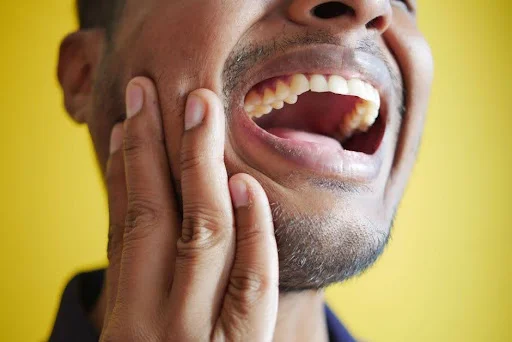
You might think teeth grinding is just a bad habit that wears down enamel, but the effects can reach much further than your mouth. Sleep quality, headaches, jaw pain, mood, and even the way your neck and shoulders feel can all get tangled up in it. If you wake up tired, clench during stress, or hear someone mention that you grind at night, it’s worth looking at the bigger picture before the damage quietly builds.
Why Teeth Grinding Often Goes Unnoticed
A lot of people grind their teeth for years without realizing it. Nighttime grinding, also called sleep bruxism, happens when you’re unconscious, so you won’t catch it the way you’d notice nail biting or jaw clenching during the day. The first signs are often indirect: chipped edges on teeth, a sore jaw in the morning, tension headaches, or a partner hearing strange grinding sounds at night.
Stress is a common trigger, but it’s not the only one. Caffeine, alcohol, smoking, certain antidepressants, sleep apnea, and a misaligned bite can all play a role. That mix makes bruxism tricky because it rarely has one simple cause. You may need to look at your sleep habits, mental load, medication profile, and dental wear patterns together instead of assuming it’s only about stress.
The Jaw Joint Can Become the Main Problem
Grinding puts repeated pressure on the temporomandibular joints, the small but complex joints that connect your jaw to your skull. These joints are built for movement, not for hours of forceful clenching. Over time, that pressure can irritate the joint structures, overwork surrounding muscles, and trigger symptoms linked to TMJ disorders.
You may notice popping, clicking, stiffness, or pain when chewing. Some people feel like their jaw briefly locks or doesn’t open smoothly. Others shift to softer foods without thinking much about it because crunchy or chewy meals start to feel annoying. Once the joint and chewing muscles are inflamed, discomfort can spread fast. A problem that started as nighttime grinding can turn into daily pain when talking, eating, yawning, or even sitting through class and unconsciously clenching.
Headaches, Ear Pressure, and Facial Pain Are Common Spillover Effects
Bruxism rarely stays limited to the teeth. The muscles used for chewing are strong, and when they stay tense for long periods, the pain often refers to nearby areas. That can mean morning headaches at the temples, tenderness along the cheeks, ear fullness, or soreness that feels oddly difficult to place.
This is one reason people sometimes chase the wrong cause for months. They may assume they need new pillows, sinus treatment, or less screen time, when part of the issue is repetitive jaw muscle overload. Dentists and sleep specialists have become more alert to this pattern in recent years because the symptom overlap is so common. If you want a clear overview of how teeth grinding affects health, the key point is that facial pain often starts as a mechanical strain issue, then expands into sleep and quality-of-life problems.
Your Sleep Quality Can Drop Even If You Stay in Bed for Eight Hours
You can technically sleep a full night and still wake up unrefreshed if your body stays activated through repeated grinding episodes. Sleep bruxism is associated with micro-arousals, which are brief interruptions in sleep architecture. You may not remember them, but they can chip away at deep, restorative sleep.
That matters because poor sleep can intensify almost everything else tied to grinding. You become more sensitive to pain, more irritable, and less able to handle stress, which can feed daytime clenching and make the cycle worse. If sleep apnea is also in the picture, the situation deserves even closer attention. Some people grind in response to airway-related sleep disturbances, so the worn teeth become a clue that a broader sleep disorder may need evaluation, not just a mouthguard.
Tooth Damage Adds Up Faster Than Most People Expect
Enamel is the hardest substance in the human body, but it isn’t indestructible. Repeated grinding can flatten the biting surfaces, create microfractures, chip restorations, and expose dentin underneath. Once dentin is exposed, temperature sensitivity often shows up. Ice water, hot coffee, or even cold air can start to sting.
The financial side is also real. A little wear can become bonding, crowns, onlays, or even root canal treatment if cracks deepen enough to affect the tooth pulp. Dental restorations don’t always fail because they were poorly done; sometimes they fail because the bite force on them is relentless. If you’ve ever wondered why one filling keeps breaking or why your front teeth seem shorter in photos than they used to, grinding may be part of the answer.
Stress and Bruxism Feed Each Other in a Tight Loop
Teeth grinding isn’t purely psychological, but stress has a huge influence on muscle tension and parafunctional habits. You may notice yourself clenching while studying, driving, gaming, working out, or scrolling your phone. Daytime clenching often looks subtle from the outside, yet it keeps the jaw muscles in a near-constant state of low-grade contraction.
That matters because pain changes your stress threshold. When your jaw aches and your sleep is fragmented, your nervous system has less reserve. Small frustrations feel bigger. Concentration drops. Some people even hold their mouth tensely while trying to focus, almost like the jaw becomes part of their stress posture. Breaking that loop often takes more than dental protection alone. Behavior awareness, sleep hygiene, stress management, and sometimes treatment for anxiety or sleep-disordered breathing all have to work together.
What You Can Actually Do if You Suspect Grinding
Start by paying attention to patterns. Morning jaw soreness, tooth sensitivity, cheek biting, worn edges, headaches at the temples, and visible clenching during focused tasks all count as useful clues. A dental exam can identify occlusal wear, fractures, and muscle tenderness, while a sleep-focused medical evaluation may be needed if snoring, choking awake, or heavy daytime fatigue are part of the picture.
Treatment depends on the cause. A custom night guard can reduce tooth damage, but it won’t solve every underlying trigger. Cutting late caffeine, limiting alcohol before bed, relaxing the jaw during the day, and setting screen-free wind-down time can help lower nighttime activation. If anxiety, medication effects, or sleep apnea are involved, those need direct attention too. The big takeaway is simple: grinding is rarely just a noise in the night. It’s often a body-wide signal that deserves a closer look before minor wear turns into persistent pain.
