

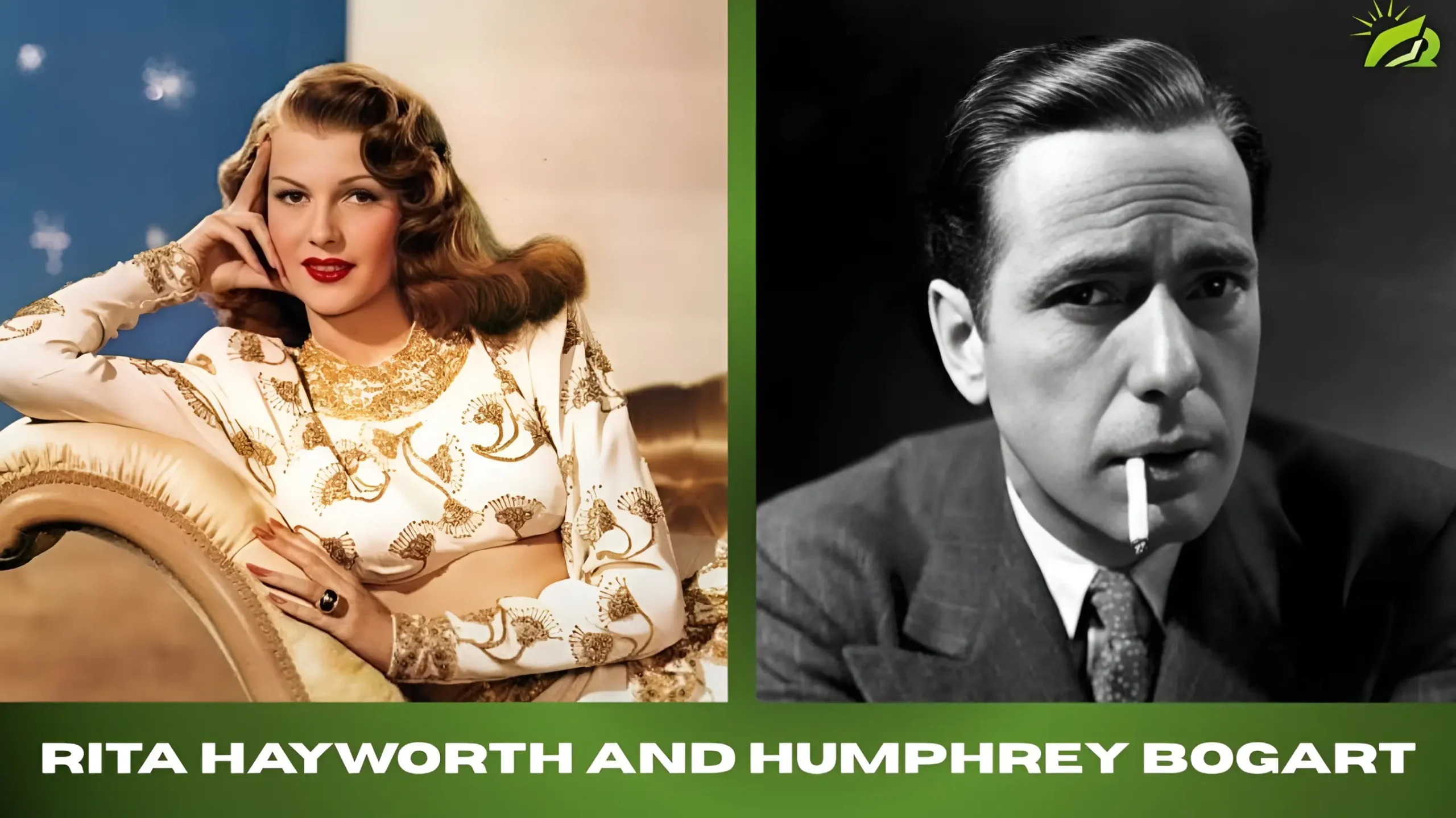
Rita Hayworth and Humphrey Bogart remain two of the most recognizable names from Hollywood’s Golden Age. Hayworth captivated audiences with her dancing talent, striking screen presence, and memorable performances in romantic dramas and film noir. Bogart became famous for his understated acting style, sharp dialogue, and unforgettable portrayals of complicated men who often concealed their emotions behind a tough exterior. Both actors helped define American cinema during the 1930s, 1940s, and 1950s, leaving behind performances that continue to attract new generations of movie lovers.
At first glance, it seems natural to imagine Rita Hayworth and Humphrey Bogart sharing the screen. Their careers developed during overlapping periods, and both became closely associated with the sophisticated, dramatic atmosphere of 1940s Hollywood. Hayworth was one of the era’s most celebrated female stars, while Bogart established himself as a leading figure in crime dramas, suspense films, and romantic thrillers.
However, their shared place in Hollywood history comes with an interesting detail. Although the two actors were announced for a proposed Columbia Pictures production called Once Upon a Time, the released film ultimately featured Cary Grant and Janet Blair instead. Hayworth was also considered for a role in Dead Reckoning, a 1947 film starring Bogart, but Lizabeth Scott eventually played the female lead.
These near-misses make the subject particularly fascinating. Their careers crossed through Hollywood’s casting plans, even though they never appeared together in a completed feature film.
Understanding the connection between Rita Hayworth and Humphrey Bogart therefore requires looking beyond a simple list of movies. Their individual careers reveal how Hollywood studios developed stars, changed casting decisions, managed contracts, and shaped the images that audiences remember decades later.
This article explores their backgrounds, celebrated films, unrealized collaborations, distinctive screen personas, and lasting cultural influence. It also separates documented facts from speculation, helping readers understand why these two legendary actors remain connected in discussions about classic Hollywood.
Did Rita Hayworth and Humphrey Bogart Ever Make a Movie Together?
The most important question surrounding Rita Hayworth and Humphrey Bogart has a straightforward answer: they never starred together in a completed feature film.
Nevertheless, their names did become connected through proposed casting arrangements. These projects offer a glimpse into how Hollywood operated during a period when studios exercised considerable influence over actors’ professional lives.
One particularly interesting example is Once Upon a Time, a Columbia Pictures production announced during the early 1940s. At one stage, the studio planned to cast Hayworth and Bogart in the same movie. Changes in the production schedule, contractual disagreements, and replacement decisions eventually altered the project.
The finished film was released in 1944, starring Cary Grant and Janet Blair. Neither Hayworth nor Bogart appeared in the released version.
The second important example is Dead Reckoning, released in 1947. The crime drama starred Bogart as Captain Warren “Rip” Murdock, a former paratrooper investigating the circumstances surrounding a military friend’s death. Lizabeth Scott played Coral Chandler, a mysterious singer whose involvement becomes central to the investigation.
Hayworth was reportedly considered for Coral, particularly after the success of her performance in Gilda. However, she did not appear in the completed movie.
These two productions explain much of the connection between the actors. They were not simply strangers working in completely separate periods of film history. Instead, their careers intersected through casting possibilities that did not lead to a finished collaboration.
There is also no well-established evidence that they were a romantic couple. Their names are better understood through their professional histories and the unrealized opportunities that briefly brought their careers together.
For readers researching the keyword “Rita Hayworth and Humphrey Bogart,” this distinction matters because it provides a more accurate answer than suggesting that they starred together in one of Hollywood’s famous romantic or crime films.
The Once Upon a Time Casting Connection
The story of Once Upon a Time is one of the clearest examples of how close Rita Hayworth and Humphrey Bogart came to sharing a production.
Columbia Pictures announced the proposed casting in 1942. Historical production records maintained by the American Film Institute document the original plans involving Hayworth and Bogart, along with subsequent changes before the film reached audiences.
At that point in their careers, both actors were developing increasingly recognizable screen identities. Hayworth was gaining attention for her beauty, dancing ability, and performances in increasingly prominent productions. Bogart was moving away from the supporting gangster roles that had characterized much of his earlier film work.
A shared film could have offered an interesting contrast between their performances. Hayworth was frequently associated with glamour and romantic intrigue, whereas Bogart brought a more restrained and frequently cynical quality to his characters.
However, a proposed cast does not guarantee that a film will proceed as originally planned.
The production encountered delays, and Columbia’s decisions changed considerably over time. Bogart was eventually replaced by Brian Donlevy, who was subsequently replaced as the leading man in Sahara, allowing Bogart to take that role. Hayworth also became involved in a dispute with the studio after refusing the female lead in Once Upon a Time. Janet Blair eventually took the part, while Cary Grant became the film’s principal male star.
The resulting movie was released in May 1944. Its story follows Broadway producer Jerry Flynn, who attempts to save his struggling theatrical enterprise with the help of an unusual attraction.
The project’s development demonstrates how quickly Hollywood productions could change direction. A casting announcement that appeared promising could become outdated long before a film reached theaters.
For Hayworth and Bogart, Once Upon a Time remained an unrealized opportunity. Their names appeared in connection with the production, but audiences never saw the proposed pairing on screen.
This historical detail is important because it provides a concrete explanation for why searches about the two actors sometimes uncover reports of a possible collaboration.
Rather than treating the casting announcement as evidence of a released Hayworth-Bogart movie, it is more accurate to understand it as an early production plan that changed before completion.
The Dead Reckoning Near-Miss
Another meaningful connection between Rita Hayworth and Humphrey Bogart emerged around Dead Reckoning, the 1947 crime drama directed by John Cromwell.
By this time, Hayworth had become one of Columbia Pictures’ most valuable stars. Her performance in Gilda had strengthened her position as a major Hollywood attraction and established an enduring association between her image and the dark, seductive atmosphere of film noir.
Bogart, meanwhile, had become one of cinema’s defining performers through films such as The Maltese Falcon and Casablanca. His familiar mixture of toughness, intelligence, dry humor, and emotional restraint made him especially effective in stories involving crime, betrayal, and moral uncertainty.
The possibility of placing Hayworth opposite Bogart therefore had commercial appeal. Both actors were established names, and their contrasting screen personas could have created an intriguing dramatic partnership.
Hayworth was considered for the role of Coral Chandler in Dead Reckoning. However, the production moved forward with Lizabeth Scott instead.
Historical accounts describe complications involving Hayworth’s relationship with Columbia and her professional commitments, including her work on The Lady from Shanghai. Whatever the precise combination of circumstances, the final casting decision was clear: Scott appeared opposite Bogart in the released film.
Dead Reckoning follows Murdock as he investigates what happened to his wartime companion. His search draws him into a complicated situation involving deception, dangerous associations, and Coral’s uncertain role in the events.
Scott’s performance gave the film a different dynamic from the one audiences might have imagined with Hayworth. Her low voice, controlled delivery, and ambiguous screen presence worked effectively within the film’s shadowy atmosphere.
Had Hayworth accepted the part, the production might have carried a different visual and dramatic character. However, that possibility remains hypothetical.
The movie that exists is the one featuring Bogart and Scott. It should not be confused with an actual Hayworth-Bogart collaboration.
This near-miss is nevertheless worth examining because it shows how two stars could be linked by Hollywood’s casting process without ever sharing a completed production.
It also demonstrates the importance of distinguishing between an actor who was considered for a role and one who ultimately performed it.
Who Was Rita Hayworth?
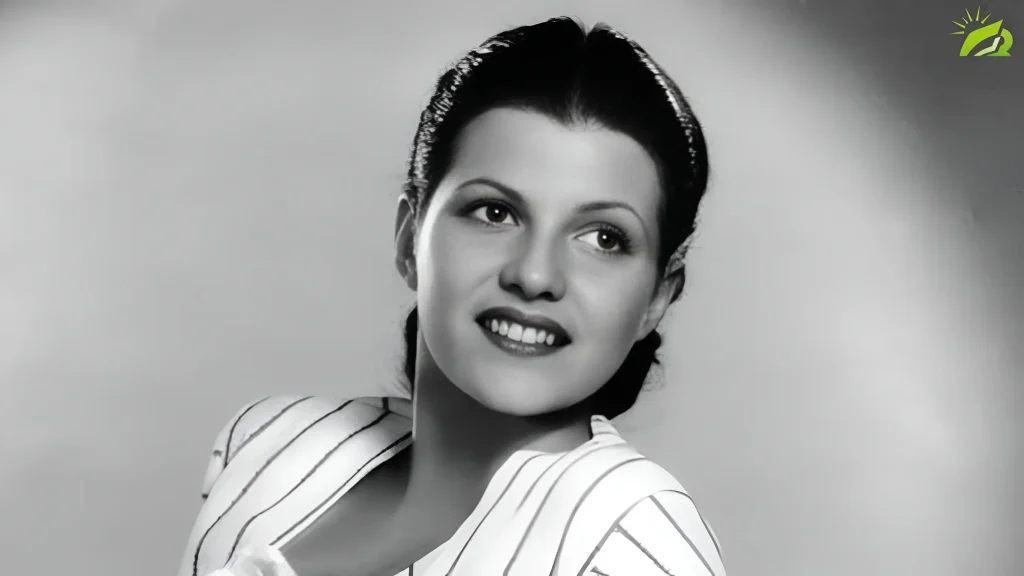
Rita Hayworth was one of the defining female stars of Hollywood’s Golden Age. Her combination of dancing ability, screen presence, and dramatic versatility allowed her to move between musicals, romantic stories, adventure films, and crime dramas.
She was born Margarita Carmen Cansino on October 17, 1918, in Brooklyn, New York. Her family had deep connections to entertainment. Her father, Eduardo Cansino, was a Spanish-born dancer, while her mother, Volga Hayworth, had worked in show business.
Hayworth began dancing at a young age and performed professionally before establishing herself as a film actress. Her early experience gave her a physical confidence that later became an essential part of her screen identity.
Her first film appearances came under the name Rita Cansino. Like many performers working under the studio system, she underwent a carefully managed transformation as her career developed. Her professional name changed to Rita Hayworth, and Columbia Pictures helped cultivate the glamorous image that audiences would eventually recognize around the world.
This transformation was part of a broader Hollywood practice in which studios shaped the public identities of their contracted stars. Actors were often given new names, publicity narratives, wardrobes, and carefully controlled screen personas.
Hayworth’s rise was not simply a matter of appearance, however. Her dancing background, persistence, and growing acting experience contributed to her success.
Early Career and Breakthrough
During the 1930s, Hayworth appeared in smaller film roles while gaining experience in front of the camera.
Her career began to advance significantly around 1941, particularly with The Strawberry Blonde and Blood and Sand. These productions helped increase her visibility and demonstrated her ability to work alongside established male stars.
She also collaborated with Fred Astaire in You’ll Never Get Rich in 1941 and You Were Never Lovelier in 1942. These musical productions allowed her to showcase the dancing skills she had developed during her childhood.
Her performance in Cover Girl in 1944 further demonstrated the appeal of her musical screen persona. Starring opposite Gene Kelly, Hayworth appeared in a Technicolor production that combined romance, choreography, and the glamour of the entertainment industry.
The film remains a useful starting point for anyone interested in understanding her abilities beyond the dramatic roles for which she later became famous.
The Cultural Importance of Gilda
Hayworth’s most enduring screen role came in Gilda, released in 1946.
In the film, she played Gilda Mundson Farrell, a woman whose arrival complicates the relationship between a gambler and a powerful casino owner. Glenn Ford played Johnny Farrell, the gambler, while George Macready appeared as the casino owner.
The film combined romantic tension, jealousy, crime, and psychological conflict. Hayworth’s performance became central to its identity, helping establish one of the most recognizable female characters in classic film noir.
Her costumes, hairstyle, movements, and confident screen presence helped transform Gilda into a lasting cultural symbol.
Yet the character’s popularity also illustrates the complicated relationship between an actor and a public image. Audiences could become so fascinated by a screen persona that they struggled to separate the performer from the fictional character.
Hayworth’s later reflections on fame are frequently discussed in connection with this problem. Her success demonstrated her extraordinary ability to command attention, but the mythology surrounding her image sometimes overshadowed her work as an actress.
Importantly, Gilda did not star Humphrey Bogart. It featured Glenn Ford, whose on-screen partnership with Hayworth continued in several other films.
This is a key distinction for readers exploring Hayworth’s leading men and the history of 1940s film noir.
The Lady from Shanghai and Later Career
Another significant Hayworth performance came in The Lady from Shanghai, directed by Orson Welles and released in 1947.
The production differed substantially from the glamorous image associated with Gilda. Hayworth appeared with a shorter, lighter hairstyle, creating a markedly different look for her character, Elsa Bannister.
The film explored manipulation, mistrust, and criminal intrigue through an unusual visual style. Its famous mirror sequence remains one of the most memorable examples of experimental imagery in classic American cinema.
The production was also personally complicated because Welles was Hayworth’s husband during its development, and their marriage was ending around the time of the film’s release.
Hayworth continued working in the years that followed, appearing in projects such as Affair in Trinidad, Pal Joey, and Separate Tables. Although her later career did not consistently reproduce the enormous prominence of her 1940s stardom, she remained an important figure in film history.
Her life also included serious personal challenges, and she was eventually diagnosed with Alzheimer’s disease. She died on May 14, 1987, at the age of 68.
Today, Hayworth is remembered for more than her glamour. Her work demonstrates how a performer with a strong background in dance could develop into a major dramatic star and leave an enduring influence on Hollywood’s visual culture.
Who Was Humphrey Bogart?

Humphrey Bogart became one of the most influential actors in American cinema, particularly through performances that combined toughness with vulnerability.
Born Humphrey DeForest Bogart on December 25, 1899, in New York City, he entered the entertainment industry through theater before building a film career.
His early screen appearances often placed him in supporting roles, including criminals and gangsters. These parts helped establish a recognizable screen presence, but they did not initially make him a major star.
Bogart’s career changed significantly around the turn of the 1940s. Rather than simply playing a one-dimensional villain, he increasingly portrayed characters whose hard exterior concealed conflicting values and emotions.
This became one of his greatest strengths. His characters could be cynical without appearing completely heartless, and their decisions often revealed a personal code that they were unwilling to abandon.
The Maltese Falcon and the Rise of a Star
A major milestone was The Maltese Falcon, released in 1941 and directed by John Huston.
Bogart played private detective Sam Spade, a character drawn into a complicated investigation involving deception, murder, and a valuable object sought by competing parties.
The film helped establish Bogart as a leading man who could anchor a complex crime story. His performance relied less on exaggerated emotion than on precise delivery, watchful expressions, and an ability to suggest that his character was constantly evaluating the people around him.
This style became an important part of his screen identity.
Bogart followed that success with another landmark performance in Casablanca, released in 1942. He played Rick Blaine, an American expatriate who manages a nightclub in wartime Morocco.
Rick begins as a seemingly detached man who avoids involvement in other people’s problems. As the story develops, his former romantic relationship and the wider conflict force him to confront the difference between personal happiness and moral responsibility.
Casablanca remains one of the most celebrated films of its era because of its performances, dialogue, atmosphere, and emotionally difficult choices.
Bogart’s restrained portrayal was crucial to the film’s effectiveness. He gave Rick a combination of cynicism, wounded affection, and quiet integrity that audiences could believe.
His Partnership with Lauren Bacall
Another defining period in Bogart’s career began with To Have and Have Not, released in 1944.
The film paired Bogart with Lauren Bacall, whose confident screen presence and distinctive delivery created an immediately memorable partnership.
Their on-screen chemistry became an important feature of their subsequent collaborations, including The Big Sleep in 1946.
Bacall and Bogart also developed a romantic relationship away from the screen and married in 1945. Their partnership became one of classic Hollywood’s best-known relationships.
The popularity of Bogart and Bacall helps explain why audiences often search for possible pairings involving Bogart and other leading women of the period.
His screen identity was closely connected with romantic tension, sharp dialogue, and stories in which affection was complicated by distrust or difficult circumstances.
Hayworth possessed many qualities that made her a plausible partner for this kind of material. Her experience with mystery, romance, and psychologically complex characters makes the idea of a shared film appealing, even though it never became reality.
Later Achievements and Legacy
Bogart continued to deliver major performances throughout the 1940s and 1950s.
His films included The Big Sleep, Key Largo, In a Lonely Place, and The African Queen. These productions demonstrated that his abilities extended beyond the private-detective and nightclub-owner roles with which he was often associated.
In The African Queen, released in 1951, Bogart played Charlie Allnut, a rough-edged riverboat captain drawn into a dangerous wartime adventure alongside a missionary played by Katharine Hepburn.
The performance earned Bogart his only Academy Award for acting, recognizing a role that differed significantly from his familiar crime-drama persona.
Bogart died on January 14, 1957, following an illness. He was 57 years old.
His influence continued through film directors, actors, and audiences who admired his distinctive style. Bogart’s performances helped establish an enduring model of screen masculinity based on restraint, independence, moral ambiguity, and reluctant courage.
Like Hayworth, he became larger than the individual characters he played. His name came to represent an entire style of filmmaking and performance.
Why Rita Hayworth and Humphrey Bogart Seem Like a Natural Pairing
Although Hayworth and Bogart never completed a film together, their names seem compatible because they represented complementary aspects of 1940s cinema.
Both had developed distinctive professional identities. Audiences could often recognize their screen styles within a few moments, and each possessed the ability to communicate complicated emotions without relying entirely on dialogue.
Hayworth frequently brought an element of glamour, uncertainty, and emotional complexity to her roles. Bogart often provided an atmosphere of suspicion, moral conflict, and guarded determination.
Together, those qualities could have supported a wide range of stories.
A crime drama might have placed Hayworth in the role of a singer whose loyalties were uncertain, while Bogart could have played a detective attempting to uncover the truth. A romantic thriller could have used their contrasting personalities to create tension between attraction and distrust.
These are possibilities rather than historical facts. No completed film exists to demonstrate how their chemistry would have worked.
Nevertheless, imagining such a collaboration helps explain the continuing interest in their names.
Their Connection to Film Noir
Film noir provides one of the strongest artistic links between the actors.
The genre is associated with crime, moral uncertainty, dangerous relationships, and visual atmospheres shaped by shadow and contrast. Its characters frequently struggle with motives they cannot fully trust, including their own.
Hayworth’s Gilda and The Lady from Shanghai demonstrate different approaches to these themes. In the first, she became closely associated with a glamorous but difficult-to-understand character. In the second, she appeared in a more experimental thriller filled with deception and shifting perceptions.
Bogart’s The Maltese Falcon, The Big Sleep, and In a Lonely Place explored different forms of suspicion, violence, and personal conflict.
Although their styles were not identical, both actors were capable of sustaining ambiguity. Their characters were often more complicated than their public reputations suggested.
This shared artistic territory creates a reasonable basis for imagining them in the same film.
However, being associated with a similar genre does not mean that actors automatically worked together. Studio contracts, availability, casting choices, and the needs of individual productions determined which combinations appeared on screen.
Two Different Approaches to Stardom
Hayworth and Bogart also illustrate two different approaches to the Hollywood star system.
Hayworth’s image was carefully shaped around beauty, glamour, dancing, and romantic appeal. Her public identity was often designed to create fascination, while her performances gradually demonstrated greater dramatic range.
Bogart’s image developed in a different direction. His appeal rested heavily on the suggestion that he was independent, skeptical, and difficult to impress.
Neither approach fully describes the people behind those images. Both stars worked within an industry that promoted recognizable personas because such identities helped audiences connect with films.
Their careers show that the Hollywood star system did not rely on every performer following the same formula. Different personalities and screen styles could become equally influential.
This distinction is central to understanding why the idea of a shared Hayworth-Bogart production remains intriguing.
The two performers represented contrasting but compatible forms of screen appeal. That combination makes their unrealized collaborations interesting to film historians and classic-cinema fans alike.
Three Case Studies Explaining Their Hollywood Connection
Case Study 1: Once Upon a Time and the Changing Studio System
Once Upon a Time provides a clear example of how a proposed collaboration could disappear during the production process.
The initial casting announcement created the possibility of pairing Hayworth and Bogart in a Columbia Pictures project. Yet the final film reflected several changes in the studio’s plans.
Bogart was replaced by Brian Donlevy before the production ultimately moved forward with Cary Grant. Hayworth did not continue into the final version, and Janet Blair played the female lead.
This sequence demonstrates the importance of separating preliminary casting information from completed film credits.
A studio might announce a project based on the availability and contractual obligations of its contracted performers. A delay, disagreement, scheduling conflict, or revised creative plan could change that arrangement before shooting or release.
For contemporary readers, the lesson is straightforward: an article about a proposed film should not present every announced actor as a member of the finished cast.
In the case of Rita Hayworth and Humphrey Bogart, the distinction explains why an apparently promising shared project did not become part of either star’s filmography.
Case Study 2: Dead Reckoning and the Importance of Casting Decisions
Dead Reckoning offers a second example, this time involving a film that did reach theaters with Bogart in a leading role.
The production developed around a crime story that required a female character who could remain emotionally difficult to read. Coral Chandler needed to appear appealing while also leaving the audience uncertain about her motives.
Hayworth was considered for the role, but Lizabeth Scott ultimately played Coral.
Scott brought her own qualities to the performance. Her delivery and controlled presence suited the film’s atmosphere, producing a different screen dynamic from the one viewers might have imagined with Hayworth.
This case illustrates why casting alternatives should not be treated as interchangeable versions of the same movie.
An actor influences a film through timing, facial expression, physical movement, vocal delivery, and the emotional signals they give other performers. Changing a lead actor can alter the feeling of a scene even when the plot remains unchanged.
Had Hayworth appeared in Dead Reckoning, it would have become a genuine entry in the shared screen histories of Hayworth and Bogart. Because she did not, the proposed pairing remains an interesting historical possibility rather than an actual collaboration.
Case Study 3: Gilda and Casablanca as Parallel Career Milestones
A third case study comes from comparing two films that define the actors’ individual legacies.
In Gilda, Hayworth delivered a performance that combined glamour with emotional uncertainty. The film’s atmosphere and visual style helped make the title character an enduring symbol of film noir.
In Casablanca, Bogart played Rick Blaine, a character whose guarded behavior conceals unresolved feelings and a strong sense of responsibility.
The films are not a collaboration, and their stories differ significantly. Nevertheless, both demonstrate how an established screen persona can become an essential part of a film’s meaning.
Hayworth gave audiences a character whose image was both captivating and difficult to separate from her inner life. Bogart gave audiences a character whose outward detachment concealed emotional and ethical conflict.
These parallel achievements help explain why viewers can imagine them appearing together in a similarly complex story.
They also provide a better way to understand the actors’ connection than inventing a shared film or an unsubstantiated personal relationship.
Their individual performances are real cinematic achievements; the appeal of a potential collaboration is an interpretation built upon them.
What Movies Should You Watch to Understand the Connection?
For readers who want to explore Rita Hayworth and Humphrey Bogart after learning that their shared film never materialized, the best approach is to watch a selection of their most significant individual performances.
Start with Gilda (1946)
Gilda is essential for understanding Hayworth’s dramatic screen identity.
The film demonstrates her ability to command attention while keeping a character’s emotional motivations uncertain. It also provides an introduction to her association with the visual style and complicated relationships of film noir.
Pay attention to the way the story uses performance, costume, and dialogue to create tension between the character audiences see and the person they are trying to understand.
Continue with The Lady from Shanghai (1947)
This film reveals a different side of Hayworth.
Its experimental visual approach and atmosphere of distrust distinguish it from her more glamorous musicals. It is especially useful for understanding how she could function within a darker, psychologically complicated story.
Watch The Maltese Falcon (1941)
Bogart’s portrayal of Sam Spade provides a foundation for understanding his approach to crime dramas.
The character is observant, independent, and difficult to manipulate. His apparent emotional distance does not prevent him from developing clear judgments about the people around him.
The film also demonstrates Bogart’s ability to make intelligence and controlled reactions more important than grand displays of emotion.
Watch Casablanca (1942)
Casablanca shows how Bogart combined romantic appeal with moral conflict.
Rick Blaine’s personal history and difficult decisions give the story an emotional dimension that extends beyond its wartime setting. The role remains one of the strongest demonstrations of Bogart’s ability to communicate vulnerability without abandoning his characteristic restraint.
Finish with Dead Reckoning (1947)
Dead Reckoning is the most directly relevant choice for anyone investigating the unrealized Hayworth-Bogart pairing.
Watching the completed film allows viewers to see Bogart opposite Lizabeth Scott and understand the actual production that might have featured Hayworth.
It also provides context for the type of crime drama in which Hayworth was considered for a role.
Taken together, these films create a useful viewing path. They allow audiences to appreciate both performers on their own merits while exploring why a shared project remains such an appealing possibility.
The Personal Lives Behind Their Public Images
Rita Hayworth and Humphrey Bogart lived different private lives, and their experiences should not be conflated simply because both became major stars during the same period.
Hayworth’s personal history included several marriages, professional pressures, and the challenges of being defined by a glamorous public image. Her work often required audiences and publicity campaigns to focus on beauty and romantic appeal, even as her acting developed in more complex directions.
Bogart experienced his own professional and personal changes. His earlier career involved years of supporting work before he achieved stardom, and his later screen identity became associated with independence and emotional control.
His marriage to Lauren Bacall remains an important part of his public biography. Their professional collaboration and off-screen relationship contributed to the popular image of Bogart as a leading man capable of combining toughness with romantic appeal.
However, there is no reliable basis for suggesting that Hayworth and Bogart shared a comparable romantic relationship.
It is important to resist the temptation to turn a casting possibility into a personal story. The two stars’ lives were already rich with professional successes, personal relationships, and historical significance.
Their connection does not need a fabricated romance to become interesting.
The documented near-misses provide a compelling story of their own, illustrating how Hollywood’s professional machinery could bring stars close to collaboration without ever putting them together in a finished film.
Why Their Story Still Matters Today
The continuing interest in Rita Hayworth and Humphrey Bogart reflects more than nostalgia for old movies.
Classic Hollywood remains important because its films established acting conventions, visual styles, storytelling techniques, and star images that continue to influence modern entertainment.
Hayworth’s performances helped establish enduring ideas about glamour, mystery, and the relationship between a performer and the public image associated with a character.
Bogart’s work helped define the hard-edged but morally complicated leading man, a figure whose apparent indifference frequently conceals a deeper commitment to personal principles.
Their careers are also valuable examples of how actors can shape film history without working directly together.
The two stars occupy overlapping places in discussions of crime cinema and Hollywood’s Golden Age. Their proposed collaborations create a separate historical thread, connecting individual filmographies through the business decisions that shaped their careers.
Modern audiences may first encounter them through streaming platforms, classic-film screenings, social media discussions, or articles about legendary Hollywood couples and co-stars. Questions about whether they made a movie together naturally follow from that interest.
Providing a clear answer, alongside the background that makes the question meaningful, gives readers a more satisfying understanding of their legacy.
The historical record may not offer the Hayworth-Bogart film that viewers can imagine. It does, however, provide something equally useful for understanding Hollywood: a real account of how a proposed casting combination can become part of film history without ever reaching the screen.
Conclusion
Rita Hayworth and Humphrey Bogart were two major figures of Hollywood’s Golden Age, each recognized for a distinctive screen identity and a collection of influential performances.
Hayworth became famous for her dancing, dramatic development, and iconic role in Gilda. Bogart established himself as one of cinema’s defining leading men through films such as The Maltese Falcon, Casablanca, and The African Queen.
Their professional histories intersected through projects that brought them close to working together. Columbia Pictures announced them for Once Upon a Time, but the final film starred Cary Grant and Janet Blair. Hayworth was also considered for Dead Reckoning, which ultimately featured Bogart opposite Lizabeth Scott.
Neither opportunity resulted in a completed feature film starring both actors.
That fact does not diminish their significance. Instead, it reveals how unpredictable the Hollywood studio system could be and how much a star’s career depended on decisions that were sometimes made far beyond the screen.
The fascination with Rita Hayworth and Humphrey Bogart ultimately rests on the combination of documented history and cinematic imagination. Their careers shared an era, a genre landscape, and a lasting place in American movie culture, even though the collaboration audiences might have hoped to see never happened.
Their individual films remain the best way to appreciate what each actor contributed to cinema. The unrealized partnership is an intriguing part of their story, but their lasting legacy rests on the work they actually completed.
Frequently Asked Questions
Q1: Did Rita Hayworth and Humphrey Bogart ever make a movie together?
A: No. Rita Hayworth and Humphrey Bogart never appeared together in a completed feature film. They were announced for the proposed Columbia Pictures production Once Upon a Time, but the released film featured Cary Grant and Janet Blair. Hayworth was also considered for Dead Reckoning, which starred Bogart and Lizabeth Scott.
Q2: Why were Rita Hayworth and Humphrey Bogart connected to Once Upon a Time?
A: Columbia Pictures announced in 1942 that Hayworth and Bogart would star in the production. Subsequent casting changes and production delays altered the plan. Bogart was replaced by Brian Donlevy, and Cary Grant and Janet Blair eventually appeared in the completed 1944 film.
Q3: Was Rita Hayworth supposed to star in Dead Reckoning?
A: Yes. Hayworth was considered for the female lead, Coral Chandler. However, Lizabeth Scott ultimately played the role opposite Humphrey Bogart in the 1947 crime drama. Hayworth did not appear in the finished film.
Q4: Were Rita Hayworth and Humphrey Bogart ever romantically involved?
A: There is no reliable evidence establishing that Hayworth and Bogart were a romantic couple. Their historical connection is primarily professional, involving proposed film collaborations rather than a documented romance.
Q5: What is Rita Hayworth’s most famous movie?
A: Gilda (1946) is widely regarded as one of Rita Hayworth’s signature films. Her portrayal of Gilda Mundson Farrell became an enduring part of classic film noir and helped establish her as one of Hollywood’s most recognizable stars.
Q6: What is Humphrey Bogart’s most famous movie?
A: Casablanca (1942) is among Humphrey Bogart’s most celebrated films. He is also widely remembered for The Maltese Falcon (1941), The Big Sleep (1946), and his Academy Award-winning performance in The African Queen (1951).
Q7: Why do people associate Rita Hayworth and Humphrey Bogart with film noir?
A: Both actors appeared in significant crime dramas and thrillers associated with the atmosphere and themes of classic film noir. Hayworth became strongly associated with Gilda and The Lady from Shanghai, while Bogart starred in films such as The Maltese Falcon and The Big Sleep. Their overlapping cinematic styles make an imagined collaboration appealing.
Q8: Which movie should I watch to learn more about their connection?
A: Start with Gilda to understand Hayworth’s screen persona, then watch Casablanca or The Maltese Falcon to explore Bogart’s performances. Dead Reckoning is particularly relevant because Hayworth was considered for a role before Lizabeth Scott was cast opposite Bogart.
Q9: Why did Rita Hayworth not appear in Dead Reckoning?
A: Hayworth did not ultimately take the role of Coral Chandler. Historical accounts discuss complications involving her studio relationship and professional commitments. Lizabeth Scott was eventually cast in the 1947 production. The important distinction is that Hayworth was considered for the role but did not appear in the released film.
Q10: What is the lasting legacy of Rita Hayworth and Humphrey Bogart?
A: Hayworth remains an icon of classic Hollywood glamour and film noir, particularly through Gilda. Bogart remains one of the most influential actors of his generation, celebrated for his restrained performances and morally complex characters. Although they never completed a film together, their individual contributions continue to shape how audiences understand Hollywood’s Golden Age.
For More Visits: Bright Magazine
Also Read: Jackie DeAngelis Husband: The Truth About Her Marriage
