

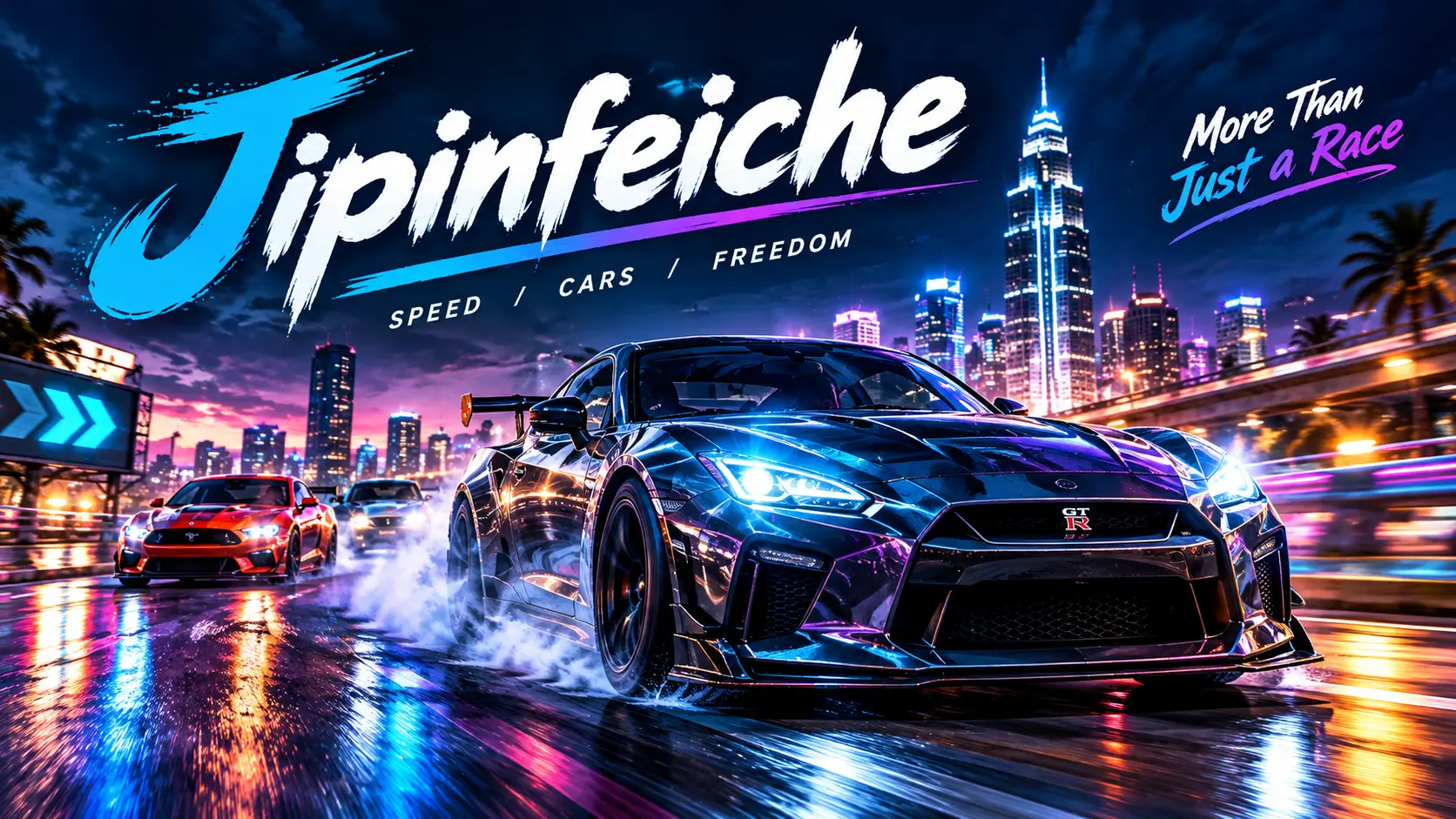
The world of racing games brings together speed, competition, powerful vehicles, vehicle customization, and the excitement of pushing a car to its limits in a virtual environment. Among the terms that racing enthusiasts may encounter online is Jipinfeiche, a word that can initially seem unfamiliar to players who primarily use English-language gaming websites. Understanding this term makes it easier to explore Chinese-language racing content and discover games associated with one of the most recognizable names in racing entertainment.
Jipinfeiche is the romanized form of the Chinese name 极品飞车, pronounced Jípǐn Fēichē. In gaming contexts, this name is associated with the Need for Speed franchise published by Electronic Arts. The international name is Need for Speed, while the Chinese characters are used for the franchise in Chinese-language markets. Official Electronic Arts game pages establish this connection through their Need for Speed titles and related localized content.
For someone discovering Jipinfeiche for the first time, this distinction is important. The keyword does not necessarily identify a separate racing game, an independent software company, or a standalone gaming platform. Depending on the context in which it appears, it may refer to the broader Need for Speed series, a particular game release, racing gameplay, vehicle modifications, or discussions about the franchise.
The appeal of this racing universe comes from the different experiences it offers. Some players enjoy mastering difficult corners and improving lap times. Others prefer exploring city environments, collecting vehicles, competing against rivals, or building a customized car that reflects their personal style. Certain entries emphasize police pursuits, while others focus on open-world exploration, organized competitions, or online challenges.
Understanding Jipinfeiche requires more than simply translating a name. It also means exploring what makes racing games engaging, how different releases vary, what players should consider before choosing a game, and how beginners can develop their driving skills.
This guide explores the meaning of Jipinfeiche, its connection with Need for Speed, important gameplay concepts, vehicle customization, racing strategies, platform considerations, and common questions that new players may have.
What Is Jipinfeiche?
Jipinfeiche is a romanized spelling associated with 极品飞车, the Chinese name used for the Need for Speed racing game franchise. Romanization represents the pronunciation of Chinese words with the Latin alphabet, making Chinese names more accessible to people who cannot read Chinese characters.
The standard Mandarin pinyin spelling is Jípǐn Fēichē. Online searches frequently remove tone marks and spaces, resulting in the single word Jipinfeiche.
This explains why the keyword may appear unusual to English-speaking readers. Someone might encounter it in a gaming discussion, video title, search result, or Chinese-language game listing without realizing that it connects to a familiar international franchise.
The meaning is best understood through its gaming context rather than through a rigid word-for-word English translation. Individual Chinese characters can carry meanings associated with exceptional quality, speed, and vehicles, but translating each character independently does not reproduce the official English title.
For practical purposes, a player searching for Jipinfeiche information will often be looking for material related to Need for Speed.
That material may include:
- Information about different Need for Speed releases.
- Racing mechanics and driving techniques.
- Car selection, performance upgrades, and visual customization.
- Police pursuit systems featured in certain games.
- Tips for progressing through races and unlocking content.
- PC, console, or mobile gaming information.
- Questions about installing, purchasing, or accessing a particular release.
The exact intention behind a search depends on the words accompanying the keyword. Someone searching for the meaning of Jipinfeiche needs an explanation of the name. Another person searching for Jipinfeiche gameplay probably wants to see how the associated racing game works.
Recognizing these differences helps players find the information they actually need instead of confusing the franchise name with a particular edition.
What Does Jipinfeiche Mean in English?
The Chinese expression behind Jipinfeiche contains two main parts: 极品 (jípǐn) and 飞车 (fēichē).
The first part can convey the idea of something exceptional, high-grade, or top-quality. The second part is associated with fast-moving vehicles or speeding. Together, the expression creates an association with exciting, high-performance driving.
However, it is important to distinguish a general interpretation from an official English name. Expressions such as “premium racing car” or “ultimate speed car” may communicate part of the phrase’s imagery, but they should not be treated as official translations of the game title.
The internationally recognized franchise name is Need for Speed.
This distinction matters because people sometimes assume that an unfamiliar romanized word must represent an entirely new product. In reality, localized names are common across the entertainment industry. Games, films, television programs, and other products may use different names in different language markets.
A player who understands the relationship between Jipinfeiche and Need for Speed can navigate Chinese-language gaming content more confidently.
For example, a listing might display Chinese characters instead of the English franchise name. Recognizing the romanized term can help a player understand the general subject, although checking the complete game title remains important before downloading or purchasing anything.
Language is therefore a useful starting point, but it is not the only consideration. The next step is understanding the type of racing experience associated with the name.
Is Jipinfeiche the Same as Need for Speed?
In the established gaming context, Jipinfeiche refers to the Chinese-language name associated with Need for Speed rather than a completely separate racing franchise.
This is the central point readers should remember when researching the keyword.
Need for Speed includes multiple releases with different settings, features, visual styles, progression systems, and driving experiences. Consequently, Jipinfeiche does not automatically identify one particular game.
A player might use the term when discussing an older entry, a modern release, or general racing content. The intended title becomes clearer when additional information is provided, such as the game’s complete name or platform.
Consider the following examples.
Someone searching for Jipinfeiche cars may be interested in the vehicles available across the series or in a specific game’s garage.
A search for Jipinfeiche customization may relate to paint colors, wheels, body modifications, tuning, or performance upgrades, depending on the release.
Someone looking for Jipinfeiche multiplayer might want to know whether a particular installment supports competitive online racing.
These searches overlap, but they do not necessarily have identical answers.
Before making a decision, check the full game title, its publisher information, compatible platforms, and feature list. This is especially important when several games from the same franchise have similar names.
The distinction also helps prevent confusion with unofficial mobile applications and websites that may use the keyword without being connected to the original publisher.
The Connection Between Jipinfeiche and Racing Game Culture
Racing games appeal to people for different reasons. Some appreciate the challenge of controlling a car at high speed, while others enjoy building an impressive collection of vehicles or experimenting with different modifications.
The Need for Speed series brings together several elements of this wider gaming culture, although their importance varies between releases.
The excitement of speed
Speed is a central part of the racing experience. Players must decide when to accelerate, how to approach corners, and when to avoid risky maneuvers.
Simply holding the accelerator does not guarantee success. Effective driving requires awareness of the road, attention to approaching turns, and an understanding of how a particular car responds to steering and braking.
This creates a balance between aggression and control.
A player who enters every corner at maximum speed may lose valuable time through collisions or poor positioning. A more controlled approach can produce better results, even when it appears less dramatic.
Competition and progression
Many racing games offer progression systems that encourage players to improve their vehicles, unlock additional events, and compete against stronger opponents.
Winning races may provide rewards within the specific game’s progression system. These rewards can support vehicle purchases, upgrades, or access to additional activities.
The exact progression model differs by release. Players should not assume that every Need for Speed game uses the same economy, event structure, or unlocking requirements.
The appeal of customization
Vehicle customization allows players to develop a personal identity within a game. A vehicle can be selected for its performance, appearance, or combination of both.
Some players prefer understated designs and balanced driving characteristics. Others enjoy dramatic paint schemes, distinctive wheels, aggressive bodywork, and visually striking builds.
Customization also encourages experimentation. Changing a vehicle’s setup can affect how it behaves, depending on the game and the modifications available.
The challenge of improving
Racing games reward practice. Players gradually learn when to brake, how to maintain speed through a corner, and which racing lines work best on familiar roads.
Progress does not always require purchasing the fastest vehicle available. Learning to handle an existing car effectively can be just as valuable.
For beginners, this combination of challenge, discovery, and gradual improvement is one of the most appealing aspects of racing games.
A Brief Overview of the Need for Speed Experience
The Need for Speed franchise has evolved through different generations of racing games. Individual entries have experimented with vehicle handling, open-world environments, police pursuits, customization, narrative elements, and competitive play.
This variety is one reason the Jipinfeiche keyword can lead to several different types of content.
Rather than treating the franchise as one uniform game, it is more useful to understand the major experiences that different releases may offer.
Street racing and urban environments
Some games place considerable emphasis on racing through city streets and navigating an urban environment.
These settings can make the driving experience feel dynamic. Traffic, intersections, narrow passages, and changing road layouts may require quick decisions.
Urban racing can also make vehicle control particularly important. A car with impressive acceleration may still be difficult to use effectively if it feels unstable through corners.
Players who enjoy exploring city environments and competing across varied road layouts may find this style appealing.
Organized racing competitions
Other racing experiences emphasize structured events and competition.
These may include circuit races, sprint races, drift challenges, or other event formats, depending on the game.
Each format requires a different approach. Circuit racing rewards consistency across repeated laps. Sprint racing involves reaching a destination efficiently, while drift challenges emphasize controlled sliding and scoring mechanics.
Understanding the objective of an event makes it easier to select the right vehicle and approach.
Police pursuits
Police pursuits are a memorable feature of several Need for Speed releases.
In games that include this mechanic, players may need to escape pursuing vehicles while managing the risks associated with the chase. The exact rules, pursuit intensity, and consequences depend on the title.
A successful escape may require more than speed. Route selection, vehicle handling, knowledge of the environment, and awareness of nearby obstacles can all matter.
Not every Need for Speed release emphasizes police encounters in the same way, so players should verify the features of their preferred game.
Open-world exploration
Open-world racing environments let players move between activities rather than following only a fixed sequence of tracks.
This freedom can make exploration part of the entertainment. Players may discover new routes, locate events, experiment with different cars, or simply practice driving in the available environment.
An open-world format may suit players who like variety and independent exploration. Someone who prefers clearly structured competitive events might prefer a different racing experience.
Online competition
Some releases offer online modes in which players can compete or interact with others.
These experiences may introduce new challenges because human opponents do not always follow predictable patterns. They can choose different routes, use varying levels of aggression, and respond differently to race conditions.
Online availability and features depend on the specific title, platform, and current service arrangements. It is therefore worth checking the game’s official information before choosing a release primarily for multiplayer.
Popular Need for Speed Games to Explore
A useful way to understand Jipinfeiche is to examine a few well-known entries in the wider franchise.
The following examples are different games, not separate franchises. Their availability and current purchasing options may vary by region and platform.
Need for Speed (2015)
The 2015 Need for Speed release combines street racing with a strong emphasis on car customization and a nighttime urban atmosphere.
Its presentation appeals to players who enjoy modifying vehicles and building a distinctive visual style.
The game’s experience is shaped by its particular progression systems, driving model, and online requirements. It should not be assumed to have identical features to later releases.
Players interested in this installment should check its current compatibility and account requirements before purchasing it.
Need for Speed Payback
Need for Speed Payback offers another interpretation of the franchise, combining racing with a more structured narrative and different event types.
Its approach may appeal to players who enjoy having objectives and story elements alongside driving challenges.
As with other releases, vehicle options, upgrade mechanics, and event availability are specific to the game. Someone choosing Payback should consider whether its overall style matches their preferences rather than relying on the franchise name alone.
Need for Speed Heat
Need for Speed Heat places a strong emphasis on the contrast between daytime racing and nighttime street-racing challenges.
The game includes a progression structure that connects racing activities, reputation, vehicle development, and police pressure. This combination gives players different considerations as they move through the game.
Heat can be an appealing option for people who enjoy vehicle tuning and the tension associated with police pursuits.
Its available editions, system requirements, and online-related conditions should be checked before purchasing or installing it.
Need for Speed Hot Pursuit Remastered
Hot Pursuit Remastered takes a different approach from entries that emphasize urban customization.
The experience centers more directly on high-speed competition and the pursuit dynamic between racers and law enforcement.
This style may appeal to players who prefer fast races and chase scenarios over spending extensive time developing a personalized street-racing car.
Because the game has its own structure and visual presentation, it offers a different entry point into the series.
Need for Speed Unbound
Need for Speed Unbound features a distinctive visual presentation, vehicle customization, competitive events, and progression associated with climbing toward major racing challenges.
Its stylistic effects combine animated elements with detailed vehicle imagery, creating an identity that differs from more conventional racing presentations.
The game also includes its own approach to progression and police encounters. Players should examine the full feature list and platform requirements to understand whether it suits their interests.
These examples illustrate why searching for Jipinfeiche alone may not be enough when someone wants a particular experience. Choosing the right entry depends on the features that matter most to the individual player.
Cars and Vehicle Selection in Jipinfeiche
Cars are central to the appeal of racing games. Players often develop preferences for particular vehicle types, manufacturers, performance characteristics, and visual designs.
In Need for Speed games, the available vehicle roster varies by release. A car that appears in one installment may not be available in another, and its performance characteristics can change between titles.
When selecting a car, it is helpful to consider several factors rather than focusing exclusively on its advertised speed.
Acceleration
Acceleration affects how quickly a vehicle gains speed.
Strong acceleration can be useful when leaving a slow corner, recovering after a collision, or reaching competitive speed on a short straight.
However, acceleration alone does not determine overall performance. A vehicle must also be controllable, particularly when the route includes frequent turns.
Top speed
Top speed becomes more relevant on long, open sections where the player can maintain acceleration.
On narrow roads with frequent corners, the ability to reach an extremely high speed may be less important than the ability to slow down and change direction reliably.
The best car therefore depends on the type of event and the player’s driving style.
Handling
Handling describes how a vehicle responds to steering and other driving inputs.
Some players prefer responsive cars that change direction quickly. Others may favor a setup that feels stable and predictable.
The best handling characteristics depend on the game’s driving model, the selected vehicle, available tuning options, and the player’s preferences.
Braking
Braking is an important but sometimes overlooked part of racing.
A car that reaches high speed quickly can still perform poorly if the player cannot slow it down effectively before corners.
Learning to brake in a controlled manner helps maintain the racing line and reduces unnecessary collisions.
Overall balance
Instead of selecting a vehicle using one statistic, beginners should evaluate how the car performs across several situations.
A practical checklist includes:
- Does the car accelerate adequately for the selected event?
- Can it maintain control through corners?
- Is its braking behavior comfortable to manage?
- Does it suit the player’s preferred driving style?
- Are the available upgrades suitable for the next challenge?
A balanced car can be a sensible choice for beginners because it allows them to learn several aspects of driving without constantly fighting an extreme vehicle setup.
Understanding Car Customization
Customization is one of the most engaging features of racing games that support extensive vehicle modification.
It allows players to express creativity while exploring how different setups may influence a vehicle’s behavior. However, visual modification and performance tuning should be understood as separate activities.
Visual customization
Visual customization changes how a vehicle looks.
Depending on the game, available options may include paint colors, decals, wheels, body kits, spoilers, or other cosmetic features.
A player might create a simple design based on one color or combine several contrasting elements for a more dramatic appearance.
There is no universally correct visual style. The purpose is to create a car that the player enjoys using.
When developing a coherent design, consider how the different parts work together. A carefully selected color palette often creates a more recognizable appearance than adding every available effect at once.
Performance upgrades
Performance upgrades are designed to change particular aspects of a vehicle’s in-game performance.
Available options differ between releases and may affect acceleration, power delivery, handling, or other characteristics.
Players should evaluate upgrades in the context of the next event. An improvement that suits a long sprint may not provide the same advantage during a technical race with frequent corners.
It is also useful to understand that upgrading one characteristic may change the overall balance of a vehicle. A faster car may become harder for a beginner to manage if its other characteristics are not adjusted appropriately.
Tuning and experimentation
Where tuning options are available, players can experiment with vehicle settings to find a comfortable balance.
A useful approach is to make a small number of changes at a time. If several modifications are applied simultaneously, it becomes more difficult to identify which change produced the improvement or caused a problem.
After changing a setup, test the vehicle on a familiar route or event. Pay attention to how it accelerates, responds to steering, and behaves through corners.
This process encourages a better understanding of the game’s mechanics and reduces the temptation to rely entirely on someone else’s setup.
Essential Racing Skills for Beginners
A beginner does not need expert-level reflexes to enjoy Jipinfeiche-related racing games. What matters most is learning a few basic techniques and applying them consistently.
Learn to control acceleration
Accelerating at every possible moment can appear like the fastest strategy, but it can also cause problems.
If a car enters a corner too quickly, the player may struggle to maintain the intended line. The resulting loss of control can cost more time than was gained on the preceding straight.
Practice accelerating smoothly and adjusting speed according to the road ahead.
Brake before difficult corners
Many beginners wait until they are almost inside a corner before braking.
This leaves less time to adjust the vehicle and increases the chance of running wide or hitting an obstacle.
Try braking earlier, entering the corner at a manageable speed, and accelerating again when the vehicle is positioned to exit safely.
The correct approach depends on the game and vehicle, but smooth inputs are a useful starting point.
Look ahead
Paying attention only to the immediate position of the car makes it harder to prepare for what comes next.
Look toward the approaching route whenever possible. Notice upcoming curves, traffic, intersections, and changes in road direction.
Anticipating these features allows the player to make decisions before a situation becomes difficult to manage.
Avoid unnecessary collisions
Collisions can interrupt momentum, damage performance in some game systems, or force the player to correct the vehicle’s direction.
Learning to anticipate obstacles is often more effective than trying to recover from repeated impacts.
On unfamiliar roads, use a controlled pace until you understand the layout.
Understand the racing line
The racing line is the path a driver takes through a corner to maintain effective speed and control.
In general, the goal is to approach the turn from a suitable position, follow a smooth path through the corner, and exit in a direction that supports acceleration.
The ideal line varies with the road, corner shape, traffic, and game physics. Beginners should focus on smoothness rather than attempting advanced techniques immediately.
Practice consistently
Short, focused practice sessions can be more useful than repeatedly racing without reviewing mistakes.
After an unsuccessful race, consider whether the main problem was braking, poor cornering, collisions, vehicle choice, or an unfamiliar route.
Identifying one specific issue gives the next practice session a clear purpose.
How to Choose the Right Jipinfeiche Game
Choosing the right game is a personal decision. Different players value different combinations of story, competition, exploration, customization, and technical requirements.
Before purchasing or downloading a release, consider the following questions.
Do you prefer open-world driving or structured races?
Open-world games may suit players who enjoy exploring at their own pace and discovering activities naturally.
Structured racing experiences may be more appealing to people who prefer clear objectives, defined tracks, or a stronger emphasis on direct competition.
Neither approach is automatically better. The appropriate choice depends on the type of experience you find entertaining.
How important is vehicle customization?
Some players spend considerable time modifying their cars, while others want to begin racing as quickly as possible.
If extensive customization is a priority, review the options available in the specific release. Do not assume that every game has the same visual tools or performance-tuning systems.
Do you enjoy police chases?
Police encounters can introduce additional pressure and decision-making into a racing game.
Players who enjoy escape challenges should look for an installment that emphasizes this mechanic.
Those who prefer straightforward competition may favor a release where police pursuits play a smaller role or are not central to the experience.
What platform will you use?
Compatibility is essential.
Check whether the selected game supports your PC, console, or mobile device. Also confirm any account, connection, storage, controller, or operating-system requirements.
A title that is suitable for one device may not be available on another.
What is your budget?
Compare the full cost of the game rather than considering only its initial price.
Depending on the release, there may be different editions, optional add-ons, subscriptions, or in-game purchases.
An inexpensive base version might be sufficient for your needs, while a more expensive edition may include extra content that you do not intend to use.
Make a decision based on the features you actually value.
Playing Jipinfeiche on PC, Console, or Mobile
The platform you choose affects how you interact with the game, how much control you have over settings, and which releases are available to you.
It is important to distinguish the general franchise from any individual PC, console, or mobile version.
PC gaming
PC gaming can appeal to players who appreciate configurable graphics, a range of control options, and hardware flexibility.
A compatible computer may support keyboard controls or a game controller, depending on the title.
However, performance depends on the specific game’s requirements and the computer’s hardware. Before installation, review the minimum specifications and consider whether the system can run the game comfortably.
If the computer is older, storage and graphics requirements may influence which release is most suitable.
Console gaming
Console versions provide a more standardized hardware environment.
Players who already own a compatible PlayStation or Xbox may find console gaming convenient because the setup is usually straightforward once the game and relevant updates are installed.
The exact console generation matters. A game available on one console family or generation is not automatically compatible with every other system.
Always check the game’s official platform listing before buying it.
Mobile gaming
Mobile racing games offer the convenience of playing on a phone or tablet.
However, a mobile game associated with the Need for Speed name should not automatically be treated as an identical version of a PC or console release.
Controls, progression, monetization, graphics, and available vehicles may differ.
Before installing an application, identify its developer and verify that it is the intended game. Confirm device compatibility and review any in-app purchase information.
Avoid assuming that every website offering a “Jipinfeiche mobile download” provides an official or safe application.
How to Download Jipinfeiche Safely
People searching for Jipinfeiche may eventually look for a download. This is an important point at which to distinguish reliable distribution channels from unfamiliar websites.
The safest approach is to identify the exact game first and then locate its official publisher page or a recognized digital store that carries the specific release.
For PC gaming, check the publisher’s store and recognized platforms that list the game. For consoles, use the relevant official console marketplace. For mobile gaming, verify the application through the appropriate app store and check the developer information.
A page using the correct keyword is not necessarily legitimate.
Unknown download websites sometimes use familiar game names to attract visitors. Their links may lead to unrelated applications, modified files, misleading advertisements, or software that creates security risks.
Before downloading, take these precautions:
- Confirm the game’s complete title and publisher.
- Check that the download is offered through a recognized distribution channel.
- Review the supported operating system and device requirements.
- Avoid installers that ask you to disable security protections without a legitimate explanation.
- Be cautious of websites promising paid games for free through unofficial files.
- Do not provide account credentials to suspicious pages.
- Review permissions before installing a mobile application.
For paid titles, compare legitimate purchase options and check whether subscriptions or special editions are relevant to your needs.
A few minutes of verification can help prevent unnecessary problems later.
Common Misunderstandings About Jipinfeiche
Because Jipinfeiche is unfamiliar to many English-language readers, several misconceptions can arise.
Misunderstanding 1: Jipinfeiche is necessarily a brand-new game
Not necessarily. In the established gaming context, the term is associated with Need for Speed through its Chinese name.
A person encountering the word should first determine whether the page refers to the wider franchise, a particular installment, or something unrelated that happens to use the same spelling.
Misunderstanding 2: Every Need for Speed game has the same features
The franchise contains different releases with different gameplay systems.
A player should not assume that every installment includes the same cars, customization tools, story elements, police mechanics, or online modes.
Check the exact version before making a purchase or relying on a guide.
Misunderstanding 3: The fastest car always wins
A high top speed can be valuable, but racing performance depends on more than one statistic.
Handling, braking, acceleration, route design, and player skill can influence the outcome.
A vehicle that is easier to control may help a beginner achieve better results than one with impressive specifications but difficult handling.
Misunderstanding 4: Customization is only about appearance
Visual modifications are one part of the experience.
Where supported, performance upgrades and tuning can also affect the way a car behaves.
Players interested in competitive performance should understand the differences between cosmetic changes and mechanical upgrades.
Misunderstanding 5: Any download using the keyword is official
The presence of the word Jipinfeiche does not prove that a website, installer, or mobile application is affiliated with Electronic Arts.
Always verify the publisher, complete title, and distribution channel.
These distinctions help players make more informed decisions and avoid confusing search-term relevance with authenticity.
Illustrative Case Studies: How Different Players Can Approach Jipinfeiche
The following case studies are illustrative scenarios designed to demonstrate practical decision-making. They are not presented as independently documented accounts of real players.
Case Study 1: A beginner who struggles with corners
Imagine a new player who selects a powerful car because its speed rating appears impressive.
At first, the player performs well on straight roads but repeatedly loses races on routes with sharp corners. The car accelerates rapidly, yet approaching turns becomes difficult. Missed braking points lead to collisions, and the player loses time recovering.
The initial instinct may be to purchase an even faster vehicle. However, the main issue is not necessarily the car’s maximum speed.
A better approach would be to practice braking earlier, learn the road layout, and use a balanced vehicle that feels comfortable through corners.
The player could then adjust the car gradually and compare results after each change.
The lesson: understanding vehicle control is often more valuable than choosing a car based on one performance statistic.
This approach also makes racing more enjoyable because improvements become easier to identify and repeat.
Case Study 2: A player who enjoys visual customization
Consider another player whose main interest is creating a distinctive collection of cars.
This player spends considerable time changing colors, experimenting with wheels, and testing different visual themes. The results look impressive, but the cars are not always suited to the player’s preferred race types.
The solution is to separate the process into two stages.
First, create a visual design that reflects personal taste. Second, evaluate the vehicle’s performance for its intended purpose.
A car designed primarily for display can prioritize appearance, whereas a vehicle intended for competitive events may need a more carefully balanced setup.
Keeping these goals separate allows the player to enjoy creative expression without overlooking gameplay requirements.
The lesson: a successful customization strategy begins with a clear purpose. Appearance and performance can complement each other, but they are not always the same objective.
Case Study 3: A player who cannot decide which game to buy
Imagine a player who searches for Jipinfeiche and finds references to several Need for Speed releases.
One game emphasizes police pursuits, another focuses more strongly on a stylized presentation and structured progression, and another offers a different approach to racing and vehicle customization.
Choosing immediately based on the franchise name creates unnecessary uncertainty.
Instead, the player makes a short list of priorities: preferred platform, budget, desired racing style, interest in customization, and whether online competition is important.
The player then checks the official listings for the relevant games and compares their individual features.
This produces a more useful decision than choosing the first title that appears in a search result.
The lesson: when a keyword identifies a franchise rather than a single product, selecting the correct edition is an essential part of the research process.
Taken together, these examples demonstrate that good decisions about Jipinfeiche-related games depend on identifying the intended experience, understanding individual needs, and checking the relevant details before taking action.
Tips for Getting More Enjoyment From Jipinfeiche
The best racing experience is not necessarily the one with the greatest number of cars or the most expensive upgrades. Often, it is the game that fits your interests and gives you room to improve.
A few practical habits can make the experience more rewarding.
First, spend time learning the controls before entering difficult races. Understanding acceleration, braking, steering, and camera options provides a more stable starting point.
Second, experiment with different vehicles. A car that feels uncomfortable during a particular event may perform better in another setting. Exploring alternatives can help you discover which characteristics suit your driving style.
Third, upgrade strategically. Consider the weaknesses you have noticed rather than purchasing parts without a clear objective. If cornering is your main problem, an upgrade intended primarily to increase top speed may not address it.
Fourth, learn from unsuccessful races. Review where you lost control, missed a turn, or made an unnecessary maneuver. Treat each mistake as information that can guide the next attempt.
Fifth, manage expectations. Some racing games have steep learning curves, and progress may require practice. Comparing your earliest attempts with those of experienced players can make improvement seem more difficult than it actually is.
Finally, remember that the purpose of a game is to provide an enjoyable experience. Competition can be exciting, but exploration, experimentation, and personal challenges are also valid reasons to play.
The Future Appeal of Racing Games Associated With Jipinfeiche
Racing games continue to offer developers opportunities to experiment with visual presentation, vehicle behavior, player progression, and social interaction.
Different players look for different improvements. Some want more realistic handling, while others prefer accessible controls and visually exciting races. Some value deeper customization, and others want better multiplayer experiences or richer environments to explore.
These preferences help explain why a long-running racing franchise can contain games that feel substantially different from each other.
Visual technology can make cars and environments more detailed, but graphics alone do not define a successful racing experience. Responsive controls, useful feedback, engaging events, and a suitable difficulty level are equally important to many players.
Customization also remains an attractive design element because it allows players to make choices that shape their experience. A racing game becomes more personal when players can select vehicles, develop their skills, and decide how to approach challenges.
Online features can add another dimension by allowing players to compete with other people. At the same time, players should check the current service requirements of a particular release rather than assuming every older game retains the same online functionality.
The continued interest in racing games is therefore not based on speed alone. It comes from the combination of competition, creativity, learning, exploration, and the freedom to develop an individual playing style.
For people discovering Jipinfeiche, the most useful starting point is to identify the specific game or experience they want to explore.
Frequently Asked Questions About Jipinfeiche
1. What is Jipinfeiche?
Jipinfeiche is the romanized spelling associated with the Chinese name 极品飞车 (Jípǐn Fēichē). In gaming contexts, the name is associated with Electronic Arts’ Need for Speed racing franchise.
2. What does Jipinfeiche mean in English?
The Chinese expression conveys ideas associated with exceptional quality and fast-moving vehicles. However, its established English-language gaming equivalent is Need for Speed, rather than a literal word-for-word translation.
3. Is Jipinfeiche the same as Need for Speed?
Yes, in the established gaming context, Jipinfeiche refers to the Chinese name associated with Need for Speed. It does not normally represent an independent racing franchise.
4. Is Jipinfeiche a separate video game?
Not in its established use as a localized franchise name. It generally points toward Need for Speed or associated Chinese-language gaming content. The precise game depends on the surrounding context.
5. Who publishes the Need for Speed series?
Electronic Arts publishes the Need for Speed franchise. Individual games have their own development histories, releases, features, and supported platforms.
6. Can beginners enjoy Jipinfeiche-related games?
Yes. Beginners can start with a release whose controls and difficulty suit their preferences. Practicing braking, steering, cornering, and vehicle selection can improve the experience over time.
7. Which Need for Speed game should beginners choose?
There is no single choice that suits everyone. Consider the desired racing style, platform, budget, interest in customization, and preference for police pursuits or structured races. Compare individual releases before deciding.
8. Can players customize cars in Jipinfeiche?
Many Need for Speed games offer car customization, but the available options differ by release. Depending on the game, players may be able to adjust appearance, install performance upgrades, or tune vehicle behavior.
9. Does Jipinfeiche support multiplayer?
Some Need for Speed games offer online multiplayer features, but support depends on the specific release and platform. Check the official game information for current availability and account or connection requirements.
10. Is Jipinfeiche available on PC?
Need for Speed has releases available for PC, although the specific platforms, system requirements, and purchasing options vary by game. Confirm that your computer meets the requirements of the selected title.
11. Can I play Jipinfeiche on mobile?
Mobile availability depends on the particular Need for Speed release. A mobile title should not automatically be assumed to offer the same features as a PC or console game. Verify the exact application and its supported devices.
12. Is Jipinfeiche free to download?
There is no single price for every game associated with the keyword. Some releases require a purchase, while other gaming products may use different distribution or monetization models. Check the legitimate listing for the specific title.
13. Is it safe to download Jipinfeiche from any website?
No. A website using the keyword is not necessarily an official distributor. Prefer the publisher’s official pages, recognized game stores, and legitimate app marketplaces. Avoid suspicious installers and unofficial modified files.
14. What is the difference between car customization and tuning?
Customization usually refers to changing a car’s appearance, such as paint, wheels, or body styling. Tuning and performance upgrades concern how a vehicle behaves, where supported. The available systems vary by game.
15. Why is Jipinfeiche written without spaces or tone marks?
The word is commonly typed in simplified romanized form. The Mandarin pinyin version includes tone marks and spacing, while online searches often omit these elements for convenience.
16. Does every Need for Speed game feature police chases?
No. Police pursuits are prominent in certain releases, but the importance and implementation of the mechanic differ between games. Check the feature list for the particular installment you want to play.
17. How can I improve my racing performance?
Practice braking before corners, look ahead along the route, avoid unnecessary collisions, and learn how your car responds to steering. Experiment with suitable vehicle upgrades and focus on one driving weakness at a time.
18. How should I choose a car for racing?
Consider acceleration, top speed, handling, braking, and the event’s requirements. A balanced and controllable vehicle can be more useful for a beginner than a car selected solely for its maximum speed.
19. Does Jipinfeiche refer to a mobile application or gaming website?
The established meaning connects the term to the Chinese name associated with Need for Speed. A particular application or website using the same spelling should be evaluated separately, including its developer, publisher, and legitimacy.
20. Why do people search for Jipinfeiche?
People may encounter the word in Chinese-language game listings, racing videos, gaming communities, or search results. They may want to understand its meaning, discover associated games, explore vehicle customization, or find information about a specific release.
Conclusion
Jipinfeiche is a useful keyword for understanding the connection between Chinese-language gaming terminology and the internationally recognized Need for Speed franchise. Its romanized spelling may initially seem unfamiliar, but its established gaming context makes it easier to identify the type of content a player may be looking for.
Exploring the topic also reveals why racing games appeal to such a broad audience. Speed and competition are important, but vehicle customization, personal progression, driving technique, exploration, and the challenge of mastering different events can be just as engaging.
The key is to recognize that Jipinfeiche does not necessarily identify one particular game. Different Need for Speed releases offer different vehicles, mechanics, environments, and platform requirements. Understanding these differences helps players select a title that suits their interests instead of relying on the franchise name alone.
Whether someone is learning the meaning of the term, comparing racing games, improving driving techniques, or exploring vehicle modifications, a thoughtful approach makes the search more productive. Verify the exact game, review its features, choose a suitable platform, and use legitimate distribution channels when installing or purchasing software.
Ultimately, the appeal of Jipinfeiche lies in its connection to a racing universe where speed, skill, competition, and creativity come together. For new players and experienced enthusiasts alike, understanding that connection provides a clearer starting point for exploring the games and experiences associated with the name.
For More Visits: Bright Magazine
Also Read: What Is Tatavel? A Complete Guide to Travel
