

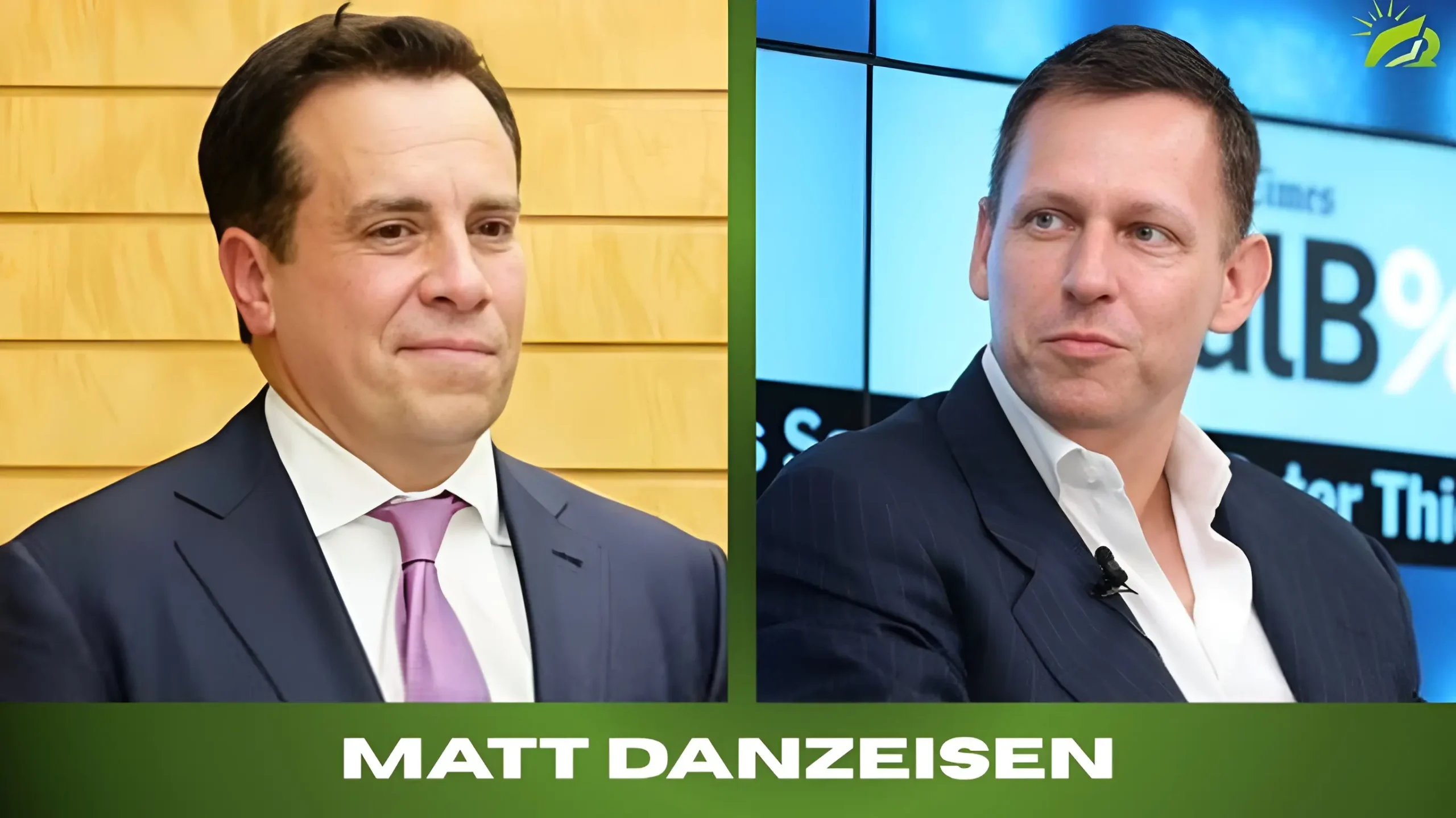
Matt Danzeisen is an American investor and financial professional whose career connects traditional investment management with private equity, financial technology, and international business. Although many people recognize his name because of his marriage to billionaire entrepreneur Peter Thiel, his professional experience tells a much broader story. Long before his personal life attracted widespread attention, Danzeisen was building a career in banking, portfolio management, and private investments.
His professional background includes positions at Banc of America Securities, BlackRock, and Thiel Capital. He has also been involved in investment ventures operating across the United States and Asia, including Crescendo Equity Partners and the Bridgetown investment companies. These responsibilities have placed him within financial networks where business decisions involve substantial capital, emerging technologies, and long-term investment planning.
What makes Matt Danzeisen particularly interesting is the difference between his professional responsibilities and his public visibility. Many individuals working alongside famous technology entrepreneurs become recognizable personalities themselves. Danzeisen has maintained a comparatively reserved public presence while participating in significant investment activities.
His career also illustrates how modern investment professionals move between financial institutions, private businesses, and international markets. Rather than concentrating on a single industry, his background spans fixed-income investing, financial technology, private equity, and corporate governance.
Understanding Matt Danzeisen therefore requires looking beyond his marriage. His education, investment experience, business responsibilities, and approach to professional life provide a more complete picture of who he is and why his name continues to attract attention.
Who Is Matt Danzeisen?
Matt Danzeisen, also known as Charles Matthew Danzeisen, is an American financier and investor recognized for his work in institutional investment management and private capital. He is associated with Thiel Capital, the investment firm connected to Peter Thiel, and has held leadership responsibilities involving financial technology businesses and investment companies.
Unlike investment personalities who regularly publish market predictions or appear in interviews, Danzeisen has built much of his career through professional roles that receive relatively little mainstream publicity. His work has involved analyzing investment opportunities, participating in company governance, and helping manage exposure to businesses operating in different sectors and geographical markets.
His career began in conventional financial services before expanding into private investments. That progression is important because banking and institutional asset management require different skills from investing in privately held businesses. Experience across these areas can provide a broader understanding of risk, capital allocation, and corporate development.
Danzeisen is also known as the husband of Peter Thiel, the entrepreneur associated with PayPal, Palantir Technologies, and several influential technology investment ventures. Their marriage became public knowledge in 2017 and brought significantly more attention to Danzeisen’s personal background.
Despite that visibility, his professional identity should not be reduced to his relationship. Danzeisen has held investment and board-level responsibilities that can be examined independently of Thiel’s public reputation.
Matt Danzeisen: Key Facts at a Glance
- Full name: Charles Matthew Danzeisen
- Known as: Matt Danzeisen
- Nationality: American
- Profession: Investor and financial executive
- Education: Cornell University
- Professional qualification: CFA charterholder
- Previous employers: Banc of America Securities and BlackRock
- Major professional association: Thiel Capital
- Investment interests: Private equity, financial technology, and international investments
- Notable business involvement: Crescendo Equity Partners and Bridgetown Holdings
- Spouse: Peter Thiel
- Marriage year: 2017
- Public profile: Primarily known through finance-related activities and his marriage
These details establish the main areas of his public biography. However, they do not capture the professional progression that shaped his career or explain why his investment experience deserves attention.
Early Life and Educational Background
Publicly available information about Matt Danzeisen’s childhood and early family life is relatively limited. His precise date of birth, personal upbringing, and early interests have not been documented as extensively as his professional career. Rather than relying on uncertain biographical claims, his educational qualifications provide a clearer starting point.
Danzeisen graduated from Cornell University with a degree in finance and a minor in economics. This combination is particularly relevant to his subsequent career because finance and economics address related but distinct questions about business decisions and financial markets.
Finance generally examines how money is raised, invested, managed, and distributed. Economics provides a broader framework for understanding market behavior, incentives, competition, and the allocation of limited resources. Together, these disciplines are useful for professionals who must evaluate individual investments while considering larger economic conditions.
He also holds the Chartered Financial Analyst designation, commonly known as the CFA charter. This professional qualification focuses on investment analysis, asset valuation, portfolio management, and ethical standards within financial services.
The qualification is especially relevant to Danzeisen’s background in institutional investment management. Professionals working with securities and complex portfolios need to understand the relationship between potential returns and the risks required to pursue them.
His education did not determine the outcome of his career, but it provided a foundation for the responsibilities he later assumed. The connection between analytical training and practical financial work becomes particularly clear when examining his progression from investment banking to asset management and private capital.
Beginning His Career in Investment Banking
Matt Danzeisen’s early professional experience included working as an investment banker at Banc of America Securities between 2000 and 2001. This period introduced him to an industry where financial analysis is closely connected with corporate financing, market conditions, and business transactions.
Investment banking differs from ordinary personal banking. Its activities can include assisting businesses with capital raising, advising on transactions, evaluating securities, and examining financial opportunities involving corporations or institutional clients.
Professionals entering this environment must develop an understanding of financial statements, business structures, and the relationship between company performance and market expectations.
These skills also remain useful outside traditional banking. A private investor evaluating a growing technology company must consider many of the same issues: how the business earns money, how much capital it needs, what risks it faces, and whether its financial assumptions are realistic.
Danzeisen’s banking experience formed an early stage of a career that would eventually expand into more specialized investment responsibilities.
One distinction worth making is that an employment history does not establish exactly which transactions an individual personally completed. The importance of this stage lies in the type of professional environment he entered and the financial knowledge associated with that work.
His next major career move took him into an organization where investment management, rather than investment banking, became the central responsibility.
Matt Danzeisen’s Career at BlackRock
Between 2002 and 2008, Matt Danzeisen worked at BlackRock as a vice president and portfolio manager in its fixed-income division. This represents one of the most significant stages of his professional development.
BlackRock is a global investment management company whose business involves managing assets for institutional and individual investors. Its investment operations cover a wide range of financial products, including bonds, equities, and other investment strategies.
Danzeisen’s work in fixed income is particularly relevant because this investment category has a different risk structure from ordinary equity investing.
Fixed-income investments commonly include bonds and other debt instruments. Investors in these products must consider factors such as interest rates, credit quality, repayment obligations, liquidity, and changing economic conditions.
For example, a bond may appear attractive because it offers a particular interest payment. However, its actual investment risk depends on the financial strength of the issuer, the price paid, its maturity, and the possibility that market conditions will change.
Portfolio management requires evaluating these issues collectively rather than treating each security as an isolated decision.
A portfolio manager also needs to consider how different holdings interact. Investments that seem individually reasonable may create excessive risk when combined. Concentration, market exposure, and liquidity can become as important as the expected performance of any single asset.
Danzeisen’s years at BlackRock provide evidence of experience within institutional finance before his later association with Peter Thiel’s investment businesses.
This background also helps explain the transition he subsequently made. Private investments may involve different assets and longer holding periods, but disciplined financial evaluation remains an important part of the process.
Transition From BlackRock to Thiel Capital
In 2008, Matt Danzeisen moved into the investment operations associated with Clarium Capital Management and Thiel Capital. This transition marked a shift from institutional fixed-income management toward a broader private-investment environment.
Thiel Capital is associated with Peter Thiel’s private investment activities. Its work differs from that of a large public-facing asset manager because private capital can involve direct investments in businesses, specialized funds, and opportunities that are not available through ordinary publicly traded securities.
Danzeisen has served as Head of Private Investments at Thiel Capital, with responsibilities involving investments in private companies and funds in the United States and Asia.
The move was significant because private-market investing presents challenges that differ from managing a portfolio of publicly traded bonds.
Public securities generally offer more frequent market prices and established trading mechanisms. Private businesses often require investors to evaluate financial information without the benefit of continuous market quotations.
Investment decisions may involve assessing management teams, business models, ownership rights, financing requirements, and possible future exits.
A private investment may remain illiquid for years. During that period, investors may need to participate in strategic decisions, monitor operating performance, and respond to changes in competition or regulation.
Danzeisen’s movement between these two professional environments illustrates the range of financial skills involved in managing different types of capital.
It also establishes an important chronological fact: his financial career was already well developed before his marriage to Peter Thiel became a public event in 2017.
Understanding His Role at Thiel Capital
The title Head of Private Investments can involve substantial responsibilities, but it should not be confused with ownership of every investment made by a firm.
Private investment leadership generally involves evaluating potential investments, organizing financial analysis, coordinating professional advisers, and monitoring businesses after capital has been committed.
These activities require a combination of technical knowledge and business judgment. Identifying a promising market is only the beginning. An investor must also determine whether a particular company can compete effectively within that market and whether its valuation offers a reasonable relationship between risk and potential return.
An experienced investment professional might examine several questions before supporting an opportunity:
- Does the company address a meaningful business or customer need?
- Can its operations expand without costs rising at the same rate as revenue?
- What competitive advantages protect the business?
- How much additional funding might it require?
- What legal, technological, and market risks could affect its future?
- What conditions would make the investment financially attractive?
These are general considerations in private investing, not a personal checklist attributed to Danzeisen.
His documented work at Thiel Capital has included investment activity involving financial technology companies, debt and equity financing, and participation in the governance of portfolio businesses.
Such responsibilities can extend far beyond choosing where to invest. They may also involve understanding a company’s long-term development and helping ensure that major financial decisions receive appropriate oversight.
His Involvement in Financial Technology
Financial technology, often shortened to fintech, is one of the clearest recurring themes in Matt Danzeisen’s investment career.
Fintech refers to businesses that use technology to provide or improve financial services. These services can include electronic trading, financial management tools, digital payments, investment platforms, and software that assists businesses with financial operations.
The importance of fintech lies in the relationship between technology and existing financial infrastructure. Financial markets depend on systems that move money, process transactions, manage information, and connect participants. Improvements to these systems can create commercial opportunities, but they can also introduce new technical and regulatory risks.
Danzeisen has been associated with businesses such as Trumid, Artivest, and Coru through board-level responsibilities.
Trumid operates within electronic bond trading, an area connected with institutional fixed-income markets. Artivest has been associated with alternative investment access and administration, while Coru has operated in personal financial management.
These companies represent different parts of financial technology rather than a single narrow product category.
Electronic bond trading focuses on how financial securities are bought and sold. Alternative investment platforms address access and administration. Financial management applications concentrate more directly on the needs of consumers.
The connection between these businesses and Danzeisen’s career is notable because it combines his earlier fixed-income experience with private investment opportunities involving changing financial technologies.
It would be inaccurate to conclude that every investment he has encountered reflects an identical strategy. However, his documented involvement demonstrates a professional interest in businesses operating where financial services and technology intersect.
Why International Markets Matter in His Investment Career
Another distinguishing feature of Matt Danzeisen’s professional background is his involvement in investment activities across the United States and Asia.
International investing requires more than identifying companies with attractive products. Different markets operate under different financial regulations, business practices, competitive structures, and economic conditions.
A technology business that succeeds in one country may encounter substantial challenges when entering another.
Consumer expectations may differ. Financial institutions may operate under different legal requirements. Currency movements can affect investment results, and ownership structures may influence what international investors are allowed to do.
These issues make local market understanding important.
Danzeisen’s involvement with Asian markets includes private investment activities and his association with Crescendo Equity Partners, a South Korea-based investment firm.
The geographical focus is interesting because Asia contains several markets with substantial technology manufacturing, digital commerce, and financial services industries. These industries often depend on regional relationships between suppliers, manufacturers, investors, and customers.
For an investment professional, evaluating a company within these systems means looking beyond its immediate revenue.
A successful business may depend on reliable suppliers, access to skilled workers, technological expertise, and the ability to compete internationally.
Understanding those connections can help investors evaluate opportunities more realistically.
Danzeisen’s professional history demonstrates sustained involvement in financial activities that extend beyond the American domestic market, although the precise details of individual investment decisions are not always publicly disclosed.
Case Study 1: Crescendo Equity Partners and Cross-Border Private Equity
One useful case study for understanding Matt Danzeisen’s investment background is Crescendo Equity Partners, a private equity firm based in South Korea.
Danzeisen co-founded Crescendo Equity Partners in 2012 while working at Thiel Capital. The firm has focused on investments involving technology-related businesses and supply-chain industries, particularly in South Korea and Southeast Asia.
Its activities demonstrate how private investment strategies can concentrate on businesses that support larger technological industries rather than only investing in consumer-facing products.
Technology supply chains include companies that provide components, equipment, specialized materials, manufacturing services, and other functions needed to produce finished products.
These businesses may be less recognizable to consumers, but their commercial importance can be considerable. A manufacturer of specialized components, for example, may serve several larger companies without developing a widely known consumer brand.
From an investment perspective, evaluating such businesses requires attention to customer concentration, production capacity, competitive advantages, and the durability of demand.
A company that supplies a critical component may have an attractive market position. However, it may also face risks if a major customer reduces orders or develops an alternative supplier.
Crescendo’s regional focus places these considerations within international technology markets.
Danzeisen’s involvement as a co-founder and investment committee member is relevant because investment committees help assess opportunities and make decisions within a firm’s governance framework.
The case also demonstrates how his career extended beyond employment at an established investment company into helping establish an investment organization with its own geographical and sector focus.
What This Case Study Reveals
The Crescendo example highlights three useful features of private equity.
First, valuable investment opportunities are not always concentrated in famous technology brands. Businesses operating behind the scenes of major industries can play an important economic role.
Second, regional specialization can matter. Understanding a particular market’s business relationships and industrial structure may provide insights that broad international analysis misses.
Third, creating an investment platform differs from making an individual investment. A firm needs processes for identifying opportunities, evaluating management teams, allocating capital, and monitoring portfolio companies.
Crescendo’s history provides a concrete example of Danzeisen’s participation in this type of investment structure.
However, his role should not be interpreted as proof that he personally originated every investment or was individually responsible for the firm’s financial performance. Private equity businesses operate through teams, committees, and multiple decision-makers.
The broader lesson is that his career includes both investment management and involvement in building an international investment business.
Case Study 2: Bridgetown 2 and the PropertyGuru Transaction
Another significant example of Matt Danzeisen’s professional involvement is Bridgetown 2 Holdings, an investment company associated with Thiel Capital and Pacific Century Group.
Danzeisen served as chairman of Bridgetown 2, which was established as a special purpose acquisition company, commonly known as a SPAC.
A SPAC is a company formed to raise capital and subsequently complete a business combination with an operating business. The structure can provide an alternative route for a private company to enter public markets.
In March 2022, Bridgetown 2 completed its business combination with PropertyGuru, a digital real estate platform operating in Southeast Asia.
PropertyGuru connects participants in real estate markets through digital property listings and related services. Its business operates in a sector where technology can influence how consumers search for properties and how real estate professionals reach potential customers.
The transaction illustrates the relationship between private investment organizations, publicly traded acquisition vehicles, and established technology businesses.
As chairman of Bridgetown 2, Danzeisen occupied an important governance position during the company’s development.
A chairman’s responsibilities generally include helping oversee board processes, supporting corporate governance, and participating in important decisions within the authority granted by the organization.
Nevertheless, major business combinations involve multiple parties, including company executives, financial advisers, legal teams, investors, and shareholders.
The completion of the PropertyGuru combination should therefore be understood as a corporate transaction rather than an achievement attributable to a single individual.
Why the PropertyGuru Case Is Important
The PropertyGuru transaction provides a useful example of investment activity involving a business outside traditional financial technology.
Real estate technology, often called proptech, uses digital platforms and software to improve activities connected with property markets.
A property platform may create value by bringing buyers, renters, sellers, agents, and developers into a more accessible digital environment.
However, digital marketplace businesses face their own commercial challenges. They need enough users to attract business customers while providing information and services that encourage users to return.
They must also respond to changing property-market conditions.
For investors, these businesses require a different analytical perspective from fixed-income securities or traditional banking services.
This is what makes the Bridgetown 2 case relevant to Danzeisen’s broader career. His professional responsibilities extended into a transaction involving a consumer-facing digital business operating across multiple Asian markets.
The example highlights the importance of combining financial expertise with an understanding of technology-enabled business models.
It also shows why corporate governance deserves attention when evaluating an investment professional’s experience. Participating in board leadership can involve responsibilities that extend beyond choosing investments.
Case Study 3: Bridgetown Holdings and MoneyHero
A third business case connected with Matt Danzeisen involves Bridgetown Holdings and MoneyHero Group.
Bridgetown Holdings was another special purpose acquisition company developed through a collaboration between Thiel Capital and Pacific Century Group, with Danzeisen serving as chairman.
In October 2023, Bridgetown completed a business combination with MoneyHero Group, a digital financial products comparison platform serving markets in Greater Southeast Asia.
MoneyHero’s business has involved helping consumers compare financial products and connect with financial service providers through online platforms.
This type of company occupies an interesting position in the financial services industry.
Rather than operating primarily as a bank or traditional lender, a comparison platform can help consumers navigate financial choices by presenting information about available products.
The commercial model depends on several factors, including consumer trust, the accuracy of product information, partnerships with financial institutions, and the ability to attract users efficiently.
These characteristics make the business different from the institutional fixed-income portfolios Danzeisen worked with earlier in his career.
However, there is a consistent underlying theme: evaluating businesses connected with the financial system.
Investment Considerations in the MoneyHero Example
Digital financial comparison platforms operate in a competitive environment. Their value depends partly on attracting consumers who are actively researching financial services.
A company in this sector must consider the cost of attracting users, the quality of its commercial relationships, and the regulations governing financial promotions and customer information.
The business must also adapt to changing financial products and consumer expectations.
For investors, these factors create questions about profitability, growth, market concentration, and long-term competitive advantages.
Bridgetown’s combination with MoneyHero provides an example of how an investment vehicle can participate in bringing a digital financial services business into public markets.
Danzeisen’s position as chairman places him within the governance history of that transaction. It does not establish that he personally controlled every negotiation, financial decision, or operational outcome.
Comparing the Three Case Studies
Crescendo, PropertyGuru, and MoneyHero involve different businesses, but examining them together reveals the range of investment structures associated with Danzeisen’s career.
Crescendo illustrates a private equity approach focused on regional technology-related businesses. PropertyGuru represents a digital real estate platform that completed a public-market combination. MoneyHero demonstrates a similar corporate transaction involving consumer financial services.
These cases share several themes:
- A meaningful connection with Asian markets
- Investment in businesses influenced by technology
- The importance of capital structure and corporate governance
- Exposure to different commercial and regulatory environments
- Participation in investment activities involving multiple organizations
The distinction between the cases is equally important. Private equity fund management, SPAC governance, and operating-company development are not identical activities.
Understanding their differences provides a more accurate picture of Matt Danzeisen’s professional involvement than a simple list of company names.
The Relationship Between Matt Danzeisen and Peter Thiel
Matt Danzeisen is married to Peter Thiel, one of the most recognizable figures in modern technology investment.
Thiel became widely known through his involvement in PayPal, his early investment in Facebook, and his role in businesses such as Palantir Technologies. He has also attracted attention for his political views and participation in public debates about technology, economics, and society.
Danzeisen’s relationship with Thiel connects his personal life to a much more visible public figure.
Their connection also has a professional dimension because Danzeisen has worked within Thiel Capital’s investment operations.
However, a personal relationship and a professional association should not be treated as interchangeable explanations for an individual’s career.
Danzeisen’s work at BlackRock and his earlier banking experience demonstrate that his finance career existed independently before the couple’s marriage became public knowledge.
The relationship brings together two people with substantial connections to investment and technology businesses, but that does not mean their individual responsibilities or viewpoints are identical.
Thiel is frequently discussed in relation to entrepreneurship, venture capital, public policy, and political activity. Danzeisen’s documented professional background is more closely associated with portfolio management, private investments, and corporate governance.
These differences are useful when understanding why both names may appear in business coverage while attracting very different levels of public attention.
Matt Danzeisen and Peter Thiel’s Wedding in 2017
Matt Danzeisen and Peter Thiel married in 2017, with a wedding celebration reported in Vienna, Austria.
The event attracted attention partly because guests had reportedly expected a celebration of Thiel’s 50th birthday rather than a wedding.
That unexpected element made the occasion memorable in media coverage, particularly because the couple had kept many details of their relationship private.
The marriage was a significant personal event, but it also increased public interest in Danzeisen’s background. Readers who were already familiar with Thiel’s business activities began searching for information about his husband.
As a result, Danzeisen’s name became associated with questions about his education, career, professional responsibilities, and family life.
The wedding also illustrates the limitations of public information about the couple.
Although the 2017 celebration has been widely discussed, not every detail of their private relationship has been publicly established. Accounts that provide elaborate descriptions of their personal conversations, private decisions, or family routines without clear evidence should be approached cautiously.
The most useful understanding of their marriage focuses on the established relationship rather than attempting to reconstruct aspects of their personal lives that the couple has chosen not to publicize.
Family Life and the Importance of Privacy
Matt Danzeisen and Peter Thiel have maintained a relatively private family life despite their connections to internationally recognized technology businesses.
Public discussion has acknowledged that the couple have children, but detailed information about their family is not necessary to understand Danzeisen’s investment career.
This distinction matters because public interest in a wealthy or influential person can sometimes lead to excessive attention toward family members who have not chosen a public role.
Danzeisen’s lower public visibility also creates a challenge for anyone preparing a biography.
When a subject rarely gives personal interviews, writers may be tempted to fill informational gaps with assumptions about personality, daily routines, or motivations.
That approach can produce an engaging narrative, but it does not necessarily produce an accurate one.
There is a meaningful difference between observing that someone maintains a limited public profile and claiming to know why that person prefers privacy.
In Danzeisen’s case, the public record provides considerably more information about financial responsibilities than about personal habits.
Respecting that difference makes it possible to discuss his career in detail without turning limited personal information into speculation.
Public Appearances and Professional Visibility
Although Matt Danzeisen is not known for maintaining a celebrity-style public presence, he has appeared in professional and business settings connected with finance and technology.
His participation in investment activities has linked him with organizations operating across international markets. Corporate documents have also identified his leadership and governance responsibilities.
In July 2026, Danzeisen and Peter Thiel were photographed attending the Allen & Company Sun Valley Conference in Idaho, an event associated with senior figures from technology, finance, business, and media.
Such appearances demonstrate that Danzeisen is not entirely absent from public life. Rather, the attention he receives is often associated with professional events or his relationship with Thiel.
There is also an important difference between being publicly visible and being publicly influential.
An executive may appear frequently in interviews without holding substantial responsibility for financial decisions. Another professional may rarely appear in the media while occupying significant positions within investment organizations.
Publicity alone does not establish professional importance.
For Danzeisen, a more useful assessment comes from examining positions he has held and the kinds of organizations with which he has been associated.
This approach avoids treating limited social media activity or a small number of interviews as evidence that someone lacks an established professional career.
Matt Danzeisen’s Net Worth: What Is Actually Known?
One of the most common questions surrounding Matt Danzeisen concerns his personal net worth.
Interest in his finances is understandable because of his career in private investment and his marriage to Peter Thiel, whose wealth has been widely discussed.
However, Danzeisen’s individual net worth cannot be reliably established from the public information generally available.
This is an important distinction. A professional association with a major investment company does not reveal how much of that company’s assets an individual personally owns.
Similarly, a board position does not automatically establish a specific ownership percentage, salary, bonus arrangement, or investment portfolio.
Personal net worth is generally calculated by subtracting liabilities from the value of assets owned by an individual.
That calculation may involve real estate, financial investments, cash holdings, business interests, debt obligations, and other financial arrangements.
Without reliable information about those components, assigning an exact figure would be speculative.
Another frequent mistake is treating the wealth of a spouse as an individual’s independently established fortune.
Marriage can create shared financial interests, but it does not allow an outside observer to calculate one spouse’s personal assets without sufficient evidence.
Consequently, claims that Matt Danzeisen has a precisely determined multimillion-dollar or billionaire net worth should not be accepted simply because they appear in online biographies.
His documented career establishes substantial experience in finance. It does not provide a complete public accounting of his personal wealth.
Career Timeline: Major Milestones
A chronological overview helps connect the different stages of Danzeisen’s professional life.
2000–2001: Worked as an investment banker at Banc of America Securities, establishing early experience within financial services.
2002–2008: Served as a vice president and portfolio manager in BlackRock’s fixed-income division.
2008: Joined the investment operations associated with Clarium Capital Management and Thiel Capital.
2012: Co-founded Crescendo Equity Partners, a private equity business based in South Korea.
2017: Married Peter Thiel in a wedding celebration reported in Vienna, Austria.
2020: Became chairman of Bridgetown Holdings, an investment company associated with Thiel Capital and Pacific Century Group.
2020–2022: Held the chairmanship of Bridgetown 2, which later completed a business combination with PropertyGuru.
2023: Bridgetown Holdings completed its combination with MoneyHero Group.
2026: Continued to be publicly identified with Thiel Capital’s private-investment activities, including in coverage of professional appearances.
This timeline shows a progression from banking and asset management into private equity, investment leadership, and corporate governance.
It also demonstrates that his professional career includes substantial activity before and after his marriage became widely known.
Common Misconceptions About Matt Danzeisen
Because relatively little personal information about Danzeisen is publicly available, online discussions sometimes mix established facts with assumptions.
One misconception is that his professional identity exists entirely because of Peter Thiel. His documented banking and investment-management career shows that he had developed financial experience before their marriage.
Another misconception concerns the difference between managing investments and personally owning the businesses involved. Executives, portfolio managers, and board members may have substantial responsibilities without holding controlling ownership positions.
A third area of confusion involves his personal wealth. Working with major financial institutions or wealthy investors does not establish an individual’s exact net worth.
There is also a tendency to assume that someone associated with a politically visible figure necessarily shares every political opinion or participates equally in public political activity. Such assumptions should not replace evidence about an individual’s own statements and actions.
Finally, a limited public profile does not necessarily mean that a person’s professional history is unknown. In Danzeisen’s case, corporate roles and business transactions provide a clearer picture of his career than personal interviews or celebrity coverage.
Separating these categories of information makes his biography more informative and less dependent on speculation.
What Makes Matt Danzeisen’s Professional Story Distinctive?
Matt Danzeisen’s career stands out primarily because it crosses several areas of finance that require different forms of expertise.
Investment banking introduced him to financial transactions and corporate financing. Institutional portfolio management exposed him to securities analysis and the demands of managing financial risk.
His later career expanded into private businesses, financial technology, international investment structures, and board-level responsibilities.
Each stage added a different dimension to his professional background.
His association with Thiel Capital placed him within investment activities involving innovative companies and private-market opportunities. His involvement with Crescendo demonstrated participation in a regional private equity platform. His work with Bridgetown connected him to corporate transactions involving technology businesses entering public markets.
Another noteworthy feature is that the better-documented elements of his professional life concern responsibilities rather than personal publicity.
The finance industry includes many individuals whose work remains largely outside ordinary public discussion. Investment decisions may involve teams of analysts, advisers, executives, and board members rather than one recognizable public personality.
Danzeisen provides an example of how professional experience can span different investment structures while the individual maintains a relatively limited media presence.
That does not mean every investment associated with his career has been successful, nor does it establish that he personally directed every transaction.
His professional significance is better understood through the breadth of documented responsibilities and the business environments in which he has worked.
Broader Lessons From His Career
Although Matt Danzeisen’s professional circumstances are not typical, several elements of his career provide useful context for understanding the investment industry.
One lesson is that expertise developed in established financial institutions can remain valuable when professionals move into private markets.
Understanding bonds, credit risk, and portfolio construction does not automatically make someone successful in venture capital or private equity. However, the underlying ability to evaluate risk and financial assumptions can be relevant across many investment categories.
Another lesson concerns specialization. International investment activity often benefits from knowledge of particular industries or regions.
A business operating within a technology supply chain may require a very different evaluation from a consumer-facing financial application. Investors need to understand the economic characteristics of the business rather than relying entirely on the popularity of its industry.
Corporate governance offers a third lesson.
Investors who participate on company boards may become involved in oversight, accountability, and long-term organizational decisions. These responsibilities differ from simply purchasing a financial asset.
Finally, his career illustrates the importance of distinguishing visibility from professional experience.
Public recognition can help an individual become influential, but it is not the only way responsibilities develop within financial organizations.
Danzeisen’s story is therefore relevant not only to readers interested in Peter Thiel’s husband but also to those researching careers in investment management, private equity, and international finance.
Frequently Asked Questions About Matt Danzeisen
Q1: Who is Matt Danzeisen?
A: Matt Danzeisen is an American financial executive and investor known for his career in investment banking, asset management, and private investments. He has worked at Banc of America Securities and BlackRock and has held senior investment responsibilities at Thiel Capital. He is also publicly known as the husband of billionaire entrepreneur Peter Thiel. His professional background includes involvement with financial technology businesses, private equity, and corporate governance.
Q2: What does Matt Danzeisen do for a living?
A: Matt Danzeisen works in investment management and private capital. He has been identified as Head of Private Investments at Thiel Capital, where his responsibilities have involved investments in private companies and funds. His professional history also includes participation in investment committees and board leadership. These roles require knowledge of business evaluation, investment risk, financial structures, and corporate oversight.
Q3: Is Matt Danzeisen married to Peter Thiel?
A: Yes. Matt Danzeisen and Peter Thiel married in 2017. Their wedding celebration was reported in Vienna, Austria, and attracted attention because guests reportedly believed they were attending Thiel’s birthday celebration. The couple have maintained a relatively private family life despite Thiel’s prominent role in technology investing and public affairs.
Q4: When did Matt Danzeisen and Peter Thiel get married?
A: Matt Danzeisen and Peter Thiel married in 2017. Their wedding became widely known after reports described a private celebration in Vienna during the period of Thiel’s 50th birthday. The event attracted public interest because the marriage had not been extensively publicized beforehand.
Q5: Where did Matt Danzeisen go to college?
A: Matt Danzeisen attended Cornell University, where he earned a degree in finance with a minor in economics. His educational background relates closely to his later work in investment banking and asset management. He also holds the CFA charter, a professional qualification associated with investment analysis, portfolio management, and financial ethics.
Q6: Did Matt Danzeisen work at BlackRock?
A: Yes. Matt Danzeisen worked at BlackRock from 2002 to 2008 as a vice president and portfolio manager in the company’s fixed-income division. His responsibilities were connected with investment management rather than a general retail banking role. This experience formed an important part of his professional background before he moved into the investment operations associated with Thiel Capital.
Q7: What is Matt Danzeisen’s role at Thiel Capital?
A: Matt Danzeisen has served as Head of Private Investments at Thiel Capital. His documented responsibilities have included private-company and fund investments, particularly involving the United States and Asia. He has also been connected with financial technology investments and the governance of portfolio businesses. This position is separate from Peter Thiel’s broader public identity as an entrepreneur and investor.
Q8: What is Matt Danzeisen’s net worth?
A: There is no sufficiently reliable public information to establish Matt Danzeisen’s exact personal net worth. His investment career and marriage to Peter Thiel indicate connections with substantial financial activities, but those facts do not reveal his personal assets and liabilities. Online estimates should therefore be treated cautiously unless they are supported by credible financial information.
Q9: How old is Matt Danzeisen?
A: Matt Danzeisen’s exact date of birth is not consistently established in widely accessible biographical information. Some professional records provide his age at particular reporting dates, but a precise birthday should not be assumed without dependable confirmation. His documented educational and career history offers a more reliable basis for understanding his background.
Q10: What is Crescendo Equity Partners?
A: Crescendo Equity Partners is a private equity firm based in South Korea that Matt Danzeisen co-founded in 2012. Its investment activities have involved technology-related businesses and supply-chain industries in South Korea and Southeast Asia. Danzeisen has participated in the firm’s investment committee and its relationships with selected portfolio companies. The business represents an important example of his involvement in international private equity.
Q11: What is Matt Danzeisen’s connection to PropertyGuru?
A: Matt Danzeisen served as chairman of Bridgetown 2 Holdings, which completed a business combination with PropertyGuru in March 2022. PropertyGuru operates digital property platforms in Southeast Asia. His connection came through the investment company involved in the transaction rather than through being the founder of PropertyGuru. The distinction is important when understanding the responsibilities of different participants in corporate transactions.
Q12: How is Matt Danzeisen connected to MoneyHero?
A: Matt Danzeisen served as chairman of Bridgetown Holdings, the investment company that completed a business combination with MoneyHero Group in October 2023. MoneyHero operates digital platforms associated with financial product comparisons in Asian markets. His involvement demonstrates his participation in corporate governance within investment structures connected with financial technology and public-market transactions.
Q13: Is Matt Danzeisen a billionaire?
A: There is no reliable public basis for confirming that Matt Danzeisen is personally a billionaire. His marriage to Peter Thiel does not establish his individual net worth, and his professional positions do not reveal his total personal assets. Without dependable information about ownership interests, investments, and liabilities, any precise wealth classification would be speculative.
Q14: Does Matt Danzeisen have children?
A: Matt Danzeisen and Peter Thiel have been publicly described as parents. However, their family generally maintains a private profile, and detailed personal information about their children is not essential to understanding Danzeisen’s professional biography. His publicly documented career provides a more substantial foundation for discussing his achievements and responsibilities.
Q15: Is Matt Danzeisen involved in venture capital?
A: Matt Danzeisen has worked within private investment organizations associated with technology businesses and has participated in investment structures that overlap with the broader venture capital and private equity industries. His documented career includes private-company investments, financial technology, and investment committee responsibilities. However, venture capital, private equity, and portfolio management are different disciplines, so they should not be treated as identical descriptions of every position he has held.
Q16: Why is Matt Danzeisen famous?
A: Matt Danzeisen became more widely recognized because of his marriage to Peter Thiel. However, his professional reputation is connected with investment management and private capital. His career includes experience at BlackRock, Thiel Capital, Crescendo Equity Partners, and Bridgetown-related investment companies. His public profile combines an established finance career with a personal relationship that attracts wider media attention.
Q17: Does Matt Danzeisen use social media?
A: Matt Danzeisen does not have the highly public social media presence commonly associated with celebrities or prominent technology commentators. Readers should be cautious about assuming that accounts using his name are authentic without independent confirmation. His professional activities are more readily understood through his documented business positions than through social media content.
Q18: What industries has Matt Danzeisen invested in?
A: Matt Danzeisen’s documented professional activities include financial technology, private investment funds, technology-related supply chains, and investment vehicles involved with digital business platforms. His associations with businesses such as Trumid, Crescendo Equity Partners, PropertyGuru-related transactions, and MoneyHero illustrate exposure to different sectors. However, these connections should not be interpreted as a complete list of investments personally owned or independently managed by him.
Q19: Is Matt Danzeisen still involved with Thiel Capital?
A: Matt Danzeisen has continued to be publicly identified with Thiel Capital’s private-investment activities, including in 2026 professional coverage. He has a long history of involvement with the firm’s investment operations. Specific current responsibilities can change over time, so individual titles and appointments are best understood in relation to the dates on which they are publicly confirmed.
Q20: What makes Matt Danzeisen different from other finance executives?
A: Matt Danzeisen’s career combines experience in institutional fixed-income management, private equity, international investing, and corporate governance. His professional responsibilities have also intersected with technology-focused investment businesses operating across the United States and Asia. Unlike finance executives who regularly cultivate public recognition, he has maintained a comparatively limited personal media presence. His career is therefore most meaningfully understood through documented professional responsibilities rather than celebrity coverage.
Final Thoughts
Matt Danzeisen’s story is more substantial than the public attention surrounding his marriage to Peter Thiel might initially suggest. His career began in established financial institutions and developed through positions involving portfolio management, private investments, financial technology, and international business activity.
His experience at BlackRock provided an important institutional investment foundation, while his responsibilities at Thiel Capital introduced broader exposure to private companies and specialized investment opportunities. His involvement with Crescendo Equity Partners and the Bridgetown companies further demonstrates his participation in international investing and corporate governance.
At the same time, much of his personal life remains private. Information about his exact wealth, personal routines, and other private matters should not be presented as established fact when reliable confirmation is unavailable.
Ultimately, Matt Danzeisen is best understood as an experienced investment professional whose public identity combines an independent financial career with a high-profile marriage. Examining both dimensions, without confusing one for the other, offers a clearer and more complete understanding of his background, responsibilities, and place within the modern investment industry.
For More Visits: Bright Magazine
Also Read: Donna Sicuranza: Biography, Career and Animal Welfare Work
