

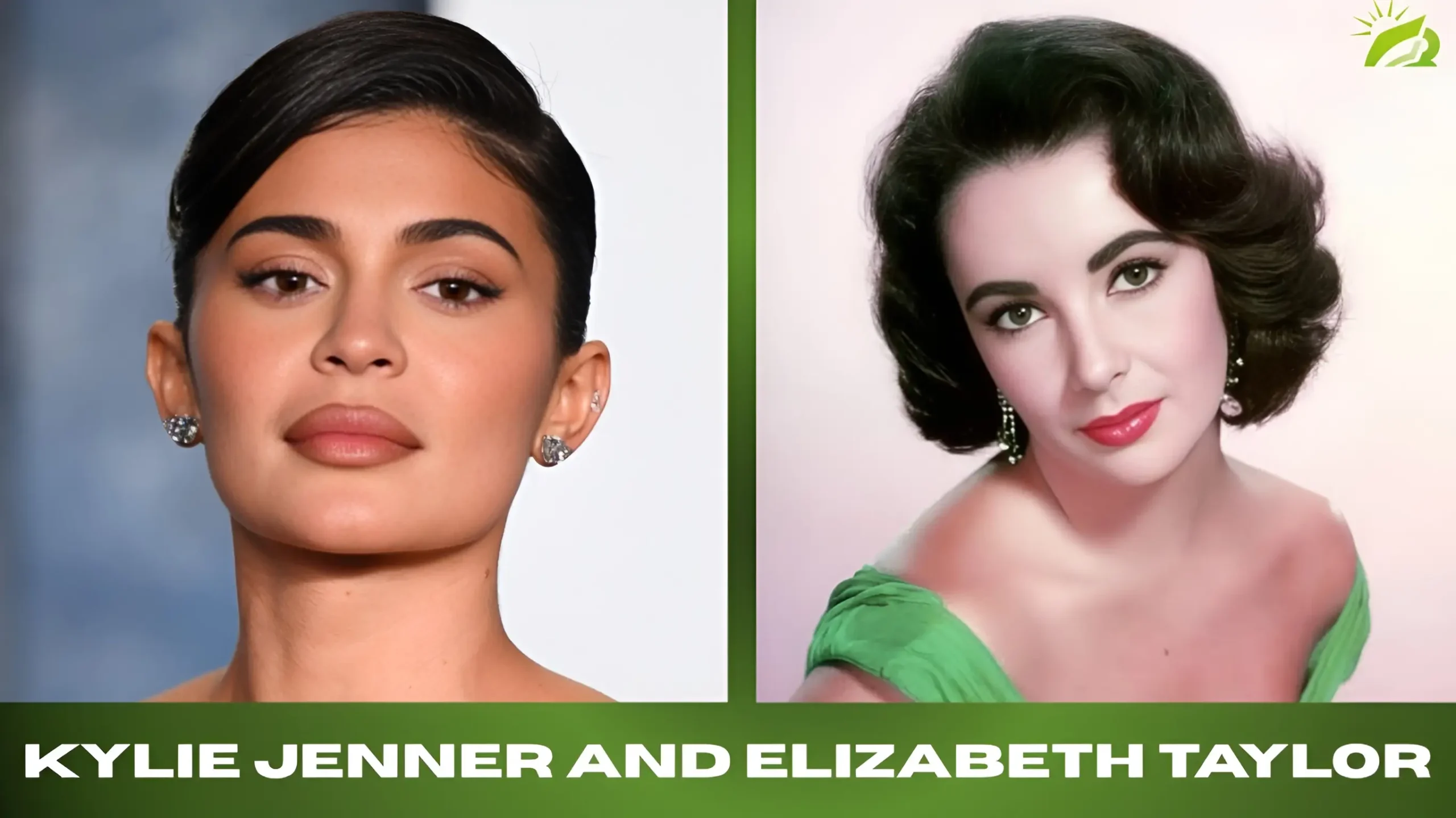
When people search for Kylie Jenner and Elizabeth Taylor, they are often looking for more than a simple comparison between two famous women. At first glance, they belong to completely different worlds. Elizabeth Taylor represented the golden age of Hollywood, when movie stars were larger-than-life figures whose images were shaped by studios, magazines, cinema screens, and carefully staged public appearances. Kylie Jenner represents the modern celebrity era, where influence can be built through social media, beauty companies, fashion, personal branding, and a direct relationship with a global audience.
Yet the comparison makes sense.
Both women have been closely associated with beauty, glamour, luxury, visual identity, and the commercial power of celebrity. Both understood that a recognizable public image could extend beyond entertainment and become something much larger. Elizabeth Taylor transformed her fame into businesses connected with fragrance and jewelry, while Kylie Jenner built a modern beauty identity around makeup, skincare, fragrance, and her highly recognizable personal aesthetic. Their methods were very different, but the underlying lesson is remarkably similar: celebrity can become a brand when the public image has a clear identity.
That is what makes Kylie Jenner and Elizabeth Taylor such an interesting pairing. It is not primarily about claiming that the two women had the same career, personality, or life story. They did not. Instead, it is about examining how celebrity beauty evolved from the classic Hollywood model to the digital-first model of today.
Elizabeth Taylor’s official estate describes her as an iconic actress, entrepreneur, advocate, and influential public figure. Her legacy includes her film career, fragrance businesses, jewelry interests, and humanitarian work. Kylie Jenner, meanwhile, has built a beauty ecosystem that includes cosmetics, skincare, and fragrance, with the Kylie Cosmetics brand presenting makeup as an extension of her personal style.
The connection between these two names therefore becomes especially interesting when viewed through the changing definition of celebrity.
Who Are Kylie Jenner and Elizabeth Taylor?
Before comparing them, it is important to understand the worlds that shaped each woman.
Elizabeth Taylor was born in 1932 and became a major Hollywood actress while still young. Her career developed across multiple decades, allowing her to become one of the most recognizable stars of classic cinema. Her official biography highlights her acting achievements, entrepreneurial instincts, passion for jewelry and fragrance, and later humanitarian activism. She died in 2011 at the age of 79.
Her fame was built during an era in which celebrity operated differently from today. There were no social media timelines, personal livestreams, influencer campaigns, or direct-to-consumer online stores. A Hollywood star’s image reached audiences through films, television, newspapers, magazines, photographs, advertising campaigns, premieres, and carefully managed publicity.
Taylor mastered that environment.
Her appearance was a major component of her public identity, but beauty was only one part of the larger Elizabeth Taylor image. Her style included dramatic makeup, luxurious clothing, unforgettable jewelry, expressive eyes, and an unmistakable sense of glamour. Her career also demonstrated an ability to turn visibility into commercial influence.
Kylie Jenner belongs to an entirely different era.
Born in 1997, Jenner grew up within the Kardashian-Jenner media ecosystem and became one of the world’s most recognizable young celebrities. Rather than depending primarily on studios, entertainment publications, or traditional television networks, she developed her public identity in an environment dominated by social platforms and direct communication with audiences.
Her beauty career became an especially important part of that identity. Kylie Cosmetics describes its mission around giving fans access to makeup products associated with Jenner’s own looks and beauty preferences. The brand’s current portfolio includes makeup and fragrance, while Kylie Skin represents another part of her beauty business.
That difference tells us something important.
Elizabeth Taylor was a movie star who became a powerful brand.
Kylie Jenner is a modern celebrity who built a powerful brand alongside her public identity.
Both demonstrate how the boundary between entertainment and commerce can become almost invisible when audiences strongly associate a person with a particular lifestyle.
Why Are Kylie Jenner and Elizabeth Taylor Compared?
The similarities are not about identical careers. They are about influence.
Search interest around Kylie Jenner and Elizabeth Taylor can be understood through several overlapping themes: beauty, celebrity branding, luxury, makeup, fragrance, fashion, jewelry, media attention, and the lasting power of a recognizable image.
Elizabeth Taylor represented a version of celebrity where glamour itself could become a product. Kylie Jenner represents a generation in which the celebrity can participate in product development, promotion, storytelling, and customer engagement almost simultaneously.
The comparison becomes particularly strong in beauty.
Taylor’s relationship with fragrance helped establish the idea that an entertainer could become a serious commercial force in the perfume business. Her official legacy materials explain that she entered the fragrance world with Passion in 1987 and later developed the collection associated with White Diamonds and other jewelry-inspired scents.
Jenner’s modern approach is broader. Instead of being associated primarily with fragrance, her public beauty identity extends across makeup, skincare, and scent. Her current cosmetics platform includes products ranging from lip products and complexion items to fragrance.
This makes the comparison less about who was “more influential” and more about how celebrity influence changed.
Taylor’s audience encountered her image.
Jenner’s audience can interact with hers.
Taylor’s beauty identity was communicated through photographs, performances, advertising, and media coverage.
Jenner’s beauty identity can be communicated through a social post, product launch, video, campaign, tutorial, interview, or direct brand content.
The technology changed, but the fundamental principle remained surprisingly consistent: a powerful personal image can influence how audiences think about beauty.
Elizabeth Taylor and the Meaning of Old Hollywood Glamour
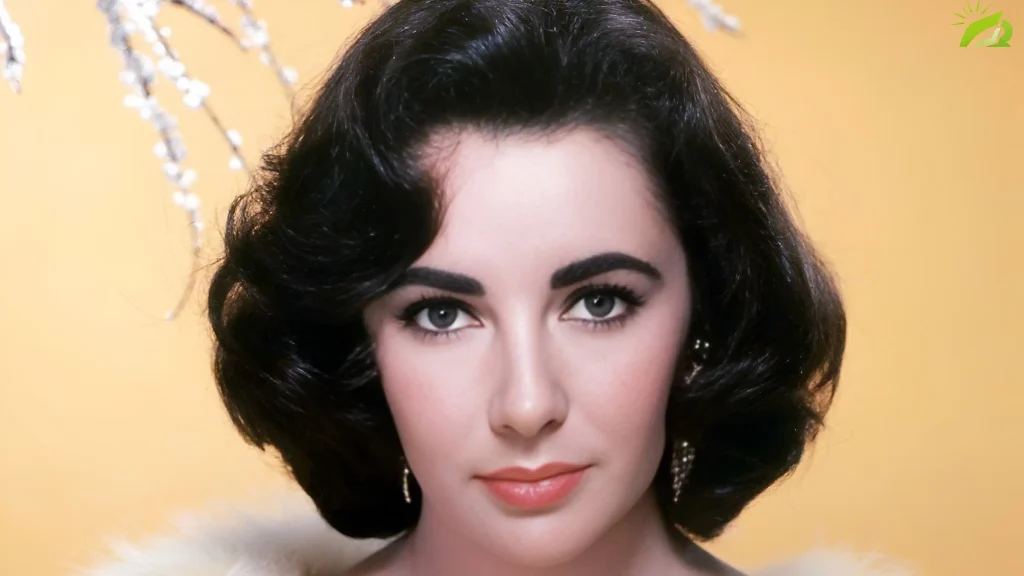
To understand why Elizabeth Taylor continues to attract attention, it helps to look beyond the phrase “Hollywood beauty.”
Taylor’s appeal was never just about being conventionally attractive. Her public persona combined elegance, intensity, confidence, drama, vulnerability, and extravagance. She could appear sophisticated and polished while also projecting a sense of unpredictability.
That complexity helped make her memorable.
Her beauty style was also recognizable. Strong eye makeup, defined brows, luminous skin, dramatic lips, carefully styled hair, and statement jewelry contributed to an aesthetic that remains immediately associated with classic Hollywood. British Vogue has noted that Taylor had a genuine interest in makeup and often did her own makeup for appearances and roles, including the dramatic eye-focused beauty associated with Cleopatra.
This matters when comparing Taylor with modern beauty figures.
Today, audiences are accustomed to celebrities sharing specific makeup preferences and beauty routines. Taylor was doing something conceptually similar in a completely different media environment. Her appearance was part of her identity, rather than merely something created for a single role.
She also understood the emotional value of glamour.
Jewelry was a particularly important part of her image. Her love of extraordinary pieces became part of her story, and that relationship between jewelry and fragrance eventually informed the “Fragrant Jewel” concept associated with her fragrance collection.
The key lesson is that Taylor did not simply wear luxury.
She made luxury part of her narrative.
That distinction is important for understanding her influence.
Kylie Jenner and the Rise of Personal Beauty Branding

Kylie Jenner entered celebrity culture when the relationship between famous people and audiences was changing rapidly.
The modern celebrity did not need to wait for a magazine to publish a beauty story. A celebrity could reveal a hairstyle, makeup look, outfit, product preference, or new business idea directly to millions of followers.
That created an enormous opportunity for personal branding.
Kylie Cosmetics reflects this model. The brand’s own description presents its products as an extension of Jenner’s beauty preferences and emphasizes categories such as lip products, blush, bronzer, highlighter, complexion products, and eye essentials. The company also has a fragrance line and a separate skincare business.
The significance of Kylie Jenner’s beauty career is therefore not limited to individual products.
It illustrates a broader change in consumer behavior.
A customer no longer has to view a celebrity only as an entertainer. The celebrity can become a guide to a lifestyle. The audience can move from watching a person to following a person, from following a person to trying a product, and from trying a product to becoming part of a brand community.
That is one of the most important differences between traditional celebrity marketing and influencer-era branding.
Jenner’s identity is not separated completely from the products associated with her.
The personal brand and commercial brand continuously reinforce one another.
Beauty as a Language Shared by Two Eras
One of the strongest connections between Kylie Jenner and Elizabeth Taylor is the way both turned beauty into a recognizable visual language.
Think about how easily a beauty identity can be described.
For Taylor, the vocabulary included Old Hollywood glamour, dramatic eyes, jewelry, polished hairstyles, rich fabrics, statement accessories, and sophisticated fragrance.
For Jenner, the vocabulary is more fluid. It can include defined lips, sculpted makeup, glowing skin, neutral tones, glossy textures, minimalist looks, and contemporary fashion.
The actual techniques may change, but the strategic idea remains the same.
A beauty icon becomes powerful when the audience can identify her aesthetic without needing a name attached.
That is brand recognition.
A person sees a specific makeup combination or style and immediately thinks of a celebrity. That association can be incredibly valuable because it transforms an ordinary aesthetic decision into part of a recognizable identity.
Elizabeth Taylor helped demonstrate the power of that association through classic Hollywood.
Kylie Jenner demonstrates it through social media and contemporary beauty culture.
The Fragrance Connection
Fragrance is one of the clearest areas in which the comparison becomes meaningful.
Elizabeth Taylor’s fragrance legacy is especially significant. Her official estate identifies fragrance as an important part of her entrepreneurial story, beginning with Passion and expanding into a wider fragrance business. White Diamonds became closely connected with her public image, while later scents drew inspiration from jewelry and the luxurious world she was known for.
The idea behind celebrity fragrance is powerful because perfume is intensely personal.
A lipstick can be seen.
A dress can be photographed.
Jewelry can be displayed.
Fragrance is different. It becomes associated with memory, mood, identity, and personal presence.
Taylor recognized the connection between scent and her image.
Kylie Jenner’s approach arrives decades later but uses some of the same emotional logic. Her official beauty platform describes fragrance as something personal, with the bottle and scent designed around a feeling associated with her identity. Its current fragrance offering includes Cosmic Kylie Jenner and Cosmic Kylie Jenner 2.0.
This is where the two brands overlap conceptually.
Neither approach requires fragrance to be merely a liquid inside a bottle.
The fragrance becomes a story.
The consumer is purchasing not only a scent but also an association with the lifestyle represented by the celebrity.
Jewelry, Luxury, and Visual Storytelling
Elizabeth Taylor’s relationship with jewelry is legendary within the story of her public image. Her estate continues to emphasize the importance of jewelry within her legacy, and House of Taylor connects her entrepreneurial history with fragrance and jewelry.
Kylie Jenner’s public style also frequently incorporates luxury jewelry and high-fashion accessories, although the surrounding culture is distinctly contemporary.
This distinction matters.
Taylor’s luxury image was built around exclusivity. Some of the jewelry associated with her became famous because of its rarity, historical importance, and relationship to major moments in her life.
Jenner’s luxury image is more connected with visibility and fashion circulation. A look can appear online, become widely discussed, and influence conversations about beauty or style almost instantly.
The underlying psychology, however, is similar.
Luxury helps communicate identity.
A dramatic necklace, a carefully chosen fragrance, a signature beauty look, or a glamorous dress can all tell an audience something about the person wearing them.
Celebrity brands become stronger when products feel like extensions of a recognizable lifestyle rather than disconnected commercial objects.
Kylie Jenner and Elizabeth Taylor: Different Routes to Fame
The most important difference between the two women may be the route by which they achieved cultural recognition.
Elizabeth Taylor’s fame was anchored in performance.
She was an actress first, and her career gave audiences a reason to become emotionally invested in her. Her film roles established the foundation from which her broader celebrity identity developed. Her official biography records a career spanning decades, including major acting accomplishments and later entrepreneurial and humanitarian work.
Kylie Jenner’s route is more closely tied to reality television, family celebrity, social media, fashion, and entrepreneurship.
Her public identity developed in an era when business itself could become part of celebrity storytelling.
This creates two very different models.
Taylor represents the star whose fame expanded outward.
Jenner represents the personality whose influence developed across several interconnected platforms.
Neither model is inherently superior.
They simply reflect their historical moment.
The Power of a Recognizable Face
Celebrity marketing depends heavily on recognition.
A familiar face reduces the distance between a company and its audience. When consumers already know a person, the product can inherit some of the emotion associated with that person.
This is particularly powerful in beauty.
Beauty products are intimate purchases. They involve the face, body, scent, style, and sometimes confidence. Customers often want products that help them achieve a particular feeling rather than merely solve a functional problem.
Elizabeth Taylor’s beauty image was deeply connected with glamour and femininity.
Kylie Jenner’s beauty image has been associated with contemporary experimentation, polished makeup, and a more direct relationship between celebrity and consumer.
Both demonstrate that beauty marketing becomes more memorable when it has a face and personality behind it.
How Social Media Changed the Celebrity Beauty Model
This is where Kylie Jenner has a major structural advantage over the Hollywood stars of previous generations.
Social media allows a celebrity to be present continuously.
Instead of appearing only when a film premieres, a magazine publishes a profile, or a television program airs, today’s celebrity can appear in a consumer’s feed repeatedly.
That repetition has commercial significance.
A beauty product can be demonstrated.
A shade can be shown in different lighting.
A makeup routine can be explained.
A fragrance can be introduced through mood and imagery.
A campaign can be turned into content.
A launch can generate conversation before the customer even visits a store.
Kylie Cosmetics reflects this environment by connecting products with Kylie’s preferred looks and beauty identity.
Elizabeth Taylor could not operate this way because the technology did not exist.
But the comparison reveals something fascinating: the fundamental objective is similar.
Build recognition.
Create desire.
Associate the product with an identity.
Give the audience a reason to remember the name.
Case Study One: Elizabeth Taylor and the Celebrity Fragrance Model
The first case study is Elizabeth Taylor’s fragrance career.
The interesting part is not simply that she had perfume products. The larger lesson is how she connected the emotional world of celebrity with the commercial world of fragrance.
Taylor’s fragrance story began with Passion and developed into an extensive fragrance identity. Her jewelry was an important source of creative inspiration, and the later “Fragrant Jewel” concept linked scents to the glamour and symbolism of precious stones.
From a branding perspective, this is sophisticated.
Instead of treating fragrance as a separate business, the concept strengthened an existing association.
Taylor was already recognized for luxury, jewelry, glamour, and femininity.
The fragrance brand therefore felt coherent.
The lesson for modern celebrity businesses is straightforward: a product becomes stronger when it naturally belongs to the story people already associate with the founder.
That principle remains relevant in the digital age.
Case Study Two: Kylie Jenner and the Beauty-to-Brand Pipeline
Kylie Jenner provides a modern example of a different brand pathway.
Rather than beginning with acting and then expanding into business, her commercial identity has become one of the defining components of her public image.
Kylie Cosmetics describes the products as being inspired by makeup Jenner loves and uses to create her own looks. The company’s current range covers multiple areas of makeup and also includes fragrance, while Kylie Skin extends the overall beauty ecosystem.
This creates what can be described as a beauty-to-brand pipeline:
A personal look becomes recognizable.
That look becomes associated with a product category.
The product becomes available to consumers.
Consumers use the product.
The product reinforces the original image.
The cycle begins again.
The effectiveness of the model depends on maintaining consistency without becoming repetitive. Modern beauty customers expect newness, but they also want recognizable brand identity.
That balance is one reason celebrity beauty remains such a competitive category.
Case Study Three: From Product to Cultural Symbol
A third case study can be seen in the way both women transformed products into symbols.
Elizabeth Taylor’s fragrance and jewelry interests became inseparable from the larger story of Elizabeth Taylor herself. House of Taylor continues to preserve that connection through her name, archive, partnerships, products, and cultural legacy.
Kylie Jenner’s products similarly operate within a wider cultural ecosystem. A beauty product associated with her can become connected with trends involving makeup, fashion, social media, celebrity lifestyles, and contemporary ideas about beauty.
The product is therefore only one piece of the story.
That is a critical insight for anyone studying celebrity branding.
Successful celebrity businesses rarely sell only an object.
They sell participation in an identity.
Are Kylie Jenner and Elizabeth Taylor Beauty Icons?
The answer depends on how “beauty icon” is defined.
Elizabeth Taylor clearly belongs to the history of classic Hollywood beauty. Her image has endured long after her acting career ended, and her beauty, jewelry, fashion, fragrance, and personal style remain part of the public conversation about her legacy. The continued preservation of her name and cultural archive reflects the enduring interest in her life and work.
Kylie Jenner belongs to a newer category.
Her influence is tied closely to contemporary beauty culture, social platforms, cosmetics entrepreneurship, and the changing expectations around celebrity visibility.
Calling both women beauty icons does not mean they have the same type of influence.
Taylor’s influence is historical and cinematic.
Jenner’s influence is digital, commercial, and contemporary.
That distinction is precisely what makes the comparison worthwhile.
A Comparison of Their Beauty Philosophies
The beauty philosophies associated with these two women can be understood through a few major contrasts.
Elizabeth Taylor’s aesthetic was dramatic. Her beauty often emphasized strong eyes, polished hair, jewelry, elegant silhouettes, and an unmistakable sense of Hollywood extravagance.
Kylie Jenner’s aesthetic is more adaptable. Her beauty image can move between full glamour, minimalist makeup, glossy looks, and contemporary fashion-driven styles. Her current beauty business spans multiple categories, reinforcing that flexibility.
Taylor’s luxury was often presented as exceptional. Her jewelry and Hollywood status contributed to an image of extraordinary glamour.
Jenner’s luxury is more digitally visible. A beauty or fashion choice can become part of an online conversation almost immediately.
Taylor’s influence was mediated by traditional entertainment.
Jenner’s influence can move directly from personal content to commercial activity.
Yet both approaches rely on one essential ingredient: a distinctive identity.
Why Elizabeth Taylor Still Matters to Modern Beauty Culture
It is easy to assume that a celebrity from classic Hollywood belongs entirely to the past.
Elizabeth Taylor proves otherwise.
Her name continues to be used in conversations around fragrance, jewelry, fashion, film history, beauty, and celebrity culture. House of Taylor continues to maintain and develop her legacy, including contemporary projects connected with her name and products.
This endurance comes partly from the strength of her original image.
Taylor did not become memorable because every element of her beauty was minimal or universally conventional. She was memorable because she was distinct.
Her eyes, makeup, hairstyles, jewelry, clothing, and expressive personality formed a visual identity that could be recognized across photographs and film.
Modern branding experts often talk about consistency and differentiation.
Elizabeth Taylor demonstrates both without ever needing to use that terminology.
Why Kylie Jenner Matters to the Future of Celebrity Beauty
Kylie Jenner’s significance lies in the opposite direction.
Rather than showing how celebrity influence can survive for generations, her career demonstrates how quickly influence can be converted into a business model in the digital era.
Her beauty company gives her a platform for communicating directly with consumers, and her product categories allow the personal brand to remain connected with changing beauty habits.
This model also illustrates the importance of adaptability.
Beauty trends change.
Consumers change.
Platforms change.
A brand connected to a living celebrity must evolve while preserving recognizable characteristics.
That is a difficult balance, but it is increasingly important.
The Similarity That Matters Most: Selling a Feeling
Perhaps the most interesting connection between Kylie Jenner and Elizabeth Taylor is emotional rather than visual.
Neither beauty culture nor luxury culture is primarily about objects.
People buy beauty products because of how they hope those products will make them feel.
Confident.
Glamorous.
Elegant.
Attractive.
Modern.
Powerful.
Playful.
Sophisticated.
A celebrity can strengthen that emotional promise because the audience already has an image of the person.
Elizabeth Taylor represented a particular vision of glamour.
Kylie Jenner represents a more contemporary version of beauty and self-presentation.
In both cases, the celebrity becomes part of the emotional meaning surrounding the product.
That is why celebrity branding can be so effective when the brand feels authentic to its founder.
Glamour Then and Glamour Now
Glamour has not disappeared. It has changed form.
During Elizabeth Taylor’s era, glamour was often carefully staged. A formal photograph could take hours of preparation, and a red-carpet appearance had a sense of rarity because audiences could not experience it constantly.
Today, glamour is more frequent and more accessible.
A celebrity can share an elaborate look online within minutes. Fans can see the makeup, jewelry, dress, hair, and setting from multiple angles.
The paradox is that increased access can reduce the feeling of rarity.
That is one reason classic Hollywood glamour remains so appealing.
Taylor’s world had distance.
Jenner’s world has immediacy.
Taylor’s glamour invited audiences to admire.
Jenner’s digital beauty culture often invites audiences to recreate.
The shift from admiration to participation is one of the most important developments in celebrity culture.
Can Elizabeth Taylor’s Beauty Style Influence Modern Makeup?
Absolutely, although influence does not always need to happen through a direct product collaboration.
Modern makeup trends repeatedly revisit classic ideas: defined brows, dramatic eyeliner, polished lips, luminous skin, and strong eye makeup.
Taylor’s beauty style is particularly useful as inspiration because it demonstrates how a limited visual vocabulary can become highly distinctive.
A modern interpretation of her look might focus on:
- defined brows without making them look overly rigid
- softly dramatic eyeliner
- carefully blended eyeshadow
- glowing but controlled complexion makeup
- classic lipstick shades
- elegant hair styling
- statement earrings or jewelry
- a fragrance chosen to complete the overall mood
The goal is not to reproduce a historical makeup routine exactly.
The goal is to understand why the original look worked.
Taylor’s beauty was coherent.
Every element contributed to the same visual story.
Can Kylie Jenner’s Beauty Approach Learn From Old Hollywood?
The reverse comparison is also interesting.
Although modern beauty culture often emphasizes experimentation and rapid trends, there is value in the discipline of classic Hollywood styling.
Kylie Jenner’s public beauty identity demonstrates versatility, but Old Hollywood provides a reminder that recognition often comes from having a few strong signatures.
The strongest personal brands usually have something people remember.
It might be a specific product category.
It might be a makeup technique.
It might be a color palette.
It might be a hairstyle.
It might simply be a consistent attitude.
Taylor had several recognizable signatures.
Jenner has built a brand environment where different signatures can coexist.
Both approaches offer useful lessons for contemporary beauty entrepreneurs.
What Makes a Celebrity Beauty Brand Successful?
Looking at Kylie Jenner and Elizabeth Taylor together reveals that celebrity alone is not enough.
A famous name can attract initial attention, but long-term interest requires a convincing connection between the person and the product.
Several factors help explain why celebrity beauty brands can become memorable.
A Strong Personal Identity
The founder needs to stand for something recognizable.
Taylor stood for cinematic glamour, sophistication, drama, jewelry, and powerful femininity.
Jenner is closely associated with contemporary beauty, fashion, social media, and entrepreneurship.
A Product That Fits the Story
A celebrity can sell almost anything once, but products feel more credible when they fit the public identity.
Taylor and fragrance made sense together.
Jenner and makeup make sense together because cosmetics are a central part of her public beauty identity.
Consistent Visual Branding
Packaging, advertising, photography, social content, and the founder’s personal image should feel connected.
Consistency helps turn individual campaigns into a larger brand.
Adaptability
A celebrity’s audience changes over time.
Beauty preferences change too.
A strong brand can evolve without losing its core identity.
Emotional Connection
Consumers are more likely to remember brands when they associate them with a lifestyle or feeling.
This may be one of the biggest lessons that connects these two celebrity generations.
The Role of Authenticity in Celebrity Branding
Authenticity has become one of the most important words in modern marketing, but the underlying idea is not new.
Audiences want to believe that a product relates to the person promoting it.
Kylie Cosmetics explicitly positions its makeup around products Kylie Jenner loves and uses as part of her own looks.
Elizabeth Taylor’s fragrance story similarly connected her perfumes with her personal interests, especially her love of fragrance and jewelry.
The lesson is not that every celebrity needs to manufacture a completely spontaneous image.
Rather, the strongest branding usually has some continuity between the person, the product, and the story.
When those three elements align, the commercial side feels like a natural extension of the celebrity identity.
Kylie Jenner and Elizabeth Taylor as Businesswomen
Another important similarity is entrepreneurship.
Elizabeth Taylor’s official biography emphasizes her business instincts and her ability to extend her celebrity into commercial opportunities.
Kylie Jenner’s beauty career similarly demonstrates that celebrity can be transformed into an entrepreneurial platform.
The difference is in the surrounding business environment.
Taylor worked within the traditional world of licensing, fragrance, entertainment, publishing, retail, and luxury.
Jenner operates in an ecosystem shaped by social commerce, online storytelling, direct-to-consumer relationships, beauty retail, digital advertising, and creator culture.
The tools are different.
The entrepreneurial principle is the same.
A celebrity has an audience.
A business turns that audience into a community of customers.
A successful brand gives the audience a reason to stay.
What Their Stories Teach About Celebrity Evolution
The phrase Kylie Jenner and Elizabeth Taylor can therefore be viewed as a shortcut for a much larger story: the evolution of celebrity itself.
Elizabeth Taylor represents an era when stars were scarce and therefore seemed almost mythical.
Kylie Jenner represents an era when celebrities are visible almost constantly, yet certain individuals can still achieve enormous levels of cultural attention.
Taylor’s fame was strengthened by scarcity.
Jenner’s fame is strengthened by frequency.
Taylor became unforgettable through performances, photographs, interviews, and major public moments.
Jenner can create a new moment through a post, launch, appearance, or campaign.
The world changed, but the desire to understand famous personalities did not.
The Importance of Legacy
One of the biggest differences between the two women is that Elizabeth Taylor’s story can now be evaluated as a legacy.
Her acting career is complete.
Her personal story is part of history.
Her fragrance and jewelry interests have become components of a preserved cultural identity.
The Elizabeth Taylor estate continues to maintain her public legacy and archive, while her humanitarian work remains another important dimension of her life.
Kylie Jenner’s story is still developing.
She remains an active contemporary figure whose business, public image, fashion preferences, and beauty ventures can continue changing.
That creates an interesting distinction.
Taylor can be studied retrospectively.
Jenner has to be understood dynamically.
One represents an established legacy.
The other represents an ongoing brand.
A Practical Beauty Lesson From Both Icons
There is also a useful personal lesson hidden inside this comparison.
Beauty does not have to mean copying a celebrity exactly.
Instead, both Taylor and Jenner demonstrate the importance of developing a recognizable personal aesthetic.
Someone inspired by Elizabeth Taylor might choose classic eyeliner and elegant jewelry.
Someone inspired by Kylie Jenner might prefer a modern complexion, defined lips, and a more contemporary finish.
Another person might combine elements from both.
The point is not imitation.
It is intentionality.
A strong appearance usually comes from understanding what works together rather than wearing every trend simultaneously.
That is one reason celebrity beauty remains influential: famous people provide recognizable examples of complete looks.
Are Their Beauty Brands Similar?
They overlap, but they are not the same.
Elizabeth Taylor’s commercial beauty legacy is strongly connected with fragrance. Her official fragrance material emphasizes her history with perfume and the continuing development of her scent collections.
Kylie Jenner’s beauty business is broader in its current makeup offering, with cosmetics, skincare, and fragrance represented across the wider brand ecosystem.
This distinction is important because it shows how consumer expectations have changed.
A celebrity beauty brand today can involve an entire routine.
A customer might encounter complexion products, blush, lipstick, mascara, skincare, body products, and fragrance through the same celebrity ecosystem.
That broader approach reflects the modern tendency to build lifestyle brands rather than single-product endorsements.
Why Their Names Continue to Generate Curiosity
The enduring curiosity around Kylie Jenner and Elizabeth Taylor comes from the tension between similarity and difference.
They are similar enough to compare.
They are different enough to make the comparison interesting.
Both are associated with beauty.
Both are associated with glamour.
Both understand the commercial value of celebrity.
Both have been connected with fragrance and luxury.
Both developed highly recognizable public identities.
But their paths are separated by generations of technological, cultural, and commercial change.
That gives readers a useful lens through which to understand celebrity culture.
Rather than asking which woman is more famous or more beautiful, a more meaningful question is:
What does their comparison reveal about how beauty and celebrity work?
The answer is that successful beauty influence is rarely only about physical appearance.
It is about storytelling.
Kylie Jenner and Elizabeth Taylor: The Biggest Similarities
When the comparison is reduced to its most important ideas, several similarities stand out.
First, both women have strong visual identities. Their images can be recognized quickly, which is crucial for personal branding.
Second, both have been linked with beauty products rather than relying exclusively on entertainment fame.
Third, both demonstrate the commercial value of celebrity trust and recognition.
Fourth, both understand that luxury becomes more powerful when it is attached to a story.
Fifth, both have influenced the way women think about beauty, although through very different media environments.
Finally, both demonstrate that a celebrity’s strongest commercial asset may not be a single product.
It may be the identity surrounding the name.
Their Biggest Differences
The differences are just as important.
Elizabeth Taylor was fundamentally an actress whose business interests grew from an already established Hollywood legacy.
Kylie Jenner’s entrepreneurial identity developed during an era when digital platforms could be central to a celebrity’s business strategy.
Taylor’s influence was built largely through cinema and traditional media.
Jenner’s influence has been reinforced by social media and contemporary digital culture.
Taylor’s beauty image emphasized traditional glamour.
Jenner’s beauty image can change rapidly with trends.
Taylor’s legacy is now historical and preserved through her estate and cultural archive.
Jenner’s brand remains active and evolving.
These differences prevent the comparison from becoming simplistic.
They also make it much more useful.
What Modern Brands Can Learn From Elizabeth Taylor
Business owners can still learn from Taylor’s approach to celebrity.
The first lesson is coherence.
Her fragrance and jewelry associations fit the larger narrative of her life and public image.
The second lesson is differentiation.
Taylor did not disappear into a generic definition of glamour. She had specific visual characteristics that separated her from other actresses.
The third lesson is emotional branding.
Her products were connected with glamour, luxury, femininity, and personal identity.
The fourth lesson is longevity.
A recognizable identity can survive changes in fashion because the core story remains understandable.
These principles are still applicable to brands operating today.
What Modern Brands Can Learn From Kylie Jenner
Jenner offers an equally relevant set of lessons for today’s digital environment.
The first is direct communication.
Modern brands can use personal storytelling to reduce the distance between founder and customer.
The second is category expansion.
A strong identity can potentially move from one product category into related categories without losing its core message.
The third is visual consistency.
Beauty is highly visual, and Kylie Cosmetics uses the founder’s beauty identity as part of its overall positioning.
The fourth is adaptability.
Digital audiences quickly move from one trend to another, so contemporary brands need to evolve.
The fifth is community.
Modern celebrity branding is no longer only about people looking at a famous person. It can be about people participating in an ecosystem surrounding that person.
The Future of Celebrity Beauty
The comparison between Kylie Jenner and Elizabeth Taylor also raises a broader question: where does celebrity beauty go next?
The answer may involve an even closer relationship between entertainment, technology, commerce, and personal identity.
Future celebrity brands may increasingly combine cosmetics, fragrance, skincare, fashion, digital experiences, memberships, and community.
But the fundamentals are unlikely to disappear.
People will continue looking for brands that represent a feeling.
They will continue being inspired by recognizable personalities.
They will continue using beauty to express identity.
And celebrities will continue trying to convert cultural attention into lasting businesses.
Elizabeth Taylor showed how powerful this could be before social media.
Kylie Jenner demonstrates what it can look like in the social-media era.
Final Thoughts on Kylie Jenner and Elizabeth Taylor
Kylie Jenner and Elizabeth Taylor represent two very different chapters in the history of celebrity culture, but comparing them reveals a remarkable continuity.
Elizabeth Taylor built a legendary image through acting, glamour, fashion, jewelry, fragrance, and a personality that remained fascinating long after individual films ended. Her official legacy continues to preserve those different dimensions of her life, including her entrepreneurial and humanitarian work.
Kylie Jenner emerged in a world where celebrity could become a direct-to-consumer business. Her beauty identity developed alongside social media and entrepreneurship, with Kylie Cosmetics expanding across makeup and fragrance and the wider Kylie beauty ecosystem including skincare.
Their stories are not identical, and there is no need to force a direct relationship between them.
The real connection is more interesting.
Both show how a recognizable woman can turn beauty into a form of storytelling. Both demonstrate that personal style can become commercial identity. Both illustrate why fragrance, cosmetics, jewelry, and fashion are so closely connected to celebrity culture.
Elizabeth Taylor represents glamour that became legendary.
Kylie Jenner represents influence that became entrepreneurial.
One emerged from the cinema screen.
The other emerged from the digital age.
Yet both demonstrate the lasting power of a strong personal image.
That may be the most meaningful answer to the question behind the search for Kylie Jenner and Elizabeth Taylor. Their relevance is not that they are the same. Their relevance is that each, in her own era, helped show how beauty, fame, personality, and business can come together to create an identity that audiences remember.
Frequently Asked Questions About Kylie Jenner and Elizabeth Taylor
Q1: Are Kylie Jenner and Elizabeth Taylor related?
A: There is no established family connection that makes Elizabeth Taylor a relative of Kylie Jenner. The two names are more meaningfully connected through celebrity culture, beauty, glamour, branding, and their association with luxury.
Q2: Did Kylie Jenner and Elizabeth Taylor know each other?
A: They belong to different generations, so there is no substantial public story of a personal relationship between the two. Elizabeth Taylor died in 2011, while Kylie Jenner represents a younger generation of celebrity and beauty entrepreneur.
Q3: What is the main connection between Kylie Jenner and Elizabeth Taylor?
A: The strongest connection is their influence on beauty and celebrity branding. Elizabeth Taylor became strongly associated with Hollywood glamour, jewelry, and fragrance, while Kylie Jenner built a contemporary beauty business around makeup, skincare, and fragrance.
Q4: Did Elizabeth Taylor have a beauty brand?
A: Elizabeth Taylor developed an important commercial legacy around fragrance and jewelry. Her fragrance history includes Passion, White Diamonds, and additional scents inspired in part by her love of jewelry.
Q5: Does Kylie Jenner own a beauty business?
A: Kylie Jenner is closely associated with Kylie Cosmetics, a beauty brand offering makeup and fragrance, while the broader Kylie beauty ecosystem has also included skincare. The official Kylie Cosmetics website describes the products as being connected with Jenner’s own beauty preferences and looks.
Q6: Which woman had a bigger influence on Hollywood beauty?
A: Elizabeth Taylor had a profound influence on classic Hollywood beauty and remains one of the best-known beauty figures from that era. Kylie Jenner’s influence belongs to a different period and is particularly connected with contemporary makeup culture, social media, and celebrity entrepreneurship.
Q7: Was Elizabeth Taylor known for doing her own makeup?
A: Yes. Accounts of her beauty routine note that Taylor frequently did her own makeup, including for some professional appearances and acting roles. Her eye makeup became one of the recognizable elements of her beauty image.
Q8: What fragrance is Elizabeth Taylor best known for?
A: White Diamonds is one of the fragrances most strongly associated with Elizabeth Taylor. Her official legacy materials describe the fragrance as an important part of the larger perfume business she developed after entering the industry with Passion.
Q9: Does Kylie Jenner have a fragrance?
A: Yes. Kylie Cosmetics currently features fragrances including Cosmic Kylie Jenner and Cosmic Kylie Jenner 2.0. The company’s official description presents fragrance as a personal extension of Jenner’s beauty identity.
Q10: Why is Elizabeth Taylor still relevant today?
A: Taylor’s relevance goes beyond her film career. Her beauty, jewelry, fragrance, fashion, entrepreneurship, and humanitarian work continue to be discussed and preserved through her official estate and related projects.
Q11: Why is Kylie Jenner influential in beauty?
A: Kylie Jenner is influential because her celebrity identity and beauty entrepreneurship developed together in the digital era. Her brand connects personal beauty preferences with commercial products and direct audience engagement.
Q12: Can Elizabeth Taylor’s makeup style still inspire modern looks?
A: Yes. Her dramatic eyes, defined brows, polished complexion, classic lip colors, and glamorous approach can be adapted to contemporary makeup without copying the original style exactly.
Q13: Is Kylie Jenner’s beauty style the same as Elizabeth Taylor’s?
A: No. Their aesthetics reflect different generations. Elizabeth Taylor is strongly associated with classic Hollywood glamour, while Kylie Jenner’s beauty image is more contemporary and adaptable to modern trends.
Q14: What can we learn by comparing Kylie Jenner and Elizabeth Taylor?
A: The comparison demonstrates how celebrity branding has evolved while preserving several fundamental ideas. A distinctive personal image can inspire beauty trends, support commercial products, and create an emotional connection with an audience. Taylor achieved this through classic Hollywood culture, while Jenner operates through the digital and entrepreneurial world.
Final FAQ Takeaway
The story of Kylie Jenner and Elizabeth Taylor is ultimately a story about transformation. Elizabeth Taylor showed how a movie star could become a beauty and lifestyle icon whose image extended into fragrance, jewelry, and cultural legacy. Kylie Jenner shows how a contemporary celebrity can build a beauty ecosystem while communicating directly with a digital audience.
Their eras are different, their careers are different, and their routes to influence are different. What connects them is the enduring ability of celebrity identity to shape beauty culture-and the realization that the most memorable brands are often built around much more than a product.
For More Visits: Bright Magazine
