

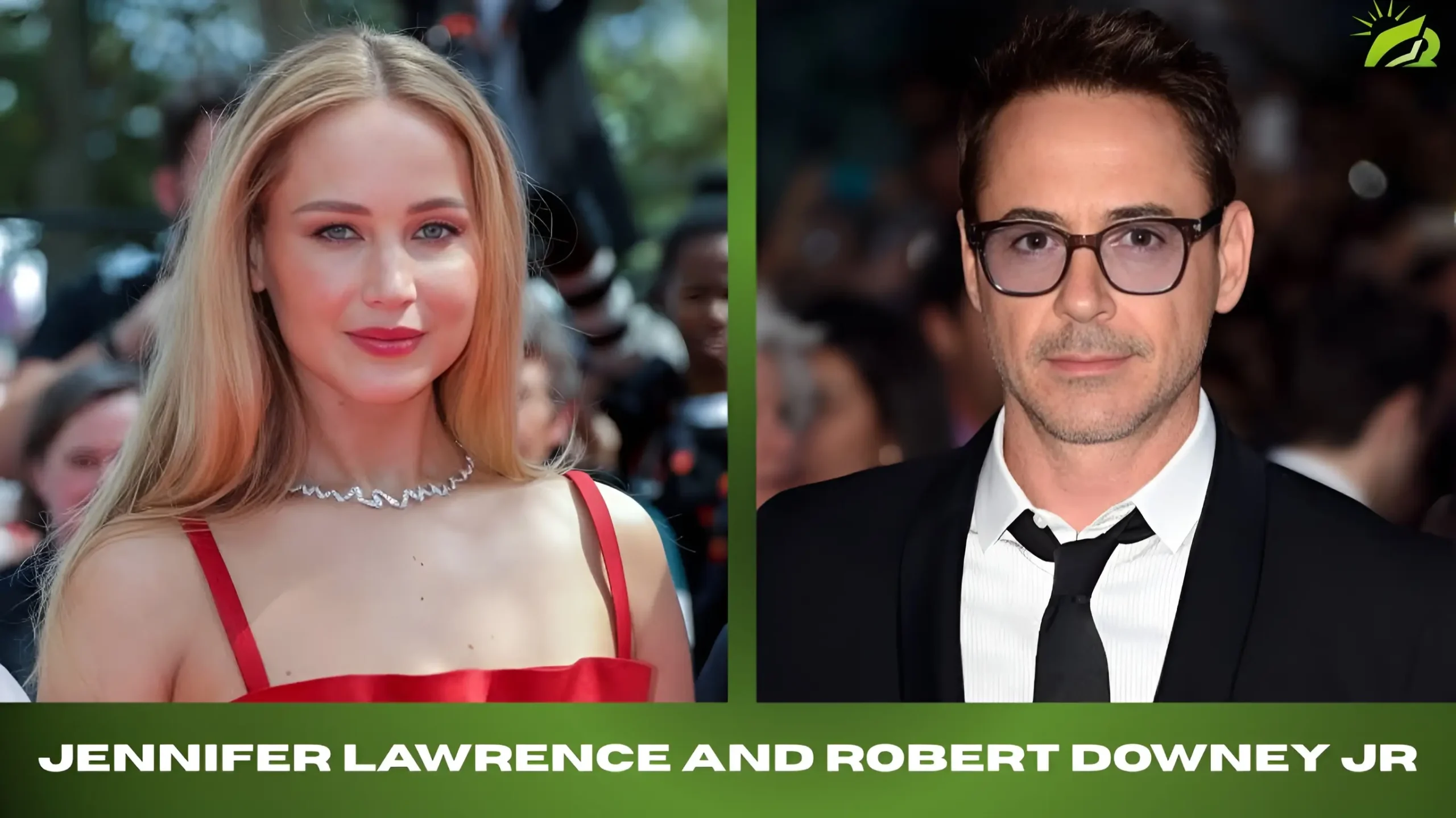
Jennifer Lawrence and Robert Downey Jr. are two of the most recognizable performers of modern Hollywood, but they reached that position through remarkably different routes. Lawrence became a defining young star through critically respected dramas, blockbuster franchises, and an Oscar-winning performance, while Downey built his reputation over several decades, experienced serious career setbacks, and ultimately transformed himself into one of the world’s most recognizable blockbuster actors.
Their names are often searched together because they occupy a similar place in popular culture: both are charismatic performers who can move between prestige projects and major commercial entertainment. They also crossed paths publicly during major Hollywood events. For example, both were among the presenters announced for the 2014 Golden Globe Awards, placing them together within one of the industry’s most visible award-season events.
At the 2015 People’s Choice Awards, their parallel popularity became even more obvious. Downey won Favorite Movie Actor, while Lawrence won Favorite Movie Actress and Favorite Action Movie Actress. The pair therefore represented two sides of the same star-driven Hollywood culture even though their careers were not built around a shared franchise.
But what really makes a comparison interesting is not a single event. It is the contrast between their journeys.
Lawrence’s career demonstrates how a relatively young performer can move from independent cinema into worldwide franchise fame without losing a strong awards identity. Downey’s career demonstrates how persistence, talent, reinvention, and the right character can completely redefine a long-established actor’s public image.
This detailed look at Jennifer Lawrence and Robert Downey Jr. explores their backgrounds, acting styles, biggest career turning points, awards histories, public appeal, business influence, similarities, differences, and what their careers can teach us about modern movie stardom.
Jennifer Lawrence and Robert Downey Jr. at a Glance
Jennifer Lawrence was born in Louisville, Kentucky, on August 15, 1990. She began acting professionally at a young age and gained substantial attention for Winter’s Bone, a performance that established her as a serious dramatic actor before her global franchise success. She later became internationally famous as Katniss Everdeen in The Hunger Games series and as Mystique in the X-Men films.
Robert Downey Jr. was born in New York City on April 4, 1965. His career began decades before Lawrence’s, and he developed a reputation through a mixture of dramatic, comedic, and character-driven work. His performance as Charlie Chaplin earned significant critical recognition, while later films such as Kiss Kiss Bang Bang helped reinforce his range. His portrayal of Tony Stark in the Marvel films eventually made him an international blockbuster icon.
Their basic career profiles reveal the biggest distinction between them:
- Jennifer Lawrence represents a comparatively rapid rise to international stardom.
- Robert Downey Jr. represents a long career shaped by reinvention and a spectacular late-career transformation.
- Both have demonstrated that mainstream popularity and serious acting recognition can coexist.
- Both have built strong identities around personality as well as performance.
- Neither actor depends on only one type of role to define their entire career.
That combination makes their comparison much more meaningful than simply asking who is more famous.
How Jennifer Lawrence Became a Major Hollywood Star

Jennifer Lawrence’s rise is interesting because it began with work that was far removed from the image of a traditional blockbuster celebrity.
Her breakthrough in Winter’s Bone introduced audiences to a performer capable of handling difficult material with remarkable emotional restraint. The film did not depend on conventional Hollywood glamour. Instead, Lawrence’s impact came from her ability to make a determined and vulnerable character feel authentic.
That early credibility became extremely valuable later.
When an actor enters blockbuster cinema after establishing serious dramatic credentials, audiences are often more willing to view the performer as a complete artist rather than simply the face of a franchise. Lawrence benefited from exactly that progression.
Her role as Katniss Everdeen in The Hunger Games then changed the scale of her career. Katniss was not simply another popular movie character. The character became a symbol of resilience, independence, leadership, and resistance, and Lawrence became closely associated with those ideas.
The success of the franchise also demonstrated that Lawrence could carry a large-scale film series rather than merely contribute to an ensemble.
At the same time, she continued working with filmmakers and casts associated with awards-oriented cinema. Her work with David O. Russell was particularly important. Lawrence won Golden Globe awards for Silver Linings Playbook, American Hustle, and Joy, showing how successfully she could move between commercial recognition and awards recognition.
Her Oscar win for Silver Linings Playbook added another important layer to her profile. The Academy lists Lawrence as the winner of the 2013 Best Actress Oscar for the film.
The result was a career that could operate on several levels simultaneously.
Lawrence could be:
- the lead of a major franchise,
- a respected dramatic performer,
- a comedic presence,
- an awards-season favorite,
- and a highly recognizable celebrity personality.
That flexibility has been one of the greatest strengths of her career.
Robert Downey Jr.’s Extraordinary Career Reinvention
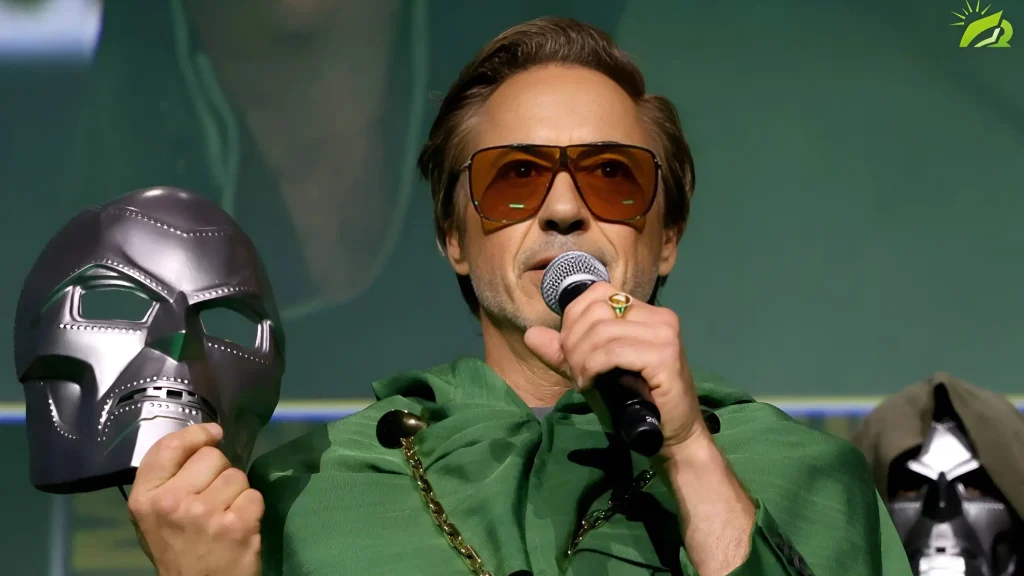
Robert Downey Jr.’s career tells a very different story.
Unlike Lawrence, he was not a new face when he reached the height of his international fame. He had already been acting for many years and had accumulated a substantial body of work.
His performance in Chaplin is an important example of the range he displayed before the Marvel era. He also worked across comedy, drama, television, and character-driven films. Later projects such as Zodiac, Tropic Thunder, and Kiss Kiss Bang Bang reinforced the idea that his appeal went far beyond one genre.
Yet his public identity changed dramatically when he became Tony Stark.
Iron Man transformed Downey from an actor with a complicated and unconventional career history into the central face of a globally expanding cinematic universe.
Tony Stark worked because the character matched many qualities audiences already responded to in Downey’s screen presence: speed, wit, confidence, intelligence, sarcasm, vulnerability, and an underlying emotional complexity.
He did not have to suppress his distinctive personality to make the role work. Instead, the role amplified it.
That is one of the clearest lessons from Downey’s career.
Sometimes a star becomes successful not by becoming less distinctive, but by finding a character and creative environment that make the person’s existing strengths more valuable.
Downey’s Marvel run ultimately included Iron Man, The Avengers, Iron Man 2, Iron Man 3, Avengers: Age of Ultron, Captain America: Civil War, Spider-Man: Homecoming, Avengers: Infinity War, and Avengers: Endgame. His Tony Stark performance became one of the defining elements of the modern superhero era.
The later chapter of his career offered another kind of reinvention.
His role as Lewis Strauss in Christopher Nolan’s Oppenheimer showed audiences a different version of Downey. The character required calculation, restraint, ego, tension, and controlled dramatic intensity rather than the rapid-fire humor that had become closely associated with Tony Stark.
That performance earned him the Academy Award for Best Supporting Actor.
His career therefore contains one of Hollywood’s most compelling arcs: early promise, significant turbulence, blockbuster reinvention, and later critical validation.
What Connects Jennifer Lawrence and Robert Downey Jr.?
The connection between Jennifer Lawrence and Robert Downey Jr. should not be exaggerated. Their careers are not built around a long-running on-screen partnership, and they are not primarily known as co-stars.
Instead, their connection is best understood through Hollywood culture, public visibility, awards recognition, and the way audiences respond to distinctive screen personalities.
Both became major stars during periods when movie audiences increasingly expected actors to function as recognizable personal brands.
Their names can therefore generate interest even when they are not promoting the same film.
That phenomenon is particularly strong with performers who have become larger than individual roles.
Jennifer Lawrence is associated with Katniss, Mystique, dramatic work, comedy, candid interviews, and an energetic public persona.
Robert Downey Jr. is associated with Tony Stark, Sherlock Holmes, character acting, reinvention, sharp humor, and a long history of career evolution.
In both cases, audiences recognize the person almost as quickly as they recognize the character.
This is a major form of modern star power.
Their 2014 Golden Globes Connection
One of the clearest documented moments connecting Jennifer Lawrence and Robert Downey Jr. came during the 2014 Golden Globe Awards.
Both actors were announced among the presenters for that ceremony. The Golden Globes are one of the most visible stops in the annual Hollywood awards calendar, so appearing together in that setting placed them within the same high-profile entertainment moment.
Why does this matter?
Because award shows are not merely about handing out trophies.
They are also major showcases of Hollywood status.
A presenter lineup can bring together performers from different generations, studios, genres, and franchises. Lawrence represented the rapidly rising generation of actors who had become major box-office attractions while maintaining awards credibility. Downey represented an established veteran whose modern blockbuster status had reached another level.
Their presence at the same event reflected a broader change in the entertainment industry: movie stars were increasingly expected to be both highly bankable and culturally visible.
Lawrence and Downey were particularly effective examples of that model.
Their 2015 People’s Choice Awards Connection
Their parallel popularity was even more visible at the 2015 People’s Choice Awards.
That ceremony emphasized audience voting, making it a useful snapshot of popular appeal rather than simply industry recognition.
Robert Downey Jr. won Favorite Movie Actor, while Jennifer Lawrence won Favorite Movie Actress and Favorite Action Movie Actress.
That overlap is important because it demonstrates that both actors had become deeply familiar to mainstream audiences.
Their success was not limited to critics or awards bodies.
They were also performers whom ordinary moviegoers actively connected with.
This distinction helps explain why their names continue to generate search interest years after the peak of some of their most famous films.
Jennifer Lawrence’s Acting Style
Jennifer Lawrence’s biggest strength is often her ability to make heightened material feel grounded.
She can operate within a huge franchise environment without making the character feel artificial.
That quality became especially noticeable in The Hunger Games.
Katniss lives inside a fictional world with exaggerated costumes, political spectacle, violence, and elaborate mythology. Yet Lawrence’s performance remained centered on emotion, survival, fear, loyalty, and personal relationships.
The result was a character who felt human even when the surrounding world was highly stylized.
Lawrence is also effective when comedy relies on timing rather than physical exaggeration. Her screen persona often works because she can make awkwardness, frustration, confidence, and vulnerability coexist within the same scene.
Another important strength is her willingness to allow imperfections to remain visible.
Rather than creating an untouchably polished movie-star image, she has often projected a sense of spontaneity.
That makes audiences feel that the person behind the performance is accessible.
Robert Downey Jr.’s Acting Style
Downey’s screen presence is built around energy.
He can deliver lines quickly, shift emotional registers rapidly, and create the impression that his character is thinking several moves ahead.
But his range is sometimes underestimated because Tony Stark became such an enormous cultural phenomenon.
The Marvel character can dominate public perception so completely that audiences forget Downey had already demonstrated considerable dramatic ability.
His Oppenheimer performance offered a useful reminder of that range.
Instead of relying heavily on improvisational charm, Downey had to build a more controlled character whose power often came from silence, suspicion, and psychological tension.
His Golden Globe win for the role and subsequent Oscar victory reinforced that his career should be viewed as broader than superhero cinema.
Downey’s performance style can generally be characterized by several recurring strengths:
- verbal precision,
- strong comic timing,
- expressive physical behavior,
- emotional reversals,
- confidence,
- and the ability to make complicated characters feel watchable.
His great advantage has always been his unmistakable presence.
Jennifer Lawrence vs. Robert Downey Jr.: Different Generations, Similar Impact
The age difference between them is significant, but their cultural influence is surprisingly comparable.
Lawrence represents a generation of stars whose fame expanded through social media, internet culture, franchise cinema, and global streaming-era visibility.
Downey’s original rise happened in an earlier Hollywood environment, but his later career demonstrated an impressive ability to thrive in the modern blockbuster ecosystem.
This means the two stars provide an unusually useful comparison.
Lawrence’s fame expanded rapidly.
Downey’s fame expanded repeatedly.
Lawrence moved upward through the traditional progression of serious acting, breakout role, franchise leadership, awards success, and continued mainstream visibility.
Downey moved through multiple versions of himself as an actor before discovering perhaps his most commercially powerful identity.
In other words, Lawrence is a story of acceleration, while Downey is a story of transformation.
Case Study 1: Jennifer Lawrence and the Power of Franchise Credibility
Jennifer Lawrence provides an interesting example of how a performer can use a major franchise without becoming completely dependent on it.
A franchise can create global recognition, but it can also create a branding problem.
An actor becomes so closely associated with one character that audiences struggle to imagine them elsewhere.
Lawrence largely avoided that outcome.
Her work outside The Hunger Games helped keep her profile diverse. She appeared in films that allowed her to explore different emotional registers, genres, and adult characters.
This offers an important career lesson.
A franchise can be most valuable when it expands an actor’s audience while the actor simultaneously continues developing a separate identity.
Lawrence’s career illustrates that balance.
Her Oscar for Silver Linings Playbook arrived during the period in which her franchise profile was becoming enormous.
That timing helped establish her as more than a blockbuster face.
From a career-positioning perspective, that was powerful.
Case Study 2: Robert Downey Jr. and the Power of Reinvention
Robert Downey Jr. offers a completely different lesson.
An established actor can experience career disruption and still rebuild a stronger public identity.
The important part is not merely surviving difficulty.
It is finding a new narrative.
Downey’s transformation into Tony Stark gave audiences a role through which they could once again experience his strengths at full scale.
The character was funny but serious, arrogant but vulnerable, powerful but emotionally damaged.
That complexity gave Downey room to use his existing talents while reaching a vastly broader audience.
Years later, Oppenheimer provided another reinvention.
The role moved him away from the heroic image of Tony Stark and into a more psychologically layered dramatic performance. His Oscar win confirmed the effectiveness of that second transformation.
The career lesson is simple: a successful second act can be just as important as an impressive first act.
Case Study 3: Why Their Audience Appeal Works Differently
A useful way to compare Jennifer Lawrence and Robert Downey Jr. is to look at why people enjoy watching them.
Lawrence’s appeal often comes from relatability.
She can feel spontaneous, imperfect, funny, serious, vulnerable, and confident without seeming overly manufactured.
Downey’s appeal often comes from charisma.
He can appear clever, unpredictable, highly controlled, rebellious, or effortlessly entertaining.
These are different forms of star power.
Lawrence invites audiences into the emotional experience of the character.
Downey often pulls audiences toward the personality of the performer.
Of course, both actors can do both things.
That overlap is why comparing them is more interesting than simply placing their filmographies next to each other.
Their Approach to Blockbuster Cinema
Blockbuster cinema has changed dramatically during both actors’ careers.
When Lawrence rose to prominence, franchise films were already becoming major cultural events. The Hunger Games demonstrated that a young female protagonist could carry a global franchise and become the center of mainstream pop culture.
Downey, meanwhile, became one of the defining faces of the interconnected superhero-film era.
Both careers therefore became tied to the expansion of franchise storytelling.
Yet they approached it from opposite directions.
Lawrence entered franchise cinema as a rapidly rising performer.
Downey entered it as an established actor who was being given a chance to redefine his commercial value.
That distinction matters.
Lawrence’s franchise role expanded her reach.
Downey’s franchise role rebuilt and expanded his reach.
Awards Recognition and What It Says About Their Careers
Awards do not provide a perfect measure of acting quality, but they can reveal how the industry perceives a performer at certain points in a career.
Jennifer Lawrence’s awards record demonstrates that her success has never depended exclusively on blockbuster popularity. She has received multiple Golden Globe wins, including recognition for Silver Linings Playbook, American Hustle, and Joy.
Her Oscar for Silver Linings Playbook is particularly significant because it came relatively early in her career.
Robert Downey Jr.’s awards trajectory is different.
His Golden Globe history stretches across several stages of his career, including recognition for Ally McBeal, Sherlock Holmes, and Oppenheimer.
His Academy Award for Oppenheimer represented a later-career milestone.
The contrast can therefore be summarized this way:
Lawrence achieved major awards validation during her rise.
Downey achieved one of his most defining awards milestones after decades of professional evolution.
That difference is one of the most compelling elements in their stories.
Why Audiences Continue Searching for Jennifer Lawrence and Robert Downey Jr.
Search interest around celebrity names rarely comes from one reason.
People may search two actors together because they appeared at the same ceremony, worked with the same people, belong to similar cultural conversations, or simply seem like natural candidates for comparison.
The pairing of Jennifer Lawrence and Robert Downey Jr. is particularly attractive because each represents an exceptionally recognizable Hollywood archetype.
Lawrence represents the modern franchise-era leading actress who successfully crossed into awards prestige.
Downey represents the veteran performer whose career was transformed by a defining blockbuster role and later strengthened by a dramatic comeback.
When these narratives are placed side by side, readers naturally begin asking questions:
Are they friends?
Have they worked together?
Have they ever starred in the same movie?
Who has won more major awards?
Who had the bigger franchise impact?
Who has the more varied filmography?
Which actor has had the more dramatic career transformation?
These questions are more useful than rumors because they encourage meaningful discussion about actual careers.
Have Jennifer Lawrence and Robert Downey Jr. Worked Together?
The two actors have shared high-profile Hollywood spaces, including the 2014 Golden Globe presentation lineup, but they are not primarily known for having a major long-running screen partnership.
That distinction is important.
Celebrity searches often create the impression that two people must have worked together because their names appear side by side in search results, entertainment articles, or social posts.
But being connected in public culture is not the same as being co-stars in a major film.
Their most meaningful connection is therefore one of parallel careers and shared Hollywood visibility, not a signature collaborative film franchise.
That may actually be what makes the comparison interesting.
Readers are not simply looking for a movie recap.
They are often looking for an explanation of why two seemingly different actors are being discussed together.
Are Jennifer Lawrence and Robert Downey Jr. Similar as Celebrities?
Yes, although their public styles are different.
Both have strong personalities that extend beyond their roles.
Lawrence has often been perceived as candid and spontaneous in public appearances, while Downey has built a reputation around wit, intelligence, and polished charisma.
Both also benefit from being recognizable even to people who do not closely follow their entire filmographies.
This is the difference between film recognition and star recognition.
A highly successful character actor may be recognized when a particular film appears on screen.
A movie star like Lawrence or Downey can be recognized from a trailer, photograph, interview, award-show appearance, or single line of dialogue.
That broader recognition is a powerful commercial asset.
The Importance of Persona in Their Success
Modern Hollywood increasingly relies on stars who can generate interest before audiences ever see the movie.
This is where persona becomes important.
Jennifer Lawrence has cultivated a persona that feels less polished than the traditional Hollywood archetype. That informality has become part of her appeal.
Robert Downey Jr. has embraced an entirely different kind of visibility. His personality is often integrated into his performances, particularly in roles where intelligence, confidence, and humor are central.
In both cases, the audience develops expectations.
When viewers buy a ticket to a Jennifer Lawrence film, they expect emotional credibility and personality.
When viewers choose a Robert Downey Jr. project, they often expect charisma, intelligence, humor, and strong screen presence.
Those expectations can become valuable forms of brand recognition.
Jennifer Lawrence’s Biggest Career Strengths
One of Lawrence’s most valuable strengths is range without complete loss of identity.
She can move from dramatic cinema to science fiction, from franchise action to comedy, and from emotional character work to celebrity-driven entertainment.
Another strength is emotional accessibility.
Her characters often feel as though they are reacting genuinely to the situations around them rather than performing only for the audience.
Her career also shows the importance of timing.
The combination of Winter’s Bone, Silver Linings Playbook, The Hunger Games, American Hustle, Joy, and later projects allowed her to continually refresh her public image. Her Golden Globe record reflects that breadth.
Perhaps most importantly, she became a major star without losing the impression that she was still an actor first.
Robert Downey Jr.’s Biggest Career Strengths
Downey’s greatest strength is adaptability.
He has successfully played troubled artists, comic characters, detectives, superheroes, historical figures, and serious dramatic personalities.
His range is especially impressive because he has not simply changed costumes from film to film.
He has repeatedly changed the emotional rhythm of his performances.
Tony Stark works through speed and humor.
Lewis Strauss works through restraint and psychological tension.
Sherlock Holmes depends on observation, eccentricity, and controlled chaos.
These are very different performance modes.
His other great strength is resilience.
The word “comeback” is often used too casually in entertainment, but Downey’s career genuinely illustrates reinvention on a remarkable scale.
His later Oscar win for Oppenheimer made that transformation even more significant.
What Jennifer Lawrence and Robert Downey Jr. Reveal About Hollywood
Together, these careers demonstrate a broader truth about the entertainment industry.
Hollywood success is not a single straight line.
There is no universal formula that says an actor must begin in independent film, become a franchise star, win awards, and retire at the top.
Actors can take different routes.
Lawrence achieved rapid global recognition and then continued to develop her artistic identity.
Downey spent decades moving through different professional phases before reaching a level of commercial fame that few performers ever achieve.
Both paths worked because each actor developed a recognizable personal identity.
That is perhaps the most important common factor.
Their Influence on the Idea of the Movie Star
For decades, the classic movie star was expected to project glamour, mystery, and distance.
Today’s audience often expects something different.
Modern stars are frequently expected to seem human.
They are interviewed constantly.
They appear on talk shows, social media clips, red carpets, fan videos, podcasts, and promotional tours.
Jennifer Lawrence fits this environment particularly well because her public persona often feels conversational rather than highly formal.
Downey also fits it, but through a different route. His quick humor and highly recognizable voice make him especially effective in interviews and promotional settings.
Both therefore demonstrate how modern celebrity has become an extension of acting.
The audience is no longer experiencing a performer only through films.
They are experiencing the performer as an ongoing public personality.
Could Jennifer Lawrence and Robert Downey Jr. Work Well in a Future Movie?
As a hypothetical pairing, the combination is easy to imagine.
Lawrence often works effectively in roles where emotional realism and personality are important.
Downey is particularly effective when the character requires verbal dexterity, intelligence, and layered charisma.
A film that gave them sharply contrasting roles could create interesting tension.
For example, one could imagine Lawrence playing a determined investigator while Downey plays an unpredictable strategist. Another possibility would be a dark comedy in which both characters are intelligent but pursue completely different goals.
The appeal would not come merely from their fame.
It would come from contrast.
Lawrence could provide grounded emotional realism while Downey contributes volatility and wit.
That kind of pairing could work especially well in a sophisticated comedy, thriller, political drama, or character-driven ensemble film.
Still, there is no need to invent an existing project to make the comparison interesting. Their real careers already provide enough material.
Jennifer Lawrence and Robert Downey Jr. as Long-Term Brands
A movie star’s career today is partly a branding exercise.
A successful performer needs to answer a basic question:
What should audiences expect when they see this name?
Jennifer Lawrence has built an answer around versatility, emotional credibility, strong female characters, franchise leadership, and an unusually recognizable personality.
Robert Downey Jr. has built an answer around charisma, reinvention, intelligence, humor, and the ability to take over a scene.
Neither brand is limited to one movie.
That is the key.
The strongest actor brands are not built around a single role. They are built around a collection of qualities that audiences enjoy seeing repeatedly.
A Deeper Comparison of Their Career Journeys
The easiest way to compare them is to think of their careers as two different forms of momentum.
Jennifer Lawrence: upward momentum
Lawrence’s rise was comparatively fast. She established herself with acclaimed work, became the lead of a major franchise, won an Oscar, and continued appearing in projects across genres.
Her career shows the value of momentum.
Each major success introduced her to a larger audience.
Robert Downey Jr.: cyclical momentum
Downey’s career developed in waves.
He built credibility, encountered periods of difficulty, found new opportunities, became a blockbuster icon, and eventually experienced another artistic peak.
His career shows the value of reinvention.
Each new phase changed how audiences understood him.
These are two different but equally powerful models of longevity.
The Cultural Legacy of Jennifer Lawrence
Lawrence’s cultural legacy is closely connected to the importance of Katniss Everdeen.
Katniss became more than a successful fictional character.
She became one of the most visible young female protagonists in mainstream franchise cinema.
That legacy strengthened Lawrence’s position as an actress capable of leading large-scale projects without losing audience empathy.
But her legacy is not limited to The Hunger Games.
Her Oscar-winning work and other dramatic performances helped establish a second identity that existed independently of the franchise.
That dual legacy is important.
Future discussions of Lawrence are likely to include both her franchise achievements and her awards-level acting.
The Cultural Legacy of Robert Downey Jr.
Downey’s cultural legacy is inseparable from Tony Stark.
Few actors become so strongly associated with a single modern character that audiences almost treat the actor and role as interchangeable.
Downey helped define the tone of Marvel’s early cinematic universe through a combination of humor, vulnerability, arrogance, intelligence, and emotional growth.
But his legacy extends beyond Iron Man.
His Oscar-winning performance in Oppenheimer reinforced the idea that he remains capable of serious dramatic transformation long after becoming one of the biggest faces of blockbuster cinema.
That gives his career unusual depth.
He is simultaneously a franchise icon and an award-winning character actor.
What Makes Their Comparison So Searchable?
The keyword Jennifer Lawrence and Robert Downey Jr. has a natural curiosity factor.
People tend to search celebrity combinations when the two names have enough similarity to invite comparison but enough difference to create questions.
In this case, both actors:
- are Oscar winners,
- have major franchise credentials,
- are widely recognizable,
- have strong individual screen identities,
- have appeared in high-profile award-season environments,
- and have careers that demonstrate unusual longevity.
The difference is that their journeys are almost mirror opposites.
Lawrence became huge very quickly.
Downey became huge after years of professional evolution.
That contrast creates a stronger narrative than a simple biography of either actor alone.
Frequently Asked Questions About Jennifer Lawrence and Robert Downey Jr.
Q1: Are Jennifer Lawrence and Robert Downey Jr. related?
A: There is no established public family relationship connecting Jennifer Lawrence and Robert Downey Jr. They are two separate Hollywood performers whose careers have occasionally overlapped in public entertainment spaces.
Q2: Have Jennifer Lawrence and Robert Downey Jr. starred in a movie together?
A: They are not primarily known for a major feature-film collaboration. Their public connection is better understood through shared Hollywood events and comparable levels of mainstream recognition rather than a famous co-starring movie.
Q3: Did Jennifer Lawrence and Robert Downey Jr. appear at the same awards show?
A: Yes. Both were announced as presenters for the 2014 Golden Globe Awards.
Q4: Did both win People’s Choice Awards?
A: Yes. At the 2015 People’s Choice Awards, Robert Downey Jr. won Favorite Movie Actor, while Jennifer Lawrence won Favorite Movie Actress and Favorite Action Movie Actress.
Q5: Who has the more dramatic career story?
A: That depends on how “dramatic” is defined. Lawrence’s story is notable for a rapid rise from acclaimed young performer to global franchise star and Oscar winner. Downey’s story is notable for its major career setbacks, extraordinary blockbuster resurgence, and later Oscar success.
Q6: What is Jennifer Lawrence best known for?
A: She is best known for roles including Katniss Everdeen in The Hunger Games series, Mystique in the X-Men films, and her Oscar-winning performance in Silver Linings Playbook.
Q7: What is Robert Downey Jr. best known for?
A: He is most widely known for playing Tony Stark/Iron Man in the Marvel Cinematic Universe, along with roles in films such as Sherlock Holmes and Oppenheimer.
Q8: Has Jennifer Lawrence won an Oscar?
A: Yes. She won the Academy Award for Best Actress for Silver Linings Playbook at the 85th Academy Awards.
Q9: Has Robert Downey Jr. won an Oscar?
A: Yes. He won the Academy Award for Best Supporting Actor for Oppenheimer at the 96th Academy Awards.
Q10: Who has more franchise experience?
A: Both have major franchise credentials. Lawrence is strongly associated with The Hunger Games and X-Men, while Downey is most strongly associated with the Marvel Cinematic Universe. Their franchise experiences are significant but fundamentally different in structure and tone.
Q11: Why are Jennifer Lawrence and Robert Downey Jr. often compared?
A: They are comparable because both achieved exceptional levels of fame, combined mainstream popularity with awards credibility, and developed highly recognizable screen personas. Their careers also represent two different models of Hollywood success: rapid expansion and long-term reinvention.
Final Thoughts on Jennifer Lawrence and Robert Downey Jr.
The story of Jennifer Lawrence and Robert Downey Jr. is ultimately less about whether the two actors are similar and more about why both became such enduring Hollywood figures.
Lawrence built a remarkably strong career by combining independent credibility, franchise leadership, awards recognition, and a distinctive public personality. Her journey from Winter’s Bone to The Hunger Games and an Oscar for Silver Linings Playbook illustrates how quickly a performer can evolve into a global star without being defined entirely by blockbuster cinema.
Downey’s story follows a different path. His career was already substantial before his biggest commercial breakthrough, but Tony Stark gave him a role that aligned perfectly with his strengths and transformed his global status. Years later, Oppenheimer proved that his artistic identity could continue evolving beyond superhero cinema, culminating in an Academy Award for his supporting performance.
Their occasional appearances within the same Hollywood moments, including the 2014 Golden Globes and the shared success they enjoyed at the 2015 People’s Choice Awards, help explain why audiences sometimes place their names together.
But the deeper reason is their star power.
Jennifer Lawrence and Robert Downey Jr. have both reached a point where their names carry meaning beyond any single film. Their personalities, careers, performances, franchises, awards, and public identities all contribute to their recognition.
Lawrence’s career demonstrates the power of momentum, authenticity, and versatility.
Downey’s career demonstrates the power of resilience, reinvention, and finding the right role at the right time.
That is why the comparison remains interesting.
They followed different roads, worked in different eras of Hollywood history, and developed distinct performance styles. Yet both ultimately reached the same destination: becoming actors whose names alone can generate curiosity, conversation, and global attention.
And that may be the strongest connection of all.
For More Visits: Bright Magazine
Also Read: Kylie Jenner and Elizabeth Taylor: A Beauty Legacy
