

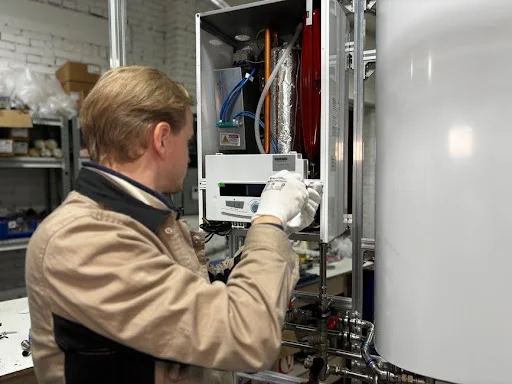
Your water heater usually stays out of sight until your shower turns cold, the utility bill jumps, or a leak shows up near the tank. At that point, you’re not dealing with a small inconvenience. You’re dealing with a system that affects your daily routine, home safety, and monthly costs. If you know what early warning signs look like, you can make smarter decisions before a minor issue turns into a full replacement.
Your hot water system does more work than you probably notice
You depend on hot water in ways that barely register until it disappears. Showers, laundry cycles, dishwashing, handwashing, and even basic cleaning all rely on a heater that delivers steady output under pressure. In most homes, that means either a storage tank unit or a tankless system, each with different performance patterns and maintenance demands.
A standard tank model constantly heats and stores water, which creates wear from sediment buildup, temperature fluctuation, and corrosion. Tankless units skip storage but can still face scale accumulation, ignition issues, and flow-rate limitations. If your system starts lagging, making noise, or producing rusty water, you’re not looking at random quirks. Those signs usually point to mechanical stress, failing components, or neglected upkeep that needs attention before your routine gets disrupted.
Installation quality affects performance, lifespan, and energy use
A lot of homeowners focus on the brand or tank size and overlook installation quality. That can be a costly mistake. A water heater has to be sized correctly for your household demand, connected with proper venting where required, and set up to meet local plumbing and safety code. If any part of that process is rushed or done poorly, efficiency and reliability can drop fast.
Pressure relief valves, expansion tanks, gas line connections, shutoff access, and drainage setup all matter. A poorly installed unit may short cycle, overheat, leak early, or waste energy every day without making the problem obvious right away. If you’re weighing options for water heater installation and repair, think beyond the appliance itself and consider the full system setup. Good installation protects both the equipment and the space around it.
Small warning signs often show up long before a total breakdown
Most water heaters don’t fail without notice. They usually send subtle signals first. Maybe your shower gets lukewarm halfway through. Maybe the hot water takes much longer to arrive. Maybe you hear popping or rumbling from the tank when nobody is using water. Those symptoms often trace back to mineral sediment collecting at the bottom of the tank, where it interferes with heat transfer.
Leaks around the base are another major warning. Even a small amount of moisture can point to valve problems, loose fittings, or internal tank damage. Discolored water can suggest corrosion inside the tank or an issue with the anode rod, which is designed to attract corrosive elements before they attack the liner. If you ignore these signs, the next stage may involve water damage, electrical hazards, or a complete loss of hot water during a busy week.
Repair makes sense in some cases, but not in every case
When your unit starts acting up, replacing it isn’t always the first move. Some issues are relatively straightforward, such as a failed heating element, a broken thermostat, a pilot light problem, or a worn pressure relief valve. These parts can often be repaired without major disruption, especially if the tank is still structurally sound.
Age changes the equation. Traditional tank water heaters often last around eight to twelve years, depending on water quality, maintenance, and usage. If your system is already near that range and showing multiple symptoms, putting money into repeated repairs may not be practical. A technician will usually look at the severity of the problem, the condition of the tank, and the cost of parts compared with replacement. You’re not just deciding whether something can be fixed. You’re deciding whether fixing it still makes financial sense over the next few years.
Household habits can quietly shorten the life of your water heater
A water heater doesn’t operate in isolation. Your usage patterns have a direct effect on wear and tear. Long back-to-back showers, frequent laundry loads, high thermostat settings, and hard water all increase strain. If you’ve added another person to the household or upgraded to appliances with different water demands, your existing unit may be working much harder than it was designed to.
Hard water is one of the biggest hidden factors. Minerals like calcium and magnesium settle inside the tank or heat exchanger and reduce efficiency over time. That buildup forces the system to use more energy and can trigger overheating. Flushing a tank periodically and checking the anode rod can improve performance and extend service life. If your area has mineral-heavy water, routine maintenance isn’t optional if you want consistent output. It’s part of basic system care, just like changing filters in HVAC equipment.
Energy efficiency matters more now than it did a few years ago
Utility costs have pushed more homeowners to pay attention to energy draw from major appliances, and water heaters are high on that list. Heating water can account for a significant share of home energy use, especially with older storage tanks that keep reheating water around the clock. If your current unit struggles to maintain temperature, there’s a good chance it’s also costing you more than it should.
Newer models often include better insulation, improved burners, more accurate thermostatic controls, and higher Uniform Energy Factor ratings. Tankless systems can reduce standby losses, though they aren’t automatically the best fit for every household. The smartest choice depends on your family size, bathroom count, fuel type, and peak usage periods. Looking at efficiency now isn’t just about sustainability language. It’s about whether your equipment still fits your daily needs without quietly draining money every month.
Paying attention early gives you more control over the outcome
The worst time to think seriously about a water heater is after it has already failed and flooded part of your home. Emergency decisions usually come with less time, fewer options, and more stress. If you notice inconsistent temperatures, unusual sounds, rusty water, moisture around the unit, or rising energy bills, treat those as useful data rather than background noise.
A water heater is one of those systems that rewards early attention. You get more control over timing, budget, and replacement choices when you act before the situation turns urgent. That doesn’t mean panicking over every small change. It means understanding what normal operation looks like in your home and responding when things shift. A little awareness goes a long way when the goal is keeping your house functional, safe, and comfortable without sudden surprises.
