

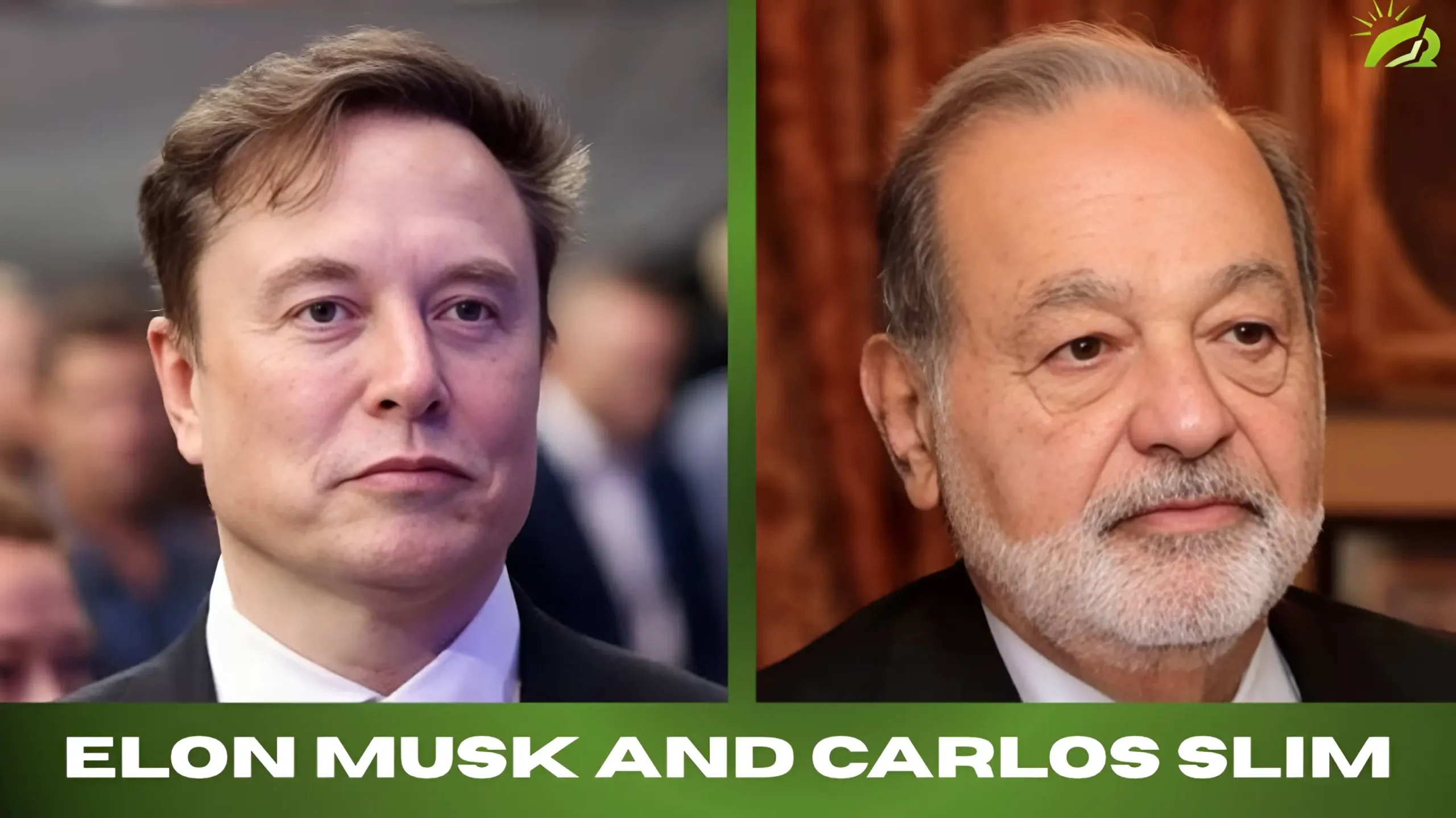
Elon Musk and Carlos Slim are two influential business figures whose careers offer fascinating examples of how different strategies can build extraordinary business success. Although they operate in different industries and have developed their fortunes through different approaches, both demonstrate the importance of identifying opportunities, making calculated decisions, and understanding how markets evolve over time.
Elon Musk is widely associated with electric vehicles, space exploration, artificial intelligence, advanced engineering, and emerging technologies. His business activities focus heavily on developing products and systems that could change how people travel, communicate, manufacture goods, and interact with technology. Tesla and SpaceX are among the companies most closely connected with his entrepreneurial career.
Carlos Slim, meanwhile, is a Mexican business magnate known for telecommunications, infrastructure, financial services, retail, and diversified investments. His business history is closely connected with Grupo Carso, América Móvil, Telmex, and other enterprises that have established positions across several industries. His approach emphasizes business fundamentals, investment discipline, operational efficiency, and the long-term development of companies.
The comparison between Elon Musk and Carlos Slim is particularly interesting because it represents two different routes to business leadership. Musk is frequently associated with ambitious technological projects and rapid product development, while Slim’s career illustrates the importance of identifying undervalued opportunities, strengthening established operations, and expanding through carefully considered investments.
Their stories also raise important questions about wealth creation, risk management, innovation, competition, and corporate responsibility. What can entrepreneurs learn from their decisions? Which business strategies appear most suitable for different industries? How do their approaches affect customers, investors, employees, and society?
Understanding these questions provides a more meaningful perspective than simply comparing their wealth or public profiles. It helps explain why both figures remain important subjects in discussions about entrepreneurship, technology, investment, and global business.
Who Is Elon Musk?
Elon Musk is an entrepreneur and business executive associated with several technology-focused companies. His career has included internet businesses, electric vehicles, reusable rockets, satellite communications, artificial intelligence, and other technically demanding projects.
His background in business and physics is often connected with his interest in solving complex engineering problems. Rather than concentrating on a single traditional industry, Musk has pursued opportunities across multiple sectors where technology can fundamentally change existing products or services.
Tesla is one of the best-known companies associated with Musk. Its business includes electric vehicles, battery products, and energy storage solutions. The company helped bring electric cars into broader discussions about mainstream transportation, vehicle performance, and the future of the automotive industry. Tesla’s official leadership profile describes Musk’s involvement in product design, engineering, and manufacturing.
SpaceX represents another major part of his business activities. The company develops rockets and spacecraft and has pursued reusable launch systems, commercial space transportation, and satellite-based internet services. Its work reflects a business strategy built around tackling difficult technical challenges that previously presented significant barriers to entry.
Musk has also been associated with Neuralink, The Boring Company, and artificial intelligence ventures. These activities demonstrate his interest in extending technology into fields beyond conventional transportation and software.
However, his entrepreneurial reputation should not be interpreted as proof that every project will succeed. Technological development involves uncertainty, large investments, regulatory requirements, engineering difficulties, and changing customer expectations. Companies can experience delays, financial pressure, product problems, and market setbacks even when their underlying ideas are ambitious.
This distinction matters when analyzing Musk’s business model. His career is not simply a story about innovation. It is also an example of the challenges involved in turning ambitious ideas into reliable, commercially sustainable products.
For entrepreneurs, one of the most important lessons from his career is the need to connect a long-term vision with practical execution. A compelling idea may attract attention, but companies ultimately need functioning products, capable teams, reliable operations, and a business model that can support continuing development.
Who Is Carlos Slim?
Carlos Slim Helú is a Mexican businessman and investor known for building a diversified collection of businesses across telecommunications, finance, industry, construction, retail, and infrastructure.
Slim studied civil engineering at the National Autonomous University of Mexico. His early business activities developed into a wider investment and industrial group, eventually associated with Grupo Carso. His official biographical history describes the expansion of these interests and the development of several major businesses.
One of the defining developments in Slim’s career was his participation in the acquisition of Telmex in 1990 alongside Southwestern Bell and France Telecom. The telecommunications sector subsequently became a major part of his business history.
América Móvil grew into a significant telecommunications enterprise serving markets across the Americas and other regions. Telecommunications businesses operate in a complex environment that includes infrastructure investment, customer service, network maintenance, licensing, competition, and technological change.
Slim’s commercial interests also extend beyond telecommunications. Grupo Carso has had operations and investments in areas such as construction, retail, industrial businesses, mining, and other sectors. This diversification illustrates his interest in creating value through multiple business activities instead of depending exclusively on one product category.
His investment philosophy is often associated with examining businesses carefully, looking for opportunities that other investors may overlook, controlling expenses, and strengthening operations over time. Such an approach can be particularly relevant when a company has established customers, valuable physical assets, or a recognizable market position but needs better management or additional investment.
Slim’s career also differs from the public image frequently associated with technology entrepreneurs. His business influence is connected less with launching futuristic consumer products and more with developing and holding interests in companies that provide services and operate substantial commercial infrastructure.
Nevertheless, it would be misleading to describe his businesses as separate from innovation. Telecommunications networks, internet access, digital services, industrial production, and modern infrastructure all require continuous technical improvement.
Slim’s career therefore provides an important lesson: innovation does not always involve inventing an entirely new product. It can also involve improving an existing service, expanding access, increasing operating efficiency, and making established businesses more competitive.
Why Are Elon Musk and Carlos Slim Compared?
The comparison between Elon Musk and Carlos Slim attracts interest because both have achieved considerable influence through business ownership, investment decisions, and participation in strategically important industries.
Their careers also challenge the idea that there is only one reliable path to entrepreneurship.
Musk’s business activities are closely associated with technology-led transformation. His companies have attempted to advance electric vehicles, commercial spaceflight, satellite communications, and other emerging technologies.
Slim’s career illustrates a different model of expansion. He has developed business interests in established sectors, built positions in telecommunications, and diversified across companies operating in several industries.
These approaches have different strengths and limitations. A technology company pursuing a new market may face uncertainty about future demand, technical feasibility, and the time required to achieve profitability. An established infrastructure business may benefit from existing customers and recognized demand but face substantial maintenance costs, regulation, and competition.
The comparison is valuable because it shifts the discussion away from celebrity and toward business fundamentals.
Consider several important questions:
- How does a business identify an attractive market opportunity?
- Should an entrepreneur prioritize developing new technology or acquiring an established company?
- How much financial risk should a business accept to pursue growth?
- Is diversification more useful than concentrating on a single industry?
- How can companies remain competitive after their initial success?
- What responsibilities accompany control over essential services and influential technologies?
There is no universal answer to these questions. The most suitable strategy depends on the industry, available resources, market conditions, management capabilities, and goals of the business.
Examining Elon Musk and Carlos Slim together provides a practical way to understand why successful business leadership requires more than a large investment account or a bold vision.
Elon Musk and Carlos Slim: A Comparison of Their Business Approaches
Although both figures are influential in business, their careers reflect different priorities.
| Business factor | Elon Musk | Carlos Slim |
|---|---|---|
| Main business association | Technology, electric vehicles, space, and AI | Telecommunications, infrastructure, finance, and diversified industry |
| Commonly associated strategy | Developing new products and technological capabilities | Investing in businesses and strengthening established operations |
| Approach to growth | Product development, engineering, and technology-led expansion | Acquisitions, operational improvement, and diversification |
| Important business challenge | Converting ambitious innovation into sustainable commercial results | Preserving competitiveness and value across a diversified portfolio |
| Risk considerations | Technical uncertainty, capital needs, execution, and regulation | Valuation, operating efficiency, market conditions, and regulation |
| Broader lesson | Innovation requires execution and persistence | Investment discipline requires patience and sound judgment |
This table summarizes broad patterns rather than claiming that either individual follows an unchanging formula. Both approaches can evolve as markets and companies change.
Innovation Versus Operational Improvement
Musk’s business model often involves entering an area where technical challenges have prevented widespread adoption or where existing products could be substantially improved.
Electric vehicles illustrate this approach. Making an electric car attractive to a large market involves much more than installing a battery in a vehicle. Manufacturers must consider driving range, charging access, cost, manufacturing efficiency, software, safety, and customer expectations.
The opportunity lies in bringing these elements together into a competitive product.
Slim’s business history offers a complementary perspective. An established company can sometimes create significant value without inventing an entirely new category. Better cost management, improved distribution, stronger customer relationships, targeted investment, and more efficient operations can substantially improve a business.
Both methods involve innovation in a broad sense, but the source of the advantage differs.
One approach seeks to change what a market can offer. The other may seek to improve how an existing business serves a market.
Neither should automatically be considered superior. A groundbreaking product can fail because it is too expensive or difficult to manufacture. A carefully managed traditional business can lose customers if it ignores technological change.
The central challenge is matching the strategy to the opportunity.
Building a Business for the Long Term
Long-term thinking is another important area of comparison.
Space exploration, advanced engineering, and emerging technologies can involve lengthy development cycles. Companies must invest in research, test products, resolve technical failures, and develop markets that may not yet be fully mature.
This creates a difficult balance between pursuing long-term ambitions and maintaining financial stability in the present.
Businesses associated with Slim’s investment history face a different version of the same challenge. Telecommunications networks and physical infrastructure require ongoing maintenance and modernization. Existing customers may generate recurring revenue, but companies still need to upgrade equipment, improve service, and respond to competing technologies.
Long-term business success therefore depends on both ambition and discipline.
A company cannot ignore current financial performance simply because it has an attractive future vision. Likewise, it cannot assume that historical profitability will protect it from future competition.
Entrepreneurs should establish measurable milestones, review results regularly, and make adjustments when an original strategy no longer fits market conditions.
The Industries That Define Their Business Careers
Electric Vehicles and Sustainable Energy
Electric vehicles are central to understanding Musk’s business influence. Tesla has participated in changing how consumers and manufacturers evaluate battery-powered transportation.
The opportunity extends beyond vehicle sales. Electric mobility involves battery manufacturing, charging infrastructure, software, energy storage, supply chains, and the economics of ownership.
These connected systems can create new sources of commercial value. However, they also create dependencies. A vehicle manufacturer can face difficulties if battery costs remain high, charging access is insufficient, or production expenses reduce the competitiveness of its products.
Energy storage provides another area of opportunity. Batteries can help homes, businesses, and electricity systems manage when energy is stored and used. Commercial success in this field depends on reliability, useful product life, cost, safety, and the needs of the customer.
The lesson is that technological progress must solve a real problem. A technically advanced product is not automatically commercially attractive unless it provides clear benefits relative to available alternatives.
Space Exploration and Satellite Communications
SpaceX has pursued rocket development, reusable launch systems, spacecraft, and satellite connectivity.
Space technology is difficult to commercialize because development involves specialized engineering, substantial investment, stringent safety requirements, and a limited pool of suppliers and technical expertise.
Reusable rockets offer a useful example of attempting to change the economics of an industry. Reusing expensive equipment can potentially reduce the cost of repeated operations, but achieving dependable reuse requires sophisticated engineering and reliable maintenance.
Satellite internet presents a different commercial opportunity. It can help provide connectivity in locations where terrestrial infrastructure is difficult or costly to deploy.
However, satellite-based services must still address equipment costs, service quality, capacity, weather-related effects, licensing, and competition with other connectivity options.
The larger business lesson is that an ambitious technical objective becomes meaningful when a company can translate it into a repeatable, reliable service that customers are willing to pay for.
Telecommunications and Digital Connectivity
Telecommunications is especially important when examining Carlos Slim’s business career.
Unlike a company selling a single product, a telecommunications provider must maintain a network that customers expect to work consistently. Its operations involve infrastructure, technical support, billing, customer retention, cybersecurity, and compliance with local requirements.
The sector also changes continuously. Consumers expect faster internet, better mobile coverage, reliable connections, and services that work across different devices.
América Móvil describes its operations as providing integrated telecommunications services across multiple markets in its official company overview.
A telecommunications business cannot rely indefinitely on its existing customer base. It must invest in network capacity, improve service quality, and respond to competitors offering different combinations of price and performance.
This is where capital allocation becomes important.
Management must decide which regions require new infrastructure, how quickly technology should be upgraded, and how to balance customer affordability with the cost of maintaining a dependable service.
These decisions have consequences beyond individual company profits because communications infrastructure supports education, commerce, employment, healthcare access, and everyday social interaction.
Financial Services, Retail, and Infrastructure
Slim’s diversified business history demonstrates the potential benefits of participating in several industries.
Financial services, retail, construction, industrial production, and infrastructure have different economic cycles and operating requirements. A company with interests in several sectors may be less dependent on the performance of a single market.
However, diversification is not automatically beneficial. Different businesses require different management skills, and a broad portfolio can become difficult to oversee. Investments that appear attractive individually may compete for limited capital or management attention.
Successful diversification therefore requires clear priorities.
A business group must understand which activities generate dependable cash flow, which require further investment, which carry elevated risks, and which no longer fit its long-term objectives.
For smaller entrepreneurs, the lesson is not necessarily to enter many industries at once. It is to understand the core business before expanding into activities that introduce unfamiliar risks.
Different Leadership Styles and Decision-Making Methods
Leadership is one of the most interesting parts of the comparison between Elon Musk and Carlos Slim.
A leader’s decisions influence the products a company develops, the risks it accepts, the people it hires, and the way it responds to setbacks.
Musk is widely associated with demanding technological objectives and ambitious project timelines. Such an approach can encourage teams to reconsider established assumptions and pursue solutions that initially appear difficult.
The potential advantage is speed and boldness. Teams may be motivated to challenge conventional limits, simplify designs, and focus on engineering improvements.
The risks include unrealistic expectations, excessive pressure, resource constraints, and the possibility that development targets do not align with technical realities.
Slim’s business reputation is more closely connected with investment judgment, operating efficiency, and the development of businesses over extended periods.
In industries with substantial physical assets, stable operations and careful financial decisions can be especially important. Improving an existing company may require patient management, detailed cost control, and a willingness to strengthen basic processes before pursuing dramatic expansion.
However, patience should not become complacency. Established businesses can lose relevance when management underestimates new competitors or delays necessary upgrades.
These different leadership patterns can be expressed through several practical principles:
- Set a clear direction so employees understand the problem the company is attempting to solve.
- Match ambitious objectives with realistic budgets, technical resources, and measurable targets.
- Use evidence to evaluate performance instead of relying entirely on a leader’s confidence or reputation.
- Encourage teams to identify problems early, before they become expensive failures.
- Adapt the management approach to the organization rather than assuming one leadership style works everywhere.
An early-stage technology company may need rapid experimentation. An essential infrastructure provider may need a stronger emphasis on reliability and risk controls.
Effective leadership recognizes the difference.
How They Approach Business Risk
Risk-taking is often discussed as though successful entrepreneurs simply possess more courage than everyone else. In practice, sound business judgment involves understanding which risks are worth taking, how much exposure the organization can tolerate, and what can be done if assumptions prove wrong.
The Technology Development Risk
A company pursuing an emerging technology may be investing in a product whose final cost, market demand, or technical requirements remain uncertain.
Even when the idea is attractive, development can encounter unexpected engineering problems. Suppliers may be unable to meet production requirements, customers may delay purchases, or competitors may introduce a better alternative.
For businesses following a technology-led approach, risk management should include:
- Defining technical milestones before committing to the full project budget.
- Testing whether customers genuinely need the proposed product.
- Developing backup plans for critical suppliers and equipment.
- Monitoring product safety and regulatory requirements.
- Maintaining sufficient financial flexibility to address delays.
These measures do not eliminate uncertainty. They help ensure that one unexpected problem does not undermine the entire business.
The Investment and Acquisition Risk
An investor purchasing an established business faces another set of challenges.
A company can appear inexpensive while hiding outdated equipment, excessive debt, weak customer relationships, or complicated legal obligations.
The investment may become attractive if the underlying business can be improved at a reasonable cost. But the buyer must distinguish between an undervalued company and an organization whose problems are too costly to solve.
Important questions include whether the business has sustainable demand, whether its assets have genuine economic value, how much investment it needs, and whether the management team can implement necessary changes.
This type of analysis is relevant to the investment approach often associated with Slim’s career.
Which Approach Is Better?
Neither approach is universally better.
A business entering an emerging market may need to accept technical uncertainty to establish an advantage. A business acquiring a mature company may benefit more from conservative valuation and careful financial controls.
The right approach depends on the relationship between expected benefits and potential losses.
For entrepreneurs, the most useful principle is to take risks deliberately rather than impulsively.
Confidence is valuable when it encourages action. Discipline is equally valuable when it prevents a promising idea from consuming resources without producing adequate results.
Wealth Creation and the Meaning of Business Success
Discussions about Elon Musk and Carlos Slim frequently focus on personal wealth. Such comparisons attract attention because both men have accumulated considerable economic influence.
Nevertheless, an individual’s estimated net worth is not the same as the amount of money available in a bank account.
For business owners whose fortunes are tied to company shares, private investments, and other assets, reported wealth can change substantially with market valuations. A change in the value of a major holding can alter a published estimate even if the person has not sold the investment or received an equivalent amount of cash.
This distinction is particularly important when evaluating entrepreneurs whose fortunes are closely associated with large businesses.
A meaningful comparison should consider more than a single estimate. It should examine how their assets were created, what businesses support their wealth, how much risk those businesses carry, and how their investment decisions influence long-term commercial outcomes.
Musk’s wealth is closely associated with technology and industrial enterprises. These businesses can experience changes in valuation as markets reassess their growth prospects, technological development, and future profitability.
Slim’s business history reflects a diversified collection of investments and companies, including major telecommunications holdings. Diversification changes the way an investor is exposed to different sectors, although it does not eliminate market or operating risks.
It would therefore be misleading to declare one person the superior businessman solely because a particular website reports a higher net-worth estimate on a particular day.
Wealth is one measure of financial outcome, not a complete evaluation of leadership, innovation, corporate governance, or social impact.
Business Influence Beyond Financial Wealth
The significance of Elon Musk and Carlos Slim extends into the industries their companies serve.
Technological products can alter consumer expectations, create new markets, and change the competitive position of established companies. Infrastructure businesses can influence how easily people access communications, transportation, and essential commercial services.
Both types of influence can produce advantages and responsibilities.
A company that controls an important technology needs to consider product safety, customer privacy, cybersecurity, and the long-term reliability of its services.
A telecommunications provider must consider service quality, fair treatment of customers, network resilience, and the impact of its operations on communities.
These responsibilities become more important as a company grows. Decisions made by a large organization can affect suppliers, employees, business customers, and entire regions.
Corporate influence can also create public scrutiny. Consumers, regulators, investors, and competitors may question pricing practices, market concentration, labor conditions, or the effect of a company’s decisions on the broader economy.
Business success should therefore be evaluated with an understanding of both commercial performance and wider consequences.
Neither a compelling technological vision nor a long history of profitable investment automatically settles questions about fairness, accountability, or the public interest.
Strong businesses benefit from clear governance, credible reporting, consistent standards, and mechanisms that allow problems to be identified and corrected.
Public Reputation, Criticism, and Accountability
Prominent business leaders often attract strong opinions. Supporters may emphasize their achievements, while critics may focus on business decisions, public statements, workplace issues, or the consequences of their companies’ activities.
A balanced comparison of Elon Musk and Carlos Slim should avoid treating public reputation as a substitute for evidence.
Musk’s high-profile position in technology and public debate means that his decisions and statements frequently attract attention beyond the businesses he leads. His companies also operate in sectors where technical claims, product performance, and long-term objectives can become subjects of intense scrutiny.
For readers assessing these businesses, it is useful to distinguish between announced ambitions, commercially available products, independently verifiable results, and expectations about future developments.
A development target should not be described as a completed achievement simply because a company has publicized it.
Slim’s business influence raises a different set of public-interest questions. Telecommunications and other concentrated industries can have significant effects on consumer choices, pricing, infrastructure investment, and competition.
The expansion and market position of major telecommunications businesses have often made competition policy and regulation important parts of the sector’s public discussion.
It is equally important to distinguish between an individual’s personal reputation, the conduct of a particular company, and a wider industry’s structural problems.
A fair evaluation should examine documented decisions, credible evidence, the applicable rules, and the context in which the business operates.
For general readers, this approach makes a business comparison more useful. It prevents promotional claims and criticism from replacing a careful analysis of commercial performance.
For investors and entrepreneurs, it reinforces the importance of examining both the opportunities and the risks associated with a successful business.
Philanthropy and Social Responsibility
Philanthropy provides another dimension to understanding major business figures.
Carlos Slim has supported philanthropic work through organizations including Fundación Carlos Slim and Fundación Telmex. The Carlos Slim Foundation’s overview describes programs involving education, health, employment, nutrition, culture, human development, and other social priorities.
Such programs illustrate how private wealth and organizational capacity can be directed toward social initiatives.
However, the existence of a foundation does not by itself establish the effectiveness of every program. Meaningful evaluation requires examining a project’s objectives, the people it reaches, its measurable outcomes, and whether benefits continue over time.
Musk has also been associated with charitable activity through the Musk Foundation and other initiatives. As with any major philanthropic effort, specific programs should be evaluated according to documented commitments and results rather than broad assumptions about an individual’s intentions.
There are important differences between philanthropy and a company’s core commercial activity. A donation can support a social objective, while a business investment generally requires a plan for generating financial or strategic value.
Both can contribute to society, but they should not be confused.
Responsible businesses can also create social value through employment, training, useful products, safe working conditions, and services that meet genuine customer needs.
The broader lesson is that financial success creates opportunities to contribute to society, but the quality of that contribution depends on implementation, accountability, and results.
Elon Musk and Carlos Slim: Is There a Business Partnership?
One important question surrounding Elon Musk and Carlos Slim is whether they have collaborated on a business venture or whether their companies are pursuing a shared commercial project.
The distinction between an interesting comparison and an actual partnership is essential.
There is no basis here to present the two men as business partners or to claim that their companies have an established joint venture.
In fact, a useful public record exists on the question of potential cooperation. At a press conference on February 10, 2025, Slim was asked whether his business group was considering collaboration, investment, or participation with any of Musk’s companies.
According to the English transcript published on Slim’s official website, Slim responded dismissively and stated that his group was more careful about the types of investments it pursued.
This exchange is relevant because it demonstrates that a discussion about the two business figures does not automatically indicate a commercial relationship.
Their businesses may operate in related parts of the broader economy, but that does not establish an agreement, investment, or strategic alliance.
Their differing investment priorities also help explain why a hypothetical partnership would require careful consideration.
A technology-oriented company might seek capital, infrastructure, distribution, technical expertise, or access to a new market. An established investor would need to evaluate whether the opportunity fits its objectives, whether the valuation is reasonable, and whether the risks can be adequately managed.
An investment would require more than shared interest in technology or business growth. It would need a convincing commercial rationale, clear responsibilities, suitable terms, and an assessment of the potential costs.
For that reason, the most accurate way to compare Elon Musk and Carlos Slim is to focus on their respective careers and business philosophies, rather than inventing an association that has not been established.
What Entrepreneurs Can Learn From Elon Musk and Carlos Slim
Their careers provide several practical lessons for people building businesses, managing investments, or evaluating new opportunities.
1. Identify a Problem Worth Solving
Businesses are more likely to create durable value when their products or services address real customer needs.
Musk’s technology-focused businesses illustrate the pursuit of problems involving transportation, energy, communications, and engineering.
Slim’s business history illustrates the potential value of improving established companies and expanding services in markets with substantial demand.
Entrepreneurs should begin by understanding a customer’s problem rather than assuming that an interesting product will automatically find a market.
2. Understand the Economics of the Business
A company needs a workable economic model in addition to a promising idea.
Revenue, production costs, customer acquisition, maintenance, financing, and operating expenses all influence whether a business can sustain itself.
An entrepreneur should understand how the organization earns money, what drives its costs, and which assumptions are most important to its financial stability.
This discipline is especially valuable when a company is growing quickly. Expansion can make a weak business model more expensive rather than more successful.
3. Match Strategy to the Industry
A strategy suitable for a new technology company may be inappropriate for a mature telecommunications provider.
Early-stage companies may need experimentation, product testing, and rapid learning. Established infrastructure businesses must pay particular attention to reliability, capital planning, maintenance, and regulatory responsibilities.
The best leaders understand the demands of their industries and build organizations capable of meeting them.
4. Be Patient Without Ignoring Change
Long-term planning matters, but patience should not become an excuse for avoiding difficult decisions.
Technology businesses need to test their assumptions and determine whether customers are willing to adopt new products. Established businesses need to monitor new competitors and invest in improvements before existing advantages disappear.
The objective is to preserve the ability to adapt while remaining committed to a clear purpose.
5. Make Investment Decisions With Discipline
Entrepreneurs frequently face situations where several appealing opportunities compete for limited resources.
A disciplined decision process asks which opportunity offers the strongest combination of potential benefits, manageable risks, strategic fit, and available resources.
It also recognizes when an opportunity should be rejected.
Declining a poor investment can be just as valuable as pursuing a good one.
6. Develop Strong Teams and Systems
A company cannot rely indefinitely on the judgment or energy of a single individual.
As an organization grows, its success depends increasingly on capable employees, reliable processes, effective governance, and clear accountability.
Strong systems help organizations make consistent decisions even when leaders are not directly involved in every operation.
7. Measure Results Honestly
Ambitious goals are useful only when progress can be evaluated.
Businesses should distinguish between activity and achievement. Launching a product, announcing an expansion, or acquiring an asset does not guarantee that the investment will generate the desired results.
Practical measurement includes reviewing customer satisfaction, product reliability, operating costs, cash flow, safety, and other indicators relevant to the business.
Honest evaluation allows management to correct problems before they become more difficult to solve.
Case Study 1: An Entrepreneur Choosing Between Innovation and Acquisition
The following is an illustrative scenario, not a real transaction involving Musk or Slim.
Imagine an entrepreneur who wants to enter the transportation industry. Two options appear attractive.
The first is to develop a new electric mobility product. The second is to acquire an established company that already manufactures transportation equipment.
The technology-led option could offer the chance to create a distinctive product and develop a competitive advantage. However, it would require research, engineering expertise, prototype testing, manufacturing arrangements, and a plan for reaching customers.
The acquisition option could provide existing employees, supplier relationships, production facilities, and customers. However, the entrepreneur would need to examine the company’s condition, purchase price, legal obligations, and requirements for modernization.
A technology-oriented strategy might be appropriate if the founder has a strong engineering team, sufficient development resources, and convincing evidence of demand for a new product.
An acquisition might be more appropriate if the founder understands the existing market and can realistically improve the acquired business.
The best decision would not depend on which option sounds more impressive. It would depend on a detailed evaluation of available resources, financial exposure, management capability, and expected customer demand.
The lesson: New product development and established-business investment are different tools. Successful entrepreneurs choose between them according to the opportunity rather than following a fashionable strategy.
Case Study 2: A Telecommunications Business Preparing for New Technology
This illustrative case study examines a hypothetical telecommunications provider.
The company has a substantial customer base and established network infrastructure. Its current services generate revenue, but customers increasingly expect better connectivity, faster internet, and more reliable digital services.
Management faces a strategic choice. It can continue concentrating on its existing network or begin a phased investment program that introduces new technology and expands selected services.
The first option may help control immediate spending, but excessive delay could weaken the company’s competitive position.
The second option could improve service quality and create new opportunities, but the investment must be justified by expected demand, technical feasibility, and an affordable deployment plan.
A sensible strategy begins with an assessment of customer needs, network limitations, available technology, and the cost of implementation.
Management could then test improvements in selected areas, measure service quality, and expand the program when the results support further investment.
It would also need to consider staff training, cybersecurity, regulatory obligations, customer communication, and the cost of maintaining existing services during the transition.
This type of scenario highlights the management challenges associated with an established telecommunications business. Investment discipline does not mean refusing to adopt new technology. It means identifying which improvements should be made, when they should be implemented, and how their outcomes will be evaluated.
The lesson: Established businesses protect their long-term value by combining operational discipline with timely modernization.
Case Study 3: An Investor Evaluating a High-Risk Technology Opportunity
Consider a hypothetical investor offered an opportunity to finance a company developing advanced artificial intelligence technology.
The company has an ambitious vision and a capable team. It expects the technology to create valuable services, but important questions remain about customer demand, development costs, competition, and commercial timing.
One approach would be to invest heavily at the beginning, accepting substantial uncertainty in exchange for a potentially significant future opportunity.
A different approach would be to provide funding in stages, with additional investment depending on progress against agreed milestones.
The staged approach might begin with technical validation, a demonstration of customer interest, and a preliminary financial assessment. Future funding would depend on whether the company achieved the required results.
This does not guarantee success. The project could still fail because of competition, technical limitations, or changing market conditions.
However, staged funding can provide opportunities to reassess assumptions and limit exposure when important milestones are missed.
The decision would also require examining ownership rights, governance arrangements, intellectual property, security, and how much additional funding the business might need.
This scenario is relevant to anyone comparing investment approaches associated with high-growth technology companies and established investment groups.
The lesson: Supporting innovation does not require abandoning financial discipline. Ambition and structured risk management can work together.
The Future of Their Business Legacies
The future significance of Elon Musk and Carlos Slim will depend partly on whether their businesses continue to adapt as technology, customer expectations, and competitive conditions change.
For Musk’s business interests, important questions include the commercial sustainability of new products, the reliability of complex engineering systems, the economics of manufacturing, and the ability to convert technological ambitions into enduring businesses.
Electric vehicles, energy storage, artificial intelligence, space transportation, and satellite connectivity each present different opportunities and uncertainties. Progress in one area does not guarantee success in another.
The performance of each business will depend on execution, investment requirements, market demand, competition, and the regulatory environments in which it operates.
For Slim’s business legacy, continued competitiveness will depend on how established operations respond to digital change, infrastructure needs, evolving customer expectations, and competition across different markets.
Telecommunications remains a field where reliability, coverage, pricing, and network investment influence customer decisions. Diversified businesses must also allocate resources carefully and ensure that their management structures remain effective as markets evolve.
Succession and organizational continuity are also important considerations for large business groups. Companies need leadership teams capable of making sound decisions, retaining institutional knowledge, and preparing for changes in technology and market conditions.
The broader point is that a successful business legacy is not defined only by the scale achieved in the past.
It also depends on whether an organization can continue to create value after its original growth strategy becomes less effective.
Common Misconceptions About Elon Musk and Carlos Slim
They Have the Same Business Strategy
They do not have identical business approaches. Musk is strongly associated with technology-driven projects and ambitious product development, while Slim’s business history emphasizes diversified investments, telecommunications, and established industrial operations.
Their strategies may share some general principles, including identifying opportunities and allocating resources, but their implementation differs.
A Higher Net Worth Proves Better Business Leadership
Net worth is only one measure of financial position. It can fluctuate with asset valuations and does not fully measure product quality, operational effectiveness, governance, or social impact.
A meaningful assessment requires a broader view of business results and long-term sustainability.
Every Technology Investment Is a Good Investment
Technology can create valuable opportunities, but it can also produce expensive failures.
Investors must assess customer demand, technical feasibility, operating costs, competitive advantages, and the amount of capital required before a company becomes commercially sustainable.
Established Businesses Do Not Need Innovation
Established businesses often depend on technology to maintain service quality, improve efficiency, and protect their market positions.
The type of innovation may differ from that of a new technology venture, but continuous improvement is important in both cases.
Comparing Them Means They Are Business Partners
A comparison does not establish a partnership. Their business histories can be analyzed together without suggesting that they share ownership, have a joint venture, or maintain an active commercial relationship.
Accurate reporting must distinguish between documented events and hypothetical possibilities.
Frequently Asked Questions
1. Who are Elon Musk and Carlos Slim?
Elon Musk is an entrepreneur known for his association with Tesla, SpaceX, and several other technology ventures. Carlos Slim Helú is a Mexican businessman and investor associated with telecommunications, Grupo Carso, América Móvil, and diversified business interests.
Both are influential business figures, but their careers developed through different industries and investment strategies.
2. What is the main difference between Elon Musk and Carlos Slim?
The main difference is the business approach most closely associated with each figure. Musk is known for pursuing ambitious technology projects, including electric vehicles and space exploration. Slim is known for investment, operational development, telecommunications, and diversified business holdings.
This distinction is a general comparison, not a claim that either person uses only one strategy.
3. Are Elon Musk and Carlos Slim business partners?
They should not be described as established business partners without evidence of an actual commercial agreement. During a press conference on February 10, 2025, Slim was asked about potential collaboration or investment with Musk’s companies and publicly expressed reluctance. The exchange appears in the press conference transcript on Slim’s official website.
4. What companies are associated with Elon Musk?
Musk is associated with Tesla, SpaceX, Neuralink, The Boring Company, and artificial intelligence ventures. Their activities include electric vehicles, energy products, space transportation, satellite communications, and emerging technology.
The management structure and operations of these companies may evolve over time, so specific current roles should be confirmed through official corporate information.
5. What businesses are associated with Carlos Slim?
Slim’s business history is closely associated with Grupo Carso, América Móvil, Telmex, and investments in telecommunications, industry, infrastructure, finance, and retail. His business interests have developed through acquisitions, investments, and the expansion of operating companies.
The precise management responsibilities across these organizations can change, so an analysis should distinguish his historical business influence from the day-to-day roles of other executives.
6. Who has the better business strategy?
There is no universal answer because the two approaches address different business environments.
Technology-led innovation may offer opportunities to create new markets, but it can involve substantial technical and commercial uncertainty. Investing in established companies can offer different advantages, including existing operations and customer relationships, but still requires careful valuation and continued adaptation.
The better strategy is the one that fits the business opportunity, available resources, and acceptable level of risk.
7. What can entrepreneurs learn from Elon Musk and Carlos Slim?
Entrepreneurs can learn the importance of identifying genuine customer needs, understanding business economics, allocating capital carefully, adapting to technological change, and building capable teams.
Musk’s career highlights the challenges of turning ambitious technologies into commercial products, while Slim’s business history illustrates the potential value of investment discipline, operational improvement, and diversification.
Both perspectives can help business owners make more informed decisions.
8. Why are Elon Musk and Carlos Slim frequently compared?
They are compared because both have built substantial business influence, participated in strategically important industries, and become prominent examples of entrepreneurship and investment.
Their different approaches also make the comparison useful for understanding how technology development, acquisitions, diversification, and long-term investment can create different forms of business value.
9. Do Elon Musk and Carlos Slim invest in the same industries?
Their business interests have some broad areas of potential overlap, particularly in technology and infrastructure, but overlap at an industry level does not establish common investments.
Any claim about a shared investment, joint venture, or business agreement requires specific supporting evidence.
10. What is the most important lesson from comparing Elon Musk and Carlos Slim?
The most important lesson is that business success does not come from following a single formula. Companies need strategies suited to their markets, disciplined investment decisions, effective execution, and the ability to adapt when circumstances change.
Both innovation and operational improvement can create value when they address real business needs.
Conclusion
The comparison of Elon Musk and Carlos Slim reveals two different approaches to building and sustaining business influence. Musk’s career is closely associated with technological ambition, engineering, and the development of products intended to change established industries. Slim’s history illustrates the opportunities available through investment, diversification, operational efficiency, and the development of established companies.
Their business models are not interchangeable. Each operates within different markets and faces distinctive technical, financial, competitive, and regulatory challenges.
For entrepreneurs, the value of comparing these two figures lies in understanding the principles behind their careers rather than treating either as a universal model for success.
Innovation must lead to useful products and sustainable operations. Investment requires careful evaluation of value and risk. Growth requires capable teams, reliable processes, and a willingness to adapt.
Ultimately, the business legacies of Elon Musk and Carlos Slim demonstrate that there are multiple paths to creating economic value. The most effective path depends on the opportunity, the people involved, the resources available, and the ability to turn a clear strategy into measurable results.
For More Visits: Bright Magazine
Also Read: Leslie Lovitz: What to Know About Jon Lovitz’s Sister
