

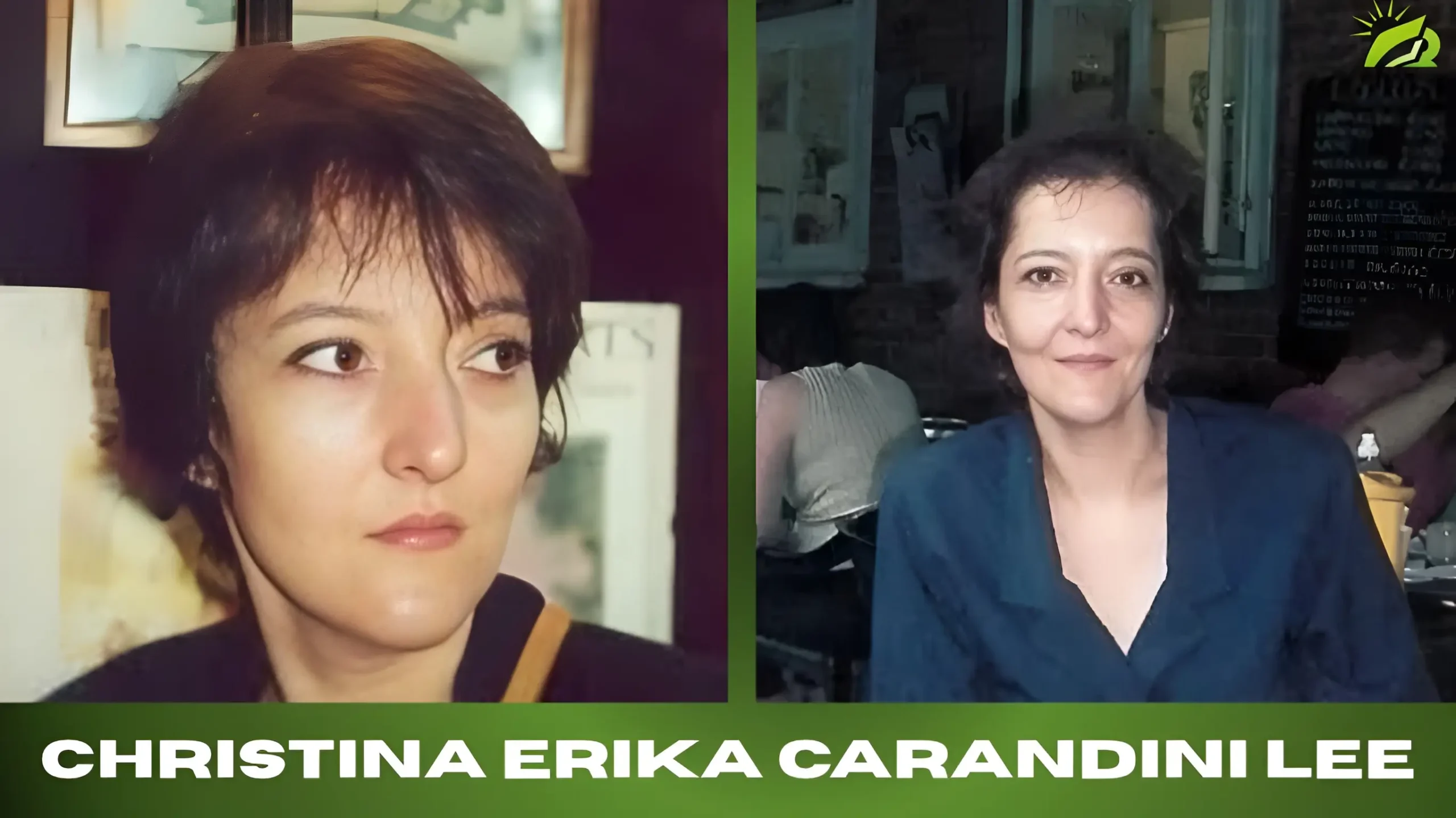
Christina Erika Carandini Lee is best known as the only daughter of the legendary British actor Sir Christopher Lee and Danish artist and former model Birgit “Gitte” Krøncke Lee. Although her father became one of the most recognizable performers in international cinema, Christina has maintained a comparatively low public profile. Her name nevertheless attracts interest from people who want to learn more about Christopher Lee’s family, his personal life, and the relatives who remained outside the entertainment spotlight.
Born in Lausanne, Switzerland, in November 1963, Christina grew up in a family connected to cinema, art, European culture, and a remarkable theatrical tradition. Her father became famous for portraying memorable characters, including Count Dracula, Saruman in The Lord of the Rings, and Count Dooku in Star Wars. Her mother also had a background in modeling and the arts, adding another creative dimension to the family’s history.
Despite these connections, Christina did not develop the extensive public career that made her father internationally famous. Her documented appearances are limited, and she has not maintained a comparable presence in interviews, entertainment news, or public-facing projects. Some of her known credits connect her to television and music, including a fantasy-metal album that featured spoken performances by both her and Christopher Lee.
The most interesting aspect of Christina Erika Carandini Lee’s story is the contrast between her family’s public recognition and the relatively small amount of reliable information about her independent life. Understanding that distinction helps explain why people continue searching for her biography while also making it important to separate established facts from online speculation.
This article explores her background, family relationships, known creative contributions, and public legacy. It also addresses common questions about her age, marriage, career, finances, and present-day life while respecting the limits of what is publicly documented.
Christina Erika Carandini Lee at a Glance
The following overview summarizes the main biographical details commonly associated with Christina Erika Carandini Lee.
| Detail | Information |
|---|---|
| Full name | Christina Erika Carandini Lee |
| Year of birth | 1963 |
| Commonly listed birth date | November 23, 1963 |
| Birthplace | Lausanne, Switzerland |
| Father | Sir Christopher Lee |
| Mother | Birgit “Gitte” Krøncke Lee |
| Known for | Being Christopher Lee’s only daughter |
| Public appearances | Selected television and documentary credits |
| Music-related contribution | Spoken-word role credited as Lothen on From Chaos to Eternity |
| Public profile | Relatively private |
| Current occupation | Not reliably established in the public record |
| Net worth | No reliable public estimate available |
These details provide a starting point rather than a complete account of her life. Her family connections and a small number of documented credits are identifiable, but many questions about her adult life remain unanswered in reliable public sources.
Early Life and Birth in Switzerland
Christina Erika Carandini Lee was born in Lausanne, Switzerland, in 1963. Her birth came approximately two years after her parents, Christopher Lee and Birgit Krøncke, married in London. The family’s connection with Switzerland reflected an important period in Christopher Lee’s professional life, when he was increasingly working across European film industries.
During the early 1960s, European cinema offered performers opportunities to work across different languages, countries, and production styles. Christopher Lee was not confined to one national film industry. His work increasingly connected him with productions made outside Britain, and Switzerland became a base for the family during part of this period.
The environment into which Christina was born was therefore shaped by an international professional background. Her father was building a career that would eventually span horror cinema, historical dramas, fantasy films, television, and music. Her mother had experience in modeling and artistic pursuits, giving the household a connection to creative professions beyond acting.
However, the fact that Christina was born into a well-known family does not provide enough information to reconstruct her childhood in detail. Public biographies offer relatively little independently confirmed information about her schools, friendships, daily routines, or personal interests while growing up. Stories that claim to describe every stage of her childhood should consequently be treated with caution unless supported by credible documentation.
What is clear is that Christina grew up during the period in which her father established a reputation as an important screen actor. His increasing recognition eventually made the Lee family name familiar to audiences around the world, even though Christina herself did not become a major celebrity.
Her early life is best understood through this historical context rather than through unverified anecdotes. The family had strong connections to the arts, while Christina’s own subsequent public record remained far smaller than that of her father.
Her Parents: Christopher Lee and Birgit “Gitte” Krøncke Lee
To understand Christina Erika Carandini Lee’s background, it is helpful to examine the two people who shaped her family history.
Her father, Sir Christopher Frank Carandini Lee, was a British actor whose career extended across several decades. He became especially recognizable through his performances in horror films and later reached new generations of viewers through internationally successful fantasy and science-fiction franchises.
Her mother, Birgit “Gitte” Krøncke Lee, was Danish and had a professional background in modeling and the arts. She was associated with the fashion industry and was also known for her artistic interests. Her relationship with Christopher Lee connected two people whose lives intersected with different areas of European culture.
Christopher and Gitte married in London on March 17, 1961. Their marriage lasted until Christopher’s death in 2015, spanning more than five decades. Christina was their only publicly documented child.
Their long marriage is an important part of the family’s story because it provides context for Christina’s connection to both parents. Although Christopher’s acting career generated international publicity, the details of his family life were not documented with the same intensity as his professional activities.
The distinction between professional recognition and personal privacy matters when describing Christina. Her father’s career can be traced through hundreds of screen credits, interviews, awards, and historical records. Christina’s own life, by contrast, is represented by a smaller collection of public information.
This difference should not be interpreted as evidence of a lack of personal achievement or an absence of interests. It simply means that the available public record does not tell the same kind of story about her that it tells about her father.
For readers researching Christina, her parents’ backgrounds explain why her name continues to attract attention. They do not, however, establish details about every aspect of her personality, private relationships, or professional activities.
Who Was Christopher Lee, and Why Is His Legacy Important to Christina’s Biography?
Christopher Lee was one of the most distinctive performers of twentieth- and early twenty-first-century cinema. His unusually deep voice, imposing screen presence, and ability to portray complex or intimidating characters made him especially recognizable to audiences.
He became closely associated with Count Dracula through his work with Hammer Film Productions. The role helped establish him as a prominent figure in horror cinema, although his career extended far beyond that genre. He played historical figures, villains, supernatural characters, and authority figures across numerous film industries.
For later generations, Christopher Lee became equally recognizable as Saruman in The Lord of the Rings film trilogy and Count Dooku in the Star Wars prequel films. These performances introduced him to audiences who might never have watched his earlier horror movies.
His professional accomplishments also included stage-related work, spoken performances, and music projects. His interest in dramatic storytelling gave him opportunities to work in formats beyond conventional acting, allowing his voice to become an important part of his artistic identity.
Christopher Lee received major recognition during his lifetime, including a knighthood in 2009 and the British Academy of Film and Television Arts Fellowship in 2011. These honors reflected the breadth and longevity of his contribution to entertainment.
His achievements naturally influence public interest in Christina Erika Carandini Lee. People frequently research the families of iconic performers because they want to understand the personal circumstances surrounding well-known public figures. They may also be curious about whether their children entered the same profession or pursued different paths.
In Christina’s case, the evidence does not support describing her as a major film star on the same scale as her father. She has a limited set of documented credits, but she has not established an extensive public acting career comparable to Christopher Lee’s.
Her biography is therefore connected to his legacy without being defined entirely by it. Her story also illustrates an important distinction: sharing a famous family name does not automatically mean pursuing the same occupation or living under the same level of public attention.
Her Mother, Birgit “Gitte” Krøncke Lee
Christina’s mother, Birgit Krøncke, generally known as Gitte Lee, occupies an important place in the family’s history. She was a Danish model and artist who worked in a creative environment that differed from, but complemented, Christopher Lee’s acting career.
Gitte’s modeling background included associations with major fashion houses. Her artistic interests also connected her with visual creativity beyond the entertainment industry. These details help explain why Christina’s family background involved several different areas of the arts rather than cinema alone.
Gitte married Christopher Lee in 1961. Their relationship continued for more than fifty years, making their marriage a longstanding part of Christopher Lee’s personal biography. Christina was born during the early period of their married life, when her father was expanding his work across international productions.
Although Christopher attracted considerable attention through his screen appearances, Gitte was less widely known to international film audiences. This difference in public visibility is one reason information about Christina’s maternal background may be less familiar to readers who primarily recognize the Lee surname through horror or fantasy films.
Gitte Lee died in 2024. Her death marked another important moment in the family’s history following Christopher Lee’s death in 2015.
It is important not to invent private conversations, family traditions, or personal beliefs to explain the relationships between Christina and her parents. Public biographies do not provide sufficient information to describe every part of their family life with confidence. A responsible account can acknowledge the importance of both parents without pretending to know details that were never publicly established.
For Christina Erika Carandini Lee, her mother’s background is a meaningful part of the broader story. It places her within a family connected to fashion, art, film, and European cultural life, while also reminding readers that her family history includes much more than her father’s famous performances.
The Meaning and Family History of the Carandini Name
The name Carandini is an important element of Christina’s full name because it also appears in her father’s birth name: Christopher Frank Carandini Lee.
Christopher Lee’s maternal family had Italian aristocratic connections. His mother was Contessa Estelle Marie Carandini di Sarzano, and the Carandini name was part of his documented family background. The name therefore connects Christina to a wider family history rather than functioning solely as an unusual addition to her personal name.
Family names often attract particular interest when they are connected to historic families, prominent artists, or well-known public figures. In Christina’s case, people may encounter the name while searching for Christopher Lee’s ancestry and then discover that his daughter shares part of that heritage.
However, a family name should not be treated as evidence of a person’s wealth, lifestyle, political influence, or personal interests. An ancestral connection can be historically meaningful without establishing anything about an individual’s present circumstances.
The same principle applies to descriptions of Christina as an heir to a particular lifestyle or as someone who inherited specific assets. Her surname alone cannot substantiate such claims. Reliable information about inheritance, private finances, or the management of family property would require appropriate documentation.
The Carandini name is best understood as a link between family generations. It reflects the historical identity associated with Christopher Lee’s maternal ancestry and helps explain why Christina Erika Carandini Lee is sometimes described using her full name rather than simply Christina Lee.
For readers interested in genealogy, this connection adds depth to her biography. It places her within a broader family history that reaches beyond the film industry. At the same time, the historical significance of a surname should remain separate from unsupported claims about the life of the person who carries it.
Christina Erika Carandini Lee’s Career and Professional Interests
One of the most frequently asked questions about Christina concerns her occupation. Did she become an actress, work in entertainment, or pursue a completely different professional direction?
The available evidence offers a limited answer. Christina has a small number of documented screen appearances and a music-related credit, but there is not enough reliable public information to establish a comprehensive professional biography or a current occupation.
This does not mean that she has no professional interests or activities. Many people maintain careers that do not attract widespread media coverage, and a limited public profile cannot tell us everything about someone’s working life.
It is more accurate to describe her documented contributions than to assign her an occupation that has not been substantiated.
Her public credits show that she has participated in entertainment-related projects. One appearance dates to the television program This Is Your Life, while another is associated with a documentary about her father. Her voice performance on Rhapsody of Fire’s From Chaos to Eternity represents a more specific creative contribution.
These credits demonstrate a connection to public entertainment, but they do not establish that Christina pursued acting as a full-time career. Nor do they prove that she rejected acting or deliberately avoided every opportunity in the industry.
The distinction is important because internet biographies sometimes turn a small number of credits into a much larger story. A person with one documentary appearance may be described as an established television personality, while a limited spoken performance may be presented as evidence of an extensive recording career.
Such descriptions can create a misleading picture.
A careful account of Christina Erika Carandini Lee recognizes that she has documented creative involvement while avoiding unsupported claims about the full scope of her work. Her professional history remains incompletely documented, and that limitation should be stated clearly.
Television Appearances and Documentary Credits
Christina Erika Carandini Lee is associated with a small number of screen appearances that provide a direct connection to her public biography.
One early credit is her appearance in This Is Your Life, the television program known for presenting the life stories of notable individuals. Her listed appearance dates to 1974, when she was still a child. The credit identifies her as Christopher Lee’s daughter.
This appearance is notable because it offers a glimpse of Christina’s presence in a television setting during her early life. Nevertheless, one television credit cannot establish whether she had formal acting ambitions, underwent professional training, or intended to pursue a career in front of the camera.
Her later documentary credit is Christopher Lee – Gentleman des Grauens, a 2010 television documentary about her father. She is listed as appearing as herself in the production.
Documentaries about established performers frequently include contributions from people connected to their professional and personal histories. Family members may appear to provide context, participate in a retrospective, or be included as part of the subject’s broader story.
Christina’s involvement in a documentary about Christopher Lee therefore provides a documented link between her and the public examination of his career. It does not, by itself, establish an extensive documentary or television career of her own.
These two credits also illustrate why Christina’s public biography can be difficult to expand. Her appearances are identifiable, but there is not enough evidence to construct a detailed filmography or claim that she has consistently worked as an actress.
For readers researching her career, the most useful approach is to identify the available credits accurately and explain their context. That approach provides more value than adding speculative productions or unsupported claims about her professional identity.
Christina’s Contribution to Music and Fantasy Storytelling
One of the more distinctive elements of Christina Erika Carandini Lee’s public record is her connection to music, particularly the album From Chaos to Eternity by the Italian symphonic metal band Rhapsody of Fire.
Released in 2011, the album belongs to a style of heavy metal that combines electric guitars and drums with orchestral elements, elaborate arrangements, and fantasy-inspired narratives. Its presentation places storytelling alongside music, creating a listening experience that resembles a dramatic fantasy production.
Christopher Lee also participated in the project. His deep, theatrical voice was well suited to the album’s fictional world, and he was credited with providing spoken vocals as the Wizard King. Christina was credited with a spoken role as Lothen.
This is a concrete example of a creative contribution that can be discussed without making assumptions about Christina’s private life. It demonstrates that her public activities have included a role in a musical work that used dramatic narration as part of its storytelling.
The connection is especially interesting because it brings together two generations of the Lee family in an entertainment format different from the films for which Christopher was best known. Instead of appearing together in a conventional movie scene, their contributions formed part of a musical narrative.
The album’s fantasy setting also helps explain why a dramatic spoken performance was a natural fit. Symphonic metal often uses orchestral textures and narrative voices to create an expansive fictional atmosphere. Spoken characters can introduce events, build tension, or provide information that moves a story forward.
Christina’s credited role should not be exaggerated into a claim that she became a leading singer or a widely established recording artist. Her contribution is specifically associated with narration. The distinction between spoken performance and lead singing matters when describing the project accurately.
Nevertheless, the credit adds an important dimension to her biography. It shows that her public record extends beyond family references and television appearances. Her voice formed part of a larger creative production in which her father also participated.
For readers interested in either Christopher Lee’s later projects or Rhapsody of Fire’s album history, this connection is one of the more useful details in Christina’s otherwise limited public biography.
What Makes From Chaos to Eternity Relevant to Her Story?
The significance of Christina’s musical credit is easier to understand when the album is considered within the wider context of Christopher Lee’s career.
Christopher had an unusually distinctive speaking voice, and his performances often benefited from its depth and theatrical character. This quality made him memorable in films, but it also suited projects that relied on spoken narration, dramatic readings, and musical storytelling.
By the time From Chaos to Eternity was released, Christopher Lee had already established himself as a veteran actor with an extensive body of screen work. His involvement in a fantasy-metal project demonstrated how his performance style could be applied outside traditional film and television formats.
Christina’s participation placed her within that same creative project. Her role was not the same as her father’s, but both contributed spoken performances to a fictional setting.
This shared credit is useful because it is concrete. Unlike claims about a person’s motivations or undisclosed aspirations, an album credit can be identified and examined through the record of the work itself.
It also demonstrates that entertainment careers need not be limited to conventional categories. A voice actor may contribute to music without becoming a professional singer, just as an actor may narrate a documentary without developing a separate career as a television presenter.
For Christina, the album provides a documented example of participation in a collaborative creative environment. It is a more precise description of her public contribution than broad statements that she either followed her father into acting or completely avoided entertainment.
The project also offers a reminder that family connections can sometimes create opportunities for distinctive collaborations. However, the public record does not establish the private circumstances surrounding Christina’s involvement, so it would be inappropriate to speculate about how the role was offered or accepted.
What can be said with confidence is that From Chaos to Eternity occupies a small but distinctive place in the publicly documented story of Christina Erika Carandini Lee.
Marriage and Personal Life
Questions about Christina Erika Carandini Lee’s marriage frequently appear in online searches because readers often want to understand the personal lives of the children of famous actors.
Some biographical databases identify her spouse as Juan Rodriguez and list a marriage date of July 28, 2001. Other online biographies use the longer name Juan Francisco Aneiros Rodriguez. Although these details appear in public biographical listings, the broader public record about the relationship is limited.
The existence of a marriage listing does not mean that all aspects of the relationship are publicly documented. There is little reliable information establishing the couple’s day-to-day life, professional arrangements, personal interests, or current residence.
It is therefore more responsible to distinguish the reported marriage information from the details that remain private.
Christina’s limited public profile also makes it difficult to construct a detailed account of her adult life outside the entertainment-related credits associated with her name. Rather than treating the absence of information as a problem that must be solved through guesswork, a biography can acknowledge that some aspects of a person’s life are not part of the public record.
Marriage is an important personal milestone, but it does not need to be accompanied by speculation about a couple’s lifestyle or domestic arrangements. Readers can understand the available biographical information without being given unsupported claims about their private circumstances.
For anyone researching Christina, the most useful answer is a measured one: certain biographical listings identify a spouse and marriage date, but reliable public information about her relationship remains limited.
That distinction preserves the value of the available information without turning uncertain details into established facts.
Does Christina Erika Carandini Lee Have Children?
Another common question concerns whether Christina has children.
Reliable public information does not clearly establish whether she has children, and a responsible biography should not present either an affirmative or negative answer as a confirmed fact.
This is an important distinction because the internet often treats missing information as an invitation to create a definitive story. Some biographies may describe a family as having children, while others may imply that there are none. Without dependable evidence, neither statement should be repeated as though it were established.
The absence of a public announcement is not proof of the absence of children. Equally, the existence of a famous family name does not justify assumptions about descendants or the continuation of a family line.
Christina has maintained a comparatively limited public profile, and her private family arrangements have not been extensively documented. That means this question must remain unresolved in a carefully written article.
Readers may find that answer less detailed than the confident statements appearing on some websites. However, accuracy is more valuable than certainty that cannot be supported.
A reliable biography can explain what is known about the family background while respecting the boundary between documented information and personal matters that have not been publicly established.
Net Worth, Income, and Financial Information
Searches for Christina Erika Carandini Lee often include questions about her net worth. Such searches are common for people associated with well-known actors because readers may assume that a famous family background provides enough information to estimate personal wealth.
In Christina’s case, no reliable public estimate of her individual net worth is established by the available biographical information.
Her father had a long professional career in film, television, and other entertainment projects. His earnings, however, cannot be used as a substitute for information about his daughter’s personal finances.
A family relationship alone does not establish how assets were owned, distributed, invested, or managed. It also does not reveal a person’s independent income, living costs, debts, property holdings, or other financial circumstances.
For these reasons, assigning Christina a specific monetary value without documentation would create a misleading impression of precision. A figure repeated across several entertainment websites would not automatically become credible if the original calculation and evidence were absent.
The same caution applies to claims about inherited wealth. While Christopher Lee’s career and family background are part of his public history, the details needed to calculate Christina’s current personal wealth are not established simply by knowing his professional achievements.
A better biography explains that her financial information remains private. This answer is direct, accurate, and more useful than a speculative number presented without an adequate basis.
Readers looking for a financial profile should therefore understand that Christina’s wealth has not been reliably quantified in the public record. Any specific estimate should be treated cautiously unless supported by credible documentation.
Where Is Christina Erika Carandini Lee Now?
People frequently search for updates about Christina because her father remains a recognizable figure in international entertainment history.
However, there is limited reliable public information about her present-day activities or current place of residence. Her earlier appearances and documented creative credits do not provide a complete picture of her life today.
It would be inaccurate to claim a specific city, country, occupation, or daily routine without dependable evidence. Online biographies sometimes offer detailed descriptions of the current lives of relatively private individuals, but such claims are not necessarily supported by verifiable records.
A person’s absence from regular entertainment news can have many explanations. They may simply not participate in public-facing work, maintain an extensive media presence, or share personal updates with a broad audience. None of these possibilities establishes the precise circumstances of Christina’s current life.
It is therefore better to describe her present public status in measured terms. She remains known primarily through her family connection, historical screen appearances, and documented music-related contribution.
This does not mean that her life has stood still or that she has no interests outside the public record. It means that dependable information about those areas is limited.
For readers seeking a current biography, that qualification is essential. An article should not imply access to private information merely because a search query asks where someone lives or what they are doing now.
Christina’s contemporary biography remains largely undocumented in public sources, and a responsible account should make that limitation clear.
Why Does Christina Erika Carandini Lee Maintain a Low Public Profile?
Christina Erika Carandini Lee is often described as a private person because she has not developed a public profile comparable to her father’s. Her documented entertainment appearances are limited, and she is not widely associated with a regular schedule of interviews or public projects.
It is tempting to attribute a specific reason to that limited visibility. Some biographies may suggest that a person chose privacy because of particular beliefs, family values, or personal experiences. Unless those explanations come from dependable statements by the individual, however, they should not be presented as established facts.
A more careful interpretation begins with what can actually be observed: Christina has a small public record, while her father’s professional life generated extensive documentation.
Public recognition is not an obligation that automatically passes from one generation to another. The children of performers may become actors themselves, work behind the scenes, enter unrelated professions, or simply remain outside public entertainment.
Each path is different, and a limited public record does not allow readers to know which motivations influenced an individual’s decisions.
In Christina’s case, the distinction between public visibility and private life is especially important because so many searches are driven by her father’s fame. The question of why she is not more visible may be interesting, but it cannot be answered fully without reliable information from her own perspective.
A respectful biography can acknowledge the limited public record while avoiding the assumption that privacy reflects a particular personality, philosophy, or deliberate rejection of celebrity culture.
This approach gives readers a more balanced understanding of her circumstances and avoids turning an absence of media coverage into a speculative personal narrative.
Public Interest in the Daughter of a Famous Actor
Interest in Christina Erika Carandini Lee is part of a broader pattern in celebrity-related searches. When a performer has a long and influential career, audiences often become curious about the family members who shared their lives outside the screen.
That curiosity can develop for several reasons. Fans may want to understand a performer’s background, learn whether the performer had children, or discover how the next generation relates to the family’s artistic history.
Christopher Lee’s career makes those questions particularly understandable. His appearances in horror, fantasy, and science-fiction films reached different generations of viewers. As new audiences discover those productions, they may also begin researching his family.
Christina’s name therefore appears in searches linked to his biography, including questions about his daughter, family life, marriage, and legacy.
However, public interest should not be confused with the availability of extensive personal information. A person can attract considerable search attention without having published interviews, a large professional portfolio, or a substantial public social media presence.
This creates a challenge for biography writers. Search demand may encourage publishers to produce increasingly detailed accounts, even when the available information does not support that level of detail.
A useful response is to explain the confirmed background, discuss the documented contributions, and identify the questions that remain unanswered. That provides readers with a meaningful account rather than a long collection of unsupported claims.
Christina’s biography demonstrates why accuracy matters especially when a subject is connected to a well-known name. The more recognizable the family, the greater the temptation to fill informational gaps. Good writing resists that temptation and gives readers a clear understanding of what the public record actually establishes.
Case Study One: What Her Recorded Credits Tell Us About Her Career
A useful way to understand Christina’s public biography is to examine her documented entertainment credits as a small case study.
The first relevant example is her appearance in This Is Your Life in 1974. The listing identifies her as Christopher Lee’s daughter, placing her within a television program connected to the life of a recognizable public figure.
The second example is Christopher Lee – Gentleman des Grauens, the 2010 documentary in which Christina is credited as herself. This appearance connects her to a later retrospective examination of her father’s career.
The third example is the 2011 Rhapsody of Fire album From Chaos to Eternity. Here, Christina is credited as Lothen, a spoken role within the album’s fantasy narrative. Christopher Lee also contributed spoken vocals to the project.
Taken together, these credits demonstrate that Christina has participated in more than one type of public production. Her appearances include television, documentary, and music-related storytelling.
At the same time, the available credits do not establish a large acting filmography or a comprehensive professional career in entertainment. The distinction is significant because the meaning of a credit depends on its context.
For example, a single role can demonstrate participation in a production without proving that someone works professionally in that field on a continuing basis. Similarly, an appearance as oneself in a documentary differs from playing a fictional character in a dramatic film.
The conclusion from this case study is straightforward: Christina has documented creative contributions, but the scope of her professional life remains incompletely established.
This interpretation is more useful than either exaggerating her career or dismissing her contributions entirely. It acknowledges the evidence while leaving room for aspects of her life that have not been publicly documented.
Case Study Two: The Difference Between Verified Facts and Celebrity Biography Rumors
Christina’s biography also provides an example of how readers can evaluate information about people who maintain limited public profiles.
Suppose a reader encounters three claims on different websites: that Christina has a particular occupation, that she has a specific personal net worth, and that she lives in a named city.
The reader should not treat all three claims as confirmed simply because each appears in a biography. Instead, every claim should be evaluated individually.
For the occupation claim, the reader can look for reliable professional records, an official biography, or credible reporting that identifies the work. If no such evidence is available, the occupation remains unconfirmed.
For the financial claim, the reader can ask whether the figure comes from disclosed assets, dependable financial reporting, or a transparent calculation. If the website supplies no explanation or evidence, the number should not be presented as fact.
For the residence claim, the reader should look for a trustworthy public statement or another reliable source. The fact that an article mentions a place does not establish that the information is accurate or current.
This example illustrates an important principle: the credibility of a biography depends on the support behind individual statements, not on how confidently the overall article is written.
For Christina Erika Carandini Lee, this method is especially valuable because her limited public record leaves room for speculation. A long article can easily become less reliable if unsupported details are repeated simply to make the subject appear more fully documented.
The better approach is to retain confirmed family information and identified credits while acknowledging unresolved questions. Readers gain a clearer account, and the subject is not assigned personal circumstances that may be inaccurate.
This case study also demonstrates why careful wording improves a biography. Phrases such as “public records list,” “the available information does not establish,” and “no reliable estimate is available” distinguish evidence from assumption.
Common Misconceptions About Christina Erika Carandini Lee
Several misunderstandings can arise when people search for information about Christina.
One is the assumption that she developed an acting career equivalent to her father’s. Although she has documented entertainment-related credits, the public record does not establish a filmography comparable to Christopher Lee’s extensive career.
Another is the idea that a famous parent automatically provides a complete picture of a child’s personal life. Christopher Lee’s career is well documented, but his professional history does not establish every detail about Christina’s occupation, finances, marriage, or current residence.
A third misconception concerns financial estimates. Online biographies may publish specific net worth figures, but a number should not be regarded as reliable unless the evidence supporting it can be identified and assessed.
There can also be confusion between a public appearance and a long-term career. Appearing in a television program or documentary establishes participation in that production, but it does not necessarily demonstrate ongoing professional work in the same field.
Finally, the limited amount of available information about Christina should not be interpreted as proof of a particular personality or lifestyle. It is possible to recognize that her public profile is small without deciding why she maintains it or what her private life looks like.
These distinctions are important because biographies can influence how a person is perceived. Repeated claims may begin to seem established even when their original basis is unclear.
An accurate account of Christina Erika Carandini Lee should therefore focus on the information that can be responsibly stated. Her family background and identified creative credits offer meaningful material without requiring assumptions about every other part of her life.
How to Research Her Biography More Effectively
Readers who want to learn more about Christina Erika Carandini Lee can improve their research by distinguishing between different kinds of sources.
Institutional film archives and established entertainment databases can help verify production credits and basic biographical information. Established newspapers may provide context about Christopher Lee’s family or major events in the family’s history.
Album credits and music-industry databases are particularly useful when examining the From Chaos to Eternity connection because they can identify the participants and their credited roles.
By contrast, unsourced biography pages may repeat one another without independently verifying their information. A claim appearing on several websites does not necessarily represent several independent confirmations if the pages all rely on the same original source.
Readers should also pay attention to dates. An older article may accurately describe a person’s circumstances at the time of publication but may not establish their current occupation, location, or family arrangements.
Another important consideration is the difference between a direct statement and an inference. If a record identifies Christina in a music credit, that establishes her contribution to the project. It does not automatically establish her broader professional ambitions or explain why she participated.
A careful researcher can use these distinctions to build a more accurate account while avoiding unnecessary speculation.
For an individual whose public biography is limited, research quality matters more than the sheer number of details collected. A small number of well-supported facts can be more useful than a much longer profile containing uncertain personal claims.
This method is useful not only for Christina but also for anyone researching the relatives of public figures whose own lives remain largely outside the media.
Christina Erika Carandini Lee’s Place in the Christopher Lee Family Legacy
Christina’s place in her family’s history is clear, even though much of her individual biography remains private.
As the only daughter of Christopher Lee and Gitte Lee, she connects two people whose lives were associated with different areas of the creative world. Christopher’s international acting career brought him recognition across generations, while Gitte had a background in modeling and the arts.
Christina’s own documented appearances demonstrate a smaller but identifiable connection to entertainment. Her television and documentary credits place her within the public record of her father’s life, while her spoken performance on From Chaos to Eternity offers an example of her participation in a collaborative music project.
These contributions do not need to be exaggerated to be meaningful. They provide an identifiable part of her story while leaving her broader professional and private life open where reliable information is unavailable.
The family’s history also demonstrates that public legacies can be understood through several different perspectives. A performer’s filmography describes professional achievements; family records describe relationships and major life events; creative collaborations provide further insight into the ways artistic work can cross generations.
Christina’s biography brings these elements together without suggesting that she should be measured against her father’s level of fame.
Her place in the family legacy is therefore best described through a combination of relationship, documented appearances, and limited creative participation. That account acknowledges the importance of her connection to Christopher Lee while allowing Christina’s individual life to remain distinct from his public career.
Timeline of Key Biographical Details
The following timeline summarizes the principal dates associated with Christina Erika Carandini Lee and her immediate family.
1961 — Christopher Lee and Birgit Krøncke marry. Their marriage establishes the immediate family into which Christina is later born.
1963 — Christina is born in Lausanne, Switzerland. Public biographical databases commonly list November 23, 1963, while institutional biographies confirm her birth in Lausanne during November of that year.
1974 — Television appearance. Christina is listed as appearing as Christopher Lee’s daughter in This Is Your Life.
2010 — Documentary appearance. She is credited as herself in Christopher Lee – Gentleman des Grauens.
2011 — Music-related credit. Christina is credited as the spoken character Lothen on Rhapsody of Fire’s From Chaos to Eternity, a project that also features spoken vocals by Christopher Lee.
2015 — Christopher Lee dies. His death marks the end of a career that extended across decades of film, television, and other creative work.
2024 — Birgit “Gitte” Krøncke Lee dies. Her death is another significant event in the family’s public history.
2026 — Continued interest in her biography. Christina remains a subject of online searches largely because of her relationship to Christopher Lee and the limited but identifiable public record associated with her name.
This timeline is intended as a concise overview rather than a complete account of her life. The available evidence establishes several family milestones and public credits, but it does not provide a comprehensive chronology of her personal or professional activities.
Frequently Asked Questions About Christina Erika Carandini Lee
1. Who is Christina Erika Carandini Lee?
Christina Erika Carandini Lee is the only daughter of British actor Sir Christopher Lee and Danish artist and former model Birgit “Gitte” Krøncke Lee. She was born in Lausanne, Switzerland, in 1963. She is known publicly through her family background and a limited number of television, documentary, and music-related credits.
2. How old is Christina Erika Carandini Lee?
Christina was born in 1963. As of October 2026, she is 62 years old. Public biographical databases commonly list her birth date as November 23, 1963.
3. Who are Christina Erika Carandini Lee’s parents?
Her father was Sir Christopher Lee, the internationally recognized actor known for roles such as Count Dracula, Saruman, and Count Dooku. Her mother was Birgit “Gitte” Krøncke Lee, a Danish model and artist. Her parents married in London in 1961.
4. Did Christina Erika Carandini Lee become an actress?
Christina has a small number of documented screen appearances, including This Is Your Life and the documentary Christopher Lee – Gentleman des Grauens. However, the available public record does not establish a major acting career comparable to her father’s extensive filmography.
5. Did Christina Erika Carandini Lee work in music?
Yes. She is credited with a spoken role as Lothen on Rhapsody of Fire’s 2011 album From Chaos to Eternity. Her father, Christopher Lee, also contributed spoken vocals to the same project as the Wizard King.
6. Who is Christina Erika Carandini Lee’s husband?
Some public biographical databases identify her spouse as Juan Rodriguez and list their marriage date as July 28, 2001. Other online biographies give his name as Juan Francisco Aneiros Rodriguez. Public information about their private life remains limited.
7. Does Christina Erika Carandini Lee have children?
Reliable public information does not clearly establish whether Christina has children. Claims about her family arrangements should not be treated as confirmed unless supported by dependable evidence.
8. What is Christina Erika Carandini Lee’s net worth?
Her individual net worth has not been reliably established in the public record. Christopher Lee’s professional earnings cannot be used to calculate her personal wealth, and unsupported online estimates should be treated with caution.
9. Where does Christina Erika Carandini Lee live today?
Her current residence is not reliably established by the available public information. Claims naming a particular city or country should be treated cautiously unless supported by a trustworthy, current source.
10. Is Christina Erika Carandini Lee active on social media?
There is not enough reliable information to identify a widely verified public social media account belonging to Christina. Accounts using her name should not automatically be assumed to be official.
11. What is Christina Erika Carandini Lee best known for?
She is best known as Christopher Lee’s only daughter. Her documented public contributions also include television and documentary appearances and a spoken performance on Rhapsody of Fire’s From Chaos to Eternity.
12. What is the meaning of the Carandini name in her biography?
Carandini is part of her father’s full name and reflects his maternal family heritage. Christopher Lee’s mother was Contessa Estelle Marie Carandini di Sarzano, linking the surname to the family’s Italian ancestry.
13. Why is there limited information about Christina Erika Carandini Lee?
Her public record is much smaller than her father’s, and she has not developed a similarly extensive body of documented entertainment work. As a result, reliable information about many aspects of her adult life is limited.
14. Is Christina Erika Carandini Lee still alive?
The available public biographical information does not establish otherwise. However, a current status should ideally be confirmed through a reliable, up-to-date source rather than inferred solely from older biographical listings.
Conclusion
Christina Erika Carandini Lee remains an intriguing figure for people interested in the family history of Sir Christopher Lee. Born in Lausanne in 1963, she is the daughter of a celebrated British actor and Danish artist Birgit “Gitte” Krøncke Lee. Her family background connects her to the worlds of cinema, art, fashion, and European cultural history.
Although Christina has not developed a public career on the scale of her father’s, her documented television and documentary appearances, along with her spoken performance on Rhapsody of Fire’s From Chaos to Eternity, provide identifiable details about her public activities.
Her biography also demonstrates the importance of distinguishing between established information and speculation. Questions about her current occupation, finances, children, and residence remain incompletely answered by reliable public sources. A meaningful account should acknowledge these limitations instead of presenting unsupported claims as facts.
Ultimately, Christina’s story is connected to a remarkable family legacy, but it also stands apart from the public career that made the Lee name internationally recognizable. The available facts provide a useful understanding of her background and documented contributions while leaving room for the personal aspects of her life that have not been shared publicly.
For More Visits: Bright Magazine
Also Read: What Is Repmold? A Complete Guide
