

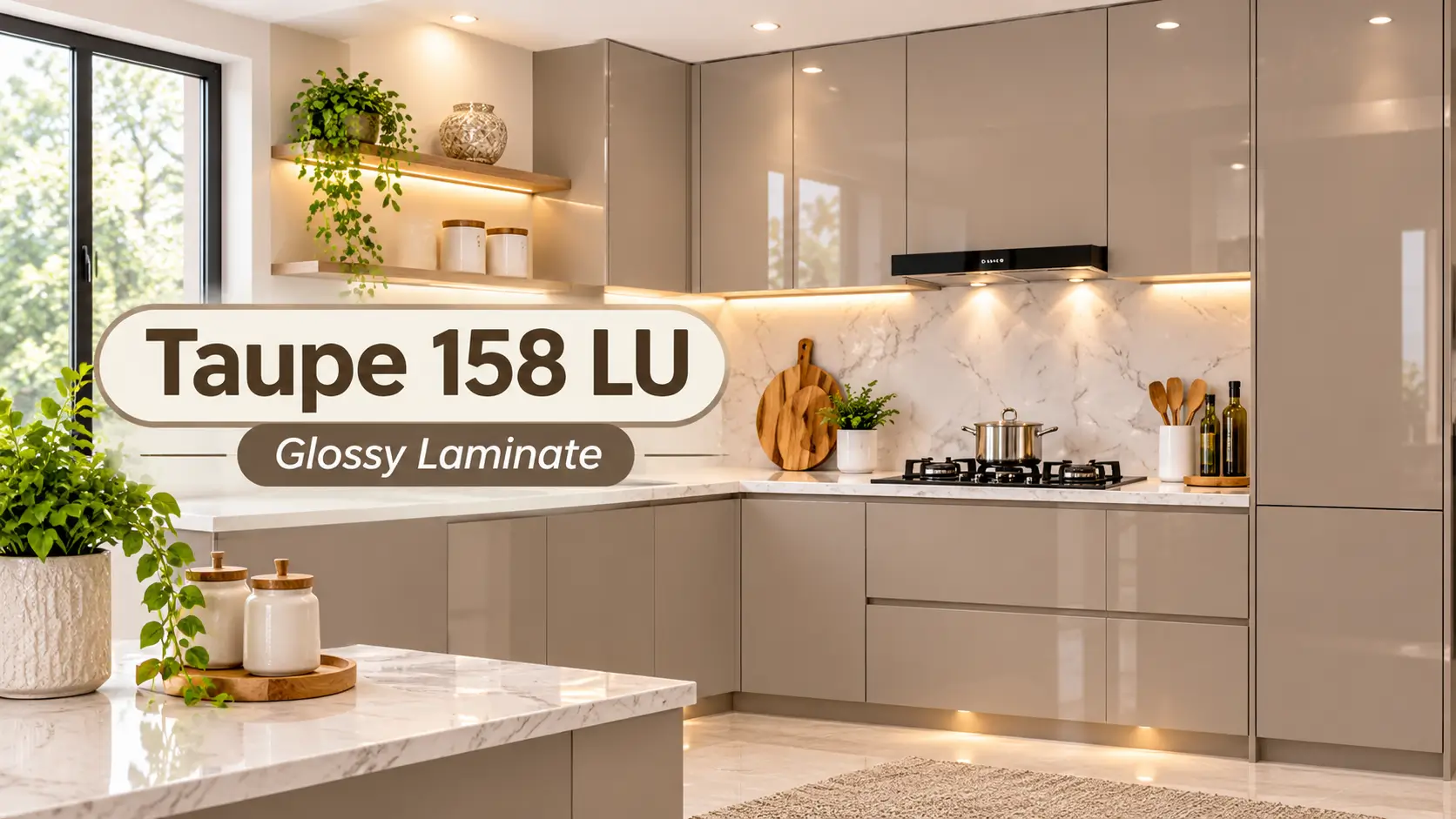
Choosing the right surface finish is an important part of creating an attractive and practical interior. Whether someone is designing a new kitchen, renovating a bedroom, updating an office, or selecting finishes for custom furniture, the materials used on cabinets and other furniture surfaces can influence the entire appearance of a space. Colour, texture, lighting, furniture proportions, and surrounding materials all contribute to the final result.
One option worth exploring is Taupe 158 LU, a decorative laminate design from CenturyLaminates. Its neutral taupe colour makes it an interesting choice for people who want a balanced interior rather than an environment dominated by extremely bright or dark shades. Neutral surfaces can also provide flexibility when choosing furniture, flooring, wall colours, accessories, and decorative elements.
Taupe is particularly interesting because it sits between traditional brown and grey colour families. It can therefore contribute warmth without making an interior look overly rustic, while its grey undertones can help create a more contemporary appearance. This balance makes taupe a useful colour direction for several types of residential and commercial interiors.
However, choosing a laminate involves more than deciding whether its colour looks attractive. Buyers should also understand its finish, dimensions, thickness, possible applications, maintenance requirements, installation considerations, and compatibility with other materials.
This guide explores Taupe 158 LU from a practical interior-design perspective. It explains what the product designation means, how the colour can be used, which combinations may work well, what to consider before purchasing, and how to make better decisions during furniture planning. It also includes illustrative design case studies to show how a neutral laminate can fit into different interior concepts.
What Is Taupe 158 LU?
Taupe 158 LU is a solid-colour decorative laminate design listed in CenturyLaminates’ Lucida collection. It combines the shade name Taupe with the design identification number 158 and the collection designation LU.
The name is important because laminate products are often identified through combinations of colour names, numbers, and finish or collection codes. Simply searching for a taupe laminate may produce numerous unrelated products. Using the complete designation helps buyers, interior designers, furniture manufacturers, and dealers identify the intended design more accurately.
The product belongs to the Solids category. This means the design is based on a solid colour rather than a printed wood grain, stone pattern, or decorative image. Such designs are particularly useful when the intention is to create a clean, consistent appearance across furniture panels.
Taupe 158 LU can be considered for different furniture-design projects, depending on the requirements of the application and the recommendations of the fabricator. It may be explored for wardrobe shutters, cabinet fronts, storage units, decorative furniture panels, and other suitable interior surfaces.
One important detail is that a laminate’s appearance should not be judged entirely from its product name or an online photograph. Digital screens, lighting conditions, photography, and display settings can influence how a colour appears. Examining the actual product sample is therefore an important step before making a final decision.
For buyers who are considering this particular shade, the complete product code offers a more reliable starting point than searching for taupe alone.
Understanding the Name: Taupe, 158, and LU
The name Taupe 158 LU contains three useful pieces of identification. Understanding them helps prevent confusion when comparing laminate options.
Taupe: The Colour Name
Taupe is a neutral colour family generally associated with a combination of brown and grey. Depending on the particular shade, it may appear warmer, cooler, lighter, or deeper.
Some taupe shades lean towards beige, while others have stronger grey or brown characteristics. This flexibility is one reason taupe is frequently considered in residential and commercial interior design.
Taupe 158 LU should be assessed through its actual physical sample rather than assumptions about every colour carrying the taupe name. Different manufacturers and collections can interpret the same general colour family differently.
158: The Design Identification
The number 158 identifies the particular Taupe design within the manufacturer’s product range.
This number becomes especially useful when someone is communicating with a dealer, ordering material, preparing a furniture quotation, or coordinating different components of a project.
A buyer should avoid ordering a product simply by saying that they want a taupe laminate. A similar colour name may exist across multiple products, and those products may not have the same appearance or finish.
Using the complete designation helps reduce this risk.
LU: The Collection Designation
The LU designation identifies the product’s association with CenturyLaminates’ Lucida collection.
This distinction is important because laminate ranges can contain multiple surface treatments and design families. Two materials can share a colour name or shade number without being visually identical.
When discussing Taupe 158 LU with a supplier, it is sensible to confirm the complete code and request the corresponding physical sample.
The main lesson is simple: Taupe describes the colour family, 158 identifies the design, and LU connects the product to its listed collection.
The Visual Appeal of Taupe 158 LU
Colour has a powerful effect on how people experience an interior. A room with carefully balanced neutral tones may feel calm and organised, while a space with too many competing colours can appear visually crowded.
Taupe offers a middle ground between warm and cool colour palettes. It can work with natural-looking materials, understated decorative elements, modern furniture, and carefully selected accent colours.
Taupe 158 LU is worth exploring for people who want a solid-colour furniture surface that does not rely on an elaborate pattern to make an impression.
A Balanced Neutral Appearance
One advantage of neutral colours is their ability to connect different parts of a room. Walls, flooring, ceilings, furniture, curtains, and accessories do not necessarily have to share the same colour to create a coordinated appearance.
Taupe can help bring these elements together by providing a subtle visual transition between warm and cool tones.
For example, a furniture unit finished in taupe may sit comfortably in a room with off-white walls and warm wooden flooring. The result can feel coordinated without making every surface look identical.
A Softer Alternative to Dark Grey
Dark grey furniture can create a dramatic and contemporary effect. However, extensive use of very dark surfaces may make some small or poorly lit rooms feel visually heavy.
Taupe offers an alternative for people who want a neutral appearance without committing to an extremely dark colour.
Its brown-related warmth can also help introduce a softer impression than a purely industrial grey scheme.
A More Subtle Option Than Bright Colours
Bright furniture colours can be attractive, especially when used as focal points. However, strong colours may become difficult to coordinate when the rest of the room changes.
Neutral shades are often easier to incorporate into evolving interior styles.
Taupe can provide a foundation for decorative accessories, colourful cushions, artwork, plants, lighting, and other changing elements without demanding that all of them follow a single colour scheme.
Why Consider Taupe 158 LU for Interior Projects?
The suitability of a laminate depends on the requirements of the project. A product that works well for one furniture design may not be the ideal option for another.
Nevertheless, there are several reasons why a taupe solid-colour design can deserve consideration.
1. Flexible Colour Coordination
Taupe can complement a broad range of interior colour directions. It may be paired with white, cream, selected shades of grey, natural wood tones, black accents, or muted green decorations.
This flexibility can be useful when a room already contains permanent elements that cannot easily be changed.
For instance, someone renovating a bedroom may want to update wardrobe shutters without replacing the existing flooring. A neutral laminate can help make that transition easier.
2. Suitable for Minimalist Interiors
Minimalist interior design focuses on simplicity, practical furniture, clean proportions, and limited decorative distractions.
A solid taupe surface can support this approach because it does not depend on prominent patterns or complicated visual effects.
It may work particularly well with flat-panel cabinets, simple handles, concealed storage, and uncomplicated furniture arrangements.
3. Useful for Contemporary Furniture
Contemporary interiors often combine neutral colours with contrasting materials.
A taupe furniture surface can be paired with black hardware, simple metallic handles, glass elements, wooden details, or light-coloured walls.
The objective is not to make every material blend completely. Instead, each element should contribute something to the overall design.
4. Adaptable to Different Room Concepts
Unlike a highly specific decorative print, a solid neutral colour can be incorporated into several different furniture arrangements.
Designers can consider it for bedrooms, living areas, kitchens, home offices, and selected commercial interiors, provided the product and supporting construction are appropriate for the application.
5. A Practical Starting Point for Future Updates
Interior preferences change over time. Furniture that initially looks good with a traditional arrangement may later need to fit a more modern decorative style.
Neutral furniture finishes can provide some flexibility when accessories, wall colours, lighting, or decorative objects are updated.
This does not mean every neutral design is automatically timeless. It means that a balanced colour palette can be easier to adapt than one built entirely around a temporary decorative trend.
Where Can Taupe 158 LU Be Used?
The possible applications of a decorative laminate depend on its specifications, the supporting substrate, the installation method, and the conditions in which the finished furniture will be used.
Taupe 158 LU may be considered for various interior furniture projects. The following applications explain where its colour direction could be useful.
Kitchen Cabinets
Kitchen cabinets occupy a significant amount of visible space. Their colour can influence whether the kitchen appears bright, warm, traditional, or contemporary.
Taupe is an option for homeowners who want something different from standard white cabinets without introducing an extremely strong colour.
It can be considered for suitable cabinet shutters and decorative panels. The colour may also be combined with a contrasting countertop, a light backsplash, or wooden details.
A balanced kitchen arrangement might include taupe cabinet fronts, a light-coloured worktop, understated handles, and neutral wall finishes.
The important consideration is that a decorative laminate surface should not automatically be treated as a complete waterproof or heatproof kitchen solution. Areas exposed to prolonged moisture, direct flames, or high temperatures require appropriate materials and protective construction.
The fabricator should confirm suitability for the intended cabinet application.
Bedroom Wardrobes
Wardrobes often form one of the largest furniture elements in a bedroom. A colour that works well with the walls, flooring, and bed can help the room feel more coordinated.
Taupe can be an attractive possibility for wardrobe shutters because it offers a neutral alternative to conventional white, cream, or dark brown surfaces.
In a smaller bedroom, it may be paired with lighter walls and simple handles to maintain a balanced appearance.
In a larger bedroom, it can form part of a richer palette that includes darker wooden furniture, warm lighting, and carefully selected decorative accessories.
A full-height wardrobe finished in one solid shade can also support a more visually organised appearance.
Living Room Cabinets and TV Units
Living rooms commonly contain multiple materials, including sofas, wooden flooring, curtains, decorative lighting, glass tables, and entertainment equipment.
Choosing a furniture colour that competes with all these elements can make the room feel crowded.
Taupe can be explored for TV units, storage cabinets, display furniture, and selected decorative panels.
For example, a low-profile entertainment unit in a neutral taupe shade can complement a light-coloured wall while allowing the television and decorative accessories to remain the main focal points.
The same colour may also be used for shelves or storage compartments when a more consistent furniture appearance is desired.
Study Tables and Home Office Furniture
A home office needs to combine practical organisation with a comfortable visual environment.
Furniture colours can influence the overall character of a workspace. Extremely bright surfaces may feel distracting to some users, while dark furniture can create a heavier appearance in limited spaces.
Taupe provides another possibility for desks, storage units, filing cabinets, and selected furniture panels.
It can be combined with a light desk accessory arrangement, neutral walls, and simple task lighting.
The result can support a professional-looking workspace without requiring an elaborate colour scheme.
Office Reception and Commercial Furniture
Commercial interiors also benefit from carefully planned colour combinations.
Reception counters, storage furniture, meeting-room cabinets, and other interior elements often need to look coordinated with branding, wall treatments, flooring, and lighting.
A neutral taupe finish can be considered when the objective is to create an understated environment.
For example, a reception area might combine taupe furniture panels with a darker countertop, subtle signage, and warm lighting.
However, commercial applications can involve greater levels of use than ordinary residential furniture. Buyers should verify the appropriate product specifications, installation requirements, and maintenance arrangements before selecting a finish.
Best Colour Combinations for Taupe 158 LU
Selecting the laminate is only part of the design process. The colours surrounding it can have an equally important effect on the finished appearance.
For more inspiration on coordinating furniture, colours, and decorative materials, explore our guide to home and garden decoration ideas.
A well-planned combination can make taupe look warmer, cooler, lighter, more contemporary, or more sophisticated.
Taupe and White
White is one of the simplest colours to combine with taupe.
The contrast helps create separation between furniture and surrounding surfaces without introducing a dramatic colour difference.
For a kitchen, taupe cabinet fronts can be paired with white walls or selected light surfaces. For a bedroom, taupe wardrobes can sit against an off-white background.
The key is to avoid creating an excessively cold appearance. Warm-white lighting and subtle decorative elements may help balance the combination.
Taupe and Cream
Cream produces a softer combination than pure white.
Because both colours belong to relatively understated colour families, they can create a comfortable and welcoming environment.
This combination may suit bedrooms, living rooms, and traditional-modern interiors.
Cream curtains, upholstery, or wall finishes can provide a gentle contrast with taupe furniture.
Taupe and Natural Wood
Wood-inspired materials can introduce visual warmth into a room.
When paired with taupe, they can create a balance between a solid-colour surface and a more natural-looking decorative element.
A bedroom might combine taupe wardrobe shutters with a wooden bed frame. A living room might use a taupe TV cabinet with wooden shelving or furniture legs.
The important part is selecting wood tones that complement the actual taupe sample rather than relying only on online photographs.
Taupe and Charcoal Grey
Charcoal grey offers stronger contrast.
This combination may work well in contemporary kitchens, offices, entertainment units, and modern bedroom furniture.
Taupe can be used as the main furniture colour, while charcoal introduces visual definition through handles, frames, decorative panels, or selected supporting surfaces.
Avoid using too many dark elements in a small room unless the lighting and layout can support the arrangement.
Taupe and Black
Black accessories can give neutral furniture a more defined appearance.
For example, slim black handles, dark metal frames, or selected decorative details may complement taupe cabinet surfaces.
The result can feel modern without relying on multiple competing colours.
However, a large amount of black can create a strong visual contrast. It is generally sensible to decide which elements should stand out rather than using black everywhere.
Taupe and Muted Green
Muted green can add a natural element to a neutral interior.
It may be introduced through indoor plants, soft furnishings, decorative objects, or selected wall details.
This combination can be useful when the objective is to create a calmer environment that feels connected to natural materials.
Taupe and Terracotta
Terracotta introduces an earthy, warmer accent.
It can work with neutral furniture when used selectively through planters, cushions, artwork, or decorative accessories.
The combination may be especially useful in interiors that already contain warm wooden elements or natural-looking fabrics.
Taupe 158 LU for Different Interior Design Styles
A particular colour does not belong exclusively to one interior design style. Its appearance depends on the materials, shapes, proportions, and decorative elements used around it.
Modern Interior Design
Modern spaces often use simple furniture arrangements, clean lines, and a controlled colour palette.
Taupe can support this direction when combined with straightforward cabinet designs, understated handles, and complementary neutral surfaces.
The aim is to keep the furniture visually organised rather than adding unnecessary decorative complexity.
Minimalist Design
Minimalist interiors focus on reducing visual clutter.
Taupe 158 LU can be considered for this style because a solid-colour design can maintain a consistent furniture appearance.
Flat-panel shutters, concealed storage, and limited hardware details may complement the shade.
The surrounding space should also remain relatively simple. Too many contrasting decorative items can reduce the visual effect of a minimalist design.
Contemporary Luxury
A sophisticated interior does not necessarily require extremely bright colours or elaborate patterns.
Neutral furniture can contribute to a refined appearance when combined with carefully chosen materials.
Taupe may be paired with selected metallic details, elegant lighting, glass, stone-inspired surfaces, or dark accents.
The quality of the overall design will depend on how these materials are coordinated.
Scandinavian-Inspired Interiors
Scandinavian-inspired interiors commonly emphasise light, functional furniture and natural-looking materials.
Taupe can be considered for selected storage units or wardrobes, especially when combined with pale walls, warm wooden furniture, and uncomplicated accessories.
The shade should be checked under the room’s actual lighting to ensure that the overall palette remains balanced.
Transitional Interiors
Transitional interiors combine elements of traditional and modern design.
Taupe may provide a bridge between classic wooden furniture and contemporary cabinet arrangements.
For example, a room with traditional decorative details might use more contemporary taupe storage furniture to introduce a softer modern element.
How Lighting Affects the Appearance of Taupe
Lighting is one of the most overlooked parts of colour selection.
The same laminate sample may appear different under direct daylight, warm indoor lighting, cool white lighting, or a combination of artificial and natural light.
This is particularly important with neutral shades because subtle undertones can become more noticeable under different conditions.
Natural Daylight
Daylight provides an important reference point when checking a laminate’s appearance.
A sample viewed near a window may look different from the same material inside a dim corner.
Before finalising the product, examine it in the room where the furniture will be installed.
Warm Lighting
Warm lighting may emphasise the warmer aspects of a taupe shade.
It can help create a welcoming atmosphere in bedrooms and living rooms.
However, buyers should examine the actual sample because the final result depends on the lamp, surrounding colours, and material finish.
Cool Lighting
Cool white lighting can make some neutral colours appear less warm.
This may suit contemporary offices and modern spaces, but the combination should be assessed before installation.
Why a Physical Sample Matters
Do not select Taupe 158 LU entirely from a computer screen or mobile display.
A photograph cannot always reproduce the exact appearance of a physical material.
Request a product sample and compare it against the proposed wall paint, flooring, countertop, and other furniture finishes.
This small step can reduce the risk of choosing a colour that looks different from what was expected.
Important Specifications and Product Details
Understanding the basic product details helps buyers discuss their requirements more effectively with dealers and furniture manufacturers.
Taupe 158 LU is listed by CenturyLaminates as part of the Lucida collection in its Solids range.
The manufacturer’s product listing provides the following identifying details:
- Product name: Taupe 158 LU
- Brand: CenturyLaminates
- Collection: Lucida
- Category: Solids
- Listed thickness: 1 mm
- Listed sheet size: 8 × 4 feet
- Catalogue location: Page 24 in the manufacturer’s physical catalogue listing
These details are useful when asking for a quotation or confirming product availability.
Thickness and sheet size should be checked against the actual stock being offered. The buyer should also ask the supplier to confirm whether the required quantity can be provided from the same design and product variant.
Understanding Thickness
Thickness is an important consideration when selecting decorative laminate.
A 1 mm laminate is a surface material that needs an appropriate supporting substrate and suitable fabrication.
The finished furniture’s performance depends on more than the decorative sheet alone. The substrate, adhesive, surface preparation, edge treatment, installation conditions, and intended use all matter.
Buyers should therefore discuss the complete furniture construction rather than assuming that the laminate thickness alone determines the strength of the final unit.
Understanding Sheet Size
An 8 × 4 ft sheet provides a standard reference for estimating material requirements.
However, the number of sheets needed for a project depends on cabinet dimensions, panel layouts, cutting arrangements, design direction, wastage, and whether both sides of a panel require finishing.
A furniture manufacturer should prepare a cutting plan before placing the final order.
This can help reduce unnecessary material purchases and identify whether additional sheets are required.
How to Choose the Right Laminate for Your Project
Selecting a laminate should involve more than comparing colour photographs.
A structured selection process helps buyers make decisions that suit their furniture, room conditions, and budget.
Step 1: Identify the Furniture Application
Start by deciding where the laminate will be used.
A wardrobe shutter, kitchen cabinet front, TV unit, and office storage panel have different design and usage requirements.
The intended application helps determine what construction and finish characteristics should be checked.
Step 2: Assess the Room’s Colour Palette
Look at existing permanent elements such as flooring, walls, ceilings, windows, and countertops.
Consider whether the room has warm or cool undertones.
If the space already includes many brown and beige elements, taupe may create a coordinated appearance. If the room is dominated by cool grey materials, compare the sample carefully before deciding.
Step 3: Check the Physical Sample
Request the exact Taupe 158 LU product sample.
Do not assume that another taupe design from the same manufacturer is identical.
Compare the sample with the intended surrounding materials during both daytime and evening lighting.
Step 4: Confirm the Complete Product Code
Make sure that the supplier is offering the requested 158 LU design.
Ask for the exact product designation to appear on the quotation or order confirmation.
This is particularly important when several similar variants are available.
For additional inspiration when planning furniture arrangements and improving your living space, read our guide to practical home decorating ideas.
Step 5: Discuss Fabrication Requirements
Talk to the furniture manufacturer about substrate selection, adhesive compatibility, panel construction, cutting, edge finishing, and installation.
The laminate should be part of a complete furniture solution rather than treated as an independent structural material.
Step 6: Calculate the Required Quantity
Ask the fabricator to measure the actual panels and prepare an estimate.
Material planning should include the layout, possible cutting waste, matching components, and the need for additional material if a repair or replacement becomes necessary.
Step 7: Confirm Availability and Delivery
Before committing to the project, check the current stock position, order quantity, delivery timeline, and replacement availability.
Product listings may remain visible even when a particular dealer does not have the required quantity immediately available.
Installation Considerations for Taupe 158 LU
The quality of a finished furniture surface depends heavily on installation.
Even an attractive laminate can produce a disappointing result if the supporting panel is uneven, adhesive application is inconsistent, or edges are poorly finished.
To understand another approach to furniture surface finishing, explore our guide explaining UV-curable coatings and their applications.
For this reason, installation should be handled by an experienced furniture fabricator who understands decorative laminate work.
Prepare the Supporting Surface
The substrate should be suitable for the intended application.
It should be properly prepared, clean, and free from obvious surface irregularities that could affect bonding or the final appearance.
Any preparation requirements should be discussed with the fabricator.
Follow Suitable Adhesive Practices
The correct adhesive and application method should be selected according to the laminate manufacturer’s recommendations and the substrate.
Inconsistent adhesive application may lead to poor bonding or visible defects.
It is not advisable to substitute an unfamiliar adhesive simply because it is readily available.
Pay Attention to Edges
Edges contribute significantly to the appearance of finished furniture.
A cabinet may have a well-finished front surface but still look incomplete if its exposed edges are poorly handled.
Matching edge solutions can help create a more coordinated result. The fabricator should confirm compatibility and the appropriate edge treatment for the project.
Plan Panel Alignment
If multiple panels are positioned next to each other, their alignment should be checked before installation.
This is particularly relevant for large wardrobes, cabinet systems, and continuous furniture arrangements.
Accurate measurements and careful cutting help create a cleaner finished appearance.
Protect the Finished Surface
During transportation and installation, the material should be handled carefully.
Tools, dust, sharp objects, and construction activities can affect finished surfaces.
The installation team should protect the completed furniture until the surrounding work is finished.
Maintenance and Cleaning Tips
Regular maintenance helps preserve the appearance of decorative furniture surfaces.
Taupe 158 LU should be maintained according to the product’s care recommendations. The following general practices can help reduce avoidable surface damage.
Use a Soft Cleaning Cloth
A clean, soft cloth is a suitable starting point for ordinary dust removal.
For routine cleaning, avoid unnecessary force and use an appropriate cleaning method recommended for the material.
Clean Spills Promptly
Food, drinks, and other substances should not be left on furniture surfaces longer than necessary.
Wipe up spills using a suitable cloth and follow the manufacturer’s cleaning instructions.
Pay particular attention to joints and exposed edges where moisture could reach the supporting material.
Avoid Harsh Cleaning Products
Strong chemicals, abrasive powders, rough scrubbing pads, and unsuitable solvents may damage the surface.
Do not assume that every household cleaner is safe for every decorative laminate.
Avoid Sharp Objects
Knives, metal tools, and other sharp objects can scratch or mark furniture surfaces.
Use appropriate boards and protective surfaces when working in the kitchen.
Do Not Place Extremely Hot Items Directly on Furniture
A decorative laminate surface should not be treated as a substitute for a heat-resistant worktop.
Avoid placing hot cookware or other heated objects directly on the material.
Use suitable heat protection and follow the recommended operating conditions.
Inspect Edges and Joints
Check furniture periodically for loose edges, damaged corners, or areas where moisture may have entered.
Early attention can help prevent a small maintenance issue from becoming a larger furniture problem.
Common Mistakes to Avoid When Buying Taupe 158 LU
Even when buyers have identified the correct product, certain mistakes can affect their final experience.
Choosing by Colour Name Alone
Not every taupe laminate has the same appearance.
The word taupe describes a colour family, not one universal shade.
Always confirm the complete product designation and examine the actual sample.
Confusing Different Product Variants
A similar design number may appear in different collections or finishes.
Do not assume that products sharing a base shade number are interchangeable.
Ask the dealer to confirm the exact 158 LU designation.
Ignoring Room Lighting
A colour that looks attractive under showroom lights may appear different at home.
Check the sample in the actual room and under the lighting conditions expected after installation.
Selecting Without Considering Other Materials
A laminate should be compared with the flooring, wall colour, countertop, hardware, and surrounding furniture.
Choosing it in isolation can produce an unbalanced final design.
Ignoring the Supporting Substrate
The laminate is only one part of the finished furniture system.
Substrate quality, bonding, edge treatment, and fabrication should also receive attention.
Assuming Every Surface Is Suitable
A decorative laminate intended for furniture applications should not automatically be used on every type of surface.
Direct heat, continuous moisture, outdoor exposure, and demanding horizontal applications require separate suitability checks.
Purchasing Without a Material Estimate
Ordering too little material can delay installation, while ordering excessive quantities may increase costs.
Request a proper cutting and material estimate before confirming the purchase.
Cost and Budget Considerations
The total cost of a Taupe 158 LU furniture project cannot be determined by the laminate sheet alone.
A complete project may include the decorative material, supporting boards, adhesives, edge treatments, handles, cutting, installation, transportation, and other finishing work.
The final quotation may also depend on the quantity ordered and the supplier’s current stock position.
For a more accurate estimate, ask the dealer to separate the material cost from the fabrication and installation costs.
It is useful to ask the following questions:
- Is the quoted product the exact Taupe 158 LU design?
- What is the quoted sheet size and thickness?
- Is the required quantity currently available?
- Are edge treatments included?
- Does the quotation include substrate and adhesive?
- Are cutting, transportation, and installation charged separately?
- What are the applicable warranty and replacement conditions?
Comparing complete quotations is more useful than selecting a supplier based only on the lowest laminate sheet price.
Illustrative Case Studies: How Taupe 158 LU Could Be Used
The following examples are hypothetical interior-design scenarios. They are included to explain possible planning approaches, not to represent completed customer projects or verified performance results.
Case Study 1: A Modern Bedroom With Neutral Wardrobe Furniture
Imagine a bedroom with off-white walls, medium-tone wooden flooring, and limited natural daylight.
The homeowner wants to update the wardrobe but does not want an extremely bright or dark furniture colour.
Taupe 158 LU could be considered for the wardrobe shutters as part of a neutral furniture arrangement.
The first step would be to compare the physical laminate sample with the flooring and wall paint. If the undertones complement one another, the design could proceed with simple cabinet proportions and understated handles.
Light-coloured bedding and selected wooden accessories could provide additional warmth.
The design objective would be to create a balanced bedroom in which the wardrobe feels integrated rather than becoming an overly dominant feature.
This example shows why examining the whole room is important. Even a suitable laminate shade can look out of place when the surrounding colours are poorly coordinated.
Case Study 2: A Kitchen With Contrasting Cabinet Elements
Consider a kitchen in which the homeowner wants to move away from an entirely white cabinet arrangement.
The space already includes light walls and a neutral worktop, but the cabinetry needs a more distinctive appearance.
Taupe 158 LU could be assessed for selected cabinet fronts.
One possible arrangement would use taupe on the main cabinet shutters and a complementary lighter material on selected upper or open-storage elements.
The visual contrast could be strengthened with simple hardware and carefully chosen lighting.
Before purchase, the fabricator would need to confirm the suitability of the laminate construction for the intended cabinet application, especially around exposed edges and moisture-prone areas.
The key design idea is to use taupe as part of a coordinated palette instead of applying it to every available surface without considering proportions.
Case Study 3: A Home Office Designed for Everyday Work
A small home office may contain a desk, storage cabinets, shelving, and a computer workstation.
The user wants the room to look professional but does not want an overly dark or visually busy arrangement.
A taupe furniture surface could be explored for the desk panels and selected storage units.
White walls and simple shelving could help maintain a clean appearance, while black or metallic hardware could introduce subtle contrast.
The furniture layout should prioritise storage access, comfortable working space, and sufficient lighting.
In this scenario, the laminate’s main contribution would be its role in the overall visual arrangement rather than an unsupported claim that its colour improves concentration or productivity.
Case Study 4: A Contemporary Living Room Entertainment Unit
A living room might include a large television, a light-coloured wall, wooden flooring, and a neutral sofa.
The homeowner wants a TV cabinet that looks coordinated with the rest of the room without copying the sofa or flooring colour exactly.
Taupe 158 LU could be considered for the cabinet’s visible panels.
A contrasting shelf or selected wooden details could provide visual separation, while concealed storage could maintain an organised appearance.
The designer would need to consider ventilation requirements for electronic equipment, access to cables, the furniture’s dimensions, and the strength of the supporting construction.
This example demonstrates how a neutral laminate can form part of a design that balances appearance with everyday functionality.
Is Taupe 158 LU the Right Choice for Your Home?
Whether this laminate is appropriate depends on your design preferences and the requirements of your project.
It may be worth considering if you:
- Prefer neutral furniture colours.
- Want an alternative to conventional white or dark brown surfaces.
- Like combinations involving wood, cream, grey, or muted accent colours.
- Are planning contemporary or minimalist furniture.
- Want a solid-colour design rather than a prominent printed pattern.
- Are willing to check the actual sample before making a purchase.
However, a different option may be more suitable if your project requires a highly decorative stone appearance, a distinctive wood grain, a very bright accent colour, or a surface with specific technical requirements that Taupe 158 LU has not been confirmed to meet.
The best selection is the one that matches both the intended appearance and the practical conditions of the furniture.
Final Checklist Before Purchasing
Before confirming an order, review the following points:
- Product identity: Verify the full Taupe 158 LU designation.
- Colour: Examine the physical sample instead of relying entirely on online images.
- Dimensions: Confirm the listed sheet size and actual stock.
- Thickness: Check that the quoted material matches the required specification.
- Application: Confirm suitability for the intended furniture surface.
- Construction: Discuss the supporting substrate, adhesive, and edge treatment.
- Design coordination: Compare the sample with flooring, walls, lighting, and other finishes.
- Quantity: Obtain a measured material estimate.
- Availability: Check delivery timelines and replacement possibilities.
- Documentation: Keep the product details and purchase information for future reference.
Taking these steps can make the selection and purchasing process more organised.
Frequently Asked Questions About Taupe 158 LU
1. What is Taupe 158 LU?
Taupe 158 LU is a solid-colour decorative laminate design from CenturyLaminates. It belongs to the manufacturer’s Lucida collection and is identified by the Taupe shade name and design number 158.
2. Which brand manufactures Taupe 158 LU?
Taupe 158 LU is listed in the CenturyLaminates product range. Buyers should confirm the brand and complete product identification when purchasing from a dealer.
3. What does 158 mean in Taupe 158 LU?
The number 158 is the product’s design identification number. It helps distinguish this particular taupe design from other shades and laminate variants.
4. What does LU mean in Taupe 158 LU?
LU is the collection designation associated with CenturyLaminates’ Lucida range. It helps identify the product’s specific design family.
5. What thickness is Taupe 158 LU?
The manufacturer’s product listing specifies a thickness of 1 mm. Buyers should confirm the thickness on the actual product quotation and stock documentation.
6. What is the sheet size of Taupe 158 LU?
The manufacturer’s product listing identifies an 8 × 4 ft sheet format. Confirm the available sheet dimensions with the supplier before calculating material requirements.
7. Is Taupe 158 LU suitable for kitchen cabinets?
It may be considered for suitable kitchen cabinet surfaces. The fabricator should confirm the appropriate construction, adhesive, edge finishing, and suitability for the intended environment, particularly around moisture and heat exposure.
8. Can Taupe 158 LU be used for wardrobes?
Yes, wardrobe shutters and other suitable furniture panels are possible applications to discuss with a professional fabricator. The final choice should take the room’s lighting, surrounding colours, and furniture construction into account.
9. What colours go well with Taupe 158 LU?
White, cream, natural wood tones, selected shades of grey, black accents, muted green, and terracotta can be explored as complementary colours. The best combination depends on the actual sample and the room’s overall palette.
10. Is Taupe 158 LU a good option for minimalist interiors?
Its solid-colour design can suit minimalist interiors, especially when combined with simple cabinet shapes, restrained hardware, clean lines, and limited decorative elements.
11. How should Taupe 158 LU be cleaned?
Use an appropriate soft cleaning cloth and follow the manufacturer’s maintenance instructions. Avoid harsh chemicals, abrasive materials, and unsuitable solvents. Clean spills promptly and do not expose the material to unnecessary heat or moisture.
12. Is Taupe 158 LU waterproof?
It should not automatically be considered waterproof. Buyers should confirm the manufacturer’s application and moisture-resistance guidance. Particular attention should be paid to exposed edges, joints, supporting materials, and areas with regular water exposure.
13. Is Taupe 158 LU scratch-resistant?
The manufacturer’s technical listing includes a scratch-resistance test for its laminate specifications. However, no decorative surface should be treated as completely scratch-proof. Actual performance depends on usage, installation, and maintenance.
14. Can Taupe 158 LU be used in commercial interiors?
It may be considered for selected commercial furniture applications, such as reception counters, storage units, and office cabinets, subject to the product’s suitability for the intended level of use.
15. How can I confirm that I am purchasing the correct product?
Ask the seller for the complete Taupe 158 LU designation, confirm the CenturyLaminates brand, and inspect the matching product sample. Check the quotation and material identification before accepting delivery.
16. Does Taupe 158 LU look the same in every room?
No. Lighting, nearby colours, reflections, and screen settings can influence how the shade is perceived. Reviewing a physical sample in the intended room is the best way to assess its appearance.
17. Is Taupe 158 LU suitable for TV units?
It can be considered for suitable TV-unit panels and storage furniture. The supporting structure should be designed to provide adequate strength, cable access, ventilation, and convenient storage.
18. What should I compare before choosing Taupe 158 LU?
Compare the actual sample, sheet dimensions, thickness, intended application, fabrication requirements, edge treatment, supplier availability, and total project quotation. These details provide a more complete basis for the decision.
Conclusion
Taupe 158 LU is an interesting decorative laminate option for people exploring neutral colours for contemporary furniture and interior projects. Its solid taupe design provides an alternative to conventional white, beige, and dark-coloured surfaces, while the Lucida designation helps identify the particular product within the CenturyLaminates range.
Its potential applications include suitable wardrobes, kitchen cabinet fronts, living-room furniture, office storage, and selected commercial interiors. The shade can also be explored alongside white, cream, natural wood, grey, black, and muted accent colours.
However, a successful interior project requires more than selecting an attractive shade. Buyers should confirm the product code, examine the physical sample, understand the dimensions and thickness, assess the intended application, and work with a capable fabricator.
Careful planning can help ensure that the finished furniture looks coordinated and meets the practical requirements of the space. For anyone considering this design, the best starting point is to request the exact Taupe 158 LU sample and evaluate it alongside the materials already planned for the interior.
For More Visits: Bright Magazine
Also Read: San Antonio Spurs vs Knicks Match Player Stats: Full Game Breakdown
