

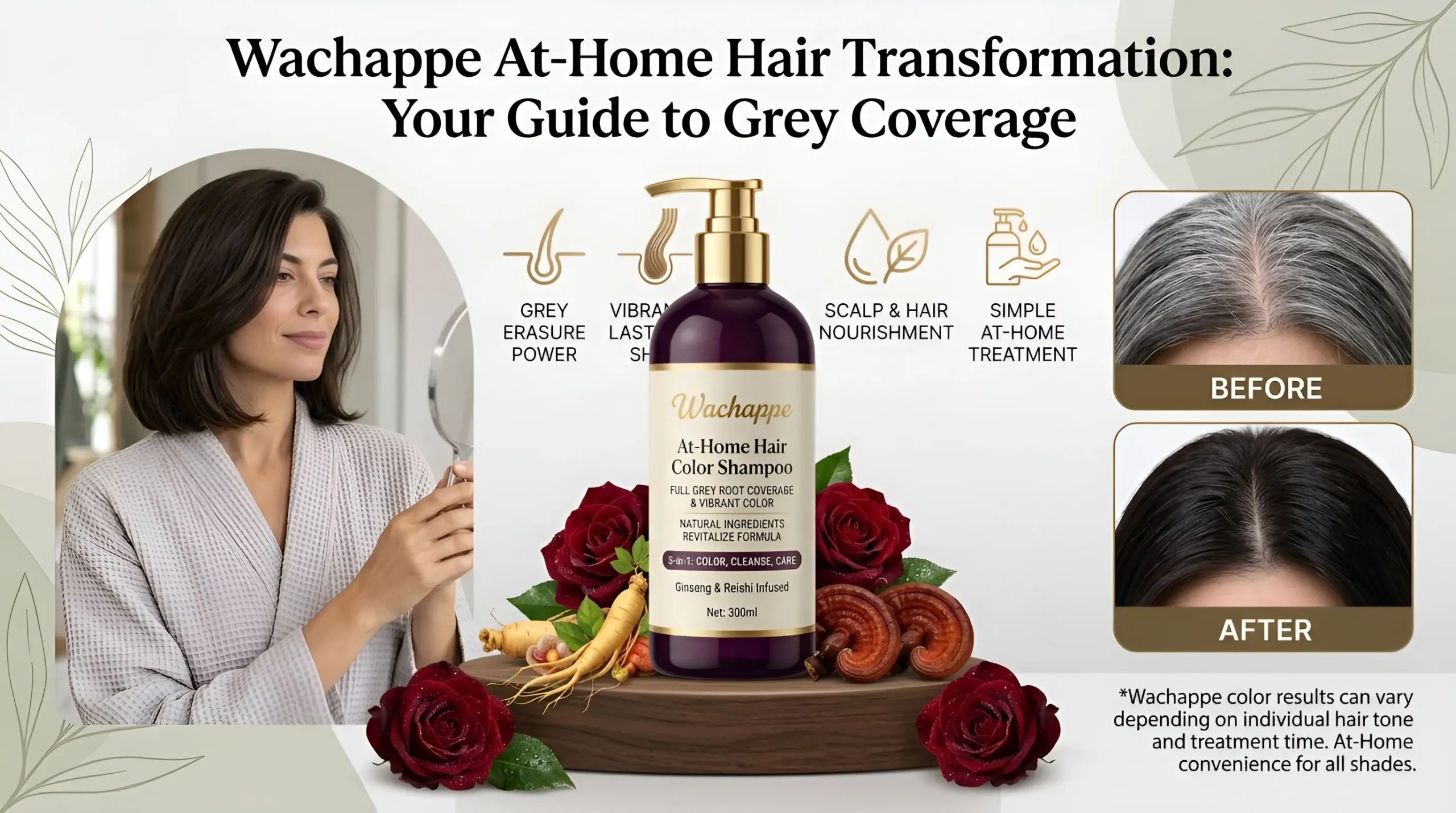
Finding a convenient way to maintain natural-looking hair colour has become an important part of many people’s personal care routines. Grey strands, changing hair colour, visible roots, and the desire to maintain a consistent appearance can lead people to explore different hair-colouring products. While traditional hair dyes remain a popular choice, shampoo-style colouring products have attracted attention because they offer a different approach to applying colour at home. One name that people may encounter while researching these products is Shihuanuo.
Shihuanuo is associated with hair-colouring and personal-care products, particularly shampoo-style hair dyes marketed for people who want to refresh their hair colour or cover visible grey strands. Its best-known product category is commonly described as a 3-in-1 hair dye shampoo, a format designed to combine colouring with shampoo-like application and conditioning functions. However, the precise formulation, shade selection, directions, and performance can vary between individual products and sellers.
For someone considering this type of product for the first time, understanding how it works is more useful than relying on promotional promises. Hair colour depends on several factors, including the original hair shade, the amount of grey hair, previous chemical treatments, and the colouring ingredients in the formula. A product that offers satisfactory results for one person might produce a different outcome for someone else.
This guide explores Shihuanuo, its commonly marketed hair-colouring format, potential benefits, application considerations, possible limitations, and important safety precautions. It also explains how to select a suitable shade, evaluate product packaging, compare colouring options, and establish realistic expectations before making a purchase. The aim is to help readers understand the product category and make an informed decision rather than assume that one colouring method is suitable for everyone.
What Is Shihuanuo?
Shihuanuo is a name associated with hair care and hair-colouring products. The brand’s public-facing materials identify it with Shihuanuo (Guangdong) Biotechnology Co., Ltd., a manufacturer associated with hair-colouring and related personal-care products. Its product range is described as including hair dye shampoo and other hair-care or colour-related formulations. The company’s own descriptions and the listings provided by individual sellers should be checked separately when evaluating a specific product.
The name is particularly relevant to people looking for an alternative to the familiar process of mixing a colour cream with a separate developer and applying the mixture using a brush. Shampoo-style hair colour is designed around a different application format, although the precise method depends on the individual formula.
A typical product in this category is promoted for home use, especially by people who want to make grey strands less noticeable or refresh an existing dark shade. It may be presented as a convenient option for adults who prefer managing their appearance without arranging frequent salon appointments.
Nevertheless, it is important to distinguish between the brand name and the product itself. A name on a bottle does not automatically reveal the full ingredient composition, the strength of its colouring action, or the quality of its manufacturing. Those details must be evaluated through the particular packaging, ingredient declaration, instructions, seller information, and applicable product documentation.
People researching Shihuanuo should therefore begin by identifying the exact item they are considering. They should check the product name, intended purpose, available shade, instructions, and ingredient list instead of assuming every product using the same name has identical characteristics.
This approach is particularly important when ordering online, where photographs, descriptions, and claims can differ between sellers. Understanding what the specific product actually contains is the foundation of a more informed hair-colouring decision.
What Is Shihuanuo Hair Dye Shampoo?
Shihuanuo hair dye shampoo is commonly presented as a shampoo-style colouring product intended to simplify the home hair-colouring process. Rather than treating hair cleansing and colouring as entirely separate routines, this format combines colour application with a method that resembles shampooing.
The term 3-in-1 is often used for products in this category to describe a combination of colouring, cleansing, and conditioning functions. However, the exact benefits and performance depend on the formulation. A product marketed this way should not automatically be assumed to provide the same conditioning performance as a dedicated conditioner or the same colouring characteristics as a professional permanent dye.
It is also important to recognise that a colour shampoo is not necessarily equivalent to an ordinary shampoo. Although its application may resemble washing the hair, its colouring ingredients are intended to change the hair’s appearance. That means the product needs to be treated as a hair-colouring formulation, with attention to its warnings and directions.
For example, someone who sees the word shampoo on the front of a package might assume the product can be used as frequently as their regular cleanser. That assumption may be inappropriate. The recommended frequency, contact time, application method, and precautions must come from the instructions for the particular colour product.
Before using Shihuanuo, readers should also establish whether the product is intended to deposit colour, provide temporary toning, or deliver another form of colouring result. These distinctions affect expectations about coverage, fading, and maintenance.
Understanding the product category helps prevent disappointment. The most useful question is not simply whether a colouring shampoo is convenient, but whether its formulation and intended results match the user’s hair type, desired shade, and personal-care needs.
How Does Shampoo-Style Hair Colour Work?
Hair-colouring products can work in different ways. Some deposit colour primarily on or near the hair’s outer layers, while other formulations use chemical processes to produce longer-lasting colour changes. Their performance depends on the ingredients and the product design.
A shampoo-style colour product is generally designed to distribute colour through the hair using a shampoo-like application method. The objective is to make the process more straightforward for home users while helping the hair achieve the intended shade.
The final appearance is influenced by several variables:
- Original hair colour: A person’s starting shade affects how clearly a new colour appears.
- Grey hair percentage: A small number of grey strands can produce a different visual result from hair that is predominantly grey or white.
- Hair condition: Porosity and previous chemical treatments can influence how colour is absorbed and retained.
- Selected shade: A darker colour may create a more noticeable change than a shade close to the original hair colour.
- Application technique: Uneven coverage can cause some areas to appear darker or lighter.
- Maintenance routine: Washing frequency and the products used afterward may influence how quickly the colour fades.
These differences explain why advertisements cannot guarantee identical results for every individual.
For example, a person with dark brown hair and a few grey strands might want a subtle refresh. Another person with mostly white hair could be seeking more complete coverage. Both may investigate the same product category, but their expectations and the suitability of a particular shade can be quite different.
It is therefore sensible to conduct a strand test before applying a new colour product across the entire head, following the product’s instructions. A small test can help reveal how the shade interacts with existing hair colour and whether the result matches expectations.
Why Are People Interested in Shihuanuo?
Convenience is an important reason people explore shampoo-style hair-colouring products. Traditional home dyeing may involve several separate items, preparation steps, and an application process that can be unfamiliar to beginners.
A colouring shampoo offers a different format that some people may find easier to handle. This can appeal to adults who want to manage their appearance at home, maintain a consistent shade, or avoid organising a separate salon visit for every colour refresh.
Another reason for interest is the desire to address visible grey hair. Greying is a natural change, and individuals have different preferences about how they manage it. Some prefer to leave their silver strands untouched, while others enjoy maintaining a darker or more consistent shade. Neither preference is inherently better; the decision is personal.
Shampoo-style colouring can also attract people who already colour their hair but are looking for a different application method. They may be interested in whether a particular product fits more comfortably into their routine.
However, convenience alone is not enough to establish product suitability. A person should consider the following questions:
- Does the available shade match the colour they want?
- Are the ingredients clearly listed?
- Are the application directions understandable?
- Does the package specify appropriate precautions?
- Is the product suitable for their hair history and intended use?
- Can they obtain reliable product and seller information?
Answering these questions creates a stronger basis for choosing a hair-colouring product than relying on a short advertisement or a photograph showing a dramatic before-and-after transformation.
Potential Benefits of Shihuanuo Hair Colour Products
The potential benefits of a shampoo-style colouring product depend on the particular formula and the user’s needs. It is useful to evaluate these benefits as practical possibilities rather than guaranteed outcomes.
1. A Convenient Application Format
A major attraction of shampoo-style hair colour is the familiar application concept. People who are accustomed to washing their hair may find the general format more approachable than using several separate colouring products.
This does not mean that the application instructions can be ignored. Users still need to follow the specified preparation method, processing time, rinsing requirements, and safety measures.
For someone who finds traditional colour kits unnecessarily complicated, a product with fewer preparation steps may make the routine easier to manage.
2. An Option for Managing Visible Grey Hair
Visible grey strands are among the common reasons people search for colouring shampoos. A suitable product may help reduce the contrast between grey strands and darker hair, depending on the formula and the individual’s starting shade.
The outcome should not be confused with guaranteed complete grey coverage. White hair, coarse strands, resistant roots, and different hair textures can respond differently to colouring products.
A person seeking uniform, full coverage should check whether the selected product is designed to deliver that result. A strand test can also help reveal whether the colour develops as expected.
3. The Possibility of At-Home Colouring
Some people prefer handling hair care privately rather than visiting a salon. A home-colouring product may offer greater flexibility around personal schedules, provided the person is comfortable applying it correctly.
At-home application can also make it easier to plan a personal grooming routine. However, the convenience must be balanced against the responsibility of reading the label, protecting the skin, and using the product within its recommended limits.
Anyone who is uncertain about the application process or has a history of serious hair-dye reactions should seek appropriate professional guidance before trying a new formulation.
4. A Potentially Simpler Routine
Combining several functions into one product can reduce the number of separate items involved in an application. This may appeal to people who prefer a straightforward routine.
Nevertheless, the phrase 3-in-1 is a product-positioning description, not proof that the colouring shampoo replaces every product needed for healthy-looking hair. A dedicated conditioner or another aftercare product may still be useful, depending on the condition of the hair.
5. Different Shade Options
Shampoo-style colouring products may be sold in more than one shade. Darker colours are commonly associated with products marketed for grey coverage, but the specific availability depends on the seller and product version.
Choosing the right shade is important because the goal is usually to achieve an appearance that works with the person’s complexion, natural hair colour, and preferences.
A carefully selected colour that looks natural can be more satisfying than choosing the darkest shade simply because it appears more powerful in the packaging.
Understanding the Limitations Before Buying
Every hair-colouring method has limitations, and a convenient format does not eliminate them. Understanding these limitations can help consumers avoid unrealistic expectations.
One consideration is colour consistency. Hair is rarely uniform across the entire head. Roots, lengths, and previously coloured sections may have different levels of pigment and different histories of chemical treatment. A single formula may therefore produce slightly different appearances across those areas.
Another consideration is fading. Colour-depositing products do not necessarily provide permanent results. Some gradually lose their visible intensity with repeated washing, while other formulations behave differently. The expected duration must be assessed using product-specific information rather than a general promise.
People should also understand that colouring is not the same as lightening. A product designed mainly to deposit a darker colour should not be expected to turn dark hair blonde. Substantial lightening generally requires a different colouring approach.
Scalp comfort is another important concern. Even if a product is advertised as herbal, gentle, or ammonia-free, those descriptions do not establish that it is safe for every user. Reactions depend on the complete formulation and individual sensitivity.
Finally, the application method might not suit everyone. Someone who prefers carefully painting individual roots may find a shampoo-style format less precise, while someone seeking a dramatic change may need a more suitable colouring technique.
Making a purchase with these limitations in mind can lead to a more realistic assessment of value.
How to Choose the Right Shihuanuo Hair Colour Shade
Shade selection deserves careful attention because it can influence how satisfied someone feels with the final result.
The starting point is the person’s current hair colour. Someone with naturally black hair may prefer a shade that maintains a familiar appearance, while someone with brown hair might want a softer or warmer finish.
Grey coverage introduces another consideration. White and grey strands can create a different contrast from naturally pigmented hair. Depending on the formulation, the final result might not look exactly like the shade displayed on the bottle.
When comparing products, consider the following factors.
Natural hair colour: Select a shade that makes sense for the existing colour and desired outcome.
Amount of grey hair: Think about whether the goal is to soften a few visible strands or address larger areas of grey hair.
Previous colouring: Previously dyed, bleached, or chemically treated hair may respond differently. Professional advice can be helpful when combining treatments.
Desired appearance: Some users prefer a colour that closely resembles their original shade. Others may want a noticeably different appearance.
Product instructions: Look for clear information about the intended shade, expected result, and restrictions on application.
Test results: A strand test can provide a useful indication of the result on the actual hair rather than relying solely on a product photograph.
It is wise to avoid choosing a shade exclusively because of promotional imagery. Lighting, camera settings, hair styling, and digital editing can alter how colour appears in photographs.
Instead, use packaging information as a starting point and consider your own hair’s condition and colour history. A realistic target is more valuable than chasing a result that a particular formula may not be able to deliver.
How to Use Shihuanuo Hair Dye Shampoo Responsibly
Correct application is essential when using any hair-colouring product. The precise steps for Shihuanuo should be taken from the instructions on the particular package, because formulas and application requirements can differ.
The following general considerations can help users prepare more carefully.
Step 1: Read the Packaging
Begin by reading the full product label. Confirm the intended use, selected shade, ingredients, warnings, and recommended application method.
Do not rely solely on the product photograph or an online seller’s summary if the physical packaging provides more detailed directions.
If instructions are missing, unclear, or inconsistent with the seller’s claims, it is better to obtain clarification before applying the product.
Step 2: Check the Ingredients
Review the complete ingredient list, especially if you have previously reacted to hair dyes, fragrances, preservatives, or other cosmetic ingredients.
Some hair dyes contain substances capable of irritating the skin or triggering allergic reactions. P-phenylenediamine, commonly abbreviated as PPD, is one example associated with certain hair-colouring products. The presence or absence of a specific ingredient must be established from the exact product label rather than assumed from the brand name.
Anyone with a known hair-dye allergy should not experiment with a new formulation without appropriate medical guidance.
Step 3: Follow the Required Allergy-Test Instructions
A patch test is an important precaution, but it does not guarantee that a reaction will never occur.
Follow the product’s stated allergy-test method and timing before each use, including the instructions regarding how long to wait before proceeding. The US Food and Drug Administration advises users to follow package directions and test hair dye on the skin before use.
Do not apply the product to your hair if the test causes redness, itching, swelling, burning, a rash, or another concerning reaction.
A strand test serves a different purpose: it helps assess the colour result. It should not be treated as a replacement for the required skin-sensitivity test.
Step 4: Prepare the Hair and Application Area
Arrange the products and protective materials required by the packaging before starting.
If gloves are specified or supplied, use them as directed. Protect clothing and nearby surfaces against colour stains.
Check that the scalp is suitable for colouring. A product should not be applied to irritated, broken, or damaged skin unless the instructions specifically allow it and appropriate professional guidance supports its use.
Avoid improvising with extra products or combining different hair dyes. Different formulas are not necessarily designed to be mixed together.
Step 5: Apply the Product According to Its Label
Follow the stated instructions concerning whether the hair should be dry or damp, how the product should be distributed, and which areas should receive attention.
Use the specified quantity and processing time. Do not assume that leaving a colouring shampoo on longer will produce a better result.
Excessive contact time can increase the risk of irritation without ensuring a more satisfactory colour.
Step 6: Rinse Thoroughly
Rinse the hair according to the product instructions. Use the recommended procedure and continue until the product has been removed as directed.
Avoid allowing the formula to contact the eyes. Hair dye should never be used to colour the eyebrows or eyelashes at home because of the risk of serious eye injury.
If you experience significant burning or another concerning symptom during application, stop using the product and rinse it off promptly.
Step 7: Evaluate the Result
Once the application is complete, allow the hair to settle and assess the shade under ordinary lighting.
Consider whether the outcome meets your expectations before deciding on future applications. If the colour looks uneven, avoid immediately applying additional dye without checking the product’s directions and considering whether professional assistance is appropriate.
A patient, measured approach is generally more sensible than repeating a chemical treatment simply to correct a disappointing result.
Is Shihuanuo Safe for Different Hair Types?
There is no single answer for every hair type because suitability depends on the individual formula, hair history, and the person’s sensitivity to its ingredients.
Normal Hair
People with hair that is in relatively good condition may find it easier to evaluate a new colouring product, particularly if their hair has not undergone several recent chemical treatments.
Even so, normal-looking hair does not remove the need to follow the instructions, conduct the required allergy test, and check the ingredients.
Dry Hair
Dry hair may benefit from a thoughtful aftercare routine, but a product marketed as conditioning should not automatically be treated as a complete solution for dryness.
Colouring can influence hair texture and appearance, particularly when combined with other treatments. People with dry hair should examine their hair’s condition before introducing another colour product.
Chemically Treated Hair
Hair that has been bleached, relaxed, permed, or previously dyed deserves additional consideration. Its condition and colour history can influence the final shade.
The American Academy of Dermatology recommends following hair-colouring instructions and taking precautions to reduce damage. It also advises allowing an appropriate interval after bleaching, relaxing, or perming before applying dye.
If the hair is fragile, severely damaged, or undergoing several treatments, consult a qualified hair professional before using another colouring product.
Sensitive Skin or a History of Allergies
People with sensitive skin may be especially concerned about the ingredients in a hair-colouring formulation.
A product described as natural or herbal may still contain ingredients that cause reactions. An ammonia-free claim also does not establish that a formula is allergy-free.
Anyone who has previously experienced a significant reaction to hair dye should not rely on a simple online description to determine whether another product is suitable.
What Ingredients Should Buyers Look For?
Ingredient awareness is an important part of choosing any cosmetic product. Rather than assuming that certain words on the front of a package prove safety, read the full declaration and understand what is actually being offered.
Some hair-care brands highlight botanical ingredients to communicate a focus on plant-derived components. Such ingredients may have a role in a formula’s conditioning properties or overall product design. However, the presence of a botanical ingredient does not establish that a colouring product will be safer, more effective, or suitable for everyone.
Buyers should pay attention to several details.
Complete ingredient declaration: Check that the ingredients are listed clearly and can be read on the package.
Known sensitivities: Look for substances that you already know you should avoid.
Colouring agents: Understand that the ingredients responsible for changing hair colour may differ from those used for conditioning or fragrance.
Warnings and restrictions: Review any information about age limits, application areas, eye contact, and the need for an allergy test.
Packaging consistency: Compare the physical product with the listing from which it was purchased. A discrepancy may justify asking the seller for clarification.
It is also important to remember that product formulations may change. An ingredient list found in an old photograph or an unrelated online listing may not match the item currently being sold.
For this reason, the packaging accompanying the exact product should be the starting point for ingredient evaluation.
Does Shihuanuo Provide Permanent Hair Colour?
The answer depends on the precise formulation being considered. Shihuanuo is often associated online with shampoo-style colouring products marketed for grey coverage, but that association alone is not sufficient to establish the permanence of every item carrying the name.
Hair-colouring products are broadly differentiated by the way they deposit or develop colour and by how their results change over time.
Some products are designed for temporary or semi-permanent results and gradually fade with washing. Others use colouring processes intended to provide more lasting changes.
Consumers should therefore look for explicit product-specific information about the colouring type and expected fading behaviour.
A product that deposits colour without producing a permanent change may need periodic reapplication to maintain the desired appearance. A product with a different formulation may behave differently.
People should also distinguish between fading and regrowth. Even when applied colour remains visible along the lengths, new hair may grow in with its original shade. This can make roots increasingly noticeable over time.
Before choosing Shihuanuo, read the packaging to establish whether its intended results match your maintenance preferences. Someone who wants a temporary refresh may have different priorities from someone who expects a permanent colour change.
Understanding this distinction also helps when comparing prices. The initial cost of a product is only one element of its overall value; frequency of use and aftercare requirements also matter.
How Long Can the Colour Last?
There is no single duration that can responsibly be promised for every Shihuanuo product or every user.
Colour retention depends on the formulation, starting hair colour, hair condition, application technique, washing routine, and the type of result the product is designed to provide.
Several practical factors can influence how the colour looks over time.
Frequent washing: Repeated washing may contribute to fading in products designed to lose colour gradually.
Cleansing products: The properties of the shampoo and other products used afterward may influence colour retention.
Hair porosity: Hair that absorbs colour differently across its lengths can show uneven fading.
Sun exposure and styling: Environmental exposure and heat styling can affect the appearance and condition of coloured hair.
New hair growth: Newly grown roots may reveal the original shade even if previously coloured lengths remain darker.
Application consistency: Uneven initial coverage may become more noticeable as the colour fades.
A sensible approach is to document the starting shade and observe how the result changes during normal use. That creates a more realistic personal expectation than relying on a fixed duration claimed in an advertisement.
Avoid repeating the colouring process more frequently than the product’s instructions permit. If the shade fades sooner than expected, first confirm whether the product is designed for temporary, semi-permanent, or longer-lasting colour.
Shihuanuo Compared With Traditional Hair Dye
Shampoo-style hair colour and traditional dye kits can serve overlapping purposes, but their application formats and formulations can differ.
Traditional at-home dye kits may require users to combine separate components, apply colour with a brush, and follow a prescribed development process. Some people appreciate this approach because it can allow greater control over individual roots or sections.
A shampoo-style product may appeal to someone who prefers a format that feels more familiar or requires fewer preparation steps.
However, ease of application does not automatically mean better coverage or a healthier result. The effectiveness of either method depends on the actual formulation and whether it suits the individual’s desired outcome.
| Consideration | Shampoo-style hair colour | Traditional hair dye |
|---|---|---|
| Application | Often designed around shampoo-like distribution | May require mixing or brush application |
| Preparation | Depends on the specific product | Depends on the kit and formula |
| Grey coverage | Varies with formulation and hair type | Varies with formulation and hair type |
| Colour longevity | Must be checked on the individual product | Must be checked on the individual product |
| Shade precision | May be less convenient for highly targeted application | Some kits allow more targeted application |
| Safety requirements | Ingredient checks and specified tests remain important | Ingredient checks and specified tests remain important |
| Best selection method | Match the product to the desired result | Match the product to the desired result |
The table should not be understood as a universal ranking. A well-formulated product of either type may suit a particular person, while another may not.
The best choice is the one that meets the desired colouring goal, provides clear instructions, and can be used appropriately by the individual.
Shihuanuo Versus Henna and Other Natural Colouring Options
Some people considering hair colour also explore henna, plant-based colouring products, or other alternatives to conventional dye formulas.
These products should not be treated as interchangeable simply because they are marketed as natural. Their colouring mechanisms, resulting shades, ingredient compositions, and suitability can vary considerably.
Henna-based products, for example, may produce different results from conventional dye shampoos. Other products described as herbal may contain a combination of plant extracts and synthetic colouring agents.
This makes the full ingredient declaration more important than broad marketing labels.
A buyer who prefers a plant-based colouring option should ask whether the product is made from a clearly identified formulation or simply promoted with botanical language.
It is also essential to understand that natural ingredients can still cause sensitivity in some individuals. No colouring method should be assumed to be risk-free.
Someone who has previously experienced a reaction to hair dye should be cautious about experimenting with an alternative without professional guidance. Different products can contain related or unrelated substances, so a previous reaction should be taken seriously.
The practical lesson is to compare the actual formula, intended result, instructions, and available product information. The label natural alone cannot establish which product is best for a particular person.
How to Buy Shihuanuo Online More Carefully
Online shopping makes it possible to discover hair-colouring products that may not be stocked by nearby retailers. At the same time, buying cosmetics without physically examining the package introduces challenges.
Before ordering Shihuanuo, review the following considerations.
Check the Exact Product Name
Confirm that the listing describes the product you intend to purchase. Look for its full name, colouring format, shade, package size, and intended use.
Do not assume two listings are identical simply because they share a brand name.
Review the Ingredient Information
A reliable listing should provide useful product details or make it possible to obtain the ingredient information. If essential details are missing, ask the seller before ordering.
This is especially important for people who need to avoid a known ingredient.
Examine Seller Transparency
Consider whether the seller provides clear contact information, an understandable return policy, and consistent product descriptions.
Independent customer reviews may offer useful context, but they should not be treated as definitive proof of quality or safety. Review photographs, dates, and descriptions carefully rather than relying solely on star ratings.
Compare the Package With the Listing
When the item arrives, examine the label, seal, packaging condition, and printed instructions.
If the delivered product differs materially from the listing, do not use it until the discrepancy has been resolved.
Avoid Choosing on Price Alone
A lower price may appear attractive, but the product’s suitability depends on more than cost. Packaging clarity, seller reliability, ingredient information, and the availability of support are all relevant.
A small saving is not worthwhile if the product’s contents or directions are unclear.
Verify Availability and Delivery Terms
Stock, shipping costs, delivery times, and return conditions can change between sellers and markets.
Confirm the current terms before purchasing. A product that appears affordable in the listing may have additional delivery expenses or limitations.
A careful buying process reduces uncertainty and helps consumers make a decision based on product information rather than promotional language alone.
Hair Care After Using a Colouring Shampoo
The way someone cares for coloured hair afterward can affect its appearance and general condition. Although the ideal routine varies according to hair type and product instructions, a few principles are broadly useful.
Begin by following the product’s rinsing directions and any aftercare guidance supplied with the package. If a separate conditioner is recommended or appropriate for the person’s hair, it may help improve manageability.
Avoid assuming that a colouring product replaces every element of a regular hair-care routine. A formula advertised as a combined shampoo, colour, and conditioner may still differ from the user’s usual cleansing and conditioning products.
It is also sensible to avoid introducing several new chemical treatments at the same time. Changing multiple products makes it harder to determine which one is responsible for an unwanted result.
For hair that becomes dry or brittle, consider reducing unnecessary heat styling and using a suitable conditioning routine. Coloured hair may benefit from gentle handling, particularly if it has previously undergone bleaching or other chemical processes.
Protective habits can also help maintain the appearance of the hair. Excessive heat and sun exposure may contribute to dryness, roughness, and colour changes, so sensible protection is useful.
Finally, monitor the scalp as well as the hair itself. Persistent itching, redness, swelling, or discomfort should not be dismissed as an ordinary part of colouring.
Hair care is most effective when the routine is adjusted to the actual condition of the hair instead of following a fixed collection of products.
Potential Side Effects and Safety Precautions
Hair-colouring products can cause irritation or allergic reactions in some individuals. A product’s popularity, botanical marketing, or convenient application format does not eliminate those possibilities.
Reactions may include itching, burning, redness, swelling, a rash, dryness, or blistering. Symptoms can sometimes appear after the application rather than immediately. The NHS advises users to follow hair-dye instructions, conduct the recommended tests, and avoid continued use when a reaction occurs.
The following precautions are important.
- Read all warnings before using the product.
- Review the full ingredient list and avoid known allergens.
- Perform the required allergy test according to the package directions.
- Wear the recommended protective gloves.
- Keep the product away from the eyes, eyebrows, and eyelashes.
- Do not exceed the stated processing time.
- Do not apply colour to an irritated or damaged scalp.
- Stop using the product if you experience a concerning reaction.
- Seek medical advice when symptoms persist or worsen.
Anyone with a previous hair-dye allergy should seek professional guidance before trying another formulation. It is not enough to assume that a different brand name guarantees a different or safer ingredient profile.
If a reaction develops, rinse the product off as directed and seek appropriate medical advice. If there is sudden swelling of the lips, mouth, tongue, or throat, difficulty breathing, or another sign of a severe allergic reaction, obtain emergency medical help immediately.
These precautions are not intended to discourage all hair colouring. They are intended to help people recognise that cosmetic products must be selected and used with care.
Practical Case Studies: Three Illustrative Scenarios
The following case studies are hypothetical examples created to explain common consumer decisions. They are not verified customer testimonials, clinical findings, or evidence of Shihuanuo’s actual performance.
Case Study 1: A Person With a Few Grey Strands
Imagine a person in their late thirties who has naturally dark brown hair and has recently noticed grey strands around the temples.
The person wants a subtle appearance and does not necessarily need to change the colour of the entire head. After discovering shampoo-style colouring products, they begin comparing the available shades.
Instead of selecting the darkest option immediately, they review the product instructions and identify a shade that appears compatible with their current hair colour. They also check the ingredients and follow the required allergy-test procedure.
Before full application, they conduct a strand test according to the directions.
This example highlights the importance of matching the product to a specific objective. Someone seeking to soften the contrast created by a few grey strands may have different requirements from a person who wants complete coverage of predominantly white hair.
The main lesson is that a careful selection process can help establish more realistic expectations. It does not guarantee a particular result, but it reduces reliance on promotional claims.
Case Study 2: A Person With Predominantly Grey Hair
Consider an older adult whose hair has gradually become predominantly grey. They are interested in using a shampoo-style colouring product because they prefer managing their appearance at home.
Their main goal is consistent coverage rather than a temporary refresh of a few individual strands.
Before purchasing, this person needs to determine whether the particular formulation is intended to provide the desired level of grey coverage. They should examine the available shades, application instructions, and information about the expected result.
A strand test can help show whether the colour is likely to match their expectations. If it does not, they may decide to investigate a traditional dye or consult a hair professional.
This scenario illustrates why the quantity and distribution of grey hair matter. A product that seems suitable for a few grey roots may not provide the same result across a head of predominantly white hair.
The important lesson is to assess the colouring objective first and the application format second.
Case Study 3: A Person With Previously Coloured Hair
Imagine someone who regularly colours their hair but has recently experienced dryness following several treatments. They are considering Shihuanuo because they want a different way to maintain their preferred shade.
Before switching products, they review their recent treatments and the current condition of their hair.
They check the exact formulation rather than assuming that a shampoo-style product will automatically be gentler. They also read the precautions and consider whether another colouring application is appropriate.
If their hair is severely damaged or their scalp is irritated, they postpone the decision and seek qualified advice instead of applying another dye immediately.
This example demonstrates the value of looking beyond the product format. A product can be convenient and still be unsuitable for hair that needs a break from additional chemical treatments.
The main lesson is to consider the entire hair-care history before making a change. The newest product is not necessarily the best choice for every situation.
Common Mistakes to Avoid When Using Shihuanuo
Even a product with straightforward instructions can produce disappointing results when important details are overlooked.
One common mistake is choosing a shade based entirely on an online photograph. Images may have been taken under different lighting conditions or edited to create a particular appearance. The shade shown in an image cannot guarantee the same result on another person’s hair.
Another mistake is treating a shampoo-style dye as an ordinary cleanser. These products are intended for a colouring purpose, so their application frequency and contact time must follow the relevant label.
Ignoring allergy precautions is another serious error. A product should not be considered safe merely because it contains botanical ingredients or is advertised as ammonia-free.
Some people also assume that leaving colour on longer will deliver stronger coverage. This is not a reliable strategy and may increase exposure to irritating ingredients. The specified processing time should be followed.
Mixing different colouring products can create additional uncertainty. Unless the manufacturers specifically direct users to combine particular products, mixing formulas is not a suitable shortcut.
Finally, repeating applications immediately after an unsatisfactory result can make it harder to protect the hair and scalp. Before attempting a correction, assess the product’s instructions and consider professional advice.
Avoiding these mistakes can make the decision-making process more informed, even though the result still depends on the individual product and the person’s hair.
Is Shihuanuo Worth Considering?
Whether Shihuanuo is worth considering depends on what the individual expects from a colouring product.
For an adult seeking a shampoo-style application method, the format may be appealing. People who prefer at-home grooming, want to investigate options for managing grey hair, or dislike complicated preparation may find the category relevant to their needs.
However, product suitability cannot be established by the brand name alone. It is necessary to review the exact formula, understand the intended colouring result, check the shade selection, and follow the stated safety instructions.
The purchasing decision should also consider practical issues such as seller reliability, packaging clarity, delivery arrangements, and the ability to obtain ingredient information.
People who want complete grey coverage, a dramatic colour transformation, or a highly precise result may need to compare several colouring methods before deciding. In some situations, a traditional dye or professional hair-colouring service may be more appropriate.
The most useful approach is to define the desired result first. Once the goal is clear, the available products can be assessed against it.
This prevents convenience from becoming the only deciding factor and encourages a more balanced evaluation of the colouring options available.
Frequently Asked Questions About Shihuanuo
Q1: What is Shihuanuo?
A: Shihuanuo is a name associated with hair-care and hair-colouring products, particularly shampoo-style hair dye marketed for home colouring. The exact purpose and characteristics depend on the individual product.
Q2: What is Shihuanuo hair dye shampoo used for?
A: It is commonly marketed for adding colour to hair, including helping make visible grey strands less noticeable. The extent of coverage depends on the formula, shade, starting hair colour, and application.
Q3: Is Shihuanuo an ordinary shampoo?
A: No. A product marketed as hair dye shampoo is intended to colour hair as well as provide its stated shampoo-related functions. It should be used according to the colouring product’s directions rather than treated automatically like an ordinary cleanser.
Q4: Can Shihuanuo cover grey hair?
A: It may help cover or reduce the appearance of grey hair, depending on the specific formula and the individual’s hair. Complete, uniform coverage should not be assumed without product-specific information and an appropriate strand test.
Q5: Is Shihuanuo permanent or semi-permanent?
A: The colouring type should be verified from the exact product label. Shampoo-style colouring products can differ in how they deposit colour and how quickly their results fade.
Q6: Does Shihuanuo contain herbal ingredients?
A: Some product descriptions emphasise botanical ingredients. However, the ingredient composition should be confirmed from the exact package rather than inferred from marketing terms such as herbal or natural.
Q7: Is Shihuanuo safe for sensitive skin?
A: Safety depends on the full formulation and the individual’s sensitivities. People with sensitive skin or a history of hair-dye reactions should examine the ingredient list, follow the required allergy-test procedure, and seek professional advice when appropriate.
Q8: Can Shihuanuo be used on chemically treated hair?
A: That depends on the product instructions and the condition of the hair. Previously bleached, relaxed, permed, or coloured hair may respond differently. Anyone with damaged or fragile hair should consider professional advice before applying another colouring product.
Q9: How should I apply Shihuanuo hair dye shampoo?
A: Follow the directions on the exact package, including the preparation method, application technique, processing time, and rinsing procedure. Complete the required allergy test beforehand and avoid experimenting with longer processing times.
Q10: How long does Shihuanuo hair colour last?
A: The duration depends on the formulation, hair condition, shade, washing habits, and application. Check the product’s own guidance rather than relying on a universal duration.
Q11: Can Shihuanuo make dark hair blonde?
A: A product designed mainly to deposit dark colour should not be expected to lighten dark hair to blonde. Significant lightening generally requires a different colouring process.
Q12: Can Shihuanuo cause an allergic reaction?
A: Yes. Hair-colouring products can cause irritation or allergic reactions in susceptible individuals. Follow the required testing instructions and stop use if you experience a concerning reaction.
Q13: Does ammonia-free mean Shihuanuo is allergy-free?
A: No. An ammonia-free description does not mean a product contains no potential allergens or irritants. The complete ingredient list and appropriate precautions remain important.
Q14: Where should I buy Shihuanuo?
A: Look for a seller that provides clear product details, ingredient information, packaging photographs, and transparent purchasing terms. Verify that the delivered product matches the listing before use.
Q15: Is Shihuanuo suitable for everyone?
A: No single hair-colouring product is suitable for everyone. Personal allergies, hair condition, desired colour, previous chemical treatments, and product instructions all influence whether a particular formulation is appropriate.
Final Thoughts
Shihuanuo is a name worth understanding for anyone researching shampoo-style hair-colouring products and at-home options for maintaining their preferred hair shade. Its association with 3-in-1 hair dye shampoo makes it relevant to people who want to explore a colouring method that combines several functions in one application format.
However, a convenient format should not be confused with guaranteed performance. Results depend on the exact formula, the original hair colour, the amount of grey hair, previous treatments, and the way the product is used. Important details such as ingredient composition, shade availability, colouring type, and application instructions should always be verified for the specific item being considered.
For a more confident decision, begin by defining the intended result. Determine whether the goal is to refresh an existing shade, make grey strands less noticeable, or achieve a more substantial colour change. Then compare the product’s stated purpose with those requirements.
Safety should remain part of that decision. Read the ingredient list, follow the package instructions, complete the required allergy test, and avoid applying hair dye to irritated or damaged skin. Anyone with a history of hair-dye allergies or concerns about damaged hair should seek appropriate professional guidance before trying a new formulation.
Ultimately, choosing a hair-colouring product is about more than following a trend. It is about finding a suitable match between the product, the desired appearance, and an individual’s hair-care needs. A careful evaluation of Shihuanuo can help readers make that decision with clearer expectations and a better understanding of what to check before use.
For More Visits: Bright Magazine
