

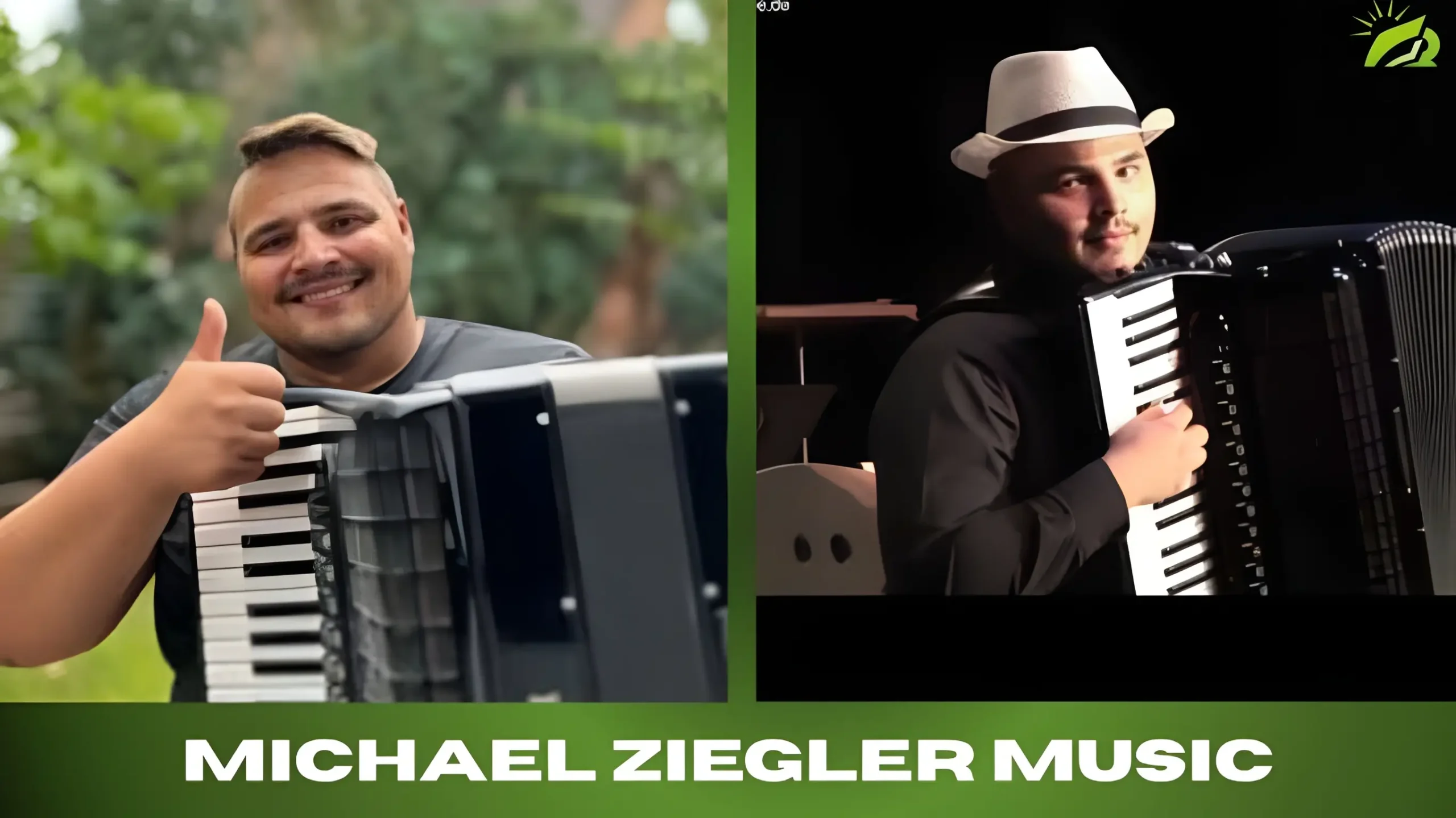
Music has the power to cross generations, connect different cultures, and transform familiar sounds into something new. Some musicians build their identities around popular instruments, while others choose an instrument with a long history and explore how it can speak to modern audiences. Michael Ziegler belongs to the latter category. As a German accordionist, composer, and performer known professionally as Ziggi Accordion, he is developing a musical identity that brings together the traditional character of the accordion and contemporary artistic ideas. His approach combines minimal music, classical influences, pop elements, and original compositions.
The subject of Michael Ziegler Music is particularly interesting for listeners who want to discover a different side of the accordion. Rather than treating the instrument exclusively as a part of traditional folk entertainment, Ziegler explores its potential for creating atmosphere, rhythm, emotion, and layered musical experiences. His artistic direction demonstrates how an instrument with a recognizable historical identity can continue to evolve when a musician approaches it with curiosity and a willingness to experiment.
Ziegler’s musical journey also highlights the importance of patience, technical development, artistic independence, and continuous learning. Developing a distinctive sound takes more than learning notes or reproducing familiar melodies. It requires a performer to understand an instrument deeply, explore different styles, and make decisions about how each performance should affect the listener.
In 2026, his debut album, ZEITLOS, marked an important development in this journey. Released on April 19, the 13-track project explores the accordion through modern sound production and musical influences that extend beyond traditional expectations.
This article explores Michael Ziegler’s musical identity, his approach to the accordion, his creative style, his debut album, his live performances, and the broader significance of bringing traditional instruments into contemporary music.
Who Is Michael Ziegler?
Michael Ziegler is a German musician whose principal instrument is the accordion. He performs under the artistic name Ziggi Accordion, a name associated with his contemporary approach to accordion performance and composition.
His work combines musical performance with creative experimentation. Instead of limiting his repertoire to a single genre, he brings together elements of classical music, pop, minimal music, and original compositions. These influences provide different ways to explore the accordion, from technically demanding passages to rhythmic patterns and more atmospheric musical passages.
The defining idea behind his artistic project is that the accordion can do more than fulfill the role traditionally assigned to it. Its sound can be powerful and rhythmic, but it can also be delicate, reflective, and atmospheric. Ziegler’s approach places these possibilities at the center of his musical identity.
The name Ziggi Accordion helps distinguish his current artistic project from a conventional musician profile. It gives listeners a recognizable identity associated with his performances, compositions, recordings, and exploration of modern accordion music.
His professional activities also extend beyond performing. Composition and music education form part of his broader musical interests, creating a connection between his own development as an artist and the opportunities he provides for other musicians to explore the instrument.
Michael Ziegler Music, therefore, is best understood not simply as a collection of performances or recordings, but as an evolving artistic direction centered on the possibilities of the accordion.
Quick Overview of Michael Ziegler Music
Here are the main details that help introduce Michael Ziegler and his musical work.
- Full name: Michael Ziegler.
- Artistic name: Ziggi Accordion.
- Country: Germany.
- Primary instrument: Accordion.
- Professional activities: Musician, performer, composer, and music educator.
- Musical influences: Minimal music, classical music, pop, and contemporary styles, including Modern Ethno and jazz/pop elements.
- Debut album: ZEITLOS, released in April 2026.
- Original compositions associated with his repertoire: “Home Again,” “Memories,” and “Zeitlos Rhapsodie.”
- Performance approach: A combination of expressive accordion playing, modern arrangements, rhythmic development, and, in some performances, loop-station technology.
These details describe the central elements of his public artistic identity without relying on unverified personal information or speculation about his private life.
Early Musical Development and the Accordion
A musician’s professional identity often develops long before that person begins presenting work under a recognizable artistic name. Learning an instrument involves building physical coordination, understanding musical structure, improving listening skills, and discovering which styles feel creatively rewarding.
Accordion playing requires particular coordination because the performer manages both the keyboard or buttons and the bellows. The bellows control airflow through the instrument, helping shape volume, phrasing, articulation, and expression. This combination makes the accordion both technically demanding and remarkably flexible.
For someone pursuing the instrument seriously, early training can provide the foundation for more advanced work. Technical practice makes it easier to perform difficult passages, while musical study helps the player understand phrasing, harmony, rhythm, and interpretation.
Ziegler’s earlier personal account of his musical development described beginning accordion lessons at the age of nine. He also discussed progressing from standard-bass playing toward melodic-bass techniques as he developed his abilities.
This background offers useful context for understanding his later artistic direction. Moving beyond the basics of an instrument can open new possibilities for arranging music, navigating different musical traditions, and developing a more individual performance style.
The accordion is especially rewarding for musicians willing to explore its multiple dimensions. Its combination of bass accompaniment, chords, melody, and expressive bellows control allows one performer to create a substantial musical texture. With experience, those capabilities can become the foundation for both traditional repertoire and more experimental performances.
For Ziegler, the instrument is not simply a means of reproducing established music. It is the central tool through which he explores ideas about sound, emotion, rhythm, and contemporary musical expression.
Why Michael Ziegler Chose a Distinctive Musical Direction
Every musician faces decisions about artistic identity. Some performers specialize in a familiar repertoire, while others seek opportunities to combine influences and create something that feels personal.
Developing a recognizable style can be particularly challenging when an instrument carries strong associations with a specific musical tradition. The accordion is often connected with folk celebrations, dance music, regional traditions, and classical repertoire. Those associations are important, but they do not represent the instrument’s entire creative range.
Ziegler’s Ziggi Accordion project takes a broader view. It places the accordion in a contemporary setting, allowing rhythmic patterns, atmospheric effects, pop influences, and original compositions to work alongside classical techniques.
This approach matters because musical traditions remain relevant when artists continue to discover new ways of interpreting them. Innovation does not have to involve abandoning an instrument’s history. It can involve understanding that history and then finding new ways to use the instrument’s established strengths.
For example, a musician can preserve the accordion’s expressive melodic character while changing the arrangement around it. A familiar melodic phrase may sound different when supported by repeated rhythmic patterns, extended resonance, or additional layers built through recording technology.
The creative challenge is to make those elements work together rather than allowing production techniques to overshadow the actual performance. Effective arrangements give the instrument room to communicate while introducing enough variation to maintain the listener’s interest.
This balance between musical knowledge and experimentation is a central reason Michael Ziegler Music provides an interesting subject for people exploring modern instrumental performance.
Understanding Michael Ziegler’s Musical Style
One of the most notable aspects of Michael Ziegler Music is its combination of musical influences. His work does not fit comfortably into one narrow genre because different traditions contribute different qualities to his sound.
Minimal music, classical influences, pop, and contemporary approaches all play a role in his artistic direction. His project also identifies Modern Ethno and jazz/pop as influences associated with ZEITLOS.
Understanding these styles helps explain why his accordion performances can appeal to listeners with different musical interests.
Minimal Music and Repetition
Minimal music often uses repeated musical patterns, gradual changes, and carefully controlled development. Instead of constantly introducing new melodies, a composition can build its effect by changing the way a repeated idea interacts with other musical elements.
This technique encourages the listener to notice details that might otherwise go unnoticed. A small rhythmic variation, a shift in intensity, or the addition of another musical layer can change the atmosphere without requiring a completely new melody.
The approach is particularly interesting when applied to the accordion. Repeated patterns can establish a strong sense of movement, while sustained notes and changes in bellows pressure introduce expressive possibilities.
For listeners accustomed to music that moves quickly between verses, choruses, and contrasting sections, minimal music can offer a different kind of experience. The emphasis shifts toward concentration, atmosphere, and gradual development.
Ziegler’s stated interest in minimal music is consistent with his broader goal of presenting the accordion through a contemporary artistic lens. His performances are not defined solely by how many notes he can play, but also by how he shapes the space between notes and develops musical ideas over time.
Classical Music and Technical Expression
Classical music contributes another dimension to an accordionist’s development. Classical repertoire often places substantial demands on precision, phrasing, interpretation, and control.
A performer must understand not only the notes themselves but also the relationships between phrases, the structure of a composition, and the expressive intentions that shape its interpretation.
For accordion players, this can mean developing precise finger movements, maintaining rhythmic accuracy, controlling dynamics, and navigating complex melodic passages.
Ziegler includes virtuosic repertoire and identifies “Asturias” as an example of the kind of established work that features in his musical program.
Classical technique can also benefit contemporary arrangements. The coordination and expressive control developed through demanding repertoire may support performances of original music, modern interpretations, and compositions that rely on subtle dynamic changes.
This connection illustrates why the distinction between classical and contemporary music is not always as strict as it appears. Skills developed in one tradition can influence the way a musician approaches another.
Pop Music and Familiar Melodies
Pop music brings a different set of possibilities. Recognizable melodies, clear rhythmic structures, and memorable musical hooks can make a performance immediately accessible to an audience.
When familiar pop material is interpreted on the accordion, the change in instrumentation can alter the character of the music without removing the qualities that made the original appealing.
The accordion can give a melody a warmer, more sustained, or more theatrical quality. Depending on the arrangement, the result may feel intimate, energetic, playful, or reflective.
Modern accordion performance also demonstrates that an instrument does not need to be associated with a particular genre to work effectively within it. The arrangement, interpretation, and musical judgment of the performer are often more important than the assumptions listeners bring to the instrument.
Ziegler’s interest in reinterpreting modern pop songs supports this broader exploration of the accordion.
Modern Ethno and Jazz/Pop Influences
Modern Ethno and jazz/pop introduce additional possibilities for rhythmic variation, atmosphere, and stylistic contrast. In contemporary instrumental music, these influences can contribute to a sound that is less concerned with strict genre boundaries.
An accordion can move naturally between rhythmic accompaniment and melodic expression. Depending on the musical context, it can create textures associated with folk traditions, support jazz-influenced phrasing, or become the main voice in a contemporary composition.
These possibilities make the instrument suitable for musical arrangements that emphasize mood as well as melody.
The inclusion of these influences in the world of ZEITLOS illustrates the range Ziegler seeks to explore through his album project. It positions the accordion as a flexible instrument capable of supporting multiple artistic ideas rather than one predetermined style.
Ultimately, the appeal of this approach lies in the relationship between different musical influences. Each brings its own strengths, and the challenge is to combine them in a way that feels coherent.
The Accordion as a Modern Instrument
The accordion has a distinctive sound that comes from a relatively direct physical process. The performer operates the bellows, air passes through reeds, and the player controls melody and accompaniment through the keyboard or buttons.
Despite this mechanical foundation, the instrument is capable of considerable expressive range. The performer can change dynamics, shape phrases, create rhythmic patterns, and move between closely connected musical roles.
A single accordion can support harmony and melody while also contributing rhythmic energy. This makes it especially interesting for solo performance, where the musician must maintain the listener’s attention without relying on a full ensemble.
However, the instrument’s flexibility is sometimes overlooked because audiences associate it with a limited number of musical traditions. Contemporary accordionists challenge that assumption by experimenting with modern arrangements, composition, electronics, and new performance formats.
Ziegler’s artistic identity reflects this broader possibility. His project uses the accordion as the foundation of contemporary instrumental music, combining his performance with ideas drawn from minimal music, pop, classical influences, and original composition.
This does not mean traditional accordion music has become less important. Traditional performance continues to preserve valuable musical knowledge and cultural expression. Modern approaches simply create additional possibilities.
An instrument can respect its history while continuing to change. In that sense, contemporary accordion music is not a rejection of tradition but an extension of what the instrument can communicate.
For new listeners, this perspective can make accordion music more approachable. Instead of asking whether a performance matches an established category, the listener can focus on its rhythm, melody, structure, and emotional effect.
How Loop-Station Technology Shapes His Music
Technology is another important part of the modern sound associated with Michael Ziegler Music. His debut album ZEITLOS uses a loop station to build layers of sound and explores atmospheric production.
A loop station allows a musician to record a short musical phrase and repeat it while performing additional parts. A performer can build a composition gradually by layering different patterns and textures.
This technique is particularly useful for solo artists who want to create a fuller musical arrangement while keeping one instrument at the center.
For example, a performer might begin with a short rhythmic figure, repeat it, and then add a contrasting melody. Another layer might establish harmonic movement, while the main performance introduces new musical ideas above the existing material.
The precise arrangement depends on the performer and composition. The larger point is that looping can expand the possibilities of solo performance without requiring several musicians to play simultaneously.
Creating Musical Layers
Layering changes how listeners experience an instrument. A short phrase may initially sound simple, but repetition can gradually establish a broader musical environment.
Each additional layer can influence the listener’s perception of rhythm and harmony. A melody that seems isolated at the beginning may take on greater depth as the arrangement develops around it.
The technique also creates opportunities for gradual transitions. Instead of moving abruptly from one section to another, a performer can build energy or reduce the texture over time.
These possibilities complement minimal music because repetition and gradual development are important characteristics of that style.
In Ziegler’s artistic approach, the loop station is one way to expand the accordion’s expressive possibilities. It can help transform a solo performance into a carefully constructed soundscape rather than simply adding accompaniment to a melody.
Why Technology Does Not Replace Musical Skill
Although loop stations can create impressive results, the technology does not automatically produce compelling music. The performer must decide what to record, how the layers should interact, when they should enter, and when they should stop.
Timing is particularly important. An inaccurately placed loop can disrupt the rhythm of everything built on top of it. A poorly chosen layer can make the arrangement crowded, while excessive repetition can reduce the impact of a musical idea.
The performer must therefore combine technical control with musical judgment.
This is an important distinction for anyone interested in modern instrumental performance. Technology offers additional tools, but the quality of the result still depends on the artist’s choices.
Ziegler’s work brings the accordion and loop-station techniques together within a wider creative concept. The intended result is not simply a demonstration of electronic equipment; it is a musical experience shaped through performance and arrangement.
Original Compositions and Artistic Identity
Performing existing music can demonstrate technical ability and interpretive skill. Writing original compositions offers another challenge because the musician must create the musical material as well as perform it.
Composition involves decisions about melody, rhythm, harmony, structure, pacing, and atmosphere. Even a short piece requires the artist to determine how its musical ideas relate to one another and how they should develop over time.
Original work is particularly important for musicians who want to establish a recognizable artistic identity. It allows listeners to encounter ideas created specifically for the artist’s chosen instrument and musical direction.
Ziegler’s repertoire includes original works titled “Home Again,” “Memories,” and “Zeitlos Rhapsodie.”
These titles represent different entry points for someone exploring his music, although a title alone cannot establish exactly what a composition sounds like or what it means to its creator.
More broadly, original accordion compositions can explore possibilities that conventional arrangements might not fully capture. A composer can choose where repetition occurs, how the bellows shape the phrasing, how the melody interacts with accompaniment, and whether silence should be an important part of the piece.
The instrument’s sound can become the starting point for the composition itself. Its sustained tones, natural changes in volume, and ability to shift between melody and harmony offer a distinctive creative vocabulary.
When a musician develops compositions around those qualities, the instrument becomes more than a delivery mechanism for familiar tunes. It becomes an essential part of the work’s identity.
This principle helps explain why composition matters within Michael Ziegler Music. It supports an artistic project concerned with finding contemporary possibilities for an established instrument.
ZEITLOS: Michael Ziegler’s Debut Album
One of the most important milestones in Ziegler’s musical journey is the release of his debut album, ZEITLOS, on April 19, 2026.
The album contains 13 tracks and explores the accordion through layering, loop-station techniques, and atmospheric sound production. Its musical influences include minimal music, Modern Ethno, and jazz/pop.
The German word “zeitlos” translates into English as “timeless.” The title creates a useful starting point for understanding the project’s artistic direction: an instrument with a long history can still participate in contemporary music.
Rather than presenting the accordion only through its established repertoire, the album places it within a modern instrumental setting. This gives the project a clear central concept and brings together performance, composition, and production.
What Makes the Album Concept Interesting?
A debut album can establish an artistic direction by bringing several related musical ideas together in a single project.
For an instrumental musician, this provides an opportunity to demonstrate a range of techniques while maintaining a recognizable sound. The album format also allows listeners to spend more time with the artist’s musical ideas than a single performance or recording might permit.
The 13-track structure of ZEITLOS gives the project room to explore different compositions within its shared artistic approach.
The album’s use of looping and atmospheric effects is also significant because it connects traditional instrumental performance with contemporary production techniques. Rather than treating technology as something separate from the instrument, the project uses it to expand the musical environment around the accordion.
This approach may interest listeners who enjoy instrumental music, contemporary composition, sound experimentation, or recordings that emphasize atmosphere alongside melody.
The Role of Atmosphere
Atmosphere is an important concept in instrumental music because a piece can communicate through tone, pacing, repetition, and changes in intensity even when it has no lyrics.
A listener may respond to the way a melody unfolds, the space around a sustained note, or the gradual development of a repeated pattern.
Atmospheric production can reinforce those qualities by giving individual sounds more room and connecting different layers into a cohesive environment.
In a project built around the accordion, this provides an opportunity to highlight the instrument’s expressive characteristics. The performer can explore how its sound behaves when supported by repetition and carefully arranged layers.
The album’s stated emphasis on atmosphere and layered sound makes it a central part of Ziegler’s contemporary artistic identity.
Is ZEITLOS Worth Exploring?
The album is a useful starting point for listeners who want to understand the direction of Michael Ziegler Music. It brings together the main elements associated with his current project: the accordion, original music, minimal musical ideas, contemporary influences, and loop-station production.
Listeners who prefer instrumental music can approach the album without needing to understand the technical details behind every arrangement.
A useful way to explore it is to listen for how the accordion interacts with repetition, how individual layers build the overall texture, and how the compositions create contrast between movement and stillness.
Rather than judging the entire project from one track, listeners can consider how its musical ideas develop across the album.
That approach provides a richer understanding of an instrumental artist’s work and allows each composition to be experienced on its own terms.
Michael Ziegler’s Live Performances
Recorded music allows an artist to shape a performance through careful production and editing. Live performance introduces a different set of demands. The musician must respond to the room, maintain concentration, manage the instrument, and communicate with an audience in real time.
For an accordionist, live performance can be especially expressive because the instrument responds directly to physical movement and breath-like bellows control. Changes in pressure and phrasing affect the character of the sound, giving the performer considerable scope to shape a musical moment.
Ziegler describes having performed at more than 120 concerts, ranging from smaller stages to special concert formats. His public presentation emphasizes the relationship between rhythm, energy, silence, and the experience of performing for an audience.
These details help explain why live performance is an important part of his artistic identity. A concert is not merely an opportunity to reproduce a recording. It gives the musician a chance to present musical ideas in a shared space, where the audience experiences the sound as it develops.
The Importance of Musical Pacing
A compelling instrumental performance often depends on contrast. Constant intensity can become tiring, while a program built entirely around quiet passages may lack variety.
Musical pacing allows a performer to move between different levels of energy. A fast, technically demanding section can create excitement, while a slower passage gives the audience time to reflect.
The accordion can support both approaches. Its rhythmic capabilities make it suitable for energetic music, while its sustained tones allow for expressive and reflective passages.
Ziegler’s artistic description emphasizes movement between intensity and quietness. That broad approach provides a useful way to understand his interest in creating a concert experience rather than simply presenting a sequence of technically impressive pieces.
Connecting With an Audience
Technical ability is only one part of a live performance. An artist also needs to communicate the structure and feeling of the music to people who may not know the instrument well.
Some audience members may recognize a melody. Others might respond more directly to rhythm, mood, or the atmosphere created by the arrangement. A successful performance can offer something to both groups.
For a musician exploring a less conventional presentation of the accordion, this connection becomes especially valuable. Listeners who initially associate the instrument with traditional music may discover that it can create unfamiliar textures and contemporary sounds.
The performance becomes an opportunity to reconsider assumptions about the instrument. Instead of being asked to appreciate it only because of its history, the audience can experience what it can do in the present.
This is one of the most interesting aspects of modern accordion performance: it can preserve the instrument’s distinctive sound while changing how listeners understand its role in music.
Music Education and Workshops
Music education is another part of Ziegler’s professional activities. His current artistic presentation describes workshops in which he shares ideas about transforming accordion performance through modern techniques.
Teaching is valuable because musical knowledge develops through practice, observation, feedback, and experimentation. A musician who has spent years learning an instrument can help others understand challenges that are difficult to recognize when working entirely alone.
Accordion education may involve several areas of development, including finger coordination, bellows control, rhythm, articulation, and interpretation. Students also benefit from learning how different musical traditions approach phrasing and structure.
Modern techniques introduce additional questions. A musician might explore how looping affects timing, how to arrange a piece for solo performance, or how to make the accordion work within a contemporary musical style.
Helping Students Explore New Possibilities
Traditional technique remains important, but it does not have to define the limits of a student’s musical interests.
A student who learns classical repertoire may later become interested in pop arrangements or contemporary composition. Another student may want to use electronic equipment or create original pieces.
Teaching can encourage this kind of development by showing students how to apply foundational skills in different musical situations.
For example, understanding rhythm can help with both classical phrasing and the timing of loop-station performance. Bellows control can support expressive melodies as well as atmospheric textures. An understanding of harmony can help a student arrange familiar songs for a solo instrument.
These connections demonstrate why musical education benefits from combining discipline with curiosity.
Why Workshops Matter for Modern Accordion Music
Workshops create opportunities for direct exchange between musicians. Participants can ask practical questions, observe techniques, discuss creative decisions, and experiment with ideas in a supportive environment.
For performers exploring modern accordion music, this kind of exchange can be particularly useful because different arrangements may require unfamiliar ways of thinking about the instrument.
Ziegler’s interest in sharing modern performance techniques aligns with his broader artistic direction: expanding what musicians believe the accordion can accomplish.
Education also contributes to the continued development of an instrument’s musical community. When performers exchange knowledge and encourage experimentation, new arrangements and approaches can emerge.
That relationship between performing and teaching gives Michael Ziegler Music a dimension beyond recordings and concerts alone.
What Makes Michael Ziegler’s Musical Approach Distinctive?
The value of an artist’s work is not determined by one award, one album, or one technical achievement. It often becomes clearer when several elements of the artist’s practice are considered together.
In Ziegler’s case, a number of features help define his current musical identity.
First, the accordion remains central to the project. Rather than using it simply as an occasional sound within a much larger arrangement, his artistic direction places the instrument at the forefront of the musical experience.
Second, the project crosses genre boundaries. Classical influences, pop, minimal music, and contemporary approaches create room for different moods and arrangements.
Third, technology is used as a creative tool. Loop-station techniques allow a solo performer to develop musical layers and explore structures that might otherwise require several instrumental parts.
Fourth, original composition contributes to his artistic identity. Works such as “Home Again,” “Memories,” and “Zeitlos Rhapsodie” give listeners examples of material associated with his own repertoire.
Finally, the project includes performance and education. Live appearances present the music to an audience, while workshops create opportunities to share ideas with other musicians.
Together, these characteristics give the project a clear creative focus. Its central question is how the accordion can be presented in ways that feel contemporary without losing the instrument’s expressive character.
That question has relevance beyond one musician. It reflects a wider challenge faced by artists working with traditional instruments: how to respect established musical knowledge while finding room for new creative possibilities.
How to Start Listening to Michael Ziegler Music
People discovering an unfamiliar artist often begin by looking for a biography, an album, or a recognizable recording. With instrumental music, however, the listening experience can become more rewarding when the audience knows what to notice.
The following approach can help new listeners explore Ziegler’s work without needing specialist musical knowledge.
Begin With ZEITLOS
The debut album is a natural starting point because it brings the current artistic project together in one place. Its 13 tracks explore the accordion through contemporary influences, original compositions, and loop-station techniques.
Rather than searching immediately for a favorite song, listen to the album with an open mind. Notice changes in musical intensity and consider how the arrangements use repetition, melody, and space.
Explore the Original Repertoire
The titles “Home Again,” “Memories,” and “Zeitlos Rhapsodie” provide additional points of entry into Ziegler’s original repertoire. They can be useful search terms when exploring his music and related performance material.
Avoid assuming that the titles reveal the exact meaning of each composition. Instrumental works can support different interpretations, and listeners may respond to them in ways that differ from the composer’s intentions.
Instead, focus on the actual musical experience: its pacing, dynamics, melodic development, and use of the accordion’s sound.
Watch a Live Performance
A live performance can help explain how the accordion works as a physical instrument. Viewers can observe the interaction between the musician’s hands, the keyboard or buttons, and the bellows.
Live material can also reveal how a performer uses timing and concentration to maintain a steady musical structure, particularly when looping is involved.
For people unfamiliar with accordion technique, seeing the instrument being played may make its expressive possibilities easier to understand.
Listen for the Role of Silence
Not every compelling musical moment depends on continuous sound. Pauses, reductions in texture, and sustained notes can be just as important as fast passages.
When exploring minimal and atmospheric music, pay attention to what happens between the main musical ideas. A short pause or gradual reduction in intensity can change how the next phrase is experienced.
This approach is particularly appropriate for a project that emphasizes both energy and stillness.
Keep an Open Mind About Genre
Finally, avoid judging a piece entirely by the instrument used to perform it. The accordion can function in classical, pop, contemporary, and experimental settings, and its character changes with the arrangement.
Listeners who approach the music without strict genre expectations may discover details they would otherwise overlook.
For anyone searching for Michael Ziegler Music, the most useful starting point is direct listening, supported by an understanding of the artist’s wider musical direction.
Illustrative Case Studies: Understanding the Artistic Approach
The following are analytical examples showing how different aspects of Ziegler’s musical approach can be understood. They are not documented audience studies or independently verified accounts of individual listeners.
Case Study 1: Reconsidering the Accordion
Imagine a listener whose experience of the accordion is limited to traditional dance music or folk performances. Before hearing a contemporary arrangement, that person might assume the instrument is suitable mainly for a narrow range of musical settings.
A performance that uses repeating patterns, modern rhythms, and atmospheric layers could challenge that assumption.
The important change is not necessarily that the listener abandons traditional accordion music. Instead, the listener becomes aware of additional possibilities.
This example demonstrates how musical interpretation can influence the public perception of an instrument. The accordion itself has not changed; the creative choices surrounding it have expanded the listener’s understanding.
Ziegler’s interest in modern accordion performance reflects this broader opportunity to challenge familiar expectations.
Case Study 2: Building a Solo Arrangement With Technology
Consider a musician who wants to perform a composition that contains several interacting musical parts but has no accompanying ensemble.
A loop station can provide one possible solution. The performer can record a short pattern, repeat it, and then add complementary material. The process continues until the arrangement contains enough layers to support a more developed musical experience.
However, this requires careful planning. The musician must decide how each layer contributes to the whole and ensure that the arrangement remains clear rather than becoming unnecessarily complicated.
Ziegler’s use of loop-station techniques on ZEITLOS provides a real example of the instrument being explored through this kind of production approach.
The broader lesson is that technology is most effective when it supports a musical purpose. A recording tool can expand the available options, but the performer still determines the arrangement’s structure and expressive character.
Case Study 3: Connecting Technique With Original Composition
Imagine an accordion student who has developed strong technical skills through established repertoire but wants to explore contemporary music.
That student may initially find original composition challenging because it requires more than accurate performance. The student must also decide how a melody begins, where it should develop, and how different musical ideas relate to one another.
Studying the techniques behind contemporary accordion performance can help connect existing skills with new creative goals.
For example, the student might experiment with repetition, dynamic contrast, and simple layered arrangements before attempting a longer composition.
This is an illustrative learning scenario rather than a claim about a specific student of Ziegler. It shows how the combination of performance, experimentation, and education can help musicians develop their own artistic identities.
The underlying principle is relevant to many instruments: technical proficiency provides a foundation, while composition and experimentation help turn that foundation into personal expression.
The Future of Contemporary Accordion Music
The future of any musical style depends on the work of artists, educators, composers, performers, and listeners. No single musician can determine how an entire instrument will develop, but individual projects can demonstrate possibilities that others may explore.
Contemporary accordion music has room for many approaches. Some musicians may focus on traditional performance, while others explore classical repertoire, jazz, pop, original composition, or electronic production.
These paths do not need to compete with one another. The instrument’s history can remain important while new arrangements introduce it to listeners who might not otherwise encounter it.
Ziegler’s current artistic direction offers one example of this broader development. By combining accordion performance with modern influences, loop-station techniques, and original compositions, he demonstrates how a traditional instrument can become the foundation of a contemporary project.
Music education may also play an important role in sustaining this development. When musicians share techniques and encourage experimentation, students gain more options for shaping their own creative work.
For audiences, the result is an opportunity to experience familiar instruments in different contexts. A listener can enjoy the sound of the accordion for its traditional qualities while also appreciating its role in modern instrumental music.
Whether someone is a long-time accordion enthusiast or a newcomer to the instrument, exploring contemporary approaches can broaden their understanding of what instrumental music can offer.
Frequently Asked Questions About Michael Ziegler Music
Q1: Who is Michael Ziegler?
A: Michael Ziegler is a German accordionist, composer, performer, and music educator. He is professionally associated with the artistic name Ziggi Accordion. His musical work combines the accordion with minimal music, classical influences, pop, contemporary arrangements, and original compositions.
Q2: What is Michael Ziegler famous for in music?
A: Michael Ziegler is known for his contemporary approach to accordion music. His Ziggi Accordion project explores ways to combine traditional instrumental performance with modern musical ideas, including minimal music, original compositions, and loop-station techniques.
Q3: What instrument does Michael Ziegler play?
A: The accordion is Michael Ziegler’s principal instrument. His work explores its melodic, harmonic, rhythmic, and expressive possibilities, including arrangements that use modern production techniques to create layered musical textures.
Q4: What is Ziggi Accordion?
A: Ziggi Accordion is the artistic name under which Michael Ziegler presents his contemporary accordion project. It encompasses his performances, original compositions, and exploration of musical styles that extend beyond traditional accordion repertoire.
Q5: What is Michael Ziegler’s album ZEITLOS?
A: ZEITLOS is Michael Ziegler’s debut album, released on April 19, 2026. The 13-track project explores modern accordion music through loop-station techniques, atmospheric sound production, and influences that include minimal music, Modern Ethno, and jazz/pop.
Q6: Does Michael Ziegler compose his own music?
A: Yes. Original composition is part of his artistic work. His repertoire includes pieces titled “Home Again,” “Memories,” and “Zeitlos Rhapsodie.” These compositions contribute to his identity as a musician who creates music as well as interprets existing works.
Q7: What musical genres influence Michael Ziegler?
A: His contemporary accordion project draws on minimal music, classical influences, and pop. His ZEITLOS album also identifies Modern Ethno and jazz/pop as musical influences. The result is an approach that crosses genre boundaries rather than remaining limited to a single category.
Q8: Does Michael Ziegler perform live?
A: Yes. His artistic biography describes more than 120 concerts, including performances on smaller stages and at special concert formats. Live performance is an important part of his musical identity, alongside composition and recording.
Q9: Does Michael Ziegler teach music?
A: Music education is part of his professional activities. His public biography describes workshops focused on modern accordion techniques and ways of expanding the instrument’s musical possibilities.
Q10: Where can listeners learn more about Michael Ziegler Music?
A: Listeners can begin with his official Ziggi Accordion website, particularly its music and album section. The site provides information about ZEITLOS, his artistic approach, and his broader musical project. His official performance and press materials offer additional context for people interested in his music.
Q11: Why is Michael Ziegler’s approach to accordion music interesting?
A: His approach is interesting because it combines the accordion’s established strengths with modern arrangements, original compositions, and contemporary sound production. This creates an opportunity to experience the instrument in settings that may differ from the traditional styles with which many listeners associate it.
Q12: What makes ZEITLOS a significant milestone in his career?
A: The album brings together several important elements of his artistic identity: accordion performance, original compositions, contemporary influences, and loop-station techniques. As his debut album, it provides a substantial introduction to the musical direction associated with Ziggi Accordion.
Final Thoughts on Michael Ziegler Music
Michael Ziegler Music offers an interesting example of how a traditional instrument can find new possibilities within contemporary musical expression. Through his Ziggi Accordion project, Ziegler combines accordion performance with minimal music, classical influences, pop, original composition, and modern production techniques.
His musical identity extends beyond technical performance. Composition, live concerts, and educational activities all contribute to a broader artistic direction centered on exploring what the accordion can accomplish.
The release of ZEITLOS in 2026 represents an important milestone in that development, bringing his contemporary approach together in a 13-track album. Its emphasis on layered sound, atmosphere, and modern musical influences provides listeners with a starting point for exploring his work.
For listeners discovering the accordion for the first time, his project offers a reason to look beyond familiar expectations. For experienced instrumental musicians, it presents an example of how established technique can support experimentation and original composition.
Ultimately, the most meaningful way to understand Michael Ziegler’s music is to experience the performances and recordings directly. They provide the opportunity to appreciate the instrument’s sound, observe the relationship between technique and expression, and discover how traditional musical tools can contribute to contemporary artistic ideas.
As interest in diverse instrumental styles continues to create opportunities for experimentation, projects such as Ziggi Accordion demonstrate the creative possibilities that emerge when musicians combine musical discipline with a willingness to explore new directions.
For More Visits: Bright Magazine
Also Read: Judah Miro Tapert: The Untold Story of Lucy Lawless’s Son
