

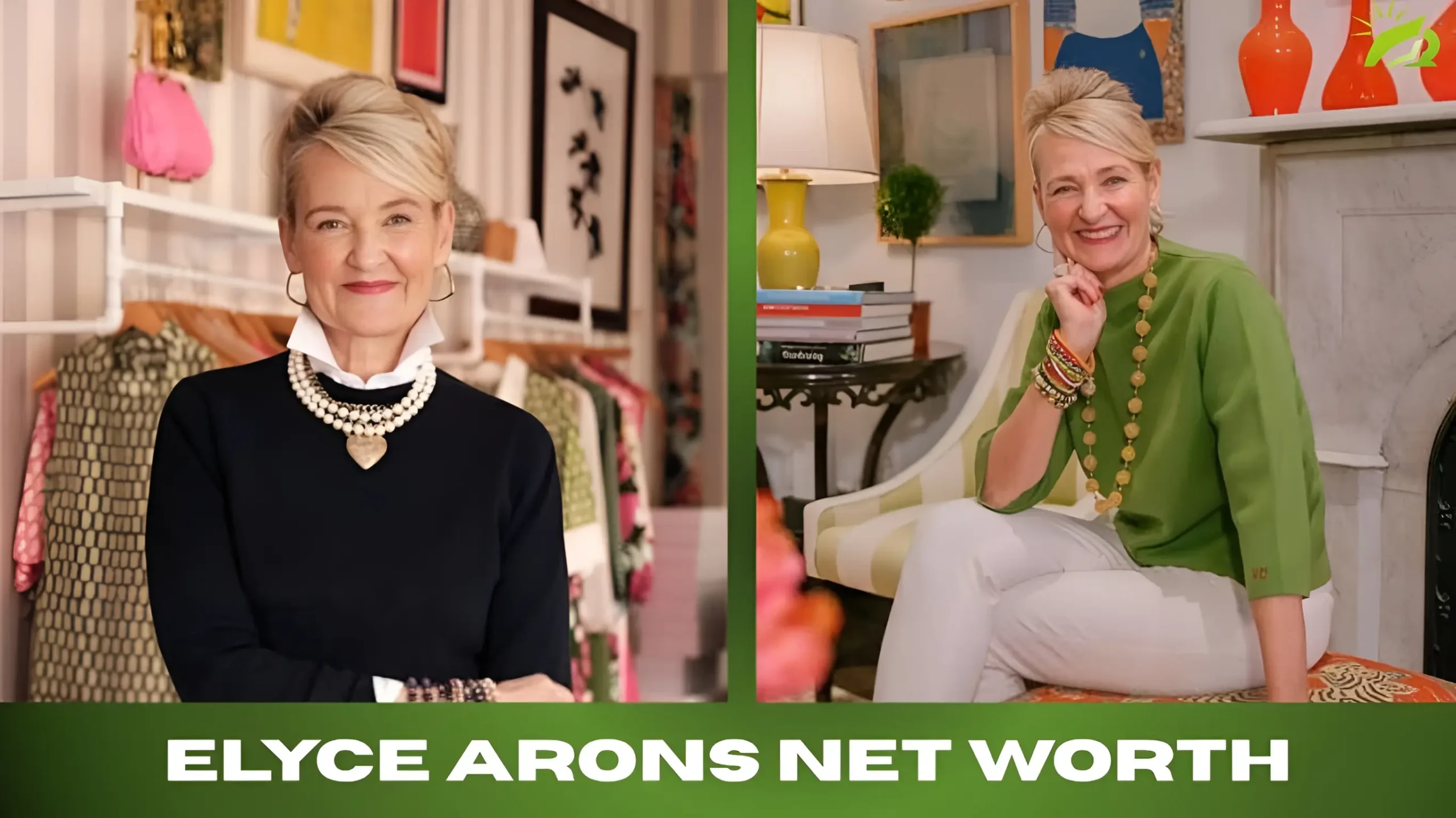
When people search for Elyce Arons net worth, they are often interested in how a woman who helped build one of America’s most recognizable handbag brands turned her passion for fashion into a successful business career. Elyce Arons is an American fashion entrepreneur, co-founder of Kate Spade, and co-founder and CEO of Frances Valentine. Her professional journey includes decades of experience in fashion marketing, brand development, product creation, and business leadership.
Although her name is closely connected to the international success of Kate Spade, Arons has built a professional identity that extends well beyond her early business partnership. Her work with Frances Valentine represents another chapter in her entrepreneurial story, combining vintage-inspired designs, distinctive accessories, and a philosophy centered on personal style. She has also shared her experiences and memories of her friendship with Kate Spade through her memoir, We Might Just Make It After All: My Best Friendship with Kate Spade. Simon & Schuster identifies her as a co-founder of Kate Spade and the co-founder and CEO of Frances Valentine.
However, an important question remains: how much money has Elyce Arons accumulated throughout her career?
Elyce Arons’s exact net worth has not been reliably established through publicly available financial disclosures. Various websites may publish specific estimates, but a figure should not be treated as confirmed without credible information about her assets, business ownership, investments, and liabilities. Her association with a valuable fashion brand does not automatically reveal her personal wealth.
This article examines Elyce Arons’s professional background, her involvement in the creation of Kate Spade, the business transactions connected to the brand, her later work with Frances Valentine, her potential income sources, and the factors that make her net worth difficult to calculate precisely.
Quick Facts About Elyce Arons
Here is a quick overview of Elyce Arons and the career milestones most relevant to searches about her financial success.
| Detail | Information |
|---|---|
| Full name | Elyce Arons |
| Profession | Fashion entrepreneur and business executive |
| Known for | Co-founding Kate Spade and Frances Valentine |
| First major fashion venture | Kate Spade |
| Kate Spade launch | 1993 |
| Later fashion venture | Frances Valentine |
| Frances Valentine launch | 2016 |
| Current professional role | Co-founder and CEO of Frances Valentine |
| Education background | Attended the University of Kansas |
| Main industry | Fashion, accessories, and lifestyle products |
| Additional work | Author of We Might Just Make It After All |
| Nationality | American |
| Exact net worth | Not publicly verified |
The professional details above are based on available biographical information from Frances Valentine, the book publisher, and fashion-industry coverage. Frances Valentine provides a first-person overview of Arons’s early life, the launch of Kate Spade, and her return to fashion with Frances Valentine.
What Is Elyce Arons’s Net Worth?
The most accurate answer to the question of Elyce Arons net worth is that her personal net worth has not been confirmed by a dependable public financial disclosure.
Arons has participated in the development and sale of an internationally recognized fashion business, and she has continued working as an entrepreneur through Frances Valentine. Those achievements indicate substantial professional experience, but they do not provide enough information to calculate the amount of wealth she personally owns.
A person’s net worth represents the difference between the value of their assets and their outstanding liabilities. Assets can include cash, investments, real estate, business ownership, and other valuable property. Liabilities can include loans, mortgages, business obligations, and other debts.
For a private business executive such as Arons, many of these details are not publicly accessible. Her precise ownership interests in private ventures, investment portfolio, personal expenses, and any outstanding financial obligations cannot be established from ordinary biographical information.
Consequently, publishing a precise number without adequate evidence would create a misleading impression of certainty.
Some websites may attempt to estimate the wealth of entrepreneurs by considering the success of their businesses, reported corporate transactions, or their professional positions. Such calculations can be useful as rough speculation, but they become unreliable when essential information about personal ownership and finances is missing.
In Arons’s case, the more meaningful approach is to examine how she developed her career and the business opportunities that may have contributed to her financial position.
Her entrepreneurial history offers several areas worth examining: her early work in fashion marketing, her partnership in building Kate Spade, the company’s eventual ownership changes, her role in establishing Frances Valentine, and her work as an author.
These activities help explain why she is a notable figure in the fashion industry without pretending that her exact personal fortune is publicly known.
Who Is Elyce Arons?
Elyce Arons is an American fashion entrepreneur best known for her role in building Kate Spade and later establishing Frances Valentine with Kate Spade. Rather than becoming widely known through celebrity appearances or social media, she developed her professional reputation through the fashion business.
Her career demonstrates how someone can contribute significantly to an established brand without necessarily becoming the public face most consumers associate with it.
Arons grew up on a farm in Kansas as the youngest of four daughters. According to her professional biography on the Frances Valentine website, she developed an early interest in vintage clothing and fashion magazines. These interests eventually became part of her professional identity, influencing the creative direction of her later business ventures.
Her early interests are relevant to understanding her career because fashion entrepreneurship frequently begins with a clear perspective on what customers want and what is missing from the marketplace.
For Arons, an appreciation of vintage style and an interest in creating a business developed alongside her friendship with Kate Spade. Their shared interests eventually led to a business partnership that would influence the handbag industry.
After helping establish Kate Spade, Arons gained experience with product development, brand identity, marketing, and the challenges associated with growing a fashion company. These skills later became useful when she returned to entrepreneurship through Frances Valentine.
Arons’s career is therefore more than a story about participating in a famous brand. It also illustrates how experience, relationships, creative judgment, and an understanding of consumer preferences can shape a long-term professional journey.
Her story is particularly interesting for readers who want to understand the financial side of fashion entrepreneurship. Building a profitable business can create opportunities for financial growth, but it also involves uncertainty, competition, investment requirements, and decisions that influence the ultimate outcome.
How Elyce Arons Met Kate Spade
One of the most important relationships in Elyce Arons’s professional life began during college.
Arons met Kate Spade, then known as Katy Brosnahan, while they were students at the University of Kansas. Their friendship developed around shared interests, including vintage shopping, humor, and creative ambitions. According to a 2025 interview published by Fashionista, the two became close friends during their freshman year.
At the time, neither woman could have known precisely how their partnership would develop. They shared an interest in fashion and a desire to build something of their own, but turning those interests into a successful company required much more than enthusiasm.
Their relationship eventually became the foundation of a professional partnership. While Spade developed a reputation for her distinctive approach to handbag design, Arons brought experience in fashion marketing and business operations.
The combination helped create a partnership in which different strengths could contribute to a shared objective.
Arons’s career also demonstrates the value of professional relationships that continue beyond a single business venture. The friendship between the two women did not end when the original company changed ownership. They later worked together again on Frances Valentine.
For someone researching Elyce Arons net worth, this background matters because her professional achievements cannot be separated entirely from the business relationships that made them possible.
However, it is equally important to recognize her individual contribution. Successful partnerships typically depend on multiple forms of expertise, including recognizing market opportunities, organizing production, developing a brand identity, and understanding customers.
Arons’s long-term involvement in two fashion ventures suggests that her strengths extended beyond simply being associated with a successful designer.
How Kate Spade Became a Major Fashion Brand
The launch of Kate Spade in 1993 marked an important turning point in Arons’s career.
The company emerged from a straightforward market opportunity. Fashionable handbags were available in many styles, but the founders saw room for attractive, practical designs that appealed to professional women without relying on the prices or conventions of more traditional luxury accessories.
Kate Spade brought together Kate and Andy Spade, Elyce Arons, and their early business partner Pamela Bell. The business began with handbags and eventually developed a broader product offering. The Council of Fashion Designers of America records Arons among the people who helped build the brand, while Fashionista’s account describes how the business started with a focused handbag concept.
The brand’s appeal came partly from its distinctive visual identity. Clean shapes, practical construction, and recognizable styling helped differentiate its products from competing accessories.
Instead of trying to serve every possible fashion customer, the business developed a recognizable point of view. This gave shoppers a reason to identify with the products and helped the brand stand apart in a crowded market.
Its development also illustrates the difference between creating a product and building a brand.
A handbag can meet functional needs, but a recognizable fashion brand offers something more. Customers may associate it with a particular lifestyle, design philosophy, or feeling. That connection can encourage repeat purchases and create demand for additional product categories.
Over time, Kate Spade expanded beyond handbags into other accessories and lifestyle products. Fashionista reports that the brand eventually included products such as shoes, eyewear, stationery, bedding, tabletop items, and fragrance through licensing and expansion initiatives.
This broadening of the product range helped develop a business that was no longer dependent on a single category.
For Arons, participation in this growth provided experience in the operational side of fashion entrepreneurship. Her career involved contributing to a business that had to maintain its identity while becoming larger and serving different customer needs.
That experience is one reason her professional history attracts attention from people interested in entrepreneurship and personal wealth.
Elyce Arons’s Role in Building Kate Spade
It is easy to assume that every person associated with a well-known fashion brand performs the same role, but successful companies usually depend on several complementary functions.
Kate Spade’s popularity was connected to its design identity, but the business also required decisions about marketing, manufacturing, retail relationships, distribution, licensing, and expansion.
Arons’s background in publicity and marketing was particularly relevant to these responsibilities. Her career before the business included work with fashion companies, including J.G. Hook and Marithé + François Girbaud, according to Fashionista’s interview profile.
Marketing in fashion is not simply about advertising a product. It also involves understanding the customer, presenting products in a compelling way, choosing appropriate retail channels, and maintaining a consistent brand image.
A company can produce appealing handbags but still struggle if consumers do not understand what makes those products distinctive.
Arons’s experience with fashion marketing contributed a business perspective to the partnership. As the company developed, this kind of expertise became increasingly important because the founders had to move beyond the early-stage work of creating and selling a limited collection.
Growing a fashion company brings practical challenges.
Production must keep pace with demand. Designs must remain recognizable without becoming repetitive. Retail partners need reliable products and deliveries. Marketing needs to support sales without making the brand feel disconnected from its original identity.
These responsibilities help explain why Arons’s professional experience has value independently of any public estimate of her fortune.
They also illustrate an important point about entrepreneurship: financial success is not always the result of being the most visible individual in a company. People working behind the scenes can play important roles in turning an appealing concept into a sustainable commercial operation.
The Kate Spade Sale and Its Financial Significance
One of the most relevant events when considering Elyce Arons net worth is the series of transactions through which Kate Spade changed ownership.
In 1999, Neiman Marcus acquired a 56% stake in Kate Spade for approximately $33.6 million, according to contemporary business reporting summarized by FashionUnited. The remaining ownership interests were subsequently acquired, and Neiman Marcus sold the brand to Liz Claiborne in 2006 for approximately $124 million.
These transactions provide useful context for understanding the commercial development of Kate Spade. They do not, however, establish the personal net worth of every founder.
The distinction is important because a company’s sale price is different from the amount received by an individual owner.
A business can be sold for a substantial sum, but that price does not automatically become the personal wealth of one founder. The proceeds may be distributed among multiple shareholders, and the financial outcome depends on the ownership structure, the terms of the transaction, expenses, taxes, and other contractual arrangements.
The headline figure also does not necessarily represent cash received directly by every person associated with the company.
Without the relevant ownership percentages and individual transaction documents, calculating Arons’s personal proceeds would require assumptions that cannot be independently confirmed.
Nevertheless, the sale history illustrates that Kate Spade developed into a valuable commercial brand. It also shows how successful businesses may create financial opportunities for their founders through strategic transactions.
For Arons, this chapter was important not only because of the financial possibilities associated with the brand but also because it gave her experience working through a business’s growth and eventual ownership transition.
The lessons from that process could later be applied to her next venture.
Why Kate Spade’s Sale Price Is Not Elyce Arons’s Net Worth
Online searches sometimes combine a company’s acquisition price, a founder’s income, and an individual’s net worth as though all three measures were interchangeable.
They are not.
The sale of Kate Spade for approximately $124 million in 2006 refers to a corporate transaction. It does not mean that Elyce Arons personally received $124 million, nor does it provide enough information to estimate her wealth today.
Several factors would be necessary for a responsible calculation.
First, the precise value of Arons’s ownership interest at the time of each sale would have to be established. Being a co-founder does not automatically mean owning an equal share of a business.
Second, the transaction’s structure would matter. The proceeds available to individual shareholders would depend on what was sold, who owned the relevant shares, and the terms of the agreement.
Third, taxes and expenses could affect the amount retained by each person.
Finally, a historical payout would not equal present-day net worth. The money might have been spent, invested, used to fund another business, or allocated among different financial priorities over the years.
Even a confirmed historical payment would therefore provide only one part of the picture.
To understand someone’s wealth today, it would be necessary to know the value of their current assets and liabilities as well as the outcome of their earlier business activities.
That information is not fully available for Arons.
As a result, the responsible conclusion is that her history with Kate Spade represents a potentially important source of entrepreneurial financial success, while the size of her personal fortune remains unverified.
What Elyce Arons Did After Kate Spade
Following the sale of the original Kate Spade business, Arons stepped away from the fashion industry for a period.
Her professional biography describes a hiatus of approximately a decade, during which she focused on family life before returning to fashion with the launch of Frances Valentine in 2016. The new company represented a reunion with Kate Spade and an opportunity to pursue their creative interests again.
Returning to an industry after years away can be difficult. The business environment may have changed, consumer expectations may have shifted, and new competitors may have emerged.
Fashion is particularly sensitive to changing tastes. A product that appealed strongly to customers in one decade might need to be reconsidered in another.
Arons’s return to entrepreneurship therefore involved more than repeating what had worked in the past.
The new venture needed its own identity, customer base, and business model. Although the founders shared a history, their new company would have to compete in a different commercial environment.
This stage of her career is significant because it demonstrates that her professional identity was not limited to the original company.
Rather than relying exclusively on past achievements, she returned to active business leadership and participated in creating a new brand.
For readers interested in her financial position, Frances Valentine represents a separate potential source of income and business value. However, without public information about ownership percentages, profitability, and liabilities, it is not possible to calculate how much the venture contributes to her personal net worth.
The more defensible conclusion is that Arons continued to pursue entrepreneurship after leaving Kate Spade, extending her experience into another phase of her career.
Frances Valentine: Elyce Arons’s Second Major Fashion Venture
Frances Valentine was launched in 2016 by Elyce Arons and Kate Spade. The company focuses on clothing, shoes, handbags, and accessories, with an aesthetic rooted in vintage inspiration and distinctive personal style.
The brand’s philosophy differs from a business that attempts to follow every short-lived fashion trend. Its creative identity places emphasis on expressive designs, colorful pieces, and vintage-inspired shapes that can be incorporated into an individual’s wardrobe over time.
This approach reflects the founders’ longstanding interest in fashion and their preference for products with recognizable character.
The name Frances Valentine was also connected to personal meaning for its founders, rather than being chosen solely as a commercial label. Over time, the brand developed an identity built around friendship, creativity, and the idea that personal style can be a source of confidence and enjoyment.
From a business perspective, Frances Valentine represents a second opportunity for Arons to apply what she learned from Kate Spade.
Her experience included seeing how a relatively focused accessories concept could evolve into a broader lifestyle business. That knowledge could inform product selection, customer communication, retail expansion, and decisions about brand consistency.
The company also operates in a different retail environment from the one in which Kate Spade first emerged.
Today’s fashion businesses must consider e-commerce, digital marketing, social platforms, changing shopping habits, and the pressure to maintain visibility in crowded online markets.
The founders’ experience provided a foundation, but the business still needed to respond to these developments.
For Arons, leading Frances Valentine has meant combining experience with continued adaptation.
Its commercial performance may contribute to her overall financial position, but business ownership and personal wealth remain separate questions. The company’s sales, expenses, debt, and ownership structure would all be relevant to any reliable valuation of her financial interest.
Without those figures, Frances Valentine’s existence and continued operations provide career context rather than a basis for assigning Arons a specific net worth.
Elyce Arons’s Position as CEO of Frances Valentine
As co-founder and CEO of Frances Valentine, Arons has a leadership role that connects the creative direction of the company with its daily business decisions.
Running a fashion company requires attention to several areas at once. A leader must understand the brand’s customer, oversee strategic priorities, support the product development process, and ensure that the company can operate within its financial resources.
The responsibilities of a CEO depend on the size and structure of the organization, but the role generally involves making decisions that influence the company’s direction and long-term sustainability.
In a fashion business, those decisions may include which product categories to develop, how the company presents itself to customers, where it should sell its products, and how to balance creative ambitions with commercial needs.
Arons’s background provides a useful foundation for these responsibilities because it combines experience in the fashion industry with years spent developing and managing brands.
Her leadership is also closely connected to the identity of Frances Valentine. The company emphasizes vintage-inspired clothing and accessories, rather than positioning itself exclusively around short-term trends.
Maintaining this identity while responding to market changes is an ongoing business challenge.
For example, introducing new products may attract different customers, but too many changes could make the brand less recognizable. Expanding retail distribution may increase reach, but it also introduces operational costs and risks. Digital marketing can improve visibility, but effective campaigns require a clear understanding of the target audience.
These decisions have commercial consequences, even when the financial details are not publicly disclosed.
Arons’s CEO position is therefore a significant part of her professional profile. It demonstrates that she remains actively involved in fashion entrepreneurship rather than being defined only by a company she helped build in the past.
However, a CEO’s title is not itself a measure of personal wealth. Salary, equity ownership, performance-related compensation, and other financial arrangements can vary widely between privately held companies.
Without confirmed details about her compensation or ownership interest, any calculation based on her title alone would be speculative.
How Does Elyce Arons Make Her Money?
Although her exact income is not publicly established, several professional activities may be relevant to understanding the potential sources of Elyce Arons’s earnings.
It is important to distinguish confirmed career activities from assumptions about how much money each activity generates.
1. Fashion Entrepreneurship
Entrepreneurship is central to Arons’s professional history.
Her involvement in Kate Spade and Frances Valentine places her among the fashion-industry professionals who have helped develop multiple businesses over time.
Business ownership can potentially produce income through distributions, dividends, or proceeds from a sale. A founder may also benefit if the value of an ownership interest increases.
However, these outcomes depend on the company’s financial position and ownership arrangements. They are not guaranteed simply because someone helped establish a successful brand.
In Arons’s case, the Kate Spade transactions demonstrate that the company underwent major ownership changes. The details necessary to calculate her individual proceeds are not publicly established, so a specific amount should not be assigned to her without additional evidence.
2. Executive Compensation
Arons’s role as co-founder and CEO of Frances Valentine makes executive compensation another possible component of her professional earnings.
CEOs may receive salaries and, depending on their agreements, bonuses or other forms of compensation. Some executives also hold ownership interests that can contribute to their financial position.
Nevertheless, Frances Valentine’s private financial arrangements are not fully available through ordinary public biographical records.
It would therefore be inappropriate to invent an annual salary or treat a typical fashion executive’s compensation as Arons’s actual income.
Her leadership position is confirmed, but her exact compensation is not.
3. Business Ownership in Frances Valentine
Ownership in a private fashion company can potentially represent an asset separate from salary.
The value of that asset depends on factors such as profitability, future sales expectations, operating expenses, debt, and the terms under which ownership could be transferred.
A brand with distinctive products and a loyal customer base may have commercial value, but that does not mean its founder can automatically convert that value into cash.
Private ownership interests can be difficult to sell, and a company might reinvest earnings rather than distribute them to its owners.
For Arons, Frances Valentine is a relevant part of her entrepreneurial history, but its private valuation and her exact ownership percentage have not been established here.
4. Book Royalties and Publishing Work
Arons added authorship to her professional activities with the publication of We Might Just Make It After All: My Best Friendship with Kate Spade in 2025.
The book explores her long relationship with Kate Spade and the personal and professional experiences they shared. It is listed on her publisher’s website.
Authors can sometimes receive advances, royalties, or other publishing-related payments. The amount earned depends on individual publishing agreements, sales, formats, and contractual terms.
No verified public figure establishes Arons’s earnings from her memoir. It should therefore be considered a new professional activity rather than a confirmed source of income at a particular dollar amount.
The book can also support her public profile and introduce her experiences to readers interested in fashion, friendship, and entrepreneurship.
Its financial significance, however, cannot be quantified from the publication announcement alone.
5. Other Assets and Investments
Entrepreneurs sometimes diversify their finances through investments, property, retirement accounts, or other assets.
Such holdings could influence an individual’s net worth, but there is not enough publicly verified information to determine Arons’s complete portfolio.
It would be misleading to assume that she owns particular properties, stocks, or other investments without reliable evidence.
The same principle applies to liabilities. A responsible assessment would consider outstanding debts and other financial obligations rather than counting possible assets alone.
For that reason, these categories remain part of the general framework for understanding her potential wealth, not a list of confirmed personal holdings.
What Can Elyce Arons’s Career Tell Us About Her Financial Success?
Although a precise net worth figure is unavailable, Arons’s career provides several meaningful indicators of professional achievement.
First, she participated in building a fashion business that attracted major retail investment and eventually changed ownership through significant transactions. That history suggests the company developed real commercial value.
Second, she maintained an entrepreneurial role beyond the original venture. Her decision to return to fashion with Frances Valentine shows continued involvement in creating and managing a business.
Third, she has expanded her professional activities into publishing, giving her another way to communicate her experience and preserve the story behind her work with Kate Spade.
These milestones do not establish a specific personal fortune, but they provide a stronger basis for understanding her career than a speculative number published without explanation.
The distinction also matters because financial success can take different forms.
Some founders seek to build a company and sell it. Others prefer to retain ownership and pursue long-term growth. Some prioritize a larger commercial footprint, while others focus on a smaller business with a carefully defined identity.
Arons’s history includes both a major brand ownership transition and a later return to entrepreneurship.
Those experiences demonstrate how business success is shaped by decisions made at different stages of a career.
Ultimately, an accurate assessment of her financial position would require more than a record of professional accomplishments. It would require information about personal ownership, income, investments, expenses, and liabilities.
Until reliable evidence establishes those details, her entrepreneurial record is a more dependable subject than a purportedly exact net worth.
Case Study 1: What Kate Spade’s Business Sale Teaches Us About Founder Wealth
This case study examines a documented corporate transaction, not Elyce Arons’s personal financial records.
The growth of Kate Spade provides a useful example of how a business can create substantial commercial value while leaving unanswered questions about the personal wealth of individual founders.
The company was launched in 1993 and subsequently attracted major investment from Neiman Marcus. In 1999, Neiman Marcus acquired a 56% stake for approximately $33.6 million. In 2006, the brand changed hands again when Liz Claiborne acquired it from Neiman Marcus for approximately $124 million.
These figures show how corporate ownership can change as a brand grows and attracts new buyers.
They do not reveal precisely how much each founder personally received.
To calculate an individual founder’s proceeds, an analyst would need to identify the shareholder’s ownership interest, the applicable sale terms, and the financial obligations associated with the transaction.
Even then, the amount received would not necessarily equal the person’s present-day net worth.
The individual may subsequently establish another company, invest the proceeds, purchase assets, incur expenses, or face financial obligations. A historical sale is only one point in a person’s financial history.
The main lesson: a company’s transaction value can provide context for its founders’ careers, but it should never be substituted automatically for an individual’s net worth.
This distinction is especially important when creating financial profiles of entrepreneurs whose private financial information is not publicly available.
Case Study 2: Frances Valentine and the Value of Starting Again
Frances Valentine offers a second business example that is relevant to Arons’s career.
After stepping away from fashion for a period, Arons returned to the industry alongside Kate Spade. Their new company launched in 2016 and developed a product identity based on expressive clothing, handbags, shoes, and vintage-inspired accessories.
The decision to establish a second brand involved a different set of challenges from building the original Kate Spade business.
A new venture must establish customer awareness, define its products, develop distribution, manage costs, and create reasons for customers to return.
Previous experience can help founders avoid certain mistakes, but it cannot eliminate commercial uncertainty.
One advantage Arons brought to the venture was familiarity with brand development. She had already participated in building an accessories business that expanded beyond its original product range.
That background could inform decisions about the new company’s visual identity, customer relationships, and product development.
Nevertheless, the financial value of Frances Valentine cannot be determined by the founders’ experience alone.
A reliable valuation would require information about the company’s revenue, profitability, debt, assets, ownership arrangements, and future commercial prospects.
This example highlights another important distinction: entrepreneurial experience can strengthen a founder’s ability to build a business, but it does not automatically establish the current market value of that business.
The main lesson: starting another company creates the possibility of further commercial success, but private ownership and financial performance must be evaluated separately from a founder’s reputation.
Case Study 3: Turning Professional Experience Into a Memoir
Arons’s 2025 memoir, We Might Just Make It After All: My Best Friendship with Kate Spade, represents another stage of her professional development.
Rather than focusing exclusively on products and retail, the book shares her perspective on a longstanding friendship and the experiences behind an influential fashion partnership. Her publisher identifies it as a personal account of her relationship with Kate Spade and their years in the fashion industry.
For entrepreneurs, professional experience can become valuable in several ways. It may inform a new business, support speaking and educational activities, or provide material for writing.
However, each opportunity has its own economics.
Book sales do not translate directly into a known personal income. Publishing contracts can include different payment structures, and an author’s proceeds depend on contractual terms and sales performance.
Similarly, a book’s public visibility does not prove that its author has earned a particular amount from it.
Arons’s memoir nevertheless illustrates how her career and personal experiences can reach audiences beyond the fashion retail market.
It also provides a way to document the history behind her professional achievements in her own voice.
The main lesson: experience can create opportunities beyond the original industry, but any financial contribution should be assessed using actual earnings information rather than assumptions.
Elyce Arons’s Personal Life and Family
Public interest in Elyce Arons extends beyond her business activities because her friendship with Kate Spade has long been associated with both women’s professional journeys.
Arons met Spade during college, and their relationship eventually developed into a business partnership that lasted across multiple projects.
The friendship is an important part of the story behind Kate Spade and Frances Valentine. It helps explain why their creative relationship continued even after the original company changed ownership.
Arons’s publisher biography states that she lives in New York with her husband and three daughters.
Beyond these publicly shared biographical details, it is important not to confuse personal privacy with a lack of professional achievement.
Many entrepreneurs maintain a relatively low public profile outside their work. They may concentrate on operating businesses, spending time with their families, or pursuing interests that are not widely documented.
Arons’s public identity has been shaped primarily by fashion, entrepreneurship, her long friendship with Spade, and her later work as an author.
These aspects of her life provide context for understanding her career. They do not, however, establish the value of her personal assets.
Personal wealth is a separate financial question that requires reliable information rather than assumptions based on lifestyle or family circumstances.
What Is Elyce Arons’s Relationship With Kate Spade?
Elyce Arons and Kate Spade were longtime friends and business partners.
They met at the University of Kansas and shared an interest in vintage fashion and entrepreneurship. Their relationship eventually led to the creation of Kate Spade and later Frances Valentine.
Spade became the designer most publicly associated with the original namesake brand, while Arons contributed to the company’s business development and marketing side.
The two later reconnected professionally to launch Frances Valentine in 2016. The company continued their interest in colorful, expressive fashion and vintage-inspired accessories.
Spade died in 2018. Arons has since spoken about their friendship and the importance of remembering the person behind the public fashion identity.
Her memoir, published in 2025, is one of the most visible examples of that effort. It focuses on their personal relationship and the experiences they shared while building a business together.
Their connection is central to understanding Arons’s professional history because the partnership shaped two major parts of her career.
However, it is worth distinguishing their shared professional story from their separate personal finances. Being friends and business partners does not imply identical ownership interests or equal net worth.
Elyce Arons’s Memoir and Its Connection to Her Legacy
In 2025, Elyce Arons published We Might Just Make It After All: My Best Friendship with Kate Spade.
The memoir revisits her long friendship with Spade, the early days of their business partnership, and the experiences that helped shape their careers. It provides readers with a personal perspective on a relationship that became closely connected to an influential fashion label.
The book adds another dimension to Arons’s public profile.
Her earlier professional reputation was primarily associated with developing and leading fashion businesses. Through the memoir, she also shares personal recollections and reflects on the relationship behind those achievements.
That does not mean the book should be treated as a financial disclosure. It is a memoir, not a statement of her assets, business interests, or current net worth.
Nevertheless, it expands the ways in which readers can understand her career.
Her experiences may be relevant to people interested in entrepreneurship, creative partnerships, professional reinvention, and the challenges of balancing a business with personal life.
The memoir also emphasizes that the history of a company is often shaped by relationships and experiences that cannot be measured through financial statements alone.
For a person searching for Elyce Arons net worth, the book provides useful career context, but it does not establish a confirmed dollar amount for her wealth.
Why Elyce Arons’s Net Worth Is Difficult to Calculate
Calculating the personal wealth of a private entrepreneur can be challenging even when the individual’s business career is well documented.
In Arons’s case, several important details remain unavailable or unverified.
Her personal ownership interests are not fully public
The existence of a company does not establish the exact percentage owned by its founders.
Different businesses can have different ownership arrangements, and those arrangements may change over time. Without verified information about Arons’s interests in her ventures, it is difficult to calculate the value of any shares she might hold.
Corporate sale prices do not reveal individual proceeds
The transactions involving Kate Spade provide historical figures about the business, but they do not establish the amount received by Arons individually.
The proceeds associated with an acquisition depend on the transaction structure, the sellers’ ownership interests, and the terms of the sale.
Current business valuation is not the same as historical value
Even if an individual’s original financial proceeds were known, their current wealth would depend on what happened afterward.
Assets can increase or decrease in value, businesses can require additional funding, and personal financial circumstances can change over time.
Income does not equal wealth
A person’s salary, book royalties, or business earnings represent income over a period. Net worth measures assets minus liabilities at a particular point in time.
An individual can earn a large amount and still have substantial expenses or liabilities. Conversely, an individual with relatively modest annual income can hold valuable assets accumulated over many years.
Private financial information is incomplete
Arons’s public biography establishes her career milestones but does not provide a comprehensive balance sheet.
Without reliable information about assets, liabilities, investments, and business ownership, a precise estimate would be largely speculative.
These limitations do not mean her career cannot be evaluated. They mean that the available evidence supports a discussion of her professional achievements more strongly than a definitive numerical claim about her personal wealth.
How to Evaluate Online Estimates of Elyce Arons Net Worth
Readers may encounter different figures when searching for Elyce Arons net worth.
One website might publish a precise dollar amount, while another gives a broader estimate or offers no figure at all. Differences can arise because websites use different assumptions, repeat unverified claims, or calculate wealth using information that is not publicly documented.
The existence of a number online does not prove that the number is accurate.
A useful assessment begins by asking where the figure came from and how it was calculated.
For example, a credible estimate should explain whether it relies on documented ownership interests, confirmed sale proceeds, public financial disclosures, or another transparent methodology.
An estimate that merely associates an entrepreneur with a successful company is not enough.
It is also important to identify the date of the information. A historical estimate may not reflect a person’s current financial situation, particularly if they have established another business or changed their investment position.
Readers should distinguish between three types of information:
- Confirmed facts: Publicly documented career milestones, business transactions, and professional roles.
- Reasonable financial context: An explanation of the ways entrepreneurship, ownership, or publishing can potentially generate income.
- Unverified estimates: Specific personal wealth figures that cannot be supported by reliable evidence.
For Arons, the first two categories help explain her financial background. The third requires caution unless better documentation becomes available.
This is particularly important for articles about entrepreneurs whose finances are not regularly disclosed through public financial reporting.
Using an unsupported number may make an article appear more definitive, but it does not make the information more accurate.
What Entrepreneurs Can Learn From Elyce Arons’s Career
Arons’s professional journey offers several lessons for aspiring entrepreneurs, particularly those interested in fashion, accessories, and consumer brands.
One lesson is the importance of understanding the customer before developing a product. Kate Spade grew from an effort to create handbags with a recognizable design and practical appeal for working women.
A second lesson is the value of a clear brand identity. Products can become more memorable when consumers recognize a consistent design philosophy rather than seeing a collection of unrelated items.
A third lesson is that successful businesses require different kinds of expertise. Product design can attract customers, but marketing, operations, manufacturing, distribution, and financial management all contribute to long-term commercial performance.
Arons’s career also demonstrates the importance of adapting to change. The retail environment that existed when Kate Spade began in the 1990s differed from the environment in which Frances Valentine launched in 2016.
Entrepreneurs must understand how customers discover products, where they shop, and what influences their purchasing decisions. The specific methods may change, but the need to understand consumers remains.
Another lesson is that professional reinvention is possible. Arons returned to fashion after a significant break and helped launch another business. This demonstrates that experience from an earlier chapter of a career can provide a foundation for a new project.
Finally, her story shows the importance of evaluating success through evidence rather than assumptions.
A company’s reputation, a founder’s public visibility, and a reported acquisition price may all be relevant to a financial discussion, but none provides a complete measure of an individual’s wealth.
For anyone interested in entrepreneurship, distinguishing between professional accomplishment and personal net worth is an essential part of understanding how business success works.
The Lasting Legacy of Elyce Arons in Fashion
Elyce Arons’s career is connected to a period of change in the American fashion accessories market.
Through Kate Spade, she helped build a brand known for a distinctive approach to handbags and lifestyle products. Through Frances Valentine, she returned to fashion with a company that emphasizes vintage-inspired designs, colorful accessories, and personal expression.
Her professional history reflects both continuity and reinvention.
The two businesses differ in their circumstances and commercial environments, but both illustrate the significance of combining a recognizable creative identity with an understanding of the customer.
Arons’s work as an author adds another part to this legacy. Her memoir preserves her perspective on the friendship and professional partnership that helped shape her life.
Taken together, these experiences establish her as an entrepreneur whose career extends beyond a single company or product category.
They also explain why interest in her personal fortune continues. Readers often want to know how much successful founders have earned from the companies they helped build.
The difficulty is that financial success cannot always be measured precisely from publicly available information.
In Arons’s case, the history of Kate Spade and the launch of Frances Valentine offer meaningful evidence of her professional achievements. They do not reveal a complete picture of her personal assets and liabilities.
A balanced assessment should therefore recognize her accomplishments without assigning an unsupported value to her net worth.
Frequently Asked Questions About Elyce Arons Net Worth
Q1: What is Elyce Arons’s net worth?
A: Elyce Arons’s exact net worth has not been reliably confirmed through publicly available financial disclosures. She co-founded Kate Spade and Frances Valentine, but her personal assets, liabilities, and ownership interests are not sufficiently documented to establish a precise total.
Q2: How did Elyce Arons make her money?‘\
A: Arons built her career in fashion entrepreneurship, beginning with Kate Spade and later co-founding Frances Valentine. Her professional activities also include serving as CEO of Frances Valentine and publishing a memoir. The precise income she has received from these activities is not publicly established.
Q3: Is Elyce Arons a co-founder of Kate Spade?
A: Yes. Elyce Arons was part of the founding team behind Kate Spade, the fashion brand launched in 1993. The business grew from a handbag company into a broader fashion and lifestyle label.
Q4: When did Elyce Arons launch Frances Valentine?
A: Frances Valentine launched in 2016 with Elyce Arons and Kate Spade as co-founders. The company offers vintage-inspired clothing, handbags, shoes, and accessories. Arons serves as its co-founder and CEO.
Q5: How much did Kate Spade sell for?
A: The Kate Spade brand was sold by Neiman Marcus to Liz Claiborne in 2006 for approximately $124 million. This was the value of the corporate transaction, not a confirmed statement of Elyce Arons’s personal earnings.
Q6: Did Elyce Arons receive $124 million from the sale of Kate Spade?
A: There is no verified public information establishing that Arons personally received $124 million. That figure relates to the company’s sale to Liz Claiborne. Individual proceeds depend on ownership interests and the terms of the transaction.
Q7: Who is Elyce Arons’s business partner?
A: Elyce Arons’s best-known business partnership was with Kate Spade. The two women helped establish Kate Spade and later reunited to launch Frances Valentine. Kate Spade died in 2018.
Q8: Is Elyce Arons the CEO of Frances Valentine?
A: Yes. Elyce Arons is identified as the co-founder and CEO of Frances Valentine on the company’s official website. Her work involves leading the fashion business she helped establish in 2016.
Q9: Did Elyce Arons write a book about Kate Spade?
A: Yes. Arons authored We Might Just Make It After All: My Best Friendship with Kate Spade, published in 2025. The memoir explores their friendship, business partnership, and experiences in the fashion industry.
Q10: Does Elyce Arons still work in fashion?
A: Yes. Arons continues to be associated with Frances Valentine as its co-founder and CEO. Her professional activities also include sharing her experiences as an entrepreneur and author.
Q11: Is Frances Valentine owned by Elyce Arons?
A: Arons co-founded Frances Valentine, but her exact ownership percentage and the company’s complete ownership structure are not established by the public biographical information discussed here. It would be inaccurate to assume that she owns the entire company.
Q12: Is Elyce Arons richer than Kate Spade?
A: There is not enough verified information about Arons’s current net worth to make a reliable comparison. Public estimates of personal wealth can be speculative, and the success of a company does not establish the current fortune of every person associated with it.
Q13: Where did Elyce Arons grow up?‘|
A: Arons grew up on a farm in Kansas as the youngest of four daughters. Her professional biography describes an early interest in vintage clothing and fashion magazines, interests that later connected with her career in fashion.
Q14: What is Elyce Arons best known for?
A: She is best known for co-founding Kate Spade and Frances Valentine. Her career also includes fashion marketing, executive leadership, and authorship. Her long friendship and professional partnership with Kate Spade remain important parts of her public story.
Q15: What is the biggest source of Elyce Arons’s wealth?
A: Her entrepreneurial career is the most relevant starting point for understanding her potential financial position. However, the relative contributions of past business transactions, current ownership interests, executive compensation, book earnings, and investments have not been publicly established.
Q16: What was Kate Spade’s net worth when she died?
A: Kate Spade’s net worth estimates vary, with some sources reporting around $100 million to $200 million at the time of her death in 2018.
Q17: Who owns Frances Valentine now?
A: A 2024 Wall Street Journal report identified Andy Spade, Elyce Arons, and other investors, including venture capital fund Sweater, as owners of Frances Valentine.
Q18: How much is Dior’s net worth?
A: As of October 16, 2026, Christian Dior SE had a market capitalization of approximately €78.15 billion. This figure represents the holding company’s market value, not an independently established valuation of the Dior fashion brand.
Final Thoughts on Elyce Arons Net Worth
Elyce Arons has built a notable career in fashion through her involvement in Kate Spade, her leadership of Frances Valentine, and her work as an author. These achievements reflect decades of experience in brand development, business management, and consumer fashion.
The historical sale of Kate Spade demonstrates the commercial scale the brand eventually achieved, while the launch of Frances Valentine shows Arons’s continued commitment to entrepreneurship.
Yet neither achievement provides a complete calculation of her personal wealth.
The most responsible conclusion is that Elyce Arons’s exact net worth remains publicly unverified. Although online estimates may offer specific figures, those numbers should not be considered established facts without transparent financial evidence.
Her professional record offers a more reliable perspective on her success. She helped build an internationally recognized fashion brand, returned to the industry with a second venture, and documented her experiences through a memoir.
For readers interested in Elyce Arons net worth, understanding the businesses she helped create-and the difference between corporate value and personal wealth-provides a more informative picture than relying on an unsupported dollar amount.
For More Visits: Bright Magazine
Also Read: Marcy Wudarski Biography: James Gandolfini’s Ex-Wife
