

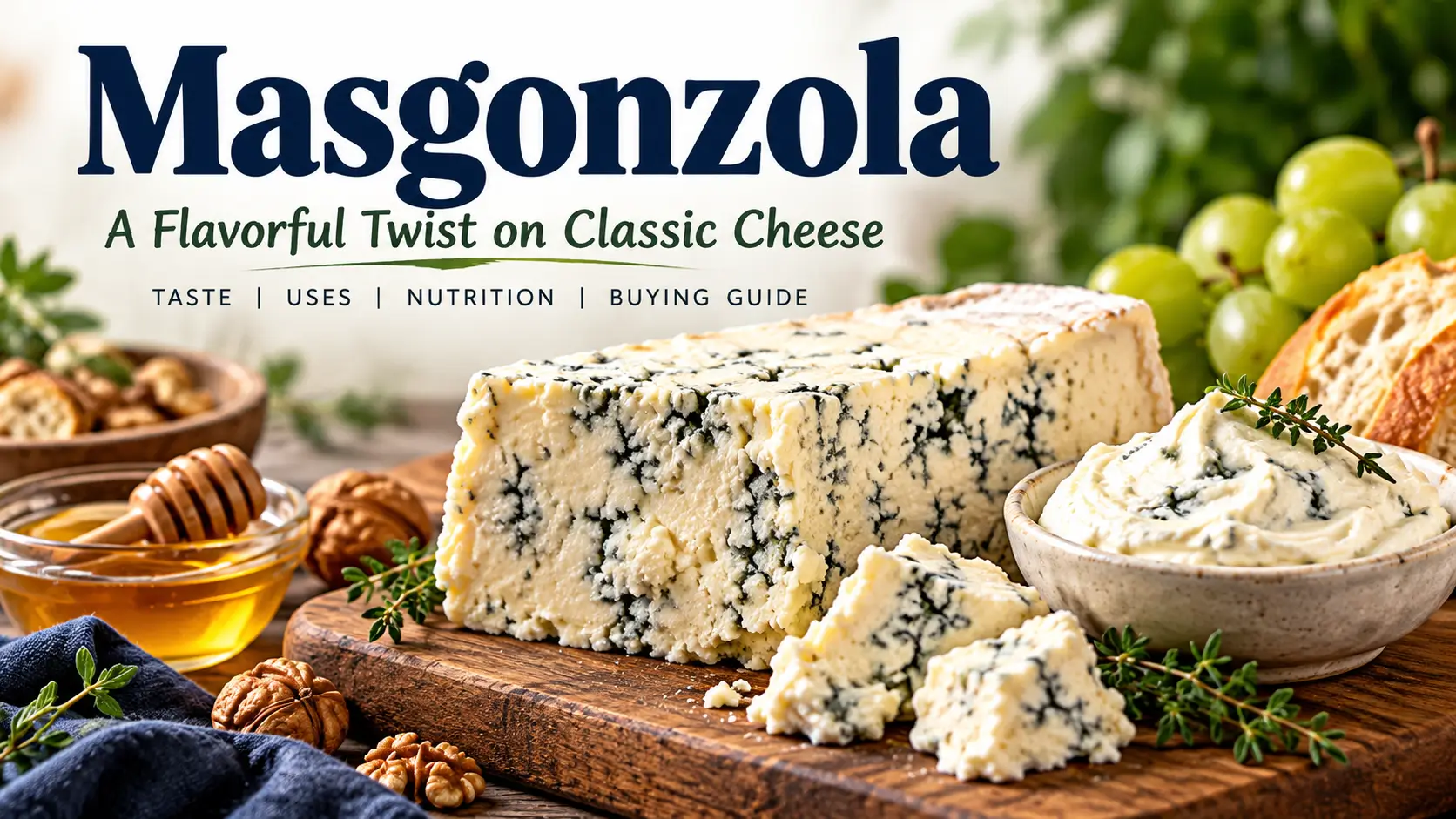
Masgonzola is an intriguing food-related term that attracts attention because it brings together the familiar sounds of two Italian cheese names: mascarpone and Gorgonzola. For people discovering the word for the first time, several questions naturally arise. What exactly is Masgonzola? Is it a particular type of cheese, a creamy cheese mixture, or simply another name used for a combination of different ingredients? Understanding the answers helps readers explore this distinctive food concept without confusing it with other established cheeses.
The term is generally associated with the combination of mascarpone and Gorgonzola. These cheeses have different characteristics, yet they can work together remarkably well. Mascarpone contributes a smooth, rich, buttery quality, while Gorgonzola introduces the distinctive tangy flavour associated with blue cheese. When combined, their contrasting characteristics create a preparation that can be enjoyed with bread, crackers, pasta, vegetables, and other foods.
However, it is important to understand the terminology. Masgonzola is not a universally standardized name for a separate protected cheese variety. Products combining mascarpone and Gorgonzola are commercially available, but their names, proportions, textures, and presentation can differ. Consequently, the precise meaning of Masgonzola may depend on the product or recipe being discussed.
This guide explores Masgonzola from a practical culinary perspective. It explains its likely meaning, the ingredients behind the combination, its flavour and texture, preparation techniques, serving suggestions, storage considerations, and potential uses in everyday cooking. It also includes illustrative case studies showing how home cooks and food businesses might approach the combination.
Whether you are a curious food enthusiast, an adventurous home cook, or someone researching the meaning of Masgonzola, the aim is to provide a clear, helpful introduction without relying on exaggerated claims or invented traditions.
What Is Masgonzola?
Masgonzola is commonly understood as an informal name associated with a mascarpone and Gorgonzola combination. Rather than assuming that it represents an entirely independent cheese with its own universally accepted recipe, it is more helpful to examine the two ingredients that give the term its meaning.
Mascarpone is a soft Italian dairy product known for its rich consistency and delicate flavour. It is frequently used in desserts, including tiramisu, but it can also contribute creaminess to savoury recipes. Its mild character makes it useful when a dish needs richness without an overwhelmingly strong flavour.
Gorgonzola, by comparison, is an Italian blue-veined cheese with a more pronounced taste. Its flavour can be mild and creamy or stronger and sharper, depending on the variety and maturation. The characteristic blue-green veins and distinctive aroma make it recognizable among many traditional cheeses.
The combination brings these contrasting qualities together. Mascarpone can soften the intensity of Gorgonzola, while Gorgonzola adds depth and savoury character to the milder cheese. The result is a preparation that may be easier for some people to enjoy than a serving of stronger blue cheese on its own.
The final product depends on how the ingredients are combined. Some preparations are mixed into a relatively uniform cream, while others preserve separate layers of mascarpone and Gorgonzola. Each method creates a different experience.
For this reason, anyone researching Masgonzola should pay attention to the actual product description, recipe, or ingredient label rather than assuming every product bearing a similar name will be identical.
The Ingredients Behind Masgonzola
Understanding Masgonzola begins with understanding what each component contributes. Although the idea of combining two cheeses sounds simple, their individual characteristics influence flavour, consistency, and the ways the finished preparation can be used.
1. Mascarpone: The Creamy Component
Mascarpone provides the soft, rich foundation of the combination. Its smooth consistency makes it suitable for spreading, mixing, and incorporating into sauces. Unlike many aged cheeses, it does not usually bring a strong salty or sharp taste to a dish.
Its main culinary contribution is balance. When paired with a blue cheese, mascarpone can make the overall flavour feel rounder and less aggressive. It can also give a preparation a more luxurious mouthfeel.
Mascarpone works particularly well in recipes where the goal is to create a creamy texture without relying exclusively on cream or butter. It can be spread on toasted bread, folded into a sauce, or combined with seasonings to produce a simple savoury dip.
However, mascarpone is rich, and adding too much can make a dish feel heavy. The best amount depends on the intended use and the strength of the other ingredients.
2. Gorgonzola: The Distinctive Component
Gorgonzola brings the characteristic flavour that separates this combination from a plain mascarpone spread. As a blue-veined cheese, it can offer tanginess, saltiness, and a savoury depth that becomes particularly noticeable in sauces and cheese-based dishes.
Its flavour is not identical in every variety. A milder Gorgonzola can provide a gentler introduction to blue cheese, whereas a stronger variety may produce a more pronounced result.
This distinction matters when preparing a Masgonzola-style mixture at home. Someone serving the preparation with delicate crackers may prefer a mild cheese. Someone planning to use it in a strongly flavoured pasta dish may want a more assertive character.
Gorgonzola also influences the appearance of the finished mixture. If blended thoroughly, its blue veins may become distributed throughout the cream. If layered or only lightly folded, the contrasting colours and textures can remain visible.
3. Additional Ingredients and Seasonings
A basic combination does not necessarily require many additional ingredients. In fact, keeping the ingredient list simple can make the contrasting qualities of the cheeses easier to appreciate.
Depending on the recipe, other ingredients may include freshly ground black pepper, herbs, toasted nuts, lemon zest, or a small amount of cream for adjusting consistency.
These additions should support the cheese rather than overwhelm it. A strong seasoning mix can hide the subtle difference between the mild, buttery component and the tangier cheese.
Before adding salt, taste the mixture carefully. Gorgonzola already contains salt, so additional seasoning may not be necessary.
What Does Masgonzola Taste Like?
The taste associated with Masgonzola is best understood as a balance between creaminess and blue-cheese intensity. Mascarpone contributes a mild, buttery character, while Gorgonzola introduces a more distinctive savoury flavour.
The precise experience depends on the ratio of the cheeses, the particular Gorgonzola used, and the way the mixture is prepared.
A preparation containing more mascarpone may taste softer and richer, with the blue-cheese character appearing mainly in the background. A mixture with a greater proportion of Gorgonzola is likely to have a more pronounced tang and a more noticeable savoury finish.
The degree of mixing also matters. A thoroughly blended preparation offers a relatively consistent taste with each bite. A layered version provides more variation because the eater encounters different proportions of the cheeses in different places.
Texture and Appearance
Texture is another important part of the experience. Mascarpone is soft and creamy, while Gorgonzola can vary from soft and spreadable to somewhat firmer, depending on its type and condition.
When combined, the cheeses may create a smooth spread, a softly marbled mixture, or distinct alternating layers.
A good preparation should suit its intended purpose. A spread for bread needs to be easy to apply without running off the surface. A pasta sauce should coat the ingredients without becoming excessively thick. A filling needs enough body to remain in place during assembly and cooking.
The appearance may range from predominantly pale cream to a mixture with visible blue-veined sections. These differences do not necessarily indicate a problem; they can simply reflect the preparation method.
Aroma and Overall Experience
Gorgonzola has a recognizable aroma associated with blue cheese. Mascarpone introduces a milder dairy scent, which can make the overall impression less intense than that of Gorgonzola alone.
A strong aroma does not automatically mean that a cheese has spoiled. Equally, an unpleasant or unexpected smell should not be dismissed simply because blue cheese naturally has a distinctive character. Storage conditions, the product’s condition, and the manufacturer’s guidance all matter.
The best approach is to understand what the particular product should look and smell like and to avoid consuming dairy products that show signs of spoilage.
Is Masgonzola a Traditional Italian Cheese?
This is an important distinction for anyone researching the name.
Gorgonzola is an established Italian blue cheese with Protected Designation of Origin status. Its production is connected to designated areas and must follow the applicable product specification. The official Gorgonzola consortium provides information about its protected status and production requirements.
Mascarpone is also an established Italian dairy product with a long culinary association. However, a preparation made by combining mascarpone and Gorgonzola should not automatically be treated as a separate traditional cheese with an independent protected designation.
Producers may market the combination using descriptions such as Gorgonzola and Mascarpone. CasArrigoni, for example, describes a product made from alternating layers of the two cheeses.
The term Masgonzola is therefore most useful as an informal or search-oriented way of referring to this style of preparation. The evidence does not establish one universal formulation, an official Masgonzola production standard, or a single historical origin for the name.
This distinction does not make the combination less interesting. It simply means the name should be used carefully.
Food names can develop through culinary experimentation, commercial descriptions, and online discussions. A term may become familiar to readers even when producers use different names for similar preparations. That is why it is useful to examine the ingredients and manufacturing information instead of relying on the name alone.
How Is Masgonzola Prepared?
A Masgonzola-style preparation can be made using a straightforward culinary approach, although the precise method depends on whether the desired result is a smooth spread, a marbled mixture, or alternating layers.
For a home preparation, the main objective is to preserve the balance between the two ingredients. The method should create a pleasant texture without allowing either cheese to dominate unnecessarily.
A Simple Home Preparation
The following is an illustrative recipe for a cheese spread inspired by the combination. It is not an official or standardized Masgonzola formula.
Ingredients
- Soft mascarpone
- Gorgonzola, crumbled or cut into small pieces
- Freshly ground black pepper, if desired
- A small amount of fresh herbs, if suitable for the intended dish
Method
Begin by allowing the ingredients to soften slightly in the refrigerator-safe preparation environment, following their packaging instructions. They should be workable but should not be left at room temperature for an extended period.
Place the mascarpone in a clean bowl. Add a modest amount of Gorgonzola and fold the ingredients together with a spoon or spatula.
Taste a small amount before adding more blue cheese. This gradual method gives you control over the final intensity and helps prevent the preparation from becoming too sharp.
If a smooth spread is preferred, continue mixing until the ingredients are evenly distributed. If a marbled appearance is more appealing, stop while small sections of the two cheeses remain visible.
Add black pepper or herbs only if they improve the intended flavour. Transfer the prepared mixture into a clean, covered container and refrigerate it promptly.
Follow the storage guidance for the ingredients and any applicable food-safety recommendations. Homemade mixtures should not automatically be assumed to have the same shelf life as a professionally packaged product.
Creating a Layered Version
A layered preparation offers a different visual and textural experience. Rather than thoroughly blending the cheeses, place one layer of mascarpone in a suitable serving dish and add a layer of mild Gorgonzola.
Repeat the process if the container and ingredient quantities allow. Keep the layers reasonably even so that the final preparation is easy to portion.
This method works particularly well for a cheese board or an appetizer where visual presentation matters. Each serving can include both components without completely removing their individual identities.
Avoid making unnecessarily thick layers, especially when the preparation needs to be spread or spooned onto small pieces of bread.
Adjusting the Consistency
Consistency should be adjusted according to the final use.
For a spread, the mixture should remain soft enough to apply with a knife while holding its shape. For a sauce, it needs to become smooth and cohesive when warmed. For a filling, it should be thick enough to remain inside the pastry or pasta without leaking excessively.
Adding more mascarpone may help soften the flavour and change the texture, but it will also alter the balance of the cheese. Adding a liquid ingredient can affect stability and should be done gradually in recipes designed for that purpose.
The most useful principle is to make small adjustments, taste as you go, and avoid treating one particular ratio as compulsory.
Popular Ways to Use Masgonzola in Cooking
The versatility of a mascarpone and Gorgonzola combination is one of its most appealing characteristics. The mixture can be used as a spread, sauce ingredient, filling, or finishing element, depending on its texture and flavour.
1. Masgonzola on Bread and Crostini
Bread offers a simple way to enjoy the combination without complicated preparation. A thin layer of the cheese mixture can be spread across toasted baguette slices, rustic bread, or small crackers.
The crispness of toasted bread provides a contrast with the softness of the cheese. For a more complete appetizer, add a small portion of chopped walnuts, a little honey, or a suitable herb.
Sweet additions should be used sparingly. Their purpose is to complement the savoury cheese rather than turn the appetizer into a dessert.
This presentation is useful for informal gatherings because the ingredients can be prepared in advance while the bread is toasted closer to serving time.
2. Creamy Pasta Dishes
Pasta is another natural setting for a creamy cheese preparation. The mixture can contribute richness and a savoury depth to short pasta shapes, long noodles, or filled pasta.
For a sauce, use gentle heat. Place the mixture in a pan with a small amount of suitable cooking liquid or another recipe-appropriate liquid, stirring carefully until it becomes cohesive.
Avoid aggressive boiling, which may affect the consistency. Add the pasta and mix until the sauce coats it evenly.
Vegetables such as mushrooms, spinach, peas, and roasted pumpkin may work well, depending on the intended flavour profile. Each brings a different texture and degree of sweetness or earthiness.
Because the cheese already provides a strong flavour, a dish does not necessarily need many additional seasonings. Taste the sauce before adding salt.
3. Risotto
Risotto depends on a creamy texture and careful management of flavour. A small amount of the cheese mixture can be stirred into a nearly finished risotto to create additional richness.
Mushroom, pumpkin, and selected vegetable preparations are possible starting points. However, the amount of cheese should be controlled so the finished dish remains balanced rather than excessively heavy.
Add the mixture toward the end of cooking and stir gently. Avoid assuming that more cheese will automatically produce a better result.
The goal is to enhance the dish while keeping the rice and other ingredients recognizable.
4. Pizza and Flatbreads
A mascarpone and Gorgonzola combination can also be considered for pizza and flatbreads.
A thin application can provide a creamy, savoury base, while ingredients such as mushrooms, onions, or suitable roasted vegetables contribute contrast. The choice of toppings depends on how strong the cheese mixture is.
Since mascarpone is soft and rich, using too much can leave the finished pizza feeling overly heavy. A moderate quantity, distributed evenly, is often easier to manage.
Cooking times and results vary by oven and dough, so follow the method for the particular pizza or flatbread recipe.
5. Vegetable Dishes
Roasted vegetables can pair well with a creamy blue-cheese preparation. Potatoes, mushrooms, cauliflower, and selected squash dishes are potential options.
The cheese can be served as a small topping, incorporated into a sauce, or used as part of a filling. Bitter or earthy vegetables may offer a useful contrast to the richness of the cheese.
Portion size matters because a strong cheese preparation may overpower a delicate vegetable. Begin with a small amount and increase it only when the overall taste benefits.
6. Sandwiches and Wraps
For sandwiches, the mixture can provide a creamy alternative to some conventional spreads. It may pair with roasted vegetables or other ingredients that complement its rich, savoury profile.
The filling should not be too wet, particularly when the sandwich will be assembled before eating. Excess moisture can make bread soggy and reduce the quality of the final result.
If using the spread in a packed lunch, maintain appropriate refrigeration and transport temperatures for perishable ingredients.
7. Stuffed Pasta
A thicker cheese preparation can be considered as a filling for ravioli, tortelloni, or similar pasta dishes.
The filling should be prepared to a consistency that can be portioned without spreading uncontrollably. Excess liquid may cause problems during assembly and cooking.
The amount of blue cheese should also reflect the other ingredients. A delicate pasta filling may require a milder balance than one served with a strongly flavoured sauce.
Best Foods to Pair With Masgonzola
Pairing is largely about balancing richness, saltiness, aroma, sweetness, and texture. Since the mascarpone and Gorgonzola combination can be both creamy and savoury, it often benefits from ingredients that introduce contrast.
Bread and Crackers
Crusty bread, lightly toasted baguette slices, and plain crackers are useful starting points. They provide structure and allow the flavour of the cheese to remain prominent.
Heavily seasoned crackers may compete with the cheese, so simpler options can be more effective.
Fruit
Some fruits provide sweetness and freshness that can complement a blue-cheese preparation.
Possible options include:
- Pear slices
- Apple slices
- Fresh figs
- Grapes
- A small amount of fig preserve
Fruit should be selected according to the intensity of the cheese. The purpose is to create a balanced bite rather than to mask the savoury character entirely.
Nuts
Walnuts and other suitable nuts can introduce a crunchy texture. Their earthy flavour can also work well alongside blue cheese.
Use fresh nuts and check for allergies before serving them to a group. If the dish contains multiple components, keep nuts separate when practical so guests can avoid them.
Vegetables
Roasted vegetables, mushrooms, potatoes, and selected leafy greens offer useful possibilities. Vegetables with a naturally sweet or earthy flavour may balance the cheese’s richness.
Preparation methods matter. Roasting changes the texture and taste of vegetables, while raw ingredients tend to bring freshness and crunch.
Herbs and Seasonings
Fresh herbs, black pepper, and a modest amount of citrus zest may be helpful in some recipes. Their usefulness depends on the preparation.
It is better to introduce one or two complementary ingredients than to combine many seasonings without considering how they interact.
Masgonzola Compared With Other Cheeses
Understanding the difference between Masgonzola-style preparations and other cheeses helps people decide when to use each option.
| Cheese or preparation | General characteristics | Potential culinary use |
|---|---|---|
| Masgonzola-style combination | Creaminess balanced with blue-cheese flavour | Spreads, sauces, appetizers |
| Mascarpone | Rich, soft, mild, and buttery | Desserts, creamy sauces, fillings |
| Gorgonzola | Distinctive blue-cheese flavour, ranging from mild to strong | Pasta, risotto, cheese boards |
| Cream cheese | Smooth, tangy, and generally mild | Dips, sandwiches, spreads |
| Ricotta | Soft and relatively delicate | Stuffed pasta, fillings, baked dishes |
| Brie | Soft cheese with a distinctive rind and creamy interior | Cheese boards, sandwiches, baked dishes |
These descriptions are general rather than absolute. The flavour and texture of a particular product may vary with its ingredients and production method.
Masgonzola is most useful when the cook wants a combination of creaminess and blue-cheese character. Mascarpone on its own may be preferable when a mild dairy flavour is needed. Gorgonzola alone may be better when a dish benefits from a more direct blue-cheese taste.
The most appropriate choice depends on the recipe, personal preference, and desired intensity.
How to Choose a Quality Masgonzola-Style Product
Since Masgonzola is not a single universally standardized product name, choosing a suitable preparation requires attention to the actual ingredients and product description.
Check the Ingredient List
Look for clear information about the cheeses used. A product described as Gorgonzola and mascarpone should identify its relevant dairy ingredients and any additional components in accordance with local labelling requirements.
Do not assume that two similarly named products contain exactly the same proportions.
Consider the Intended Use
A spread for crackers may benefit from a soft, easily portioned consistency. A product intended for pasta may need to blend well when warmed. A layered cheese may be especially suitable for presenting on a cheese board.
Choose according to the dish rather than selecting solely on the basis of the name.
Examine Storage Instructions
Check the package for refrigeration requirements, use-by information, and guidance after opening. These details are especially important for soft dairy products.
Buy from a reputable retailer that handles refrigerated foods appropriately, and avoid products with damaged packaging or signs of temperature abuse.
Understand the Flavour Profile
If the product description identifies the Gorgonzola as mild or stronger, use that information to guide your choice. When the description is limited, begin with a small quantity in the recipe until you understand how its flavour behaves.
Avoid Unsupported Claims
Be cautious when a product description promises an ancient Masgonzola tradition, a special protected status, or unique health benefits without providing reliable evidence.
Specific information about the manufacturer, ingredients, origin, and storage is more useful than vague marketing language.
Storage and Food Safety
Proper storage is an essential part of enjoying any soft cheese preparation. The combination of mascarpone and Gorgonzola should be handled as a perishable dairy product.
Keep the product refrigerated according to the label and return it to refrigeration promptly after serving. Avoid leaving it on a table for an extended period, particularly in a warm environment.
Use clean utensils when portioning the cheese. Repeated contact with used knives, crumbs, and other foods can introduce contamination and affect quality.
For a homemade mixture, use clean equipment and fresh ingredients that have been stored correctly. Place the finished mixture in a clean, covered container and refrigerate it promptly.
Do not assume that the shelf life of the original ingredients automatically applies to a mixture prepared at home. Once ingredients are opened, combined, or handled, their storage requirements may change. Follow relevant food-safety guidance and use the most conservative applicable instructions.
Pay attention to the following warning signs:
- An unexpected or unpleasant smell.
- Unusual surface changes that are inconsistent with the product’s normal appearance.
- Damaged or swollen packaging.
- Evidence that the cheese has been stored improperly.
- A passed use-by date or other manufacturer warning.
Blue-veined cheese naturally contains characteristic mould, so appearance must be judged in the context of the specific product. Do not try to make an uncertain product safe by scraping away a suspicious area or tasting it.
People who are pregnant, have weakened immune systems, or have other particular food-safety concerns should seek appropriate guidance about the dairy products they consume and check the label carefully. Pasteurization status and handling matter.
Also remember that milk is an allergen. A mascarpone and Gorgonzola preparation is generally unsuitable for someone with a milk allergy unless a product has been specifically formulated and verified as safe for that individual.
Nutritional Considerations
The nutritional composition of a Masgonzola-style preparation depends on the cheeses used, their proportions, and any additional ingredients.
Mascarpone is rich and creamy, while Gorgonzola contributes fat, protein, and salt. As a result, the combination can be an energy-dense food, particularly when served in generous quantities.
It should not be treated as a low-calorie or universally healthy food simply because it contains dairy ingredients.
A practical approach is to consider how the cheese fits into the overall meal. A small portion paired with vegetables, fruit, or whole-grain bread may provide a different eating experience from a large quantity added to an already rich dish.
What About Protein and Calcium?
Cheese can contribute protein and calcium, although the amounts depend on the actual product. People who need precise nutritional information should check the package or the manufacturer’s published nutrition panel.
It is not appropriate to assign one universal nutritional value to Masgonzola because the name does not establish a single standardized formula.
What About Sodium and Saturated Fat?
Blue cheese and mascarpone preparations may contain substantial amounts of fat and salt. The exact quantities depend on the recipe and the products involved.
People monitoring sodium, saturated fat, or total energy intake should check the relevant nutritional label and consider portion sizes. Where medically necessary, dietary decisions should follow advice from a qualified healthcare professional.
Is Masgonzola Suitable for Every Diet?
No. The preparation generally contains dairy and is not automatically suitable for vegan diets or people with milk allergies.
People with lactose intolerance may tolerate different dairy products differently, so they should not assume that this combination will be suitable. Individual tolerance and the product’s composition matter.
For a plant-based alternative, a cook could explore a dairy-free creamy spread paired with an appropriate savoury, blue-cheese-inspired flavouring. Such an alternative would be a separate preparation rather than traditional Masgonzola.
Common Mistakes to Avoid When Using Masgonzola
Even a simple cheese combination can produce disappointing results when it is handled without considering its flavour and texture.
Using Too Much Blue Cheese
One common mistake is adding a large quantity of Gorgonzola immediately. The resulting mixture may become sharper and saltier than intended.
A better approach is to add the blue cheese gradually, tasting between additions. This allows the cook to preserve the desired balance.
Making the Mixture Too Heavy
Mascarpone adds richness, but using a large quantity in every component of a meal can make the overall dish feel excessive.
Consider the rest of the recipe. If the sauce already contains cream or butter, the cheese mixture may need to be used more sparingly.
Applying Excessive Heat
A creamy cheese preparation should be warmed with care when making sauces. Rapid boiling or prolonged high heat may produce a less appealing consistency.
Use gentle heat and stir regularly. Add the mixture at a suitable stage of cooking rather than automatically exposing it to the highest temperature.
Adding Salt Without Tasting
Gorgonzola may already contribute enough salt to the dish. Seasoning before tasting can result in an unnecessarily salty final product.
Adjust salt only after the ingredients have been combined.
Ignoring Storage Requirements
Leaving soft cheese at room temperature for too long, using unclean utensils, or ignoring package instructions can create food-safety problems.
Plan preparation and serving times carefully, and refrigerate leftovers promptly.
Assuming Every Product Is Identical
The name Masgonzola does not guarantee one exact recipe or texture. Different preparations may be mixed, layered, mild, or stronger.
Review the actual product information before selecting it for a particular dish.
Illustrative Case Studies: How Masgonzola Can Be Used
The following examples are hypothetical scenarios designed to demonstrate practical applications. They are not verified customer testimonials, measured business results, or reports of real-world experiments.
Case Study 1: A Home Cook Looking for a Milder Blue-Cheese Spread
Imagine a home cook who enjoys creamy cheese spreads but finds straight Gorgonzola too intense for some guests.
The cook begins with mascarpone and introduces a small amount of mild Gorgonzola. Instead of blending the entire mixture immediately, the cook tastes it as the ingredients are combined.
The finished spread is served with plain crackers, toasted bread, and slices of pear. The neutral crackers allow the cheese to remain the main flavour, while the fruit introduces a gentle contrast.
The central lesson is that a two-cheese preparation can be adjusted to suit different preferences. The ratio matters more than following a rigid formula that may not suit the intended audience.
This example also shows why a small tasting portion is useful before preparing a larger quantity. It allows the cook to make decisions about intensity before committing all the ingredients.
Case Study 2: A Small Restaurant Developing a Pasta Special
Consider a restaurant that wants to introduce a creamy pasta dish with a distinctive savoury character.
The kitchen tests a Masgonzola-style preparation using mascarpone and Gorgonzola. During the initial preparation, the sauce tastes too strong and heavy. The chef therefore reduces the cheese quantity and introduces the mixture later in the cooking process.
The revised approach focuses on coating the pasta rather than burying it under a thick layer of sauce. Mushrooms or another suitable vegetable provide contrast, while additional salt is added only if necessary after tasting.
Before placing the dish on a menu, the restaurant would also need to consider ingredient costs, portion control, allergen communication, refrigeration, and consistency during service.
The hypothetical example illustrates that a promising flavour combination is only one part of creating a successful menu item. Preparation methods and practical kitchen requirements matter just as much.
Case Study 3: A Caterer Preparing a Cheese Board
Imagine a caterer planning a cheese board for a small gathering.
Rather than serving a block of strongly flavoured Gorgonzola alone, the caterer selects a commercially prepared Gorgonzola and mascarpone product. Its creamy texture makes it suitable for serving with bread, while the blue-cheese component introduces a more pronounced flavour.
The caterer places the cheese alongside crackers, fresh fruit, and suitable nuts, keeping allergen considerations in mind. The portions are prepared shortly before service, and the remaining cheese stays refrigerated.
This approach demonstrates how a creamy blue-cheese preparation can contribute contrast to a wider selection of foods.
The principal takeaway is that presentation, temperature management, and complementary ingredients help determine the final experience. The cheese should remain part of a balanced selection rather than dominate every element on the board.
Is Masgonzola Worth Trying?
For people who enjoy creamy cheeses and are interested in blue-cheese flavours, a mascarpone and Gorgonzola combination may be worth exploring.
Its main appeal lies in the contrast between the ingredients. One provides softness and richness, while the other contributes a distinctive savoury profile.
It can be useful in appetizers, sauces, pasta dishes, and cheese boards without requiring the cook to build an elaborate recipe around it.
However, the best choice depends on individual preference. Someone who dislikes blue cheese may still find its presence noticeable, even when mascarpone softens the overall flavour. Someone who prefers a sharp, pronounced taste may want a preparation with a greater proportion of Gorgonzola.
There is no single ratio or serving style that will suit every person or dish.
Starting with a small amount, choosing ingredients carefully, and considering the final use are more reliable ways to get a pleasing result than assuming the term represents one fixed product.
Frequently Asked Questions About Masgonzola
1. What is Masgonzola?
Masgonzola is an informal term commonly associated with a combination of mascarpone and Gorgonzola cheese. It generally describes a creamy preparation that balances the mild richness of mascarpone with the distinctive flavour of blue cheese. The exact recipe may vary between products and preparations.
2. Is Masgonzola a real cheese?
Preparations combining mascarpone and Gorgonzola are real and commercially available. However, Masgonzola is not established as a separate protected cheese category with one universal production specification. The most accurate description depends on the specific product being discussed.
3. What ingredients are used in Masgonzola?
The central ingredients are mascarpone and Gorgonzola. Some preparations combine the cheeses into a smooth mixture, while others arrange them in separate layers. Additional ingredients may be used in individual recipes, but no single universal Masgonzola recipe has been established.
4. What does Masgonzola taste like?
It generally combines a creamy, buttery quality with the savoury, tangy flavour of blue cheese. The taste depends on the type of Gorgonzola used and the proportion of mascarpone. Preparations containing more mascarpone tend to be milder, while those containing more Gorgonzola may taste stronger.
5. How is Masgonzola different from Gorgonzola?
Gorgonzola is an established Italian blue cheese with Protected Designation of Origin status. Masgonzola generally refers to a preparation that combines Gorgonzola with mascarpone. The latter introduces a creamier, milder component, changing the overall taste and texture.
6. Can Masgonzola be made at home?
A similar preparation can be made at home by combining mascarpone and Gorgonzola in a clean bowl. Add the blue cheese gradually, tasting as you go, until the flavour suits your preference. The mixture can be blended thoroughly or left slightly marbled. Refrigerate the finished preparation promptly.
7. What foods pair well with Masgonzola?
Potential pairings include toasted bread, crackers, pears, apples, grapes, walnuts, roasted vegetables, pasta, and mushrooms. The most suitable combination depends on the cheese’s strength and the final dish. Sweet ingredients can provide contrast, while bread and vegetables offer different textures.
8. Can Masgonzola be used in pasta?
Yes, a mascarpone and Gorgonzola preparation can be incorporated into a creamy pasta sauce. Warm it gently and stir until it becomes cohesive, adding an appropriate amount of cooking liquid if needed. Avoid excessive heat, taste before adding salt, and use a portion that balances the other ingredients.
9. Is Masgonzola suitable for vegetarians?
That depends on the specific ingredients and how the cheeses are produced. Some cheeses use animal-derived rennet, while others use different coagulants. Check the product label or contact the manufacturer if vegetarian suitability is important to you. The name alone does not establish whether a product is vegetarian.
10. Is Masgonzola suitable for people with lactose intolerance?
Suitability depends on the individual and the particular product. Mascarpone and Gorgonzola are dairy products, and their composition can vary. People with lactose intolerance should check the relevant product information and consider their individual tolerance. Anyone with a milk allergy should not assume that the preparation is safe.
11. How should Masgonzola be stored?
Store it in the refrigerator according to the manufacturer’s instructions. Keep it covered, use clean utensils, and refrigerate it promptly after serving. For homemade mixtures, follow the storage guidance applicable to the ingredients and preparation. Do not consume a product when its safety or storage history is uncertain.
12. Does Masgonzola have an official recipe?
There is no universally established recipe that defines every preparation described by this term. Different producers or home cooks may use different proportions and presentation styles. It is therefore more useful to look at the specific ingredients and preparation instructions than to expect one compulsory formula.
13. Is Masgonzola the same as mascarpone?
No. Mascarpone is one of the two cheeses commonly associated with the term. A Masgonzola-style preparation generally combines mascarpone with Gorgonzola, producing a flavour and texture different from mascarpone alone.
14. Can Masgonzola be served on a cheese board?
Yes, a suitable mascarpone and Gorgonzola product can be served with bread, crackers, fruit, and other complementary foods. Its creamy consistency can provide contrast to firmer cheeses. Keep it at an appropriate serving temperature while following safe handling guidance for perishable dairy products.
15. Where can Masgonzola be purchased?
Availability depends on the retailer and region. Because the name is not used consistently, searching for terms such as “Gorgonzola and mascarpone” or “Gorgonzola mascarpone cheese” may help locate relevant products. Confirm the ingredients, seller, storage conditions, and product description before buying.
16. Is Masgonzola a healthy food?
Its nutritional value depends on the ingredients and serving size. A mascarpone and Gorgonzola preparation may provide protein and calcium, but it can also contain substantial fat, saturated fat, and salt. Check the nutritional information of the specific product and consider how it fits into your overall diet.
Conclusion
Masgonzola offers an interesting way to explore the relationship between two contrasting Italian dairy products. Mascarpone brings a soft, buttery richness, while Gorgonzola contributes the distinctive savoury character associated with blue cheese. Together, they can create a creamy preparation suited to spreads, pasta, risotto, appetizers, and cheese boards.
The most important point is to understand the name accurately. Masgonzola is commonly used to describe a mascarpone and Gorgonzola combination, but it should not be presented as a universally standardized or separately protected cheese variety. Individual products may differ in their proportions, textures, and preparation methods.
For home cooks, the combination offers room for experimentation. For food enthusiasts, it provides a useful example of how contrasting flavours can complement each other. For anyone researching the keyword, distinguishing the informal name from the established cheeses gives a clearer understanding of the subject.
Ultimately, the best way to explore Masgonzola is to focus on the actual ingredients, choose a preparation suited to your taste, and use it thoughtfully in dishes where creaminess and savoury flavour can work together.
For More Visits: Bright Magazine
Also Read: Assimilasjon: Meaning, Types, and Examples
