

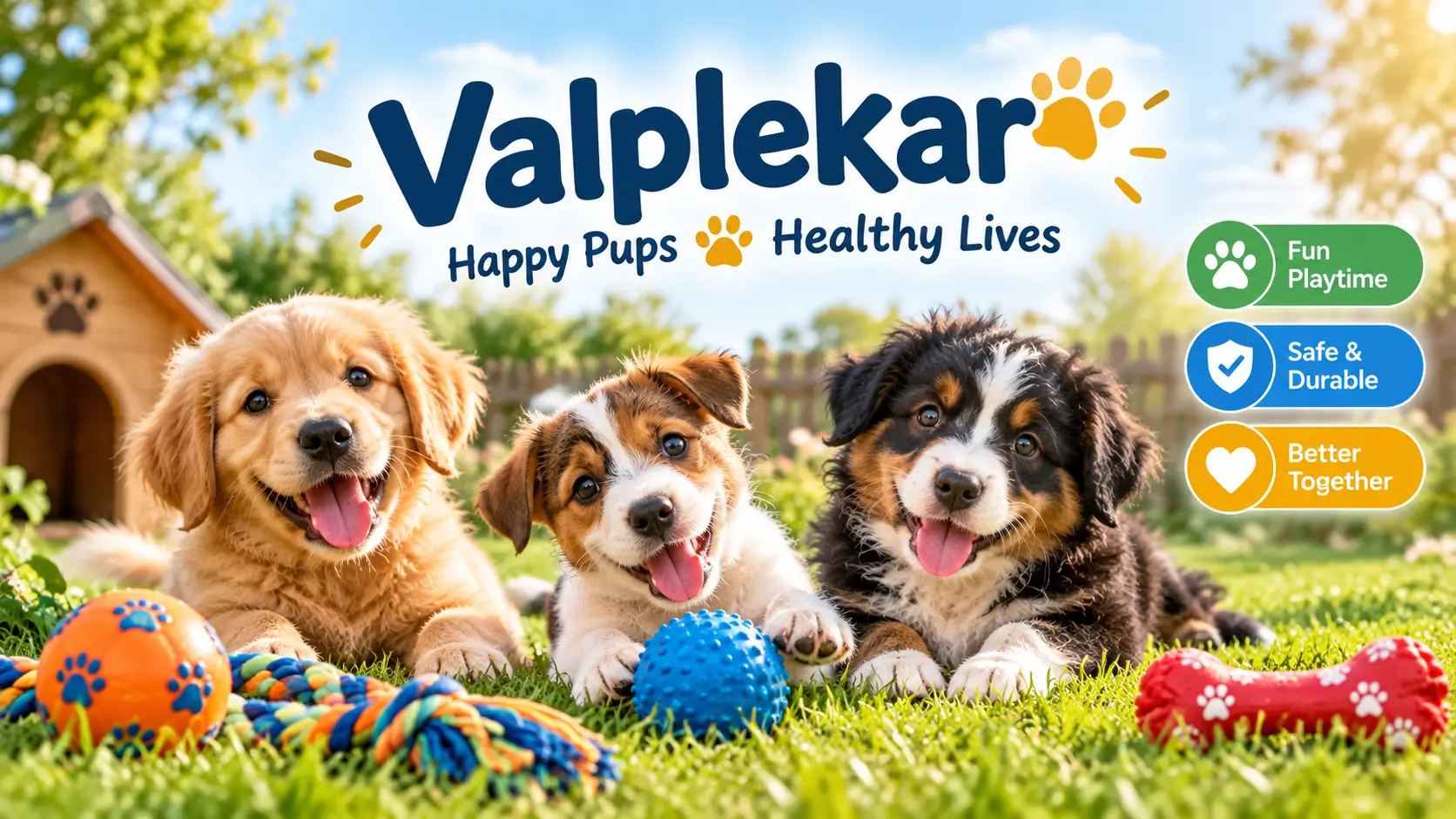
Welcoming a puppy into your home is an exciting experience, but it also brings a new set of responsibilities. Young dogs are naturally curious, energetic, and eager to explore the world around them. They investigate unfamiliar objects, chase moving toys, follow people from room to room, and use play to interact with their surroundings. These everyday activities are more than simple entertainment. When approached thoughtfully, they can create opportunities for learning, confidence-building, and a stronger relationship between a puppy and its owner.
This is where the concept of Valplekar becomes useful. The Swedish term is associated with puppy games and playful activities that allow young dogs to explore, interact, and learn through enjoyable experiences. These activities can range from searching for a favourite toy to practising gentle tug games, discovering new textures, and playing simple games with a trusted person.
Valplekar does not need to involve complicated equipment, expensive toys, or a rigid training schedule. Sometimes, the most engaging activity is a short game in the living room, a supervised exploration session, or a simple search for a piece of the puppy’s regular food. The important consideration is whether the activity is appropriate for the puppy’s age, confidence, health, and individual temperament.
Understanding how to organise puppy play can help owners make better decisions about their young dog’s daily routine. It can also prevent common problems, such as overstimulation, unsafe jumping, excessive mouthing, and interactions that become too rough.
In this guide, we explore what Valplekar means, why puppy play matters, which games owners can introduce at home, how to adapt activities to different developmental stages, and how to recognise when a puppy needs a break. We will also examine practical examples of how thoughtful play routines can help families address everyday challenges.
The central idea is straightforward: effective puppy play should be enjoyable, safe, flexible, and guided by the individual dog rather than by expectations about how much energy a puppy should have.
What Does Valplekar Mean?
Valplekar is connected with the Swedish words valp, meaning puppy, and lek, meaning play or game. In ordinary English, the term can be understood as puppy play or puppy games.
This interpretation refers to a broad category of activities rather than one particular game. A puppy investigating a cardboard box under supervision, following a soft toy across the floor, searching for food, or playing gently with a suitable canine companion may participate in activities that fit the general idea of Valplekar.
The term is useful because it encourages owners to think of play as an opportunity for interaction rather than merely a way to occupy an energetic dog.
For example, a puppy that searches for a hidden toy is practising exploration. A puppy that brings a toy towards its owner has an opportunity to develop cooperation. A puppy that encounters an unfamiliar but safe household object can investigate it at its own pace.
These experiences can make ordinary daily routines more engaging.
It is equally important to understand what Valplekar does not automatically mean. The word itself should not be interpreted as proof of a proprietary training system, a certified programme, a special dog breed, or a guaranteed behavioural technique. There is no need to attach complicated promises to a straightforward concept.
Instead, Valplekar can serve as a convenient way to describe thoughtfully planned games for puppies.
The most useful approach is to select activities according to a puppy’s needs. A confident puppy may enjoy a simple search game, while a more cautious puppy might prefer quietly investigating a familiar toy beside its owner. Neither puppy needs to follow exactly the same routine.
When owners understand this flexibility, play becomes easier to organise and more beneficial for both the dog and the family.
Why Valplekar Matters in Early Puppy Development
Puppies experience the world differently from adult dogs. Everyday sights, sounds, smells, textures, and movements may be unfamiliar. Through safe exploration and interaction, puppies have opportunities to become more comfortable with their environment.
Valplekar provides a practical way to introduce these experiences without turning every activity into a formal lesson.
Supporting Physical Coordination
Age-appropriate games encourage puppies to move their bodies in different ways. Walking towards a toy, turning around, following a person, and stepping across a low, stable surface can provide opportunities to practise coordination.
The purpose is not to exhaust the puppy or produce athletic performance. Young dogs are still developing physically, so vigorous exercise and repetitive high-impact movements are not appropriate goals.
Short, comfortable activities are generally more sensible than repeatedly encouraging a puppy to jump, race, or change direction at high speed.
Owners should also consider the surface on which a game takes place. Slippery floors can make movement difficult, particularly for puppies that are still learning how to control their bodies. A secure, nonslip area is a better choice.
Encouraging Mental Engagement
Physical movement is only one part of play. Puppies also benefit from opportunities to investigate, make simple choices, and use their senses.
A scent-searching game, for instance, asks the puppy to locate something by following its nose. A basic toy-finding activity encourages the dog to explore several possible locations. A puzzle designed specifically for puppies can introduce a simple problem-solving challenge.
Mental engagement should not become frustration. If a puppy cannot understand a game, the owner can make it easier by placing the object in a more obvious location or providing a clearer starting point.
The aim is to create an enjoyable experience, not to test intelligence.
Building Trust Between Puppy and Owner
A positive play routine gives a puppy opportunities to interact with its owner in predictable ways.
When an owner invites the puppy to play, responds calmly, offers suitable toys, and stops when the puppy becomes uncomfortable, the interaction becomes easier to understand.
Consistency matters. A puppy may become confused when one family member encourages hand biting while another person immediately objects to it. Similarly, a game can become frustrating when the rules change without warning.
Clear routines help the puppy understand what to expect.
Developing Everyday Learning Opportunities
Play can complement basic training without replacing it.
For example, a puppy may practise responding to its name while approaching its owner during a game. A simple toy exchange can introduce the idea that releasing an object may lead to another enjoyable activity. A short hide-and-seek game can create opportunities to practise coming when called.
These experiences should remain light and rewarding.
A puppy does not need to perform perfectly before it can enjoy a game. Owners can gradually make an activity more challenging as the puppy becomes comfortable with the basic idea.
The Main Benefits of Valplekar
The benefits of puppy play depend on the activity, the environment, and the individual dog. However, a well-planned routine can support several useful aspects of everyday life.
Confidence and exploration: Gentle games introduce unfamiliar objects and situations in manageable ways. A cautious puppy can investigate at its own pace without being forced into an interaction.
Problem-solving: Scent searches and simple food puzzles encourage curiosity. The puppy learns that exploring its surroundings can lead to enjoyable discoveries.
Social interaction: Appropriate play creates opportunities to communicate with trusted people and suitable dogs. These experiences can help puppies become more familiar with different forms of interaction.
Positive training: Rewarding a puppy for coming closer, exchanging a toy, or settling after a game can make basic learning more enjoyable.
Healthy daily routines: Short play breaks provide structure throughout the day. Owners can alternate play with meals, toilet breaks, quiet exploration, and sleep.
Appropriate outlets for natural behaviour: Puppies often enjoy carrying, sniffing, chasing, chewing, and investigating. Providing suitable activities gives them opportunities to engage in these behaviours without directing them towards household possessions or human hands.
A stronger owner-puppy relationship: Shared activities help owners understand what their puppy enjoys, what causes uncertainty, and how the dog communicates its needs.
It is important not to treat these benefits as automatic outcomes. A game that is appropriate for one puppy may overwhelm another. Play should be adapted to the puppy rather than used as a universal solution for every behavioural challenge.
The Best Valplekar Games to Try at Home
One of the most appealing features of Valplekar is its flexibility. Owners can introduce simple activities using safe household spaces and a few suitable toys.
The following games provide a practical starting point.
1. The Simple Hide-and-Seek Game
Hide-and-seek is an easy way to combine movement, curiosity, and interaction with an owner.
Begin in a quiet room where the puppy feels comfortable. Ask another household member to gently engage the puppy while you move a short distance away. Call the puppy in a cheerful voice from an obvious location.
When the puppy finds you, offer praise and friendly attention. If appropriate, a small reward from its normal food allowance can make the experience more appealing.
At first, keep the hiding place simple. Standing just around a doorway is enough. As the puppy understands the game, you can gradually choose slightly less obvious locations.
Avoid disappearing for long periods or calling the puppy from places that require climbing, squeezing through narrow gaps, or navigating obstacles.
This game should encourage the puppy to approach willingly, not create anxiety about being separated from its owner.
Hide-and-seek can also support early recall practice. However, the puppy should not be punished or scolded if it becomes distracted. Make the activity easier and reward successful approaches.
2. The Puppy Scent Search
Dogs rely heavily on their sense of smell, making scent-based activities a natural option for Valplekar.
Choose a few pieces of the puppy’s usual food and place them in easily accessible locations within a safe area. Begin by allowing the puppy to watch you position the food.
Give a simple cue, such as “find it,” and let the puppy investigate.
The first searches should be straightforward. You might place a piece beside a familiar toy or on a clean floor away from furniture legs. Once the puppy understands the activity, you can use slightly less obvious locations.
Avoid hiding food in places where the puppy might swallow unsuitable objects, become trapped, or damage household items while searching.
Do not use foods that are unsafe for dogs. If you would rather avoid treats, use part of the puppy’s normal measured meal where practical.
This activity is particularly helpful when you want to offer an engaging indoor game without encouraging fast running.
It can also suit puppies that prefer investigating independently rather than interacting constantly with people.
3. Gentle Tug-of-War
A suitable tug toy can provide an enjoyable interactive game for puppies that like carrying and pulling objects.
Choose a toy large enough to hold safely, with no small attachments that could be swallowed. Invite the puppy to take one end while you hold the other.
Move the toy gently and allow the puppy to engage at a comfortable level. The game should not involve forceful jerking, lifting the puppy off the ground, or pulling aggressively against its neck.
You can occasionally pause the movement and invite the puppy to release the toy. When the puppy lets go, calmly praise it and either restart the game or offer another suitable toy.
If the puppy becomes overly excited, starts grabbing hands, or struggles to disengage, stop and give it an opportunity to settle.
Tug should not be used to frighten a puppy or create a confrontation over possession. The goal is cooperative play.
Not every puppy enjoys tugging. A dog that prefers sniffing, chasing a soft toy along the floor, or exploring its surroundings should be offered alternatives.
4. Fetch With a Soft Toy
Fetch can provide a simple way to practise movement and returning towards an owner.
Start with a short, gentle roll of a soft toy across a secure, nonslip floor. Avoid throwing it high into the air or encouraging repeated sprinting.
When the puppy follows the toy, praise its interest. If it picks up the toy and moves towards you, make the return rewarding by offering friendly attention or another enjoyable interaction.
Some puppies will immediately bring the toy back. Others will prefer carrying it away or investigating it on their own. This is normal, and the game can be adapted to the individual dog.
There is no need to turn every fetch session into a strict retrieval exercise.
Keep the distance short and stop before the puppy becomes tired. Avoid repeated sharp turns, high jumps, and strenuous play, especially while the dog is young and physically developing.
The main purpose is to encourage an enjoyable exchange, not to see how many times the puppy can retrieve an object.
5. The Toy-Choice Game
This activity allows the puppy to explore personal preferences while giving the owner useful information about its interests.
Place two or three puppy-safe toys on the floor, leaving enough space between them for comfortable movement. Let the puppy decide which one to investigate.
It might select a soft toy, a lightweight ball, or an object suitable for chewing. Watch without immediately directing the puppy towards a particular choice.
You can then build a game around the selected object.
If the puppy chooses a toy that can be rolled safely, try a short rolling game. If it chooses something suitable for carrying, encourage it to bring the object a short distance. If it prefers gentle chewing, allow supervised use of an appropriate chew toy.
Do not leave the puppy alone with objects that can break apart or be swallowed.
Toy choice is useful because it reminds owners that puppies are individuals. An activity that delights one dog may be uninteresting to another.
6. The Name-and-Reward Game
Learning to recognise a name is an important everyday skill, and play provides an easy opportunity to practise it.
When the puppy is alert but not deeply distracted, say its name once in a friendly voice. As soon as it looks towards you, offer praise and a small reward if appropriate.
Initially, practise at a short distance in a familiar room.
As the puppy becomes more responsive, repeat the game in different safe areas with manageable levels of distraction. The puppy can also be rewarded for approaching you after hearing its name.
Avoid repeatedly calling the name while the puppy is occupied with something it cannot easily ignore. If the puppy does not respond, reduce the distraction or move closer.
The name should become a useful signal for attention, rather than a sound that predicts frustration.
This activity requires little physical effort and can be incorporated into ordinary daily interactions.
7. The Mini Exploration Course
An exploration course introduces a puppy to simple changes in its surroundings.
You might arrange a stable cushion, a low cardboard box with both ends open, and a familiar blanket on the floor. Leave enough room for the puppy to approach and move away freely.
Invite the puppy to investigate. Do not push, pull, or carry it through the arrangement simply to complete the course.
You can reward curiosity, such as sniffing the box, walking around the blanket, or placing a paw near the cushion.
Avoid unstable furniture, slippery surfaces, narrow tunnels that could trap the puppy, and elevated obstacles that require jumping.
The activity should be easy enough that the puppy can explore without fear.
For a cautious puppy, begin with one new object instead of several. For a confident puppy, you can introduce another safe item once it is comfortable with the first.
The purpose is not to teach a puppy to negotiate an elaborate agility course. It is to make ordinary exploration enjoyable and manageable.
8. The Toy-Exchange Game
Puppies sometimes pick up objects that are unsuitable for chewing or carrying. A calm exchange game can introduce an alternative to chasing the puppy or forcibly taking things from its mouth.
Begin with a safe toy that the puppy already enjoys.
Allow the puppy to hold it, then offer a second suitable toy or a small reward. When the puppy voluntarily releases the first object to investigate the alternative, praise it.
You can gradually introduce a consistent cue, such as “drop,” immediately before the exchange. Keep the tone relaxed.
If the puppy is holding something dangerous, prioritise safety and seek the safest way to recover it. Do not turn access to hazardous objects into a prolonged game.
Avoid repeatedly snatching ordinary toys away from the puppy, as doing so can make play less predictable.
A successful exchange teaches cooperation through a useful outcome: releasing an object does not necessarily mean that all enjoyable interaction ends.
9. The Settle-and-Play Game
Play is not only about movement. Learning to transition between excitement and calm activity is also valuable.
Begin with a brief, gentle game using a familiar toy. After a short period, reduce the movement and guide the puppy towards a comfortable resting area.
Reward calm behaviour, such as standing quietly, sitting naturally, or lying down when the puppy chooses to do so.
Then either finish the session or invite another short round if the puppy remains comfortable.
This is not a contest to see how quickly a puppy can become completely still. The aim is to introduce a predictable change from activity to rest.
Some puppies become more energetic when they are overtired. If the puppy begins biting more frequently, rushing around unpredictably, or struggling to engage calmly, it may need a quiet break instead of another game.
A regular settle routine helps owners remember that rest is an essential part of a young dog’s day.
10. The Familiar-Sound Game
Everyday household sounds can be unfamiliar to a puppy. A thoughtful introduction can help it investigate sounds without feeling overwhelmed.
Choose a quiet, safe setting. Allow the puppy to hear an ordinary sound at a comfortable intensity, such as a soft door movement or a familiar household object being placed on a table.
Observe the puppy’s reaction.
If it remains relaxed or approaches to investigate, offer calm praise. If it becomes worried, increases its distance, or tries to hide, reduce the intensity or stop the exercise.
Never deliberately frighten a puppy to test its reaction. Do not play sudden, loud recordings close to its ears.
The goal is to allow comfortable exposure to ordinary experiences, not to force the puppy to tolerate everything immediately.
For persistent noise fear, consult a veterinarian or qualified behaviour professional who uses humane, reward-based methods.
How to Create a Balanced Valplekar Routine
A useful puppy-play routine does not need to resemble a strict timetable. Instead, it should provide several opportunities throughout the day for movement, exploration, interaction, and rest.
Start by considering your puppy’s normal daily needs. These include feeding, toilet breaks, sleep, handling, appropriate social experiences, and any exercise recommended for its health and developmental stage.
Play can be fitted around those activities.
For example, a morning routine might include a toilet break followed by a short scent-searching game. Later, the puppy might investigate a toy while its owner supervises. An afternoon session could involve gentle hide-and-seek, while the evening routine might end with a quiet chew toy and rest.
This example is a flexible structure, not a requirement that every puppy follow the same schedule.
The most effective routine is one that works for the household while respecting the dog’s individual needs.
Keep Sessions Manageable
Short games are often easier for puppies than prolonged activities. There is no single session length that suits every dog.
A very young or easily distracted puppy might enjoy only a brief interaction before losing interest. Another puppy may remain engaged longer but still need frequent rest.
Instead of concentrating on a fixed number of minutes, watch the puppy’s behaviour.
If it starts wandering away, moving less comfortably, becoming unusually rough, or struggling to respond, pause the game. Offer water where appropriate and provide a quiet place to rest.
Alternate Different Types of Play
Repeating the same high-energy activity can make the routine unnecessarily demanding.
A better approach is to rotate activities with different levels of physical and mental engagement.
You could alternate between:
- A short search game that encourages sniffing.
- A gentle interactive toy game.
- Quiet exploration of a familiar object.
- A brief name-response exercise.
- Independent play with an appropriate toy under suitable supervision.
- Rest and calm companionship.
Variety helps keep activities interesting without requiring constant intensity.
Use Rewards Thoughtfully
Rewards do not always need to be food.
Depending on the puppy, a reward might involve praise, a chance to continue the game, access to a favourite toy, or friendly interaction.
Food rewards can be useful, but account for them within the puppy’s normal diet. Choose appropriate items and seek veterinary advice if the puppy has dietary restrictions or a medical condition.
Rewards should be timely and understandable. If the puppy approaches when called, praise it at that moment rather than waiting until it has wandered elsewhere.
Make Rest Part of the Routine
Owners sometimes assume that a puppy with excess energy simply needs more play. However, tired puppies may become increasingly excitable instead of calmer.
A puppy that repeatedly bites, struggles to settle, or becomes less coordinated might need a break.
Provide a comfortable resting area where the puppy can relax without being disturbed. Children and other household members should understand that the resting space is not another place to initiate play.
A balanced Valplekar routine includes both enjoyable interaction and opportunities to disengage.
Valplekar for Different Puppy Ages
Although the general idea of puppy play remains consistent, suitable activities change as a dog grows.
Very Young Puppies
Very young puppies need a gentle environment with frequent opportunities for sleep, feeding, toileting, and contact with their caregivers.
At this stage, simple activities are more suitable than elaborate games. Quiet interaction with a familiar person, brief exploration, and age-appropriate toys can provide enough engagement.
Do not expect a young puppy to maintain attention for long periods or perform complicated tasks.
If the puppy has only recently arrived home, give it time to become comfortable with the environment. Avoid introducing too many new experiences on the same day.
Puppies in the Early Learning Stage
As a puppy becomes more comfortable, owners can gradually introduce straightforward games such as scent searches, name recognition, toy exchanges, and gentle hide-and-seek.
These activities can help establish positive habits while keeping the experience enjoyable.
Continue to monitor physical comfort and emotional responses. A puppy that eagerly participates one day may be less interested after a busy outing or interrupted sleep.
Older Puppies With Growing Confidence
Older puppies may enjoy a wider variety of interactive activities, provided the games remain appropriate for their development and health.
Owners can introduce slightly more challenging scent searches, longer but still manageable toy exchanges, or basic training cues incorporated into play.
This is also an opportunity to practise calm behaviour around everyday distractions.
Do not assume that a puppy is ready for strenuous adult-dog exercise simply because it looks bigger or has more energy. Growth and physical maturity differ across breeds and individual dogs.
For questions about exercise limits, especially for large breeds or puppies with health concerns, consult a veterinarian.
Adapting Play for Individual Temperaments
Age is only one factor. Temperament and previous experiences also matter.
A confident puppy may readily approach a new toy. A cautious puppy may prefer watching from a distance before investigating.
A highly energetic puppy might enjoy searching for food, while a puppy that tires easily may prefer brief periods of gentle interaction.
There is no benefit in forcing every puppy to enjoy the same game.
Observe what makes your dog comfortable, introduce manageable challenges, and allow it to make choices whenever possible.
Safe Social Play With Other Puppies and Dogs
Playing with other dogs can provide valuable social experiences, but not every interaction is automatically suitable.
The size, temperament, health, and play style of the participating dogs matter. A large, highly energetic adolescent dog may overwhelm a small puppy even if the larger dog has no intention of causing harm.
Choose compatible playmates and supervise interactions closely.
What Does Healthy Play Look Like?
Comfortable play often involves loose body movements, pauses, changes in direction, and opportunities for both dogs to move away.
Dogs may chase each other, gently mouth during play, or take turns initiating interaction. The context matters more than any single movement.
Owners should watch the overall interaction rather than assuming that every noisy or energetic moment is dangerous. Equally, they should not dismiss signs of discomfort simply because the dogs began playing happily.
When Should Play Be Interrupted?
Pause or end the interaction if one dog repeatedly tries to escape, hides, freezes, or cannot disengage from the other. Persistent chasing, cornering, or one-sided roughness also warrants intervention.
Give both dogs space to settle before deciding whether another interaction is appropriate.
Do not force a shy puppy to remain in a group because socialisation is considered important. Positive social experiences should be introduced carefully and at a pace the puppy can manage.
Consider Vaccination and Health
Before arranging puppy playdates or attending a puppy class, discuss suitable timing and precautions with your veterinarian.
Puppies require appropriate preventive care, and the risks associated with unfamiliar dogs and shared environments vary by location. Responsible socialisation does not mean exposing a puppy indiscriminately to every dog or public area.
Veterinary guidance can help you balance safe social experiences with local disease risks and the puppy’s vaccination status.
Common Valplekar Mistakes and How to Avoid Them
Even well-intentioned owners can accidentally make puppy games less useful.
Mistake 1: Playing Until the Puppy Is Exhausted
A tired puppy is not necessarily a satisfied puppy. Excessive activity may lead to discomfort, frustration, or overexcitement.
Instead of trying to exhaust the dog, stop while the activity remains comfortable. Use several manageable play opportunities rather than one intense session.
Mistake 2: Encouraging Biting of Hands and Clothing
Using fingers as toys may seem harmless when a puppy is small. However, the same behaviour can become problematic as the dog grows.
Direct biting towards suitable toys instead. If the puppy repeatedly grabs hands, feet, or clothing, calmly disengage and give it an appropriate alternative.
Family members should respond consistently so that the puppy is not encouraged to repeat unwanted behaviour.
Mistake 3: Forcing Interaction With Unfamiliar Dogs
A puppy that appears nervous around other dogs does not necessarily need a larger or more intense group to become comfortable.
Choose calm, suitable playmates and allow distance when needed. If the puppy continues to show fear, seek advice from a veterinarian or qualified behaviour professional.
Mistake 4: Making Games Too Complicated
Owners sometimes introduce several objects, multiple rules, and distractions before a puppy understands the basic activity.
Start with one clear goal. For a scent game, hide one or two pieces of food in obvious locations. For recall practice, begin in a quiet room.
Add difficulty only after the puppy understands what to do.
Mistake 5: Using Punishment During Play
Shouting, hitting, threatening, or physically intimidating a puppy can undermine trust and may worsen behavioural problems.
Use humane, reward-based approaches. If a game becomes too rough, stop the interaction calmly and redirect the puppy towards a suitable activity when it can engage comfortably.
Persistent biting, guarding, or aggressive behaviour may require professional assessment.
Mistake 6: Ignoring Warning Signs
Not every puppy communicates discomfort in the same way. Some move away or hide, while others freeze, become unusually still, or show repeated attempts to escape.
Learn your puppy’s normal behaviour so that changes are easier to recognise.
When in doubt, pause the activity and give the puppy space. Ending a game early is preferable to forcing an interaction that is no longer comfortable.
Mistake 7: Depending on Toys to Solve Every Problem
Valplekar can contribute to a balanced routine, but it cannot replace appropriate veterinary care, training, sleep, nutrition, toilet breaks, or a suitable living environment.
A puppy that repeatedly chews household objects may need better management and appropriate chew toys. A puppy that appears restless may require a review of its routine, sleep, or health rather than simply more vigorous activity.
Use play as one part of responsible puppy care.
Practical Valplekar Case Studies
The following case studies are illustrative examples, not documented client cases or scientific trials. They show how an owner might adapt puppy play to common situations.
Case Study 1: The Puppy That Bites During Play
Imagine a family with a young puppy that frequently grabs hands and trouser legs whenever someone tries to play.
The family initially responds by waving their hands, pushing the puppy away, or encouraging the behaviour because it appears playful. Unfortunately, these responses can make the interaction more exciting and difficult to manage.
The family decides to change its approach.
First, they keep suitable toys available in the rooms where the puppy spends time. When the puppy approaches calmly, they invite it to engage with a toy rather than encouraging contact with hands.
If the puppy begins biting clothing or skin, they stop the interaction and create a brief pause. When the puppy is ready to engage appropriately, they resume with a suitable toy.
They also introduce short scent games and quiet exploration so that play is not limited to physical excitement.
Over time, the family can observe whether the puppy is responding better to the consistent routine. Progress may be uneven, so everyone follows the same approach.
The lesson is not that one particular toy will eliminate biting. It is that clear boundaries, appropriate alternatives, and consistent responses can make play easier to manage. Persistent or severe biting should be discussed with a qualified professional.
Case Study 2: The Shy Puppy That Avoids New Experiences
Consider a puppy that stays close to its owner whenever an unfamiliar object appears.
The owner initially assumes that repeated exposure will make the puppy braver. They place several unfamiliar objects in the room and encourage the puppy to approach them.
Instead of becoming more comfortable, the puppy begins avoiding the play area.
The owner then simplifies the experience.
They place one familiar toy on the floor and allow the puppy to investigate without pressure. When the puppy approaches, the owner provides calm praise. Later, a harmless new object is introduced at a comfortable distance.
The puppy is free to approach, watch, or move away.
The owner gradually adjusts the activity according to the puppy’s reactions rather than following a rigid progression.
This approach makes the experience more predictable and gives the puppy control over its distance from unfamiliar things.
The key lesson is that confidence develops through suitable experiences, not forced participation. Persistent fear, distress, or avoidance may require professional guidance.
Case Study 3: The Puppy That Becomes Overexcited Indoors
Imagine an energetic puppy that runs around, grabs toys, and begins biting more intensely during evening play.
The household assumes the puppy needs a longer game, so they keep throwing a ball and encouraging faster movement.
The puppy becomes even more excitable and struggles to settle.
After reviewing the routine, the family begins alternating gentle play with quieter activities. They use a short scent search, offer an appropriate toy, and then guide the puppy towards a comfortable resting area.
They also look for patterns in the puppy’s behaviour, such as whether the difficulty occurs after a busy day or when sleep has been interrupted.
Instead of aiming for complete exhaustion, they provide opportunities for both engagement and rest.
This example highlights an important point: increased excitement does not always mean a puppy needs more energetic exercise. Sometimes, a calmer activity or a break is the more suitable response.
How to Tell Whether Your Valplekar Routine Is Working
Successful puppy play should be assessed by the quality of the experience rather than by the number of games completed.
Look for signs that the puppy remains comfortable, participates willingly, and can disengage without becoming distressed.
You may notice that the puppy begins approaching familiar toys, investigates safe objects more confidently, or responds more readily when invited to play. It may also become more familiar with predictable routines, such as starting a game and moving towards rest afterwards.
These observations are useful, but they should not be treated as guarantees of future behaviour.
A puppy’s preferences can change with age, health, environment, and experience. Some days will be more active than others.
A simple play journal can help owners recognise patterns. Record which activities the puppy enjoys, which situations appear difficult, and when the dog seems to need additional rest.
You do not need elaborate measurements. A few notes may reveal that the puppy prefers scent games to fetch or becomes uncomfortable around crowded play areas.
If the puppy consistently refuses activities it previously enjoyed, appears to have difficulty moving, shows unusual fatigue, or develops a sudden behavioural change, consult a veterinarian. Do not assume every change is simply a training issue.
Choosing Appropriate Toys and Play Environments
The quality of the environment influences how safely a puppy can participate in Valplekar.
Choose toys designed for dogs and appropriate for the puppy’s size, chewing style, and developmental stage. Toys that are too small may be swallowed, while objects with detachable parts can create choking or ingestion hazards.
Inspect toys regularly. Remove damaged items before pieces can be swallowed.
For household games, use a space with enough room to move comfortably. Keep electrical cables, medications, cleaning products, sharp objects, and other hazards away from the play area.
Avoid encouraging a puppy to climb unstable furniture or jump from raised surfaces.
Outdoor play requires additional consideration. Check that the area is secure, the weather is suitable, and the ground does not contain hazardous objects. In unfamiliar public areas, account for local disease risks and follow veterinary advice regarding safe access.
Water should be available as appropriate, especially after activity or in warm conditions. Young puppies should never be left unsupervised in or near water.
Finally, remember that a puppy may investigate an object by chewing it. Supervision allows owners to intervene before ordinary exploration becomes unsafe.
Valplekar and Positive Reinforcement Training
Play and training can work together, but they serve slightly different purposes.
Play creates enjoyable opportunities for movement, exploration, and interaction. Training focuses on helping the puppy learn particular behaviours or responses.
When the two are combined thoughtfully, the puppy can practise useful skills without turning every interaction into a formal lesson.
For example, an owner can invite the puppy to approach during hide-and-seek, reward it for responding to its name, and then resume the game. In a toy-exchange activity, the puppy can learn that releasing a suitable object leads to another positive experience.
The reward should match the behaviour. If the puppy returns when called, acknowledge the response promptly. If it investigates a new object calmly, allow it to continue exploring.
Avoid expecting the puppy to obey perfectly when it is frightened, exhausted, or overwhelmed by distractions. Make the situation easier instead.
Reward-based training does not mean allowing every behaviour. Owners can set boundaries while remaining calm and predictable. For example, hands are not toys, and a puppy that bites clothing can be redirected towards an appropriate activity.
If a puppy shows serious resource guarding, repeated aggressive responses, or biting that places people at risk, seek help from a veterinarian or a qualified professional who uses humane, evidence-informed behaviour methods.
Valplekar is best used as a flexible part of a wider learning routine, not as a replacement for structured training when training is needed.
Frequently Asked Questions About Valplekar
1. What does Valplekar mean in English?
Valplekar is associated with puppy games or puppy play in Swedish. It can describe enjoyable activities in which young dogs explore, interact with toys, play with people, or participate in suitable social play.
2. Is Valplekar a specific dog-training method?
Valplekar is best understood as a general description of puppy play rather than the name of a formally established training method. Individual games can support training, but the term itself does not establish a particular certification, programme, or guaranteed technique.
3. Why is Valplekar important for puppies?
Appropriate play gives puppies opportunities to explore their surroundings, practise physical coordination, investigate objects, and interact with people. Depending on the activity, it can also complement early training and provide mental engagement.
The benefits depend on the individual puppy, the suitability of the activity, and the quality of supervision.
4. What are the easiest Valplekar games for beginners?
Simple scent searches, hide-and-seek, toy-choice games, gentle fetch, and short name-recognition exercises are useful starting points.
Choose one activity at a time and keep it easy enough that the puppy can participate comfortably. Use suitable toys and stop when the puppy loses interest or becomes tired.
5. Can Valplekar help with puppy biting?
Appropriate play can provide alternatives to biting hands, feet, and clothing. Suitable toys can give puppies an acceptable outlet for mouthing and chewing.
However, play alone may not resolve persistent biting. Owners should respond consistently, stop interactions when biting becomes inappropriate, and seek professional guidance if the behaviour is severe or difficult to manage.
6. How long should a Valplekar session last?
There is no universal duration for every puppy. Age, health, temperament, activity type, and individual tolerance all influence how long a game remains suitable.
Use short sessions, watch the puppy’s behaviour, and provide frequent opportunities for rest. Follow veterinary guidance when exercise restrictions apply.
7. Can Valplekar be played indoors?
Yes. Many puppy games work well indoors, including scent searches, hide-and-seek, toy exchanges, name-recognition practice, and quiet exploration.
Choose a secure area with a nonslip surface and remove objects that could be swallowed or damaged. Indoor activities should remain appropriate for the puppy’s physical abilities.
8. Is Valplekar suitable for every puppy breed?
The general idea of puppy play can be adapted to different breeds, but individual needs vary.
Some puppies prefer scent-based activities, while others enjoy gentle interactive games. Size, physical development, health, temperament, and inherited behavioural tendencies can influence the most suitable activities.
There is no single Valplekar routine that every breed or puppy must follow.
9. Should puppies play with other dogs?
Suitable social play can be beneficial for some puppies, provided the dogs are healthy, compatible, and carefully supervised.
Choose playmates with an appropriate size and temperament. Do not force a puppy to participate if it appears uncomfortable. Ask a veterinarian about vaccination, disease prevention, and appropriate socialisation opportunities.
10. What should I do if my puppy becomes frightened during play?
Pause the game and give the puppy space. Remove pressure to approach the unfamiliar object, person, or dog.
You can try again later with a simpler activity and more distance, provided the puppy appears comfortable. Do not punish fearful behaviour or force the puppy into an interaction.
If fear persists or begins affecting everyday life, consult a veterinarian or qualified behaviour professional.
11. Does Valplekar require special equipment?
No. Many games can be arranged using a suitable dog toy, a secure room, or a few pieces of the puppy’s regular food.
Specialist toys may be helpful for particular activities, but safety and suitability matter more than price. Avoid objects with small detachable parts or sizes that could be swallowed.
12. Can adult dogs participate in Valplekar?
Adult dogs can enjoy similar games, although the activities may need to be adjusted to their physical condition, training, and preferences.
Gentle search games, toy exchanges, and interactive play can remain engaging throughout a dog’s life. Older dogs or those with health conditions may require adaptations recommended by a veterinarian.
13. How can I tell when my puppy needs a break?
A puppy may lose interest, move away, become unusually rough, or show signs of discomfort. Some puppies become increasingly excitable when tired rather than settling down immediately.
Pause the activity and provide a quiet place to rest. If you notice unusual fatigue, pain, or other concerning changes, contact a veterinarian.
14. Can Valplekar replace regular puppy training?
No. Valplekar can complement training by providing opportunities to practise recall, attention, and cooperation, but it does not replace every training need.
Puppies still benefit from consistent routines, appropriate socialisation, reward-based instruction, safe handling, and responsible management. The type and amount of training should suit the dog’s development.
15. Is Valplekar more about physical activity or mental stimulation?
It can involve both. Fetch and gentle toy games encourage movement, while scent searches and simple puzzles emphasise investigation and problem-solving.
A balanced routine includes a suitable mix of activities alongside regular rest. The right balance depends on the puppy rather than a fixed formula.
Final Thoughts on Valplekar
Valplekar offers a useful way to think about the role of play in a puppy’s everyday life. Understood as puppy games or puppy play, it covers a wide range of simple activities that encourage exploration, interaction, and enjoyable learning opportunities.
The most effective activities do not have to be complicated. A short scent search, a gentle toy game, or an invitation to find an owner can provide an engaging experience when matched to the puppy’s needs.
What matters most is the way play is organised. Owners should choose appropriate toys, create a safe environment, supervise interactions, and recognise when the puppy needs more space or rest. They should also understand that play is only one part of responsible dog care.
Every puppy has its own personality, preferences, and pace of development. Some become enthusiastic participants almost immediately, while others need time to become comfortable with new experiences. Both deserve patience and thoughtful handling.
By making play predictable, rewarding, and flexible, owners can create everyday opportunities for learning without unnecessary pressure. Over time, these shared activities can help families understand their dogs more clearly and build routines that support a positive relationship.
Ultimately, the value of Valplekar is not measured by how many games a puppy completes or how tired it becomes. It lies in providing suitable opportunities to explore, interact, learn, and rest while growing into a confident and well-supported companion.
For More Visits: Bright Magazine
Also Read: Cyanová: Meaning, Uses, and Colour Guide
