

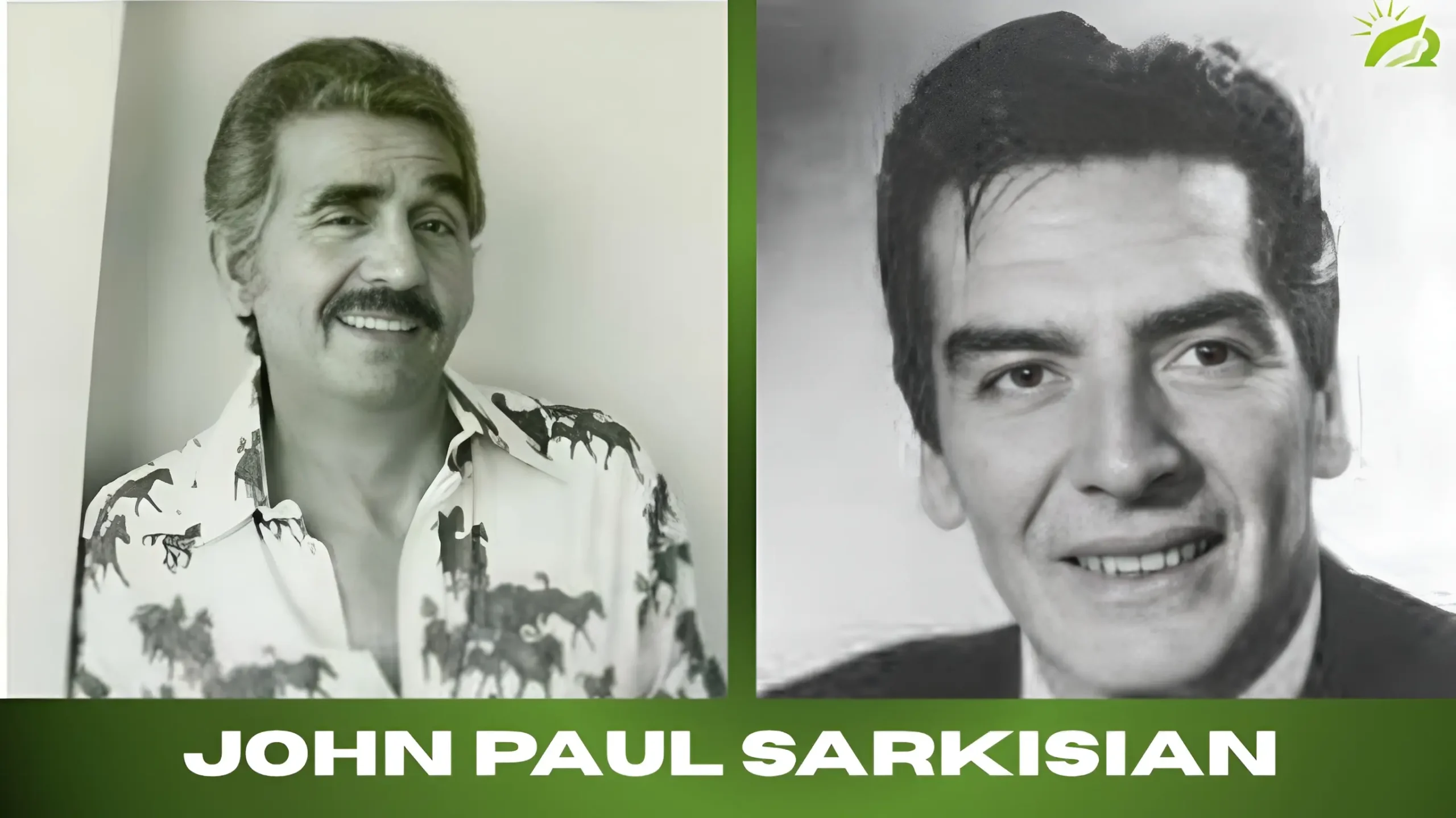
John Paul Sarkisian remains one of the most enigmatic figures in modern entertainment history, yet his story has largely been overshadowed by the astronomical fame of his daughter, Cher. Born on March 23, 1926, and passing away on January 28, 1985, Sarkisian lived a life marked by profound contradictions—a man whose genetic legacy produced one of the twentieth century’s most influential entertainers, yet whose personal presence in that legacy was minimal and complicated. Understanding John Paul Sarkisian requires looking beyond the celebrity narrative to examine a fully realized human being whose struggles, achievements, and choices shaped not just his daughter’s life, but reflected the broader American experience of his generation.
The story of John Paul Sarkisian is not one of triumph in the conventional sense. It is, rather, a story of complexity that challenges simplified narratives about success, family, and the American dream. His life intersected with major historical events—World War II, the rise of rock and roll, the cultural revolution of the 1960s—yet he remained largely on the periphery of these transformative moments. This paradox makes him an important figure to understand, as his life illuminates the experiences of countless working-class Americans whose names never made headlines but whose existence profoundly influenced those who did.
Armenian Heritage and Early Life: Roots in Survival
To understand John Paul Sarkisian is to first recognize the weight of his inheritance. His parents, Giragos “George” Sarkisian and Siranoush “Blanche” Dilkian, were survivors of the Armenian Genocide—one of the twentieth century’s most devastating catastrophes. This historical trauma, though rarely discussed in mainstream accounts of Sarkisian’s life, created an invisible foundation beneath every aspect of his existence. He was born into a family that had already endured displacement, loss, and cultural erasure, yet maintained their identity against extraordinary odds.
Growing up in Oakland, California during the Great Depression, John Paul inhabited a world that was simultaneously connected to centuries of Armenian history and thoroughly immersed in the American working-class experience. The 1930s were brutal years for immigrant communities, and the Sarkisian family navigated economic hardship while maintaining cultural traditions. Oakland’s Armenian community provided both support and structure, offering a buffer against the broader discrimination and economic marginalization that immigrant families faced during this period.
His childhood alongside multiple siblings and half-siblings meant that resources were constantly stretched thin. The Depression era normalized hardship, but for immigrant families like the Sarkisians, there was an additional layer of complexity—the need to succeed in America while preserving Armenian identity. These formative years instilled in John Paul a work ethic and a determination to provide, even as they left marks of trauma and scarcity that would surface later in his choices.
The Armenian-American experience of the 1930s-1940s carried unique psychological weight. Many in his community had lost everything in the genocide; others had family members who didn’t survive the displacement. This created a particular kind of resilience, but also vulnerability to depression and self-medication. John Paul’s generation was tasked with translating the survival imperative of their parents into sustainable American lives—a generational obligation that weighed heavily on many.
Military Service and the Formative Years of Adulthood
During World War II, John Paul Sarkisian served in the United States Coast Guard, joining millions of American men in the war effort. Military service in the 1940s was transformative for working-class men, and the Coast Guard experience in particular shaped his worldview. This was a period when American identity was being forged in unprecedented ways, and service members like Sarkisian were simultaneously defending national interests and seeking personal identity and stability.
The Coast Guard experience would have exposed him to discipline, hierarchy, and camaraderie, but also to the realities of combat, sacrifice, and loss. Many of his contemporaries never returned from the war. This context—being one of the survivors among millions who fought—created a particular psychology among his generation. There was a sense that life should be lived, that the future couldn’t be guaranteed, that stability wasn’t promised. These beliefs, while understandable given historical context, would later manifest in choices that seemed reckless to the next generation.
After returning from military service, John Paul faced the challenge that confronted millions of American veterans: translating wartime experience into civilian employment. The post-war economy offered opportunities for working-class men, and truck driving became an increasingly viable career path. The American trucking industry was expanding rapidly in the 1950s and 1960s, and truck drivers occupied a particular place in American culture—romanticized as independent, adventurous, masculine, yet also perpetually separated from family and routine.
Career and the Complexities of Ambition
John Paul Sarkisian’s primary occupation as a truck driver was not merely an economic decision—it was also a lifestyle choice that reflected his personality and values. Truck driving offered independence, movement, and a break from the constraints of traditional domesticity. Yet it also created physical and emotional distance from family relationships, a pattern that would define his entire life trajectory.
The diversity of his employment history—truck driving, bartending, auto mechanics, horse breeding, and hairstyling—reveals a man seeking various forms of mastery and connection. These weren’t random career changes; they represented attempts to find work that felt meaningful or profitable. Horse breeding, in particular, suggests an interest in agricultural life and animal husbandry that contradicted his urban upbringing. This pattern of seeking different pursuits reflects an restless temperament, a man always looking for something just beyond his current circumstances.
However, the professional achievement that characterized many of his contemporaries largely eluded John Paul Sarkisian. He remained solidly working-class throughout his life, earning enough to survive but never accumulating the kind of financial security that would characterize broader postwar prosperity. This economic reality existed alongside personal struggles that increasingly dominated his life.
Addiction: The Central Struggle of His Existence
The most defining characteristic of John Paul Sarkisian’s adult life was his severe struggle with gambling and drug addiction. These were not peripheral issues or occasional indulgences; they were central to his identity and his impact on those around him. Understanding his addictions requires moving beyond moral judgment to examine the psychological, social, and possibly genetic factors that drove these behaviors.
Addiction in the 1940s, 1950s, and 1960s was poorly understood and heavily stigmatized. There were no widely available treatment programs, no public health approach to substance use disorders, and no framework for understanding addiction as a medical condition rather than a moral failing. John Paul Sarkisian lived through this era without access to the interventions that might have transformed his trajectory.
The gambling addiction suggests something about how he coped with uncertainty and powerlessness. Gambling offers the illusion of control in a world that often feels chaotic—the sense that skill, luck, or intuition can determine outcomes. For a man born into displacement, raised in depression, and survivor of war, this attraction makes psychological sense. Similarly, drug use may have represented an escape from the accumulated pain and anxiety that characterized his emotional world.
These addictions had cascading effects on his relationships, his financial stability, and his ability to function as a stable presence in his family’s life. Addiction is ultimately a family disease—it affects not just the individual struggling with substance use, but everyone connected to that person. For John Paul’s family, particularly his daughter Cher and her mother Georgia Holt, these struggles created profound instability and emotional trauma.
Georgia Holt and the Marriage That Would Define His Legacy
In 1945, John Paul Sarkisian married Jackie Jean Crouch, who would later become known to the world as Georgia Holt—an actress, model, and television personality in her own right. This marriage represented hope for both individuals: for Georgia, an opportunity to build a life with a strong, working-class man in the postwar era; for John Paul, a chance to create the stable family life that his own childhood had lacked.
The union produced their daughter, Cherilyn Sarkisian, born on May 20, 1946. She would become Cher, transforming her name and transcending her origins to become a global cultural icon. Yet at the moment of her birth, Cher was simply the daughter of two young people trying to build a life in postwar America. John Paul’s role as her father lasted barely ten months before the marriage collapsed.
The circumstances of the divorce reveal the gravity of the issues within their relationship. When Cher was only ten months old, John Paul’s absence and the financial strain of his struggles became unbearable. Georgia made the difficult decision to briefly place young Cher in an orphanage—a decision born of desperation that haunted both Georgia and, eventually, Cher herself. This moment encapsulates the impact of John Paul’s addiction: a mother so overwhelmed by circumstances that she felt forced to surrender her child, even temporarily, to institutional care.
A Second Chance and Another Failure: The Las Vegas Remarriage
Years passed. Both Georgia and John Paul moved on, built separate lives, and experienced the full weight of their separation from their daughter. Then, in 1965, they attempted to rekindle their relationship. The remarriage, which took place in Las Vegas, represented hope that time had changed them, that they could repair what had broken. Perhaps they believed that John Paul had conquered his demons, that Georgia had found a way to forgive, or that their shared history warranted a second attempt.
The remarriage lasted only fourteen months. By September 1966, they had divorced again—this time with even more historical baggage and shattered hope. This second dissolution revealed the persistence of the patterns that had destroyed their first marriage. John Paul’s addictions had not been conquered; Georgia’s capacity to manage those addictions had reached its limit. The second marriage represents both the possibility of redemption and its failure—a dramatic acknowledgment that some patterns, once established, prove resistant to change.
By the time of this second divorce, Cher was already becoming famous. She had begun her recording career, first as part of Sonny and Cher, and the early seeds of her legendary status were already apparent. John Paul’s absence during this crucial period of his daughter’s meteoric rise stands as a profound irony: his daughter was achieving everything he never could, yet he was almost entirely absent from her life.
The Distance Years: Fatherhood in Absentia
From the perspective of the historical record, John Paul Sarkisian largely disappeared from Cher’s life during her most formative and successful years. While she was releasing hit records, starring in television shows, and becoming one of the most recognizable figures in the world, her father remained a marginal presence—occasionally referenced in interviews, occasionally reaching out, but fundamentally absent.
This absence was not unique to Cher’s experience; it reflected broader patterns in American family life where economic instability, addiction, and personal crisis created rifts between parents and children. Yet the context of Cher’s extraordinary success makes this particular father-daughter dynamic especially poignant. She had access to resources, opportunities, and professional help that most children of addicted parents never receive, yet the fundamental wound—the absence of her father during her youth—remained real and consequential.
Cher has spoken publicly about her complicated feelings toward her father. She did not hate him; rather, she struggled with a complex mixture of understanding, forgiveness, and lingering hurt. She recognized that he was struggling with forces beyond his control, yet she also had to contend with the reality that his struggles directly impacted her childhood and shaped her emotional landscape.
Later Life: Estrangement and Closure
As John Paul Sarkisian moved into his later years, the accumulated weight of his choices became increasingly apparent. He had achieved no great professional success, maintained few stable relationships, and had been largely absent from his daughter’s spectacular life. Yet he had also outlived most of his generation and had lived through transformative historical periods that had reshaped American society.
The estrangement that characterized his relationship with Cher during these final years was profound but not absolute. There remained a thread of connection—an awareness that blood ran between them despite decades of distance. Cher’s compassion as an adult allowed her to see her father more clearly as a flawed human being struggling with circumstances that he never fully mastered, rather than as the embodiment of her childhood pain.
John Paul Sarkisian died on January 28, 1985, at the age of 58 in Fresno, California. He is buried at Fresno Memorial Gardens. By the standards of traditional success, his life was a failure. Yet by the standards of human complexity and historical significance, his story offers profound insights into American working-class experience, immigrant family dynamics, addiction, and the lasting impact that absent parents can have on their children—even when those children become legends in their own right.
Understanding His Legacy: Beyond the Simple Narrative
The temptation when discussing John Paul Sarkisian is to construct a simple narrative: an absent father whose failures threw his daughter into circumstances that forced her to transcend her origins. This narrative is partly true, but it obscures more complex realities. Cher’s extraordinary success cannot be attributed solely to overcoming her father’s absence; she benefited from talent, opportunity, timing, and her mother’s resilience. Similarly, reducing John Paul to merely an absent father obscures the fuller human being—a man of his era, shaped by genocide, depression, war, and personal demons that he struggled to overcome.
The Armenian-American community has often had to grapple with questions of how to maintain identity and cultural memory in the face of assimilation pressures. John Paul Sarkisian, despite his struggles, represented a particular moment in that ongoing negotiation. He maintained Armenian identity while building a life in America; he raised a daughter who would transcend ethnic categories and become an American icon. In this sense, his life reflects one of the central American stories—the immigrant experience transformed across generations.
His struggle with addiction also resonates in contemporary contexts. In the early twenty-first century, substance use disorders are increasingly recognized as public health challenges rather than moral failings. Looking back at John Paul Sarkisian’s life through this lens, we can see a man who might have benefited from interventions that didn’t exist in his era. This historical perspective doesn’t erase responsibility, but it contextualizes struggle within systems that were themselves struggling.
CASE STUDIES: APPLICATIONS OF JOHN PAUL SARKISIAN’S LIFE LESSONS
Case Study One: The Multi-Generational Impact of Parental Absence in Celebrity Families
Consider a contemporary scenario involving a musician rising to fame while managing unresolved trauma from parental absence. This artist, like Cher, has achieved commercial success and critical recognition, yet frequently reports feeling an internal void—a sense that something fundamental is missing despite external achievements. The artist has accumulated wealth, won awards, and built a global fan base, yet intimate relationships remain fragmented and self-doubt persists.
The John Paul Sarkisian narrative illuminates this pattern. Cher’s extraordinary success did not automatically heal the wound of her father’s absence during her formative years. In fact, success and fame sometimes complicated that emotional wound, creating additional questions about whether her father would have been proud, whether he would have understood her achievements, whether his presence might have altered her trajectory in meaningful ways.
The application for contemporary high-achieving individuals with absent parents is significant: external achievement cannot substitute for early emotional security and paternal presence. The most successful therapeutic work for these individuals often involves not achieving more or succeeding more dramatically, but rather processing grief about what was absent and building self-compassion for the child they were—a child who deserved presence, consistency, and love that her parent was unable to provide.
Case Study Two: The Intersection of Addiction and Family Stability in Working-Class America
Examine a mid-century working-class family where the father struggles with alcohol addiction while maintaining employment as a truck driver. The family experiences the characteristic cycles of addiction: periods of stability followed by crises, followed by promises of change, followed by relapse. The mother, like Georgia Holt, faces the impossible choice between remaining in an unstable marriage or attempting to build life as a single parent during an era when single motherhood carried profound social and economic stigma.
The John Paul Sarkisian case study demonstrates the compounding nature of these struggles. His addiction didn’t exist in isolation; it was intertwined with economic pressure, work stress, and his own unprocessed trauma. Each relapse created financial crises and emotional chaos that rippled through his family. The addiction was not a discrete problem that could be “solved”; it was a pattern that required ongoing management, support structures that didn’t exist, and a fundamental willingness to change that he apparently could not consistently access.
For contemporary individuals in similar situations, the lesson is sobering: loving someone with active addiction typically requires boundaries that feel cruel, acceptance of outcomes that feel wrong, and willingness to prioritize one’s own wellbeing over the possibility of fixing the addicted person. Georgia Holt’s decision to place her infant daughter in temporary care, while traumatic, represented an act of survival—an acknowledgment that she could not simultaneously manage her daughter’s needs and her husband’s addiction.
Case Study Three: The Armenity-American Experience and Identity Across Generations
Analyze the experience of an Armenian-American family in the mid-twentieth century, navigating between cultural preservation and American assimilation. The grandparents are genocide survivors; their child (John Paul) grows up with this trauma legacy but largely operates within American contexts; their grandchild (Cher) becomes so thoroughly American in cultural expression that her Armenian heritage becomes almost invisible to the broader public.
This generational progression is historically significant. Each generation faces decisions about how much to emphasize cultural identity, how much to assimilate, and how to transmit cultural memory. John Paul’s life suggests someone who maintained Armenian identity in certain contexts while building an American life in others. His daughter moved further toward complete assimilation and American identity, though she never entirely erased her Armenian heritage.
The contemporary application involves understanding that assimilation and cultural preservation exist on a spectrum, not as binary choices. Children of immigrants often experience this tension intensely—wanting to fit in with American peers while maintaining connection to parental culture. John Paul Sarkisian, for all his struggles, participated in this ongoing American negotiation with identity, creating the conditions for his daughter’s even more complete integration into American cultural prominence.
FREQUENTLY ASKED QUESTIONS ABOUT JOHN PAUL SARKISIAN
Q1: How old was John Paul Sarkisian when he died? A: John Paul Sarkisian was 58 years old at the time of his death on January 28, 1985. He died in Fresno, California, and is buried at Fresno Memorial Gardens.
Q2: What was John Paul Sarkisian’s primary occupation? A: While he primarily worked as a truck driver, John Paul Sarkisian also held various other occupations throughout his life, including bartending, auto mechanics, horse breeding, and hairstyling. His career trajectory reflected a restless nature and ongoing search for meaningful work.
Q3: Who was John Paul Sarkisian’s wife? A: John Paul Sarkisian married Jackie Jean Crouch in 1945, who later became known as Georgia Holt—an actress and model. They had one daughter together, Cherilyn Sarkisian (Cher), but divorced when Cher was ten months old. They remarkably remarried in Las Vegas in 1965 but divorced again in September 1966.
Q4: What were John Paul Sarkisian’s parents’ origins? A: His parents, Giragos “George” Sarkisian and Siranoush “Blanche” Dilkian, were survivors of the Armenian Genocide. They immigrated to the United States and settled in California, providing John Paul with a strong Armenian-American heritage.
Q5: Did John Paul Sarkisian have a relationship with his daughter Cher? A: John Paul Sarkisian’s relationship with Cher was distant and complicated. He was largely absent during her childhood and rise to fame, though he did not completely abandon her. The relationship remained unresolved and somewhat estranged throughout his life.
Q6: What military service did John Paul Sarkisian complete? A: John Paul Sarkisian served in the United States Coast Guard during World War II. This military experience shaped his worldview and was formative in his transition to adult civilian life in the postwar era.
Q7: Where did John Paul Sarkisian spend his childhood? A: John Paul Sarkisian grew up in Oakland, California during the Great Depression, alongside multiple siblings and half-siblings. Oakland’s Armenian community provided cultural context and support for his family during economically challenging times.
Q8: What struggles did John Paul Sarkisian face throughout his life? A: John Paul Sarkisian struggled severely with gambling addiction and drug addiction throughout his adult life. These struggles profoundly affected his family relationships, financial stability, and ability to maintain consistent presence in his daughter’s life.
Q9: How did John Paul Sarkisian’s absence impact Cher’s childhood? A: The absence of John Paul Sarkisian during Cher’s early childhood, including a period when she was briefly placed in an orphanage due to family instability, created lasting emotional impacts. However, Cher’s subsequent extraordinary success and her mother Georgia Holt’s resilience helped her navigate this early trauma.
Q10: What does John Paul Sarkisian’s life teach us about addiction? A: John Paul Sarkisian’s life illustrates how addiction functions as a family disease, affecting not just the individual struggling with substance use but all connected family members. His experiences also demonstrate why addiction requires professional intervention and why willpower alone is often insufficient for recovery.
Q11: How does John Paul Sarkisian’s story reflect the Armenian-American experience? A: As the son of genocide survivors, John Paul Sarkisian inherited both trauma and resilience. His life illustrates the tension between cultural preservation and American assimilation that characterizes the immigrant experience, particularly for Armenian-Americans navigating identity across generations.
Q12: What is John Paul Sarkisian’s historical significance beyond being Cher’s father? A: While his daughter’s fame creates the primary historical interest, John Paul Sarkisian’s life is significant as a window into mid-twentieth-century working-class American experience, immigrant family dynamics, the impact of addiction on family systems, and the complex legacy of parental absence on even the most successful children.
CONCLUSION: A Life of Consequence Despite Absence
John Paul Sarkisian’s life defies easy categorization. He was not a success story in conventional terms—he achieved no great wealth, no lasting professional recognition, and left his most famous relationship largely unresolved. Yet his life had profound consequence, not through direct action but through the vacuum his absence created, the questions it raised, and the resilience it demanded from those around him.
His daughter Cher has spoken with compassion about her father’s struggles, recognizing in her adult understanding that he was a human being facing forces that overwhelmed his capacity to manage. This compassion—this ability to see him as a fully realized person rather than merely as “an absent father”—represents an emotional maturity that transcends blame or resentment.
The story of John Paul Sarkisian reminds us that historical significance does not require perfect success, that human complexity resists simplification, and that the ways we are absent from those we love sometimes matter as much as the ways we are present. His life, properly understood, is a life of consequence—consequence measured not in achievements but in impact, in the questions raised, and in the resilience demanded.
Understanding John Paul Sarkisian requires seeing him not through the lens of Cher’s iconic status, but as a man navigating his own historical moment—a man shaped by genocide, depression, war, and personal demons, making choices that seemed reasonable at the time even when their consequences unfolded across decades. In this fuller understanding, his story becomes not merely a footnote to Cher’s biography, but a significant American narrative in its own right.
For More Visits: Bright Magazine
Also Read: Jodi Lynn Calaway Unveils the Legacy of Wrestling’s First Lady
