

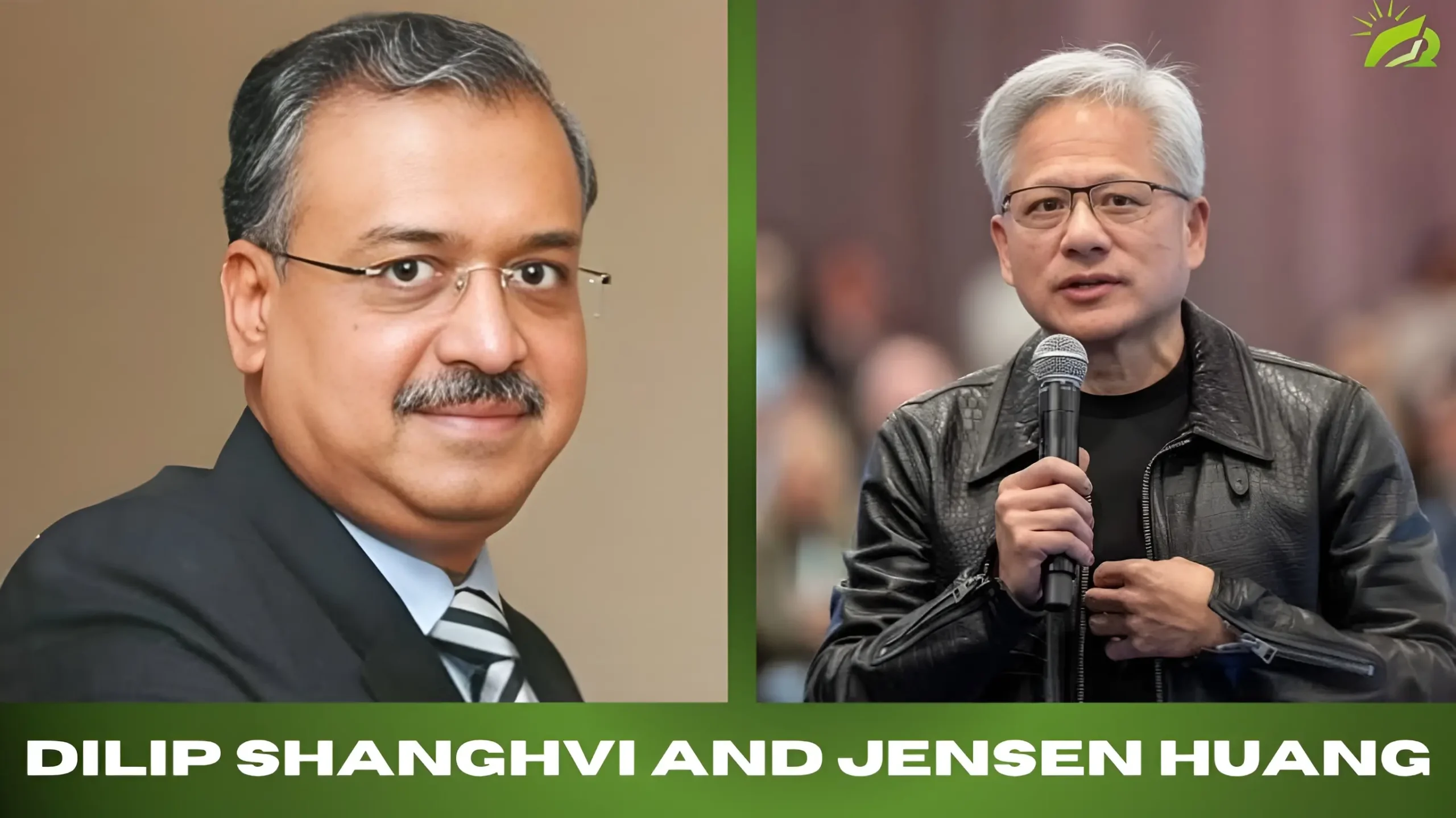
The business landscape has been shaped by countless entrepreneurs, but few have demonstrated the transformative vision of Dilip Shanghvi and Jensen Huang. These two industry titans, though operating in vastly different sectors, share a remarkable ability to identify market gaps, execute bold strategies, and build organizations that fundamentally reshape their respective fields. Their journeys from ambition to global influence offer profound insights into leadership, innovation, and sustainable business growth.
Understanding the Visionaries Behind the Empires
The Pharmaceutical Pioneer: Dilip Shanghvi
Dilip Shanghvi’s journey began with a simple observation about market inefficiencies in the pharmaceutical industry. Unlike traditional pharmaceutical companies that followed established patterns, Shanghvi recognized that the Indian pharmaceutical sector possessed untapped potential. His vision extended beyond merely producing medicines locally; he envisioned creating a global pharmaceutical powerhouse that could compete with Western pharmaceutical giants while maintaining competitive pricing and quality standards.
The founding of Sun Pharmaceuticals represented more than just another drug manufacturing company. It symbolized a shift in how emerging markets could approach healthcare innovation. Shanghvi’s early decisions to focus on generics and active pharmaceutical ingredients (APIs) demonstrated strategic foresight. This wasn’t a path of least resistance; rather, it was a calculated move to establish operational excellence and cost efficiency that would become the foundation of Sun’s competitive advantage.
The Technology Revolutionary: Jensen Huang
Jensen Huang’s trajectory in the technology sector mirrors similar entrepreneurial DNA, though expressed through computational innovation. When Huang co-founded Nvidia, the company’s initial focus on graphics processing units seemed niche compared to mainstream computing. However, Huang possessed an extraordinary vision about the future of computing architecture. He understood that graphics processing wasn’t merely about visual rendering; it represented a fundamentally different approach to parallel processing that would become essential to artificial intelligence, machine learning, and data analysis.
The Architecture of Excellence: How They Built Their Empires
Dilip Shanghvi’s Strategic Foundation
The pharmaceutical sector is notoriously complex, with regulatory hurdles, significant capital requirements, and lengthy product development cycles. Despite these barriers, Dilip Shanghvi and his organization constructed Sun Pharmaceuticals with meticulous attention to operational efficiency and regulatory compliance.
Key Strategic Pillars:
- Vertical Integration: Sun Pharmaceuticals invested heavily in manufacturing capabilities across multiple geographic locations, reducing dependency on external suppliers and ensuring supply chain stability
- Research and Development Focus: Rather than relying solely on generic formulations, the company allocated substantial resources to developing complex drug formulations that were difficult for competitors to replicate
- Strategic Acquisitions: Shanghvi demonstrated sophisticated capital allocation by acquiring complementary businesses and expanding into high-value pharmaceutical segments
- Global Expansion Strategy: The company’s international presence was carefully planned, entering markets where quality-conscious consumers valued affordable, reliable medications
The infrastructure Shanghvi created wasn’t designed for short-term profits. Instead, it represented a long-term vision of building a durable competitive advantage through operational excellence and consistent quality delivery. This philosophy would ultimately position Sun Pharmaceuticals as one of the world’s most significant generic pharmaceutical manufacturers.
Jensen Huang’s Technology Architecture
Jensen Huang’s building strategy for Nvidia reflected deep technical understanding combined with business acumen. Rather than viewing Nvidia as a graphics card manufacturer, Huang positioned the company as a computational infrastructure provider for an increasingly data-driven world.
Core Strategic Elements:
- CUDA Platform Development: Huang invested early in creating CUDA (Compute Unified Device Architecture), a proprietary platform that developers could use to harness GPU computing power. This wasn’t merely a technical achievement; it created a ecosystem lock-in that made GPU computing more valuable
- Software Ecosystem Building: Recognizing that hardware is valuable only when powerful software can leverage it, Huang prioritized ecosystem development and developer relations
- Forward-Looking R&D: Nvidia’s research focused on technologies like AI, deep learning, and autonomous systems before these became mainstream, positioning the company at the forefront of technological evolution
- Strategic Partnerships: Huang cultivated relationships with cloud computing providers, research institutions, and technology leaders, ensuring Nvidia’s GPUs became essential infrastructure
Innovation as a Core Business Philosophy
Both Dilip Shanghvi and Jensen Huang demonstrated that innovation isn’t merely about new products; it’s about reimagining entire value chains and market structures.
Pharmaceutical Innovation Under Shanghvi’s Leadership
The pharmaceutical industry traditionally concentrated innovation in drug discovery within large Western corporations. Shanghvi recognized that significant innovation opportunities existed in manufacturing processes, supply chain efficiency, and accessibility. Sun Pharmaceuticals’ approach to innovation included:
Process Innovation: Developing more efficient manufacturing processes reduced production costs without compromising quality. This allowed the company to offer medications at prices that made healthcare more accessible globally while maintaining healthy profit margins.
Formulation Expertise: The company invested in developing complex drug formulations that addressed unmet medical needs. Sustained-release medications, combination therapies, and improved bioavailability represented meaningful innovations that enhanced patient outcomes.
Regulatory Excellence: Rather than viewing compliance as a burden, Shanghvi’s organization developed world-class regulatory expertise that allowed faster market entries and provided competitive advantages in new markets.
Computational Innovation at Nvidia
Jensen Huang’s innovation philosophy centered on understanding where computation was heading and positioning Nvidia to provide essential infrastructure. His insights proved remarkably prescient:
AI Infrastructure: Well before AI became mainstream, Huang recognized that artificial intelligence would require massive computational resources. GPU computing, particularly through Nvidia’s platforms, became the backbone of AI development worldwide.
Data Center Evolution: Huang foresaw the shift from individual computing to cloud-based, data-center-centric computing architectures. Nvidia’s positioning in data center GPUs proved essential as companies globally embraced cloud computing.
Emerging Application Support: Rather than waiting for markets to develop, Nvidia’s R&D proactively developed technologies for emerging applications like autonomous vehicles, digital twins, and scientific computing.
Leadership Philosophies That Drive Excellence
Shanghvi’s Approach to Organizational Leadership
Dilip Shanghvi’s leadership style emphasizes disciplined execution and long-term value creation. Several principles define his approach:
Operational Rigor: In the pharmaceutical industry, operational excellence directly impacts patient safety and regulatory compliance. Shanghvi established organizational cultures prioritizing meticulous attention to process, quality control, and regulatory adherence.
Shareholder Value Focus: While maintaining social responsibility and employee welfare, Shanghvi’s strategic decisions consistently aimed at creating sustainable, long-term value for shareholders. This meant occasionally choosing profitable but strategically important paths over short-term profit maximization.
Global Mindset with Local Execution: Recognizing that different markets have unique regulatory requirements and customer preferences, Shanghvi built organizations capable of operating globally while adapting to local conditions.
Talent Development: The pharmaceutical sector requires highly skilled scientists, engineers, and managers. Shanghvi invested in developing talent internally, creating career paths that attracted and retained exceptional professionals.
Huang’s Visionary Leadership Model
Jensen Huang’s leadership approach combines technical credibility with strategic vision. His influence on Nvidia reflects:
Technical Credibility: Huang’s background as a technologist gives him unparalleled understanding of Nvidia’s products and technological directions. This credibility allows him to make bold strategic decisions based on deep technical insight.
Long-Term Technology Vision: Rather than being distracted by short-term market trends, Huang maintains focus on where computing is heading, ensuring Nvidia remains positioned at technological frontiers.
Empowering Innovation Teams: Huang established organizational structures where talented engineers and researchers have the freedom to explore cutting-edge ideas while aligned with company strategy.
Adaptability and Resilience: The technology sector changes rapidly. Huang’s leadership demonstrated remarkable ability to navigate pivots, from graphics cards to data center GPUs to AI infrastructure, while maintaining organizational focus and momentum.
Global Impact and Market Transformation
Shanghvi’s Influence on Pharmaceutical Markets
The impact of Dilip Shanghvi and Sun Pharmaceuticals on global healthcare cannot be overstated. The company’s strategies fundamentally altered pharmaceutical market dynamics:
Affordability Revolution: Sun Pharmaceuticals’ pricing strategies made medications accessible to populations that previously couldn’t afford them. This represented more than business success; it addressed a humanitarian imperative by increasing access to essential medicines.
Generic Medication Elevation: Prior to Sun’s emergence, generic medications were often perceived as inferior alternatives. Shanghvi’s organization elevated the perception of generics through consistent quality, rigorous testing, and reliable delivery.
Emerging Market Development: By focusing on emerging markets, Shanghvi’s company invested in regions where pharmaceutical growth potential existed but infrastructure was underdeveloped. This created sustainable competitive advantages as these markets developed.
Supply Chain Resilience: The pandemic exposed vulnerabilities in global pharmaceutical supply chains. Companies that followed Shanghvi’s approach to vertical integration and geographic diversification demonstrated superior resilience compared to competitors with concentrated supply chains.
Huang’s Transformation of Computing Architecture
Jensen Huang’s influence on computing extends far beyond Nvidia’s business success. He fundamentally altered how the technology industry approaches computing infrastructure:
GPU Democratization: Through CUDA and strategic partnerships, Huang democratized access to GPU computing power. Researchers, startups, and established companies could leverage this technology without prohibitive infrastructure investments.
AI Acceleration: The rapid advancement of artificial intelligence is directly attributable to computational capabilities that GPUs provide. Huang’s strategic positioning of Nvidia made the company essential to AI development globally.
Data Center Architecture: The shift from CPU-centric to GPU-accelerated data center architectures represents a fundamental infrastructure evolution. This transformation created new computing paradigms that power modern cloud computing, AI services, and scientific research.
Emerging Technology Enablement: Technologies like autonomous vehicles, digital twins, and quantum computing require computational capabilities that Nvidia’s platforms uniquely provide. Huang’s investment in these areas positions the company at technological frontiers.
Case Studies in Strategic Excellence
Case Study 1: Sun Pharmaceuticals’ U.S. Market Expansion
The expansion of Sun Pharmaceuticals into the United States market illustrates Shanghvi’s strategic acumen. The U.S. pharmaceutical market is highly regulated, competitive, and dominated by established players. Sun’s success in this market derived from:
Regulatory Expertise: The company developed unparalleled expertise in FDA compliance and drug approval processes. This allowed faster market entries and positioned Sun favorably compared to competitors less familiar with U.S. regulatory nuances.
Complex Formulations: Rather than competing solely on price in commodity generic markets, Sun focused on complex formulations where differentiation was possible. This strategy yielded higher margins and stronger competitive positions.
Strategic Acquisitions: The acquisition of Taro Pharmaceuticals’ U.S. operations provided immediate market access and complementary product portfolios, demonstrating Shanghvi’s willingness to deploy capital for strategic advantage.
Supply Chain Investment: Maintaining reliable supply chains in the U.S. market required significant infrastructure investment. Sun’s willingness to invest in manufacturing and distribution capabilities differentiated it from competitors taking shortcuts.
Case Study 2: Nvidia’s Evolution from Graphics to AI Infrastructure
Nvidia’s transformation from a graphics card manufacturer to an AI infrastructure leader exemplifies Huang’s strategic vision. This evolution required:
Anticipatory Technology Development: Years before large language models and generative AI became mainstream, Nvidia invested in GPU architectures optimized for machine learning. This foresight positioned the company perfectly when AI suddenly became central to technology development.
Ecosystem Development: Huang recognized that hardware value depends on software ecosystem strength. Nvidia’s investment in frameworks, libraries, and developer tools created a competitive moat around its GPU architecture.
Strategic Communication: Huang consistently articulated Nvidia’s vision to investors, developers, and customers. This communication maintained confidence in the company’s direction during periods when GPU computing’s importance wasn’t universally recognized.
Timing and Execution: Beyond recognizing AI’s importance, Huang ensured Nvidia could supply the computational resources AI development required at scale. This combination of vision and execution proved invaluable.
Key Lessons from Their Approaches
Operational Excellence as Competitive Advantage
Both Dilip Shanghvi and Jensen Huang demonstrated that operational excellence creates sustainable competitive advantages. Shanghvi’s focus on manufacturing efficiency and quality control in pharmaceuticals, combined with Huang’s architectural elegance in Nvidia’s GPU design, shows that superior operations differentiate competitors.
Long-Term Perspective Over Short-Term Gains
Neither leader pursued easy short-term profits at the expense of long-term value creation. Shanghvi’s investments in manufacturing infrastructure and Huang’s commitment to emerging technologies represented significant near-term costs. However, these investments created lasting competitive advantages that generated superior returns over decades.
Strategic Capital Allocation
Both leaders demonstrated sophisticated capital allocation abilities. Shanghvi’s acquisition strategy expanded Sun’s market presence and product portfolios efficiently. Huang’s investment in GPU technology, CUDA development, and emerging technology research optimized Nvidia’s capital deployment toward high-return opportunities.
Visionary Positioning
Perhaps most importantly, both recognized that successful businesses anticipate future market conditions rather than merely reacting to current circumstances. Shanghvi identified opportunities in generic pharmaceuticals before that sector became mainstream. Huang recognized AI’s potential before it transformed technology development. This visionary positioning created competitive advantages that lasted decades.
Frequently Asked Questions
Q1: What makes Dilip Shanghvi’s pharmaceutical approach different from traditional pharmaceutical companies?
Shanghvi recognized that pharmaceutical innovation extends beyond drug discovery to include manufacturing efficiency, regulatory excellence, and supply chain optimization. Rather than pursuing expensive original drug development, Sun Pharmaceuticals competed through operational excellence, making medications more accessible and affordable globally.
Q2: How did Jensen Huang anticipate the AI revolution?
Huang understood that artificial intelligence and machine learning required computational capabilities fundamentally different from traditional processors. By investing in GPU architecture and the CUDA ecosystem before AI became mainstream, Nvidia positioned itself perfectly when computational demands exploded.
Q3: What role did acquisitions play in their success?
Both leaders used acquisitions strategically to expand capabilities and market presence. Shanghvi’s acquisitions expanded Sun’s product portfolios and geographic reach. Huang’s acquisition strategies strengthened Nvidia’s technological capabilities and market position in emerging areas.
Q4: How do their leadership styles differ?
Shanghvi’s approach emphasizes operational discipline and regulatory excellence in a highly regulated industry. Huang’s style combines technical credibility with visionary thinking about future technology trends. Despite differences, both maintained focus on long-term value creation.
Q5: What is the importance of ecosystem development in their strategies?
Shanghvi developed ecosystems of manufacturing facilities, distribution networks, and regulatory relationships. Huang built software ecosystems around GPU computing through CUDA and developer relations. Strong ecosystems create competitive moats that are difficult for competitors to replicate.
Q6: How did they handle competition from larger, established companies?
Rather than competing directly with larger competitors, both identified market gaps and underserved customer segments. Shanghvi focused on emerging markets and generic pharmaceuticals. Huang recognized opportunities in computational infrastructure before mainstream adoption.
Q7: What role did research and development play in their organizations?
R&D wasn’t viewed as a cost center but as a strategic investment. Shanghvi invested in developing complex formulations and manufacturing processes. Huang invested in emerging technologies like AI, autonomous computing, and scientific computing before they became mainstream.
Q8: How have they influenced their respective industries beyond their companies?
Shanghvi elevated the perception of generic pharmaceuticals globally and demonstrated that emerging markets could develop world-class pharmaceutical companies. Huang’s leadership transformed computing architecture and demonstrated that specialized processors could outperform general-purpose CPUs for specific applications.
Q9: What can aspiring entrepreneurs learn from their approaches?
Both demonstrate that sustainable success derives from operational excellence, long-term perspective, strategic capital allocation, and visionary positioning. They show that competing in established industries is possible through superior execution and anticipating future conditions.
Q10: How do their organizations maintain competitive advantages despite competitive pressure?
Through continuous innovation, ecosystem development, and strategic positioning in emerging opportunities. Shanghvi’s Sun maintains advantages through manufacturing expertise and geographic diversification. Huang’s Nvidia maintains advantages through architectural leadership and ecosystem strength.
Q11: Which companies are owned by Dilip Shanghvi?
Dilip Shanghvi serves as the managing director of Sun Pharmaceutical Industries, one of India’s most valuable drug companies. He is also chairman and managing director of Sun Pharma Advanced Research Company.
Q12: Why does Jensen Huang only own 3% of Nvidia?
The biggest reason Jensen’s ownership percentage fell was NVIDIA issuing stock to employees and using equity to grow the company over the past three decades. Other contributors include stock-based acquisitions and some founder share sales over the years.
Q13: What is Dilip Shanghvi’s religion?
Dilip Shanghvi was born into a Jain Family from Gujarat and follows the Jain faith. His family later moved to Kolkata. Due to a misinterpretation, he is sometimes described as a Vaishnav because of his visits to the Shrinathji temple but by birth he is Jain and also visits Hindu temples along with the Jain temples.
Conclusion: The Enduring Impact of Visionary Leadership
Dilip Shanghvi and Jensen Huang represent different sectors yet share fundamental principles that define successful entrepreneurship. Both identified market inefficiencies, developed strategies to address them, and built organizations capable of executing at scale. Their approaches combined operational excellence with strategic vision, short-term discipline with long-term perspective.
The pharmaceutical industry and computing sector will continue evolving, presenting new challenges and opportunities. However, the frameworks these leaders developed—focusing on operational excellence, maintaining strategic vision, making intelligent capital allocation decisions, and building strong organizational ecosystems—remain timeless.
For businesses, investors, and aspiring leaders, studying Dilip Shanghvi and Jensen Huang’s approaches provides valuable insights into sustainable value creation. Their success wasn’t achieved through shortcuts or luck; it resulted from meticulous execution, strategic thinking, and unwavering focus on long-term value creation.
As markets become increasingly complex and competitive, the lessons from their leadership prove more valuable than ever. Organizations that combine operational excellence with strategic vision, invest in emerging opportunities before they become mainstream, and build strong competitive moats through superior execution will likely achieve the enduring success that characterizes Shanghvi and Huang’s respective enterprises.
The impact of Dilip Shanghvi and Jensen Huang extends beyond their companies’ financial performance. They’ve demonstrated that visionary leadership, combined with disciplined execution, can transform industries, create enormous value, and address important human needs—whether through making essential medicines more accessible or accelerating technological progress that improves lives globally.
For More Visits: Bright Magazine
