

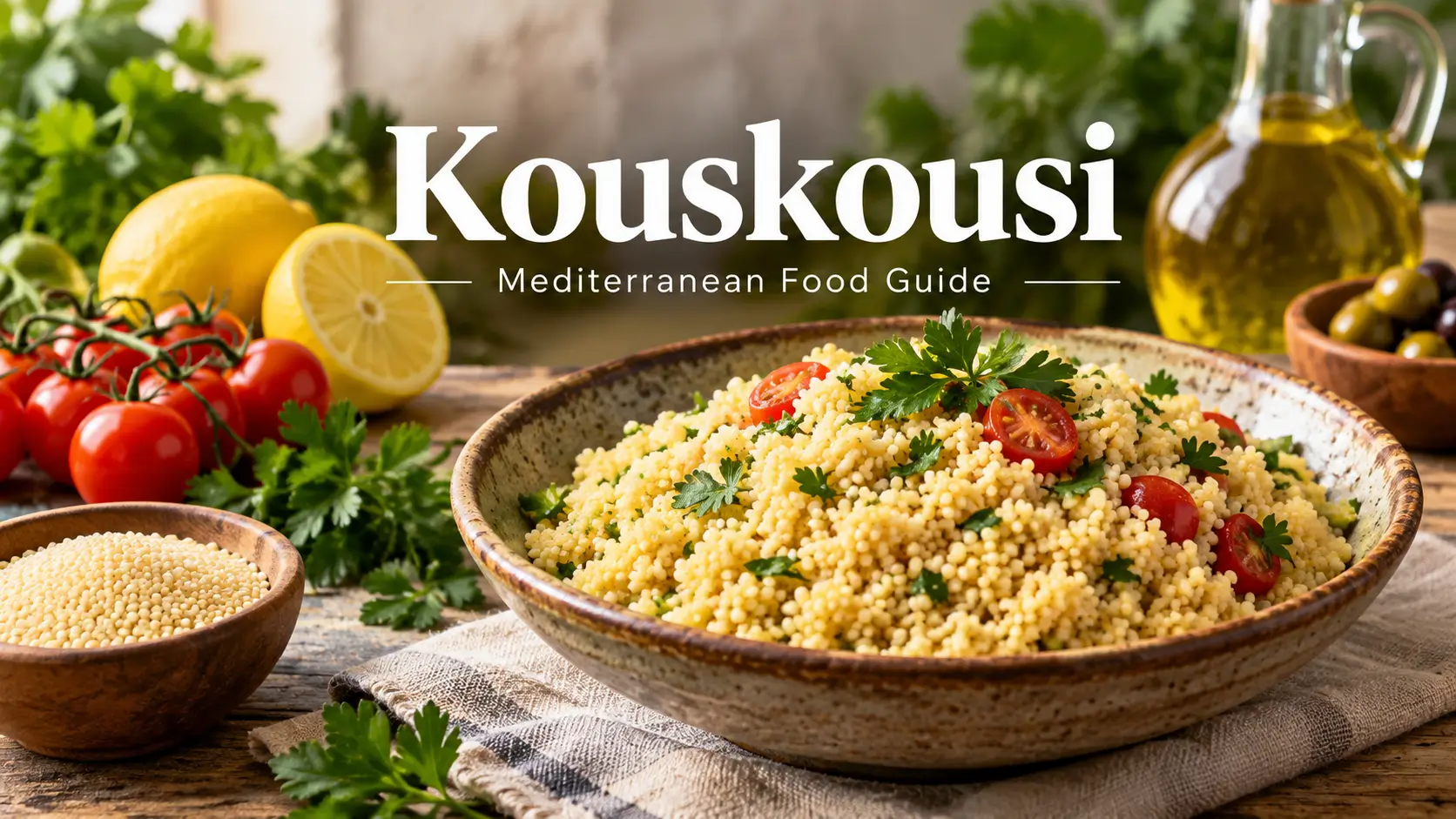
Food is one of the most interesting ways to explore different cultures, traditions, and ways of life. Many traditional dishes have unusual names that catch people’s attention, especially when those names appear online. Kouskousi is one such term. People searching for Kouskousi may want to understand what it means, where it comes from, what ingredients are used to prepare it, how it tastes, and how it can be included in everyday meals.
The name Kouskousi resembles the familiar word couscous, a traditional food associated with North African culinary heritage. However, the exact meaning of Kouskousi is not consistently established across culinary references. Some online discussions associate the spelling with couscous, while similar Greek terms, such as kouskousaki, refer to small pasta products. These distinctions matter because foods that look alike or have similar names do not always share the same ingredients, history, or cooking methods.
Understanding Kouskousi therefore requires more than a simple definition. It involves examining the foods associated with the name, the traditions surrounding them, the ingredients commonly used, and the different ways small wheat-based foods can be prepared and served.
Couscous provides a useful starting point because its preparation and cultural importance are well documented. In 2020, UNESCO recognized the knowledge and practices associated with couscous production and consumption as intangible cultural heritage, following a joint nomination by Algeria, Mauritania, Morocco, and Tunisia. The recognition highlights the food’s connection with traditional knowledge, community life, and shared meals.
This guide explores Kouskousi carefully, distinguishing established culinary traditions from uncertain claims about the name itself. It also covers preparation techniques, serving suggestions, nutritional considerations, common cooking mistakes, and practical examples to help readers understand the subject.
What Is Kouskousi?
Kouskousi is an uncommon food-related term that resembles the names used for couscous and certain small pasta products. Its meaning depends on the context in which it appears. Without a recipe, product label, regional reference, or other supporting information, it is not possible to assign one universally accepted definition to the spelling.
For many readers, the first association is couscous. Traditional couscous consists of small particles prepared from semolina, generally obtained from durum wheat. The particles are produced by moistening and rolling the semolina, then cooking them, traditionally through steaming. The resulting food is light, tender, and suitable for accompanying vegetables, meat, legumes, and flavorful sauces.
Another possible point of comparison is Greek kouskousaki. This is a form of small pasta associated with Greek traditional cuisine. Greek pasta varieties can use ingredients such as wheat, milk, and eggs, depending on the product. They are often cooked as pasta rather than prepared using the same method as traditional couscous.
These similarities explain why the word Kouskousi can be confusing. A reader might encounter it in a food article, a recipe, a conversation about Mediterranean cuisine, or a product description without knowing precisely which food is intended.
The most useful approach is to identify the product before making assumptions.
If Kouskousi appears on a package, examine the ingredient list and preparation instructions. If it appears in a recipe, check the cuisine, accompanying ingredients, and cooking method. If it appears in a cultural discussion, look for the country or region being described.
This simple distinction helps prevent confusion and makes it easier to appreciate the food’s genuine culinary background.
The Meaning Behind the Name Kouskousi
The meaning of an unfamiliar food name often depends on language, regional pronunciation, translation, and spelling conventions. Traditional dishes can have several names across neighboring communities, while familiar names may be written differently when transferred between writing systems.
Kouskousi illustrates why context is important. Its resemblance to couscous makes the connection easy to notice, but resemblance alone does not prove that the words are interchangeable in every situation.
A writer may use Kouskousi as an informal variation of a familiar food name. Another person may encounter a similar term referring to small pasta. A third person may use the spelling because that is how the word appears in a search query or product description.
These situations should not automatically be treated as evidence of separate dishes.
It is also important not to invent a translation simply because a word sounds familiar. Claims that Kouskousi has one precise meaning in an ancient language, belongs to a specific inventor, or originated in a particular village require reliable linguistic or historical evidence.
When information is incomplete, explaining the uncertainty is more useful than providing a confident but unsupported definition.
For readers interested in food terminology, the following questions can help establish meaning:
- Is the term being used in a recipe or as the name of a packaged product?
- Does the surrounding text mention North African, Greek, Mediterranean, or another culinary tradition?
- Are the ingredients described as semolina and water, or does the product contain other pasta ingredients?
- Does the recipe recommend steaming, soaking, boiling, or another cooking method?
- Is the spelling consistent across the source, or might it be an alternative transliteration?
Answering these questions offers a clearer understanding of Kouskousi and helps readers distinguish a spelling variation from a genuinely different food.
The Culinary Background: Couscous and Related Foods
To understand the foods associated with Kouskousi, it helps to explore the culinary traditions from which its closest food-related meanings may come.
North African couscous
Couscous has a long-standing place in the food traditions of North Africa, particularly across the Maghreb. Its preparation involves more than producing small semolina particles. Traditional knowledge includes selecting and processing grain, forming the particles, steaming them, choosing accompanying ingredients, and serving the finished meal.
The food can accompany vegetable-based preparations, chickpeas, meat, and a variety of sauces. The combination changes according to regional practices, household preferences, available ingredients, and the occasion.
Couscous is also associated with hospitality and communal eating. In many settings, preparing and sharing the dish provides an opportunity for family members to gather and preserve cooking knowledge across generations.
The UNESCO recognition of couscous-related practices reflects this broader cultural significance. It encompasses preparation methods, tools, knowledge transmission, and social traditions rather than treating couscous as merely a finished product on a plate.
For a reader investigating Kouskousi, this tradition explains why a small wheat-based food can have a cultural importance much greater than its appearance might suggest.
Greek small pasta
Greek cuisine contains a wide range of traditional pasta varieties, including kouskousaki. These products are connected with household cooking, regional food traditions, and the practice of making pasta from available ingredients.
Traditional Greek pasta may be formed by cutting, rubbing, shaping, or otherwise working dough into small pieces. Depending on the variety, the dough can contain wheat flour or semolina, and some varieties also use eggs or milk.
After preparation, certain products are dried for later use. This makes them convenient pantry ingredients for soups, pasta dishes, and everyday family meals.
Greek kouskousaki is therefore an important comparison when interpreting Kouskousi. It demonstrates that similar names can refer to foods that share broad characteristics but have different culinary identities.
Why the distinction matters
The difference between couscous and small pasta is not simply a question of appearance.
Traditional couscous is made by forming small semolina particles, while pasta is made from dough shaped into a particular form. The ingredients, texture, processing methods, and cooking instructions can vary accordingly.
A product that looks like tiny grains might need steaming or hydration, while another product of a similar size may need to be boiled in water.
This is why the safest culinary advice is straightforward: identify the actual food before selecting a preparation method.
Ingredients Commonly Associated With Kouskousi
Because Kouskousi does not have one universally standardized definition, its ingredients cannot be listed as if every version follows an established recipe.
However, the related foods most likely to be relevant use familiar ingredients found in many kitchens.
Semolina and wheat
Semolina is a coarse flour commonly produced from durum wheat. It is an important ingredient in traditional couscous and many pasta products.
Its texture helps determine how the finished product behaves during cooking. In couscous, the small particles become tender when properly steamed or hydrated. In pasta, the dough develops a structure that can hold its shape during boiling.
Wheat-based products provide carbohydrates, which supply energy. Depending on the product and portion size, they may also contribute protein and other nutrients.
Anyone avoiding gluten should be especially careful. Standard wheat-based couscous and wheat-based pasta contain gluten and are not appropriate for people who must strictly avoid it.
Water
Water plays a central role in preparing semolina and pasta. It helps bring dry ingredients together and determines how the food absorbs moisture during cooking.
For couscous, the amount of water or stock used during preparation influences the final texture. Too little moisture can leave the particles hard, while excessive liquid can make them soggy.
For pasta, boiling water allows the pieces to soften throughout. The required amount of time depends on their size, ingredients, and manufacturing process.
Salt
Salt is often used to improve flavor. In some recipes, it is added to the cooking water, while other preparations rely on seasoning in the broth, sauce, or accompanying ingredients.
The quantity should reflect the overall meal. A heavily seasoned sauce may require less additional salt, especially when cheese, stock, preserved vegetables, or other salty ingredients are also included.
Olive oil and other fats
Olive oil, butter, or other cooking fats may be used depending on the recipe.
A small amount of fat can help separate prepared couscous particles or enrich the flavor of a finished pasta dish. The choice depends on personal preference and the culinary tradition being followed.
These ingredients are additions, not defining requirements for every food described as Kouskousi.
Vegetables and herbs
Vegetables can turn a small wheat-based ingredient into a more substantial meal.
Tomatoes, carrots, onions, courgettes, peppers, spinach, and seasonal vegetables can work well in accompanying dishes. Fresh herbs such as parsley, mint, and coriander add aroma and contrast.
The best selection depends on the cooking style. A North African-inspired couscous meal might use warmly spiced vegetables and chickpeas, while a simple pasta preparation may use tomato sauce, herbs, and cheese.
Protein-rich ingredients
Chickpeas, lentils, beans, fish, chicken, eggs, and other protein-rich foods can accompany wheat-based dishes.
Plant-based additions provide variety and can contribute fiber, while animal-based options may provide different nutrients depending on the ingredient.
The point is not that Kouskousi requires a particular protein source. Rather, its versatility makes related wheat-based foods easy to incorporate into different meals.
What Does Kouskousi Taste Like?
There is no single taste profile that can be assigned confidently to every product called Kouskousi. Its flavor depends on which food the name describes, the ingredients used, and the way it is cooked.
Plain semolina couscous generally has a mild, wheat-like flavor. Its greatest strength is its ability to absorb the flavors of the liquid, spices, vegetables, and sauces served with it.
When prepared correctly, the particles feel tender while remaining distinct rather than forming a sticky mass. This texture allows them to work as a base for dishes with strong or delicate flavors.
Small pasta varieties can have a similarly mild taste, although their texture may be firmer or chewier. The ingredients in the dough can also influence the final flavor.
The accompanying ingredients often make the biggest difference.
A preparation featuring roasted vegetables, olive oil, herbs, and lemon may taste fresh and light. A tomato-based sauce can provide acidity and richness. A warmly spiced vegetable stew may produce a more complex and comforting meal.
For people unfamiliar with these foods, a simple preparation is often the best place to begin. Mild seasoning makes it easier to recognize the base ingredient and understand how its texture changes with different cooking methods.
How to Prepare Kouskousi at Home
The correct preparation method depends on the ingredient you have purchased. This section provides two practical approaches for the related foods commonly associated with the term.
They should not be treated as interchangeable recipes.
Method 1: Preparing couscous-style semolina
Use this method when the package identifies the product as couscous and provides soaking or hydration instructions.
Ingredients
- 1 cup of couscous
- Approximately 1 cup of hot water or vegetable stock, adjusted according to the package
- A small amount of olive oil or butter
- Salt, if needed
- Chopped herbs or vegetables for serving
Instructions
- Place the couscous in a heat-resistant bowl.
- Heat the water or stock until hot.
- Add the liquid gradually, following the package’s recommended ratio rather than assuming every product absorbs the same amount.
- Cover the bowl and leave the couscous to absorb the moisture for the recommended period.
- Fluff the particles with a fork to separate them.
- Add a little olive oil or butter if desired.
- Taste and adjust the seasoning before serving.
Some traditional or less-processed couscous varieties require more involved cooking, including steaming. For those products, follow the manufacturer’s directions or a recipe designed for that specific variety.
The objective is to achieve tender, distinct particles without excessive moisture.
Method 2: Preparing small pasta-style kouskousaki
Use this method when the package identifies the product as pasta and recommends boiling.
Ingredients
- 1 cup of small pasta
- Water for boiling
- Salt, as needed
- Tomato sauce, herbs, cheese, or vegetables for serving
Instructions
- Bring a pot of water to a boil.
- Add salt if appropriate for the dish.
- Add the pasta and stir gently to prevent sticking.
- Cook according to the package instructions.
- Check a piece near the end of cooking to assess its tenderness.
- Drain the pasta when it reaches the desired texture, unless the recipe calls for retaining the cooking liquid.
- Mix it with the chosen sauce or other ingredients and serve.
Small pasta varieties can cook relatively quickly, but cooking times depend on their composition and shape. The manufacturer’s recommended time is a more reliable starting point than a universal cooking estimate.
How to improve the final texture
Regardless of which related food you are preparing, a few habits can improve the result.
First, measure liquids carefully when preparing couscous. Adding too much at the beginning can make the particles heavy and sticky.
Second, avoid assuming that pasta and couscous require identical cooking methods. The ingredient’s identity matters more than its appearance.
Third, season the whole dish rather than relying exclusively on salt in the cooking water. Herbs, spices, citrus, vegetables, and flavorful cooking liquids can provide depth without making the meal excessively salty.
Finally, taste the food before serving. Texture and seasoning are easier to correct during preparation than after the dish has been plated.
Popular Ways to Serve Kouskousi
The versatility of couscous and small pasta makes them useful in many types of meals. The best serving idea depends on the product and the culinary tradition being followed.
With vegetables
Vegetables provide color, texture, and flavor.
Roasted carrots, courgettes, onions, peppers, and tomatoes can accompany prepared couscous. A tomato-based vegetable sauce can also work with small pasta.
The vegetables may be seasoned with herbs, garlic, black pepper, paprika, or other spices according to the intended flavor profile.
For a balanced plate, consider including several types of vegetables rather than relying on a single ingredient. Combining different textures can make the dish more appealing and satisfying.
With chickpeas
Chickpeas are a practical companion to couscous because they add substance and provide plant-based protein and fiber.
They can be cooked in a lightly spiced sauce with tomatoes, onions, carrots, and herbs. The resulting preparation can be spooned over couscous, allowing the particles to absorb some of the liquid.
Chickpeas may also be added to a vegetable salad made with cooled couscous, fresh herbs, and a lemon-based dressing.
With chicken or other meat
In meals that include meat, couscous can serve as a base for a stew or sauce.
Chicken can be cooked with onions, garlic, vegetables, and spices before being served alongside the prepared semolina. Other meats can be used according to regional customs and household preferences.
The cooking liquid is especially important because it carries flavor through the meal. A carefully seasoned sauce can make a relatively simple base ingredient feel rich and complete.
Small pasta can also accompany meat-based sauces, although the preparation should follow the pasta’s cooking requirements.
As a cold salad
Couscous can be useful in chilled salads when prepared and cooled appropriately.
A simple version may contain couscous, chopped cucumber, tomatoes, parsley, lemon juice, and olive oil. Chickpeas can be added for greater substance.
The ingredients should be mixed after the couscous has cooled enough to preserve the fresh vegetables’ texture.
Food safety is important here. Cooked grain and pasta dishes should not be left at room temperature for prolonged periods. Refrigerate leftovers promptly and keep them cold until serving.
In soups
Small pasta products can be incorporated into soups, providing additional texture and making the meal more filling.
A vegetable soup with small pasta, carrots, celery, tomatoes, and herbs is one practical option. The pasta can be cooked in the soup itself when the recipe is designed for that approach.
However, adding pasta directly to a large pot may cause it to absorb more liquid during storage. If the soup will be served over several meals, cooking the pasta separately can help preserve its texture.
Couscous can also be incorporated into certain soups or served alongside them, depending on the recipe.
Is Kouskousi Healthy?
The health value of a meal associated with Kouskousi depends on the actual ingredient, portion size, preparation method, and accompanying foods. Since the term does not identify one universally standardized product, it would be misleading to promise that every version has the same nutritional properties.
Wheat-based couscous and pasta can provide carbohydrates, which are an important energy source. They may also contribute protein, although the exact amounts depend on the product.
The overall nutritional balance of the meal depends heavily on what is served alongside the base ingredient.
Energy and carbohydrates
Carbohydrates help supply the energy needed for everyday activities. Couscous and pasta can fit into a varied eating pattern when portion sizes reflect an individual’s needs.
People with specific dietary requirements may need to consider the quantity and type of carbohydrates they consume. Individual circumstances differ, so general food guidance should not replace advice tailored to a medical condition.
Fiber
The amount of fiber depends on the grain used and whether the product is made from refined or whole-grain ingredients.
Whole-wheat products generally provide more fiber than comparable products made from refined wheat. Vegetables, beans, and chickpeas can also increase the fiber content of a meal.
Adding these ingredients is an effective way to make a dish more varied without depending solely on the base ingredient for nutrition.
Protein
Wheat-based products contribute some protein, but the amount varies.
A meal containing chickpeas, lentils, beans, eggs, fish, or meat can provide additional protein. The most appropriate choice depends on the person’s dietary pattern, preferences, and nutritional requirements.
Vegetarian meals can be substantial without using meat. A combination of couscous, legumes, vegetables, herbs, and an appropriate dressing can create a satisfying meal.
Fat and sodium
The nutritional profile also depends on added oil, butter, cheese, sauces, and salt.
Olive oil can contribute unsaturated fat, while butter and some rich sauces can increase the meal’s saturated fat content. Prepared stocks, seasoning mixes, cheese, and certain packaged sauces may contain substantial sodium.
These ingredients do not automatically make a meal unsuitable, but their amounts influence its overall composition.
Gluten and food allergies
A common mistake is assuming that a small grain-like appearance means the food is gluten-free.
Traditional wheat couscous and many small pasta products contain gluten. People with celiac disease or a wheat allergy must check the ingredients carefully and avoid products that are unsuitable for their condition.
Products made from other grains or gluten-free ingredients may be available, but they must be identified by their ingredient labels rather than by appearance alone.
People with severe allergies should also check cross-contact warnings and follow appropriate medical guidance.
A practical approach to balanced meals
A useful serving strategy is to combine the wheat-based component with vegetables and a suitable protein source.
For example, a plate could contain couscous with chickpeas, roasted vegetables, and a lemon-herb dressing. Another meal might include small pasta with tomato sauce, spinach, and a protein-rich accompaniment.
Neither option requires unusual ingredients. The balance comes from combining different food groups rather than treating one ingredient as a complete source of every nutrient.
Kouskousi and Traditional Food Culture
Food traditions are shaped by geography, available ingredients, family habits, celebrations, and the transfer of knowledge between generations.
The traditions associated with couscous offer a particularly useful example. Preparation can involve growing grain, processing semolina, shaping small particles, steaming them, preparing accompanying foods, and selecting the utensils used for cooking.
This knowledge is often passed from experienced cooks to younger family members through observation and practice. Recipes may be adapted over time, but many families continue to associate particular dishes with hospitality, shared meals, and special occasions.
UNESCO’s recognition of couscous-related practices explicitly includes their social and cultural dimensions, connecting the food with solidarity, conviviality, and togetherness.
Greek pasta traditions show a different but related example of how food preparation can reflect domestic life. Traditional pasta-making practices made use of available ingredients, seasonal household work, and methods of drying products for later use. Some regional varieties continue to be maintained by family businesses and local producers.
These histories should not be collapsed into a single story simply because the associated names sound similar.
When discussing Kouskousi, it is more accurate to acknowledge the established traditions of the foods being compared than to claim that they share one origin or that the exact spelling has an independently verified history.
For cooks, this distinction creates an opportunity to appreciate different culinary methods. For readers, it encourages a more thoughtful understanding of food names and the cultures connected with them.
Kouskousi in Modern Cooking
Modern kitchens often combine traditional ingredients with contemporary schedules and eating preferences.
Couscous and small pasta products can both be convenient pantry ingredients, but they serve different purposes depending on their composition and cooking instructions.
Quick weekday meals
A product designed for rapid preparation can be useful when there is limited time to cook.
For example, couscous may be prepared according to the package instructions while vegetables cook in a separate pan. Once both components are ready, they can be combined with chickpeas, herbs, and seasoning.
This approach minimizes unnecessary cooking steps while allowing the meal to include several ingredients.
Small pasta may also work well in a quick meal, particularly when paired with a prepared sauce or vegetables that cook in a similar amount of time.
Meal planning
Couscous and pasta can be incorporated into meal preparation because dry products are often convenient to store.
Prepared portions can be used as the base for different meals throughout the week. One serving might accompany vegetables and chickpeas, while another can be combined with a fresh salad or a different sauce.
Cooked food should be refrigerated promptly, stored in clean, covered containers, and reheated or served according to appropriate food-safety practices.
Preparing ingredients separately can help prevent them from becoming overly soft during storage.
Plant-focused cooking
People who want to increase the variety of plant-based meals can use couscous or appropriate pasta varieties as a base for vegetables, legumes, and herbs.
Roasted vegetables provide flavor through browning, while chickpeas and lentils add substance. Lemon juice and fresh herbs can help brighten the overall dish.
Plant-focused cooking does not require eliminating every other food group. It simply offers another way to build meals around vegetables, legumes, and other suitable ingredients.
Adapting flavors without losing the identity of a dish
Experimentation can make familiar ingredients more versatile, but it is useful to recognize what is traditional and what is a personal adaptation.
Adding new vegetables, using a different dressing, or substituting a suitable protein can create a delicious variation. However, one modern recipe should not automatically be described as the authentic historical preparation of a regional dish.
This distinction allows home cooks to be creative while respecting the origins of established culinary practices.
How to Choose and Store Kouskousi
Selecting the correct product is one of the most important steps in preparing a food described as Kouskousi.
Because the term can create uncertainty, shoppers should look beyond the product name.
Read the package carefully
Check the ingredient list to determine whether the product is made from semolina, wheat flour, or another ingredient.
Look for specific directions explaining whether the food should be soaked, steamed, or boiled. The recommended preparation method is an important clue to the product’s identity.
If the label describes the product as Greek pasta, do not assume that instructions for instant North African couscous will produce the correct texture.
Consider the intended recipe
Fine and medium couscous products may behave differently from larger or less-processed varieties. Similarly, small pasta products vary in their shape, density, and cooking requirements.
Choose a product that suits the intended dish rather than purchasing one based on appearance alone.
Check dietary information
Review allergen statements, gluten information where relevant, and any storage requirements.
If the product is sold in an unfamiliar package or under an unfamiliar name, the ingredient list is especially important.
Store dry products appropriately
Keep dry couscous and pasta in a cool, dry place away from moisture and pests. Once a package has been opened, a clean, airtight container can help maintain product quality.
Follow the manufacturer’s guidance about storage and shelf life.
Refrigerate prepared food
Cooked couscous and pasta contain moisture and should not be stored like dry pantry ingredients.
Refrigerate leftovers promptly in covered containers and discard food that shows signs of spoilage or has been stored unsafely. When in doubt about whether a prepared dish is safe to eat, do not rely on smell or appearance alone.
Common Mistakes When Preparing Kouskousi
Even a straightforward food can produce disappointing results when its ingredients or cooking requirements are misunderstood.
Assuming every product cooks the same way
This is the most important mistake to avoid.
Traditional couscous, instant couscous, and Greek small pasta are not necessarily interchangeable. Their preparation methods depend on processing and product composition.
The solution is to identify the ingredient and follow instructions appropriate to it.
Using too much liquid
Excess liquid can make couscous soggy, while inadequate liquid can leave it underhydrated.
Start with the package’s recommended ratio and adjust only when the specific product or recipe calls for a change.
Overcooking pasta
Small pasta can become overly soft when left in boiling water for too long. Check its texture near the end of the recommended cooking time.
If the pasta will continue cooking in a hot sauce or soup, account for that additional cooking when choosing when to remove it from the heat.
Neglecting seasoning
A plain wheat-based ingredient may taste mild on its own. The accompanying vegetables, herbs, sauce, and seasoning help give the finished meal its character.
Season gradually and taste before serving.
Adding every ingredient at once
Different ingredients require different cooking times. Vegetables, pasta, and proteins may become overcooked if everything is added to one pot without considering their individual requirements.
Cooking components separately and combining them at the end can provide greater control over texture.
Confusing a modern variation with an established tradition
A new recipe can be enjoyable without representing a historical regional dish.
When writing about Kouskousi or preparing it for a cultural event, distinguish personal interpretations from documented traditional practices.
Case Studies: Practical Examples of Understanding Kouskousi
The following case studies are illustrative scenarios, not reports of independently verified individuals, commercial outcomes, or historical events. They show how readers might apply the information in this guide.
Case Study 1: A home cook encounters Kouskousi for the first time
Imagine a home cook who discovers a recipe using the word Kouskousi. The recipe describes a small, grain-like ingredient but provides limited information about its origin.
The cook initially assumes it is instant couscous and prepares it by covering it with hot water. However, the texture does not match the expected result.
Rather than adding more water immediately, the cook checks the original package and discovers that the product is a small pasta variety with boiling instructions.
The cook prepares a fresh portion using the recommended method and serves it with a simple tomato sauce and vegetables.
The key lesson is that identifying the ingredient is more important than guessing from its name or appearance. This approach also prevents unnecessary waste and makes it easier to reproduce a successful recipe.
Case Study 2: A family wants to create a balanced weekday meal
Consider a family looking for an affordable meal that uses common pantry ingredients.
They choose a couscous product and prepare it according to its package directions. Meanwhile, they cook onions, carrots, tomatoes, and chickpeas with herbs and mild spices.
The finished vegetable mixture is served over the couscous, with fresh herbs added at the end.
The meal provides variety in texture and flavor without requiring an elaborate cooking process. It can also be adapted according to the vegetables available or the family’s preferences.
The important lesson is that the nutritional and practical value of a meal depends on the overall combination of ingredients, not simply on the name of its base component.
Case Study 3: A food writer researches the term Kouskousi
Imagine a food blogger preparing an explanatory article after noticing searches for Kouskousi.
The blogger finds several online pages that confidently describe it as a unique ancient dish, but the pages disagree about its country of origin and cooking method.
Instead of repeating those claims, the blogger investigates the related culinary terms. The research identifies the established traditions of North African couscous and Greek kouskousaki, while failing to establish one definitive meaning for the exact spelling Kouskousi.
The finished article explains the uncertainty, distinguishes the two better-documented foods, and tells readers how to identify the correct product.
This approach makes the article more useful because it addresses the reader’s actual confusion rather than adding unsupported historical details.
Case Study 4: A shopper checks a product before buying it
Suppose a shopper finds a package marketed under an unfamiliar name at an international food shop.
The shopper is interested in preparing a Mediterranean-inspired dinner but is unsure whether the package contains couscous or pasta.
By checking the ingredient list and preparation directions, the shopper can identify the product’s likely culinary use and decide whether it is suitable for the intended recipe.
This small step can prevent an incorrect purchase and reduce confusion during cooking.
The broader lesson is that packaging, ingredients, and cooking instructions often provide more useful information than an unfamiliar product name alone.
Is Kouskousi Worth Exploring?
Kouskousi is worth exploring because it provides an opportunity to understand how food terminology, regional culinary traditions, and modern online searches can overlap.
The most interesting aspect of the subject is not an unverified claim that a completely separate dish has one precise and ancient history. It is the opportunity to examine the real foods associated with similar names and learn what makes them distinct.
Couscous demonstrates the cultural importance of a wheat-based staple whose preparation and social practices have been passed down through generations. Small Greek pasta varieties demonstrate another tradition in which familiar ingredients are shaped into regional foods for soups, sauces, and family meals.
Both show how ingredients that may seem simple can acquire significance through technique, shared experience, and culinary knowledge.
For home cooks, the practical benefit is flexibility. These foods can accompany vegetables, legumes, sauces, herbs, and suitable protein sources. They can be prepared for everyday meals or incorporated into more elaborate menus.
For readers and researchers, the lesson is equally valuable: food names should be understood in context. A similar spelling does not always establish an identical origin, recipe, or cultural identity.
Approaching Kouskousi in this way leads to a more accurate understanding while leaving room for further investigation when additional information becomes available.
Frequently Asked Questions About Kouskousi
1. What is Kouskousi?
Kouskousi is an uncommon food-related term that resembles the name couscous and similar pasta terms. Its exact meaning is not consistently established. Depending on context, it may refer to couscous or be confused with a small pasta product such as Greek kouskousaki.
2. Is Kouskousi the same as couscous?
Not necessarily. Some writers use Kouskousi in connection with couscous, but the spelling does not independently establish which product is intended. Traditional couscous consists of small semolina particles, while related pasta products are made and cooked differently.
3. Where does Kouskousi originate?
The exact origin of the spelling Kouskousi has not been conclusively established. Its closest food-related comparisons include North African couscous traditions and Greek small pasta. Each has its own culinary context, so the term should not automatically be assigned to one country.
4. What ingredients are used to make Kouskousi?
The ingredients depend on which food the term describes. Traditional couscous generally uses durum wheat semolina and water. Related pasta products can contain wheat flour or semolina, and some also use eggs or milk. Check the product label for an accurate ingredient list.
5. What does Kouskousi taste like?
There is no single verified flavor profile for every product described as Kouskousi. Couscous generally has a mild wheat-like flavor, while small pasta can have a slightly firmer texture. Sauces, vegetables, herbs, and spices strongly influence the finished meal.
6. How do you cook Kouskousi?
First, identify the product. Couscous-style semolina may require steaming or hydration with hot liquid, depending on the variety. Small pasta generally needs to be boiled according to its package instructions. Using the correct method helps achieve the desired texture.
7. Is Kouskousi healthy?
Its nutritional value depends on the actual product, portion size, and accompanying ingredients. Wheat-based couscous and pasta provide carbohydrates and may contribute protein. Pairing them with vegetables, legumes, and suitable protein sources can help create a varied meal.
8. Is Kouskousi gluten-free?
Do not assume that it is gluten-free. Traditional wheat couscous and most wheat-based pasta contain gluten. Anyone with celiac disease, a wheat allergy, or another relevant dietary requirement should check the ingredients and allergen information carefully.
9. Can Kouskousi be served with vegetables?
Yes, when the term refers to a suitable couscous or pasta product. Couscous can be served with roasted vegetables, chickpeas, herbs, or vegetable stew. Small pasta can accompany vegetable soups, tomato sauces, and other preparations appropriate to its cooking method.
10. Can Kouskousi be used in salads?
Couscous can be used as the base for a cold salad with vegetables, herbs, lemon juice, and olive oil. Suitable small pasta can also be used in pasta salads. Prepare the ingredient correctly and refrigerate the finished dish promptly.
11. What is the difference between Kouskousi and Greek kouskousaki?
The spelling Kouskousi is not standardized enough to establish one universal definition. Greek kouskousaki, by contrast, is identified as a type of Greek pasta. The ingredient list and preparation instructions help determine which food is being discussed.
12. Is Kouskousi a traditional Mediterranean dish?
The term itself cannot be confidently identified as one universally established traditional dish. However, the related foods often associated with it belong to genuine culinary traditions, including North African couscous and Greek pasta-making.
13. Can Kouskousi be served as a main meal?
A couscous or pasta dish can serve as a main meal when combined with suitable ingredients. Vegetables, chickpeas, lentils, eggs, meat, fish, or other protein-rich foods can add variety and substance. The best combination depends on the product and the intended recipe.
14. How should Kouskousi be stored?
Dry couscous and pasta should generally be kept in a cool, dry place in well-sealed packaging or containers. Cooked products need refrigeration and should be stored safely in covered containers. Follow the package guidance and standard food-safety practices.
15. Why are people searching for Kouskousi online?
People may encounter unfamiliar food names in recipes, articles, product descriptions, or social media posts and search for clarification. Because Kouskousi resembles several established food terms, readers may want to understand its meaning, ingredients, origin, cooking method, and relationship to couscous.
16. How can I find out what a particular Kouskousi product is?
Start with the product’s ingredient list, cooking directions, manufacturer information, and country or regional description. If the spelling remains unclear, compare those details with reliable descriptions of couscous or the relevant pasta variety.
Final Thoughts on Kouskousi
Kouskousi is an intriguing term because it brings together questions about language, cooking, food history, and cultural identity. Although its exact meaning is not universally established, the better-documented foods associated with the spelling provide a useful starting point for understanding it.
North African couscous illustrates the significance of traditional preparation techniques, shared meals, and culinary knowledge passed between generations. Greek kouskousaki illustrates the diversity of regional pasta traditions and the importance of distinguishing similar names from different foods.
For anyone interested in trying a product described as Kouskousi, the best first step is to identify the ingredient and follow the appropriate cooking method. From there, vegetables, legumes, herbs, sauces, and other suitable ingredients can be used to create meals that reflect personal preferences while respecting the food’s culinary context.
Ultimately, a good understanding of Kouskousi begins with careful identification rather than assumptions. Recognizing what is established, acknowledging what remains uncertain, and exploring related traditions thoughtfully provides a reliable foundation for appreciating the foods behind the name.
For More Visits: Bright Magazine
Also Read: What Is Zavalio.com? A Complete Guide
