

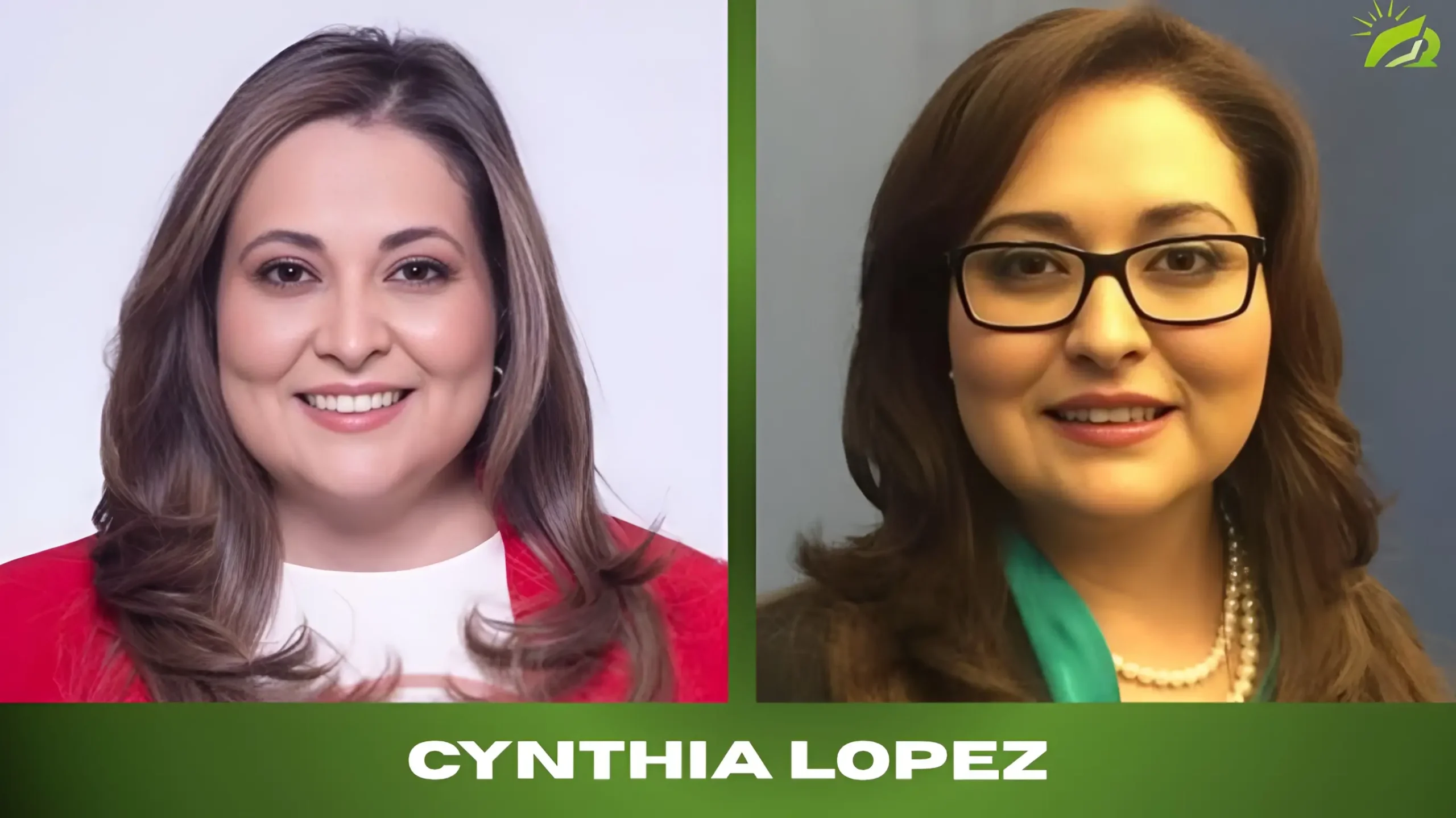
Cynthia Lopez, widely known by her full name Cynthia Iliana López Castro, is a Mexican politician whose career has developed through local government, federal legislative institutions, political organizations, and international parliamentary platforms. Born in Mexico City, she became involved in public affairs at a relatively young age and gradually established a professional path that included political leadership, legislative responsibilities, public administration, and international cooperation.
Her name is particularly associated with discussions about youth participation in politics, educational development, gender equality, and the representation of women in decision-making institutions. Over the years, she has held several positions within Mexico’s political system, including serving as a local legislator, a member of the Constituent Assembly of Mexico City, a federal deputy, and a senator.
Cynthia Lopez also attracted public attention because of her political transition from the Institutional Revolutionary Party (PRI) to Morena in 2024. The change represented an important development in her political journey and brought renewed attention to her position in Mexico’s evolving political environment.
Her professional background combines academic preparation in public administration and government with experience in legislative institutions. She has also participated in international parliamentary activities, including work connected with the Inter-Parliamentary Union, an organization that brings together representatives from national parliaments around the world.
Understanding Cynthia Lopez requires looking beyond her political titles. Her career provides an opportunity to explore how young political professionals enter public institutions, how legislative responsibilities develop over time, and how political affiliations can change throughout a person’s professional life.
This article examines her biography, education, early political involvement, professional development, legislative experience, international activities, public profile, and documented career milestones. It also considers several important stages of her career as case studies, offering readers a clearer understanding of the responsibilities and challenges associated with her public work.
Who Is Cynthia Lopez?
Cynthia Lopez is a Mexican public figure and politician whose full name is Cynthia Iliana López Castro. She was born on February 18, 1987, in Mexico City, Mexico. Her political career began through participation in youth-oriented political organizations and the PRI, where she held different organizational responsibilities before entering elected legislative positions.
She first became a member of the local legislature in Mexico City during the 2015–2018 period. Her responsibilities included work related to education, an area that remained relevant throughout her subsequent legislative career.
In 2016, she also participated in the Constituent Assembly of Mexico City, which was responsible for developing the city’s new constitutional framework. This experience placed her within an important political and institutional process involving the organization of government and the establishment of constitutional principles for Mexico City.
Her career subsequently expanded to the federal level. She served as a member of Mexico’s Chamber of Deputies during two consecutive legislative periods, from 2018 to 2024. In the 2024 elections, she secured a position in the Mexican Senate representing Mexico City.
Another significant development occurred in October and November 2024, when she separated from the PRI parliamentary group and subsequently joined Morena’s Senate parliamentary group.
As of November 2026, the Mexican government’s legislative information system identifies her as an active senator affiliated with Morena. Her public responsibilities include work within the Senate’s Education Commission, where she became its president in November 2026.
Her professional identity is therefore connected with several areas:
- Mexican federal and local politics.
- Legislative representation and public administration.
- Education policy and institutional development.
- Youth participation in political processes.
- Gender equality and women’s parliamentary representation.
- International parliamentary cooperation.
- Political party organization and legislative responsibilities.
These areas provide the foundation for understanding her professional journey and the reasons her name appears in discussions about contemporary Mexican politics.
Early Life and Background of Cynthia Lopez
Cynthia Lopez was born and raised in Mexico City, one of the most politically and economically significant urban centers in Mexico. Growing up in the country’s capital meant that public institutions, government administration, political organizations, and national debates formed part of the wider environment in which her professional interests developed.
Although detailed information about her childhood and family background is not extensively documented in the public biographical records reviewed for this article, her subsequent career demonstrates an early interest in organized public participation.
Rather than beginning her professional life outside politics and entering public office later, she became involved in political organizations while still young. This early participation helped her understand how political structures operate and how individuals can become involved in public decision-making.
Her initial experience included participation in youth organizations connected with the PRI. These organizations provided opportunities to engage with political discussions, organizational activities, leadership responsibilities, and community-related initiatives.
One of the notable early developments was her involvement in Agenda Juvenil A.C., an organization for which she was identified as a founder and national president in 2007.
This experience is relevant because youth organizations can provide an entry point into political participation. They allow younger individuals to become familiar with leadership responsibilities and the practical processes involved in organizing people around shared objectives.
For Cynthia Lopez, these early activities became part of a longer professional path that eventually led to legislative institutions.
Her background should be understood through documented public activities rather than assumptions about private family circumstances or personal experiences that have not been independently established.
Educational Background and Academic Qualifications
Education has played an important role in Cynthia Lopez’s professional profile. Her academic preparation is connected with public administration, political studies, government, and public leadership.
These subjects are closely related to the responsibilities of elected representatives because political work involves understanding institutions, public policies, administrative structures, legislation, and relationships between government and citizens.
Her educational background has been described by several institutional biographies, including profiles published by international organizations.
Studies in Public Administration
Cynthia Lopez studied Public Administration at Universidad del Valle de México. Public administration focuses on the organization and management of government institutions, the delivery of public services, administrative processes, and the implementation of public policies.
For individuals pursuing careers in government, this field provides a foundation for understanding how public institutions operate.
The subject is especially relevant to legislative responsibilities because elected representatives regularly work with proposals that affect public budgets, education systems, administrative structures, and government services.
A background in public administration can help explain the institutional side of political work, including how decisions move from legislative discussions toward practical implementation.
Political Studies and Government
Her academic profile also includes graduate-level studies in government and politics at George Washington University.
Government and political studies examine how institutions function, how political systems are organized, and how public decisions are influenced by legislation, political parties, elections, and public participation.
This academic preparation complements her experience in Mexican political institutions.
Studying government and politics also provides a broader perspective on international political systems, comparative government, and the relationship between domestic policy and international cooperation.
Doctoral Studies
Cynthia Lopez has also been identified as holding a PhD in Public Administration.
Doctoral-level study involves specialized research and a deeper examination of a particular academic subject. Her professional biographies associate her doctoral work with public administration and dual education.
The connection between academic research and legislative activity is particularly relevant in education policy, where discussions frequently involve institutional planning, workforce preparation, educational access, and relationships between schools and employment opportunities.
Leadership Education
Her professional biography also records participation in public leadership education associated with Harvard Kennedy School.
Leadership training can help public officials develop an understanding of institutional management, policy communication, strategic planning, and the responsibilities associated with public decision-making.
It is important to distinguish between academic degrees and professional certificates. They represent different forms of education and should not be treated as interchangeable qualifications.
Taken together, her academic background provides a foundation in public administration and government that is relevant to the positions she has held throughout her political career.
How Cynthia Lopez Started Her Political Career
Cynthia Lopez entered organized politics through youth-focused activities and political structures associated with the PRI.
Her early career illustrates one route through which individuals become involved in Mexican public life: beginning with organizational participation, developing leadership responsibilities, and eventually moving into elected office.
In 2007, she was identified as the founder and national president of Agenda Juvenil A.C. During the same period, she became involved with youth networks connected with the National Confederation of Popular Organizations, commonly known as CNOP.
Between 2007 and 2010, she coordinated the national youth network of this organization.
These responsibilities involved organizational participation and leadership within a political environment. Such positions can provide experience in coordinating activities, communicating with members, and understanding the internal structures of political organizations.
Her subsequent responsibilities included different political and organizational assignments.
From 2010 to 2012, she served in electoral and organizational roles within the PRI in Mexico City and surrounding areas. She later held a social management position within the party’s local structure.
These activities contributed to her development as a political professional.
Early Political Milestones
Some important early milestones in her career include:
- 2007: Founded and became national president of Agenda Juvenil A.C.
- 2007–2010: Coordinated the national youth network associated with CNOP.
- 2010–2012: Held electoral organization responsibilities within the PRI.
- 2014–2015: Served in a social management role within the PRI’s Mexico City organization.
- 2015: Became a national political council member.
- 2015–2018: Served as a local legislator in Mexico City.
These positions show that her entry into politics was gradual. She developed experience through organizational activities before taking on the responsibilities of elected office.
Cynthia Lopez and Her Work in Mexico City Politics
One of the major stages of Cynthia Lopez’s political career began in 2015, when she became a member of the VII Legislature of the Legislative Assembly of the Federal District, now associated with the political institutions of Mexico City.
She served from 2015 to 2018 and held responsibilities related to the Education Commission.
Local legislative institutions are important because many public issues require decisions at the city level. These include educational services, urban administration, public spending, local regulations, and the relationship between government agencies and residents.
Her work as a local legislator gave her experience in a political institution that operates closer to the everyday needs of people living in the capital.
Role in the Education Commission
Education became one of the recurring subjects in her political career.
As president of the Education Commission during her local legislative period, she worked within a structure responsible for examining educational matters and legislative proposals.
Education commissions can address a wide range of issues, including:
- Access to educational opportunities.
- Institutional responsibilities in the education sector.
- Educational regulations and administrative frameworks.
- The relationship between public authorities and educational institutions.
- Discussions about educational quality and development.
Committee responsibilities require more than public appearances. They involve examining proposals, participating in legislative discussions, coordinating institutional work, and considering the possible effects of public decisions.
Her involvement in this area also established a connection between her academic preparation and her public responsibilities.
Participation in the Constituent Assembly of Mexico City
Another important milestone in Cynthia Lopez’s career was her participation in the Constituent Assembly of Mexico City.
In 2016, she became part of the assembly involved in developing the constitutional framework for Mexico City.
This was a significant institutional process because Mexico City was undergoing an important transformation in its legal and governmental structure.
The work of a constituent assembly differs from ordinary legislative activity. Its responsibilities involve discussing foundational rules that establish the structure, powers, and principles of government.
Members participate in discussions about constitutional provisions and the legal framework that will guide future public institutions.
Cynthia Lopez’s participation placed her within this process at a relatively early stage of her political career.
Her work in this area is particularly relevant to readers interested in constitutional development and the evolution of local government in Mexico.
Why the Constituent Assembly Matters
The constitutional development of Mexico City was important for several reasons.
First, it provided a framework for organizing the city’s government institutions.
Second, it established principles and rules that would influence the relationship between public authorities and residents.
Third, it created an opportunity to address questions involving political participation, public administration, rights, and institutional responsibilities.
For a young legislator, participating in such a process represents an opportunity to engage with questions that extend beyond ordinary administrative decisions.
It also demonstrates the variety of responsibilities that can form part of a political career.
Cynthia Lopez’s Career in the Mexican Chamber of Deputies
After her experience in Mexico City politics, Cynthia Lopez moved into federal legislative work.
She served as a federal deputy in the Mexican Chamber of Deputies during the LXIV and LXV Legislatures, covering the period from 2018 to 2024.
The Chamber of Deputies is one of the two chambers of Mexico’s federal Congress. Its responsibilities include examining legislation, participating in the national budget process, representing citizens, and conducting oversight within the constitutional framework.
Serving as a federal deputy involves working on issues that affect the country as a whole rather than only one local jurisdiction.
This stage of her career expanded her political responsibilities and gave her experience within national legislative institutions.
First Federal Legislative Period: 2018–2021
During her first federal legislative period, Cynthia Lopez served in the Chamber of Deputies as a representative associated with the PRI.
Her committee responsibilities included education and participation in other policy areas.
She served as secretary of the Education Commission and participated in committees related to social development and gender equality.
Committee membership is an important part of legislative work because many policy discussions take place through specialized groups before proposals move through the wider legislative process.
Education committees, for example, examine issues affecting educational institutions, public policies, and government responsibilities.
Social development committees consider policies connected with social conditions and public services.
Gender equality committees address legislation and institutional matters relating to equal rights and opportunities.
Her committee assignments therefore covered several areas of public policy.
Second Federal Legislative Period: 2021–2024
Cynthia Lopez continued as a federal deputy during the LXV Legislature from 2021 to 2024.
During this period, her responsibilities included positions in the Education Commission and the Governance and Population Commission.
She also participated in the Constitutional Points Commission.
These assignments reflected a combination of policy interests involving education, governance, population-related matters, and constitutional questions.
Her experience across two consecutive federal legislative periods provided continuity in national politics.
It also allowed her to work within the Chamber of Deputies over several years, becoming familiar with legislative procedures and the institutional responsibilities of federal representatives.
Responsibilities of a Federal Deputy
The role of a federal deputy includes several important duties:
- Participating in discussions and voting on proposed legislation.
- Representing the interests of citizens within the constitutional framework.
- Examining public policies and government decisions.
- Participating in specialized legislative committees.
- Considering national budgetary and administrative matters.
- Engaging in public discussions about the country’s development.
These responsibilities help explain why her federal legislative experience is an important part of her biography.
Cynthia Lopez’s Work in Education Policy
Education is one of the most consistent subjects in Cynthia Lopez’s public career.
Her academic preparation in public administration and her repeated committee assignments connected her professional activities with educational institutions and public policy.
Education policy is a broad field that includes access to schools, educational quality, institutional administration, workforce preparation, and opportunities for students from different social backgrounds.
For legislators, working in this area requires understanding both the legal and administrative dimensions of the education system.
Interest in Educational Development
Her participation in education-related committees at both local and federal levels demonstrates the continuing importance of this subject in her public work.
Rather than treating education as a single legislative issue, it can be understood as a collection of connected policy questions.
These include:
- How educational institutions are organized.
- How public resources are allocated.
- How students access educational opportunities.
- How schools respond to changes in employment requirements.
- How education policy can support broader social development.
The subject also connects with the concept of dual education, which combines theoretical learning with practical workplace experience.
Her doctoral academic profile has been associated with this topic.
Why Education Remains Important in Her Career
Education affects economic development, social mobility, employment opportunities, and the long-term capabilities of a country.
For this reason, legislative work in education can have consequences beyond the education sector itself.
Public decisions about educational access and quality can influence the opportunities available to younger generations.
Cynthia Lopez’s continued involvement in education-related legislative responsibilities makes this subject an important element of her professional identity.
Cynthia Lopez and the Inter-Parliamentary Union
Beyond Mexico’s national political institutions, Cynthia Lopez has also participated in international parliamentary activities.
One of the most notable parts of her international profile is her connection with the Inter-Parliamentary Union, commonly called the IPU.
The organization brings together national parliaments and provides a platform for dialogue, cooperation, and discussion of international issues.
Its work includes parliamentary democracy, human rights, gender equality, sustainable development, and the participation of younger representatives.
Cynthia Lopez has been involved with the IPU since 2018.
Her international activities included participation in the Bureau of Women Parliamentarians and the Forum of Young Parliamentarians.
Bureau of Women Parliamentarians
In March 2023, she became president of the IPU’s Bureau of Women Parliamentarians.
This body focuses on advancing discussions related to women’s political participation, gender equality, and the representation of women in parliamentary institutions.
Women remain underrepresented in many political systems around the world.
International parliamentary platforms provide opportunities to discuss the institutional and practical barriers that can limit women’s participation.
The bureau’s work is therefore relevant to broader conversations about democratic representation.
For Cynthia Lopez, this role represented an opportunity to participate in international discussions beyond the responsibilities of Mexico’s domestic legislature.
Forum of Young Parliamentarians
Her international experience also included participation in the IPU’s Forum of Young Parliamentarians.
The forum creates a space for younger legislators to exchange ideas and discuss the challenges facing younger generations.
Youth participation is important because political decisions often affect young people over long periods.
Issues such as education, employment, technology, environmental policy, and democratic participation have particularly significant consequences for younger populations.
International parliamentary discussions allow representatives to compare experiences and explore different approaches to these issues.
Her involvement in the forum connects with her earlier work in youth-oriented political organizations.
Cremer-Passy Prize: An Important International Recognition
In 2022, Cynthia Lopez received the Cremer-Passy Prize at the 145th Inter-Parliamentary Union Assembly in Kigali, Rwanda.
The award recognizes parliamentary contributions connected with the objectives of the Inter-Parliamentary Union.
The recognition was particularly relevant to her work involving youth participation and parliamentary representation.
International awards can help draw attention to the activities of legislators outside their home countries.
However, an award should be understood within its actual context. It represents recognition for a particular contribution and does not independently establish the overall effectiveness of every aspect of a politician’s career.
For Cynthia Lopez, the Cremer-Passy Prize became a notable milestone in her international parliamentary profile.
It also brought attention to the importance of younger legislators participating in international institutions.
Why the Award Is Relevant
The recognition can be considered important for three reasons.
First, it reflects her participation in international parliamentary activities.
Second, it connects her career with discussions about youth representation and political participation.
Third, it demonstrates how national legislators can contribute to international institutional platforms.
The award is therefore an important part of her professional biography and should be distinguished from ordinary political appointments or academic qualifications.
Cynthia Lopez and Youth Political Participation
Youth participation has been a recurring theme throughout Cynthia Lopez’s career.
Her early involvement in youth organizations, later legislative activities, and participation in the IPU’s Forum of Young Parliamentarians all relate to this subject.
Young people frequently encounter barriers when attempting to participate in formal political institutions.
These barriers may include limited access to political networks, financial challenges, institutional traditions, and minimum-age requirements for public office.
Political participation is not limited to voting. It also includes joining organizations, participating in public discussions, becoming involved in campaigns, contributing to policy development, and seeking elected positions.
Advocacy for Lowering the Age Requirements for Candidacy
Cynthia Lopez was among the parliamentary figures associated with discussions about constitutional reform in Mexico in 2023 concerning the minimum age for eligibility for certain elected positions.
The proposal aimed to lower the age requirement from 21 to 18 for relevant offices.
The broader argument behind this type of reform is that younger adults should have opportunities to participate directly in public institutions.
Supporters of lower age requirements argue that political representation should reflect the diversity of the population, including younger citizens.
The subject also raises institutional questions about constitutional eligibility rules and the relationship between age, experience, and democratic representation.
This reform effort forms an important part of her public profile because it connects her early youth-oriented activities with later legislative work.
Cynthia Lopez’s Transition From PRI to Morena
One of the most discussed developments in Cynthia Lopez’s political career occurred in 2024, when she left the PRI and joined Morena.
The change attracted attention because she had spent approximately 21 years associated with the PRI and had held several positions within its political structure.
Her departure marked a significant transition in her political identity.
Her Earlier Relationship With the PRI
The PRI played a central role in Cynthia Lopez’s political development.
She joined the party’s organizational structures at a young age and held responsibilities connected with youth participation, electoral organization, social management, and political coordination.
Her career within the party eventually led to elected positions in Mexico City and the federal Chamber of Deputies.
She also entered the Senate in 2024 through the electoral coalition Fuerza y Corazón por México, which included the PRI.
Her political career before 2024 was therefore closely connected with the party’s organization and legislative representation.
Departure in October 2024
In October 2024, Cynthia Lopez announced her separation from the PRI parliamentary group.
Her departure took place during a period of political disagreement involving the party’s national leadership.
It also attracted attention because of controversy surrounding her absence during the Senate vote on the constitutional reform commonly discussed as the supremacy reform.
Public reporting recorded that she rejected allegations that she had negotiated her position with Morena and said that her decision to leave the PRI was connected with differences with the party leadership.
It is important to distinguish the documented sequence of events from political interpretations surrounding them.
Her departure was a political decision that became part of a wider discussion about party affiliation, legislative independence, and the changing relationships between political groups.
Joining Morena in November 2024
On November 12, 2024, Cynthia Lopez formally joined Morena’s parliamentary group in the Senate.
This change placed her within a different political organization while allowing her to continue her legislative responsibilities.
Her move also illustrated how party affiliation can change during a politician’s career.
In Mexico, elected representatives operate within a political system where parliamentary groups play an important role in legislative coordination, public debate, and the organization of congressional activities.
Changing parliamentary groups can therefore influence a politician’s institutional relationships and political profile.
For Cynthia Lopez, the transition became one of the defining events of her recent career.
Cynthia Lopez as a Mexican Senator
In the June 2024 Mexican elections, Cynthia Lopez was elected to the Senate representing Mexico City.
She began her Senate term on August 29, 2024, as part of the LXVI Legislature, which runs through August 31, 2027.
The Senate is one of the two chambers of Mexico’s federal Congress.
Its responsibilities include examining and approving legislation, participating in constitutional processes, discussing international agreements, and representing the interests of Mexico’s states and federal entities.
Senators generally serve longer terms than members of the Chamber of Deputies, providing an important institutional role in national governance.
Her Legislative Position
Cynthia Lopez entered the Senate through the principle of first minority representation for Mexico City.
She initially entered the Senate as part of the PRI parliamentary group before separating from it in October 2024.
In November 2024, she joined Morena.
As of November 2026, the official legislative information system identifies her as an active Morena senator.
Her current Senate profile records responsibilities connected with the Education Commission and the Foreign Relations Commission.
In November 2026, she became president of the Senate’s Education Commission.
This appointment is particularly relevant to her career because education has remained a recurring subject throughout her local and federal legislative activities.
Responsibilities of a Senator
The responsibilities of a Mexican senator include:
- Participating in national legislative debates.
- Reviewing and voting on proposed laws.
- Examining constitutional and institutional matters.
- Participating in specialized committees.
- Considering international treaties and agreements.
- Representing the interests of the relevant electoral constituency.
- Participating in oversight and public policy discussions.
The Senate also provides a platform for discussing issues that affect Mexico’s international relationships and constitutional structure.
Cynthia Lopez’s experience in the Chamber of Deputies and her participation in international parliamentary activities provide relevant context for understanding her move into this institution.
Current Political Activities and Public Profile in 2026
Cynthia Lopez remains an active figure in Mexican national politics as of November 2026.
Her Senate position and association with Morena continue to form the foundation of her current public role.
Her recent political profile has also included discussion about the future of the Cuauhtémoc borough in Mexico City.
In August 2026, she publicly expressed interest in seeking Morena’s candidacy for the Cuauhtémoc mayoral position in the 2027 electoral cycle.
Her statements attracted media attention because the borough is an important political and economic area of Mexico City.
She expressed interest in working with residents and addressing local government concerns.
However, an expression of interest in a future candidacy should not be confused with an official nomination or an election result.
As of the information available for this article, the important distinction is that she is a senator who has publicly discussed her interest in the future political contest.
Public Engagement and Local Politics
Local politics involves issues that residents encounter in their daily lives.
These may include:
- Public spaces and urban maintenance.
- Local public services.
- Transportation and mobility.
- Safety and neighborhood administration.
- Community participation.
- Government accountability.
A politician who expresses interest in local government must address a different set of responsibilities from those associated with federal legislative work.
The Senate focuses on national legislation and constitutional responsibilities, while borough-level government is more directly connected with local administration and public services.
This distinction helps explain why her reported interest in Cuauhtémoc attracted attention.
Case Study 1: Early Youth Leadership and Political Organization
One of the most useful ways to understand Cynthia Lopez’s career is to examine her early involvement in youth organizations.
In 2007, she became associated with the founding and leadership of Agenda Juvenil A.C. She also coordinated the national youth network connected with CNOP between 2007 and 2010.
This stage of her career demonstrates how organizational participation can serve as an entry point into public life.
The Situation
Young people interested in politics often need opportunities to develop practical experience.
Academic knowledge can provide an understanding of political systems, but organizational activities offer exposure to leadership, communication, coordination, and participation.
Youth networks provide an environment in which participants can develop these abilities.
Her Involvement
Cynthia Lopez took on responsibilities involving youth-oriented political organization.
Her activities included leadership and coordination roles within structures associated with the PRI.
These experiences formed part of her early professional development.
Broader Significance
The wider significance of this stage is that political careers often develop through a combination of organizational and institutional experiences.
For young people, participation in civic and political organizations can provide an opportunity to understand public affairs before entering elected office.
This case study illustrates the importance of early participation in building a professional foundation.
It does not, by itself, establish the measurable effects of every program or initiative associated with the organizations involved.
Case Study 2: Participation in the Mexico City Constitutional Process
A second important case study concerns Cynthia Lopez’s participation in the Constituent Assembly of Mexico City.
Her involvement took place during the development of the city’s constitutional framework in 2016 and 2017.
The Situation
Mexico City was undergoing an important institutional transformation.
The development of a constitutional framework required discussions about the organization of government, the responsibilities of public institutions, and the principles that would guide the city’s administration.
Her Involvement
Cynthia Lopez participated as a member of the Constituent Assembly.
The Atlantic Council’s biography also identifies her participation in the drafting process and records her support for the inclusion of a youth quota in the city’s electoral law.
The youth quota discussion was relevant to broader questions about political representation.
It addressed the possibility of creating more opportunities for younger people to participate in elected institutions.
Broader Significance
This experience demonstrates the difference between ordinary legislative work and participation in constitutional development.
Constitutional processes can shape the institutional environment in which future political decisions are made.
Her participation is therefore an important milestone because it connected her political career with the development of the legal framework governing Mexico City.
Case Study 3: International Recognition and Youth Representation
A third case study focuses on her participation in the Inter-Parliamentary Union and the receipt of the Cremer-Passy Prize in 2022.
The Situation
National parliaments face many shared challenges, including the representation of younger citizens and the participation of women in political institutions.
International organizations provide platforms through which parliamentarians can exchange ideas and discuss these issues.
Her Involvement
Cynthia Lopez participated in the IPU’s international parliamentary activities and received the Cremer-Passy Prize at its 145th Assembly.
Her work also included involvement with the Forum of Young Parliamentarians and the Bureau of Women Parliamentarians.
Broader Significance
The case illustrates how legislators can participate in international discussions while continuing their domestic political responsibilities.
It also connects her professional profile with two major themes: youth representation and women’s participation in political decision-making.
The award should be understood as a specific institutional recognition rather than a comprehensive assessment of her entire political record.
Case Study 4: The 2024 Political Party Transition
The fourth case study examines her departure from the PRI and subsequent move to Morena.
The Situation
Cynthia Lopez had spent many years participating in the PRI’s organizational and legislative structures.
She entered the Senate in 2024 through an electoral coalition that included the PRI.
Later that year, political disagreements became publicly associated with her decision to leave the party.
Her Involvement
She separated from the PRI parliamentary group on October 29, 2024, and later joined Morena’s Senate parliamentary group on November 12, 2024.
The transition was recorded in the Senate’s parliamentary documentation.
Broader Significance
This event provides an example of how political affiliations can change over the course of an elected official’s career.
It also highlights the importance of distinguishing between a politician’s formal institutional status and the political explanations offered by different parties or individuals.
The documented change is clear: she moved from the PRI parliamentary group to Morena.
The political interpretations surrounding that decision should be considered separately and evaluated through attributed public statements and records.
Case Study 5: Continued Involvement in Education Policy
Another important career theme is her continued involvement in education-related legislative institutions.
Her work in education commissions began during her local legislative period and continued through her time in the federal Chamber of Deputies.
In November 2026, her Senate profile records her appointment as president of the Education Commission.
The Situation
Education policy requires cooperation between government institutions, legislators, educational authorities, and communities.
The subject includes administrative decisions as well as questions about educational opportunities and long-term development.
Her Involvement
Cynthia Lopez has held education-related committee responsibilities at several levels of government.
These include her local legislative work and her federal parliamentary responsibilities.
Her current committee appointment continues this professional connection.
Broader Significance
This career pattern demonstrates continuity in one policy area despite changes in legislative institutions and political affiliation.
It also illustrates how specialized committee work can become an important part of a politician’s public profile.
Frequently Asked Questions About Cynthia Lopez
1. Who is Cynthia Lopez?
Cynthia Lopez, whose full name is Cynthia Iliana López Castro, is a Mexican politician from Mexico City. She has served as a local legislator, federal deputy, and senator, and has participated in international parliamentary activities.
2. How old is Cynthia Lopez?
She was born on February 18, 1987. As of November 21, 2026, she is 39 years old.
3. Where was Cynthia Lopez born?
Cynthia Lopez was born in Mexico City, Mexico.
4. What political party does Cynthia Lopez belong to?
As of November 2026, she is affiliated with Morena. She previously spent approximately 21 years associated with the PRI before leaving the party in October 2024.
5. Is Cynthia Lopez a senator in Mexico?
Yes. She is a senator representing Mexico City in Mexico’s LXVI Legislature, which runs from August 2024 to August 2027.
6. What did Cynthia Lopez do before becoming a senator?
Before entering the Senate, she served as a local legislator in Mexico City from 2015 to 2018 and as a federal deputy in the Chamber of Deputies from 2018 to 2024.
7. What is Cynthia Lopez’s educational background?
Her academic background includes studies in Public Administration, graduate-level education in government and politics, and a PhD in Public Administration. Her professional biographies also mention public leadership training.
8. Why did Cynthia Lopez leave the PRI?
In October 2024, she announced her separation from the PRI parliamentary group amid disagreements with the party’s national leadership. She later joined Morena on November 12, 2024.
9. What is Cynthia Lopez known for internationally?
She is known for her participation in the Inter-Parliamentary Union, including work involving the Bureau of Women Parliamentarians and the Forum of Young Parliamentarians. She received the Cremer-Passy Prize in 2022.
10. What award did Cynthia Lopez receive in 2022?
She received the Cremer-Passy Prize at the 145th Inter-Parliamentary Union Assembly in Kigali, Rwanda. The award recognizes contributions connected with the organization’s objectives.
11. What is Cynthia Lopez’s connection with education policy?
She has held education-related committee responsibilities in the Mexico City legislature, the federal Chamber of Deputies, and the Senate. Her Senate profile identifies her as president of the Education Commission from November 2026.
12. Is Cynthia Lopez interested in running for mayor of Cuauhtémoc?
In August 2026, she publicly expressed interest in seeking Morena’s candidacy for the Cuauhtémoc mayoral position in the 2027 electoral cycle. An expression of interest should not be confused with an official nomination.
13. What is Cynthia Lopez’s full name?
Her full name is Cynthia Iliana López Castro.
14. What is Cynthia Lopez’s date of birth?
Her date of birth is February 18, 1987.
15. What was Cynthia Lopez’s role in the Constituent Assembly of Mexico City?
She participated in the Constituent Assembly involved in developing the constitutional framework for Mexico City in 2016 and 2017.
For More Visits: Bright Magazine
