Close Menu
Bright Magazine
    What's Hot

    Roman Walker Zelman: Biography, Family & Career

    November 18, 2026

    Josh Winterhalt: Biography, Career & Family

    November 18, 2026

    News PBLinuxTech: Latest Linux Updates and Tech Insights

    November 18, 2026
    Facebook X (Twitter) Instagram
    Facebook X (Twitter) Instagram
    Bright Magazine
    Subscribe
    • Home
    • Celebrity
    • Business
    • News
    • Technology
    • Health
    • Lifestyle
    • Get In Touch
    Bright Magazine
    Home»Health»How the Human Eye Adapts to Changing Light From Morning Until Night
    Health

    How the Human Eye Adapts to Changing Light From Morning Until Night

    Backlinks HubBy Backlinks HubNovember 16, 2026No Comments4 Mins Read
    Facebook Twitter LinkedIn Telegram Pinterest Tumblr Reddit WhatsApp Email
    How the Human Eye Adapts to Changing Light From Morning Until Night
    Share
    Facebook Twitter LinkedIn Pinterest Email

    Your eyes are doing a lot more work than you give them credit for. From the moment morning light hits your face to the second you turn off the lamp and lie in the dark, your visual system is quietly recalibrating – no input needed from you. It’s what allows you to see clearly while driving into a sunrise and also navigate your hallway at 2am without walking into a wall.

    Knowing a little about how this works can explain a lot – why your eyes sometimes feel strained at certain points in the day, and why looking after them is worth more than just an afterthought.

    Morning: Transitioning From Darkness to Daylight

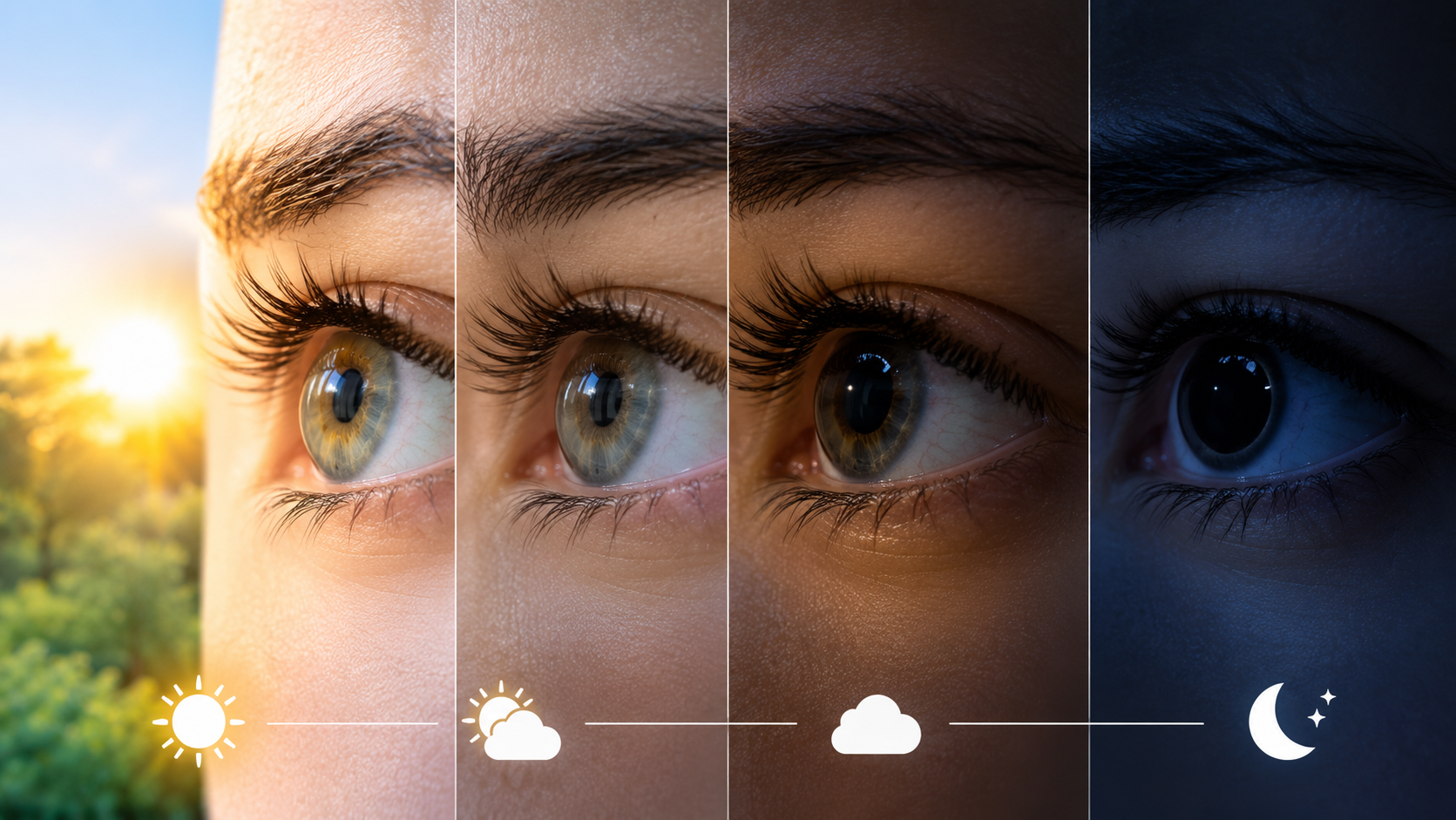
    The moment sunlight reaches your eyes, your pupils start pulling back. The iris muscles that control this respond almost immediately, tightening to cut down on how much light gets in. It’s fast and entirely automatic.

    Melatonin drops off at the same time. That’s the hormone keeping you groggy – and as light signals reach your brain, it starts to fade, nudging both your body and your eyes toward something more alert.

    Color perception is part of this too. Your cone cells – the ones handling color and fine detail – kick into higher gear as light levels climb. That’s why things can look a little washed out in those first minutes after waking and then gradually sharpen up. It’s not your imagination.

    Squinting when you first step outside is pretty common during this phase. Your pupils haven’t fully caught up yet, and bright morning light can feel like a lot. That discomfort passes, but it’s real while it’s happening.

    Midday: Peak Light Adaptation

    By midday, your eyes have more or less found their footing. Pupils are at their smallest, limiting light intake and shielding the more sensitive interior structures from the sun. Your cones are running at full capacity – color looks saturated, detail is crisp, and tasks that need real visual precision (reading small print, matching colors) are easiest right now.

    The lens in your eye also does some filtering here, blocking a portion of harmful UV light before it can reach the retina. It’s not a complete shield, though. Sunglasses with UV protection still matter, even on an afternoon that doesn’t feel especially bright.

    There’s a reason natural daylight tends to feel easy on the eyes for sustained work. It’s not just preference – midday light is roughly what your visual system evolved around. It’s the baseline.

    Afternoon to Evening: Gradual Adjustment

    As light fades through the afternoon and into early evening, your pupils slowly dilate to let more of it in. This isn’t a sudden switch – it’s gradual, tracking the sun on its way down.

    The shift from cones to rod cells happens during this stretch. Rods are better suited for low light, but they come with trade-offs: color starts to look muted, a little grayish, and fine detail gets harder to hold. Depth perception softens too. That slightly uncomfortable feeling while driving at dusk – when things seem a touch harder to judge than they did an hour earlier – is partly this handoff in action.

    Night: Full Adaptation to Low Light

    Once it’s properly dark, your pupils open up as far as they go. The goal is simple: let in as much available light as possible. Rod cells have taken over almost entirely by this point.

    This mode – scotopic vision, technically – trades color for sensitivity. Movement and shapes in dim conditions become more detectable, but the world goes gray. Most people don’t consciously notice the absence of color at night; the brain quietly fills in the gaps.

    One thing worth knowing: peripheral vision actually gets more useful in the dark. Rods are concentrated away from the center of the retina, so you’ll often catch movement more easily from the corner of your eye at night than by looking straight at something. A bit counterintuitive, but that’s how it works.

    Protecting Your Eyes Through Every Phase

    Every day, your eyes run through this whole cycle – adjusting, shifting, adapting – without you doing anything at all. It depends on healthy pupils, working photoreceptors, and a lens that’s holding up its end of the deal.

    Worth protecting, in other words. That might mean sunglasses during the brightest part of the day, or just keeping up with regular eye exams. For anyone thinking longer-term about vision correction, options like a permanent contact lens are worth a real conversation with your eye doctor – especially in terms of how they interact with your eyes’ natural ability to adapt.

    Share. Facebook Twitter Pinterest LinkedIn Tumblr Telegram Email
    Previous ArticleMother and Daughter Eid Evening Dresses: How to Coordinate Without Matching
    Next Article Python SDK25.5a Burn Lag: Causes, Fixes and Solutions
    Backlinks Hub

    Related Posts

    Breast Augmentation: What to Know Before Making Your Decision

    November 13, 2026

    How Medical Innovations Are Improving Treatment Options for Complex Physical Concerns 

    November 13, 2026

    Write GreenHeal Site Blog: Best Tips for Writers

    November 8, 2026
    Add A Comment
    Leave A Reply Cancel Reply

    Latest News

    Roman Walker Zelman: Biography, Family & Career

    November 18, 2026

    Josh Winterhalt: Biography, Career & Family

    November 18, 2026

    News PBLinuxTech: Latest Linux Updates and Tech Insights

    November 18, 2026

    The Online Gaming Event TheHakevent: A Complete Guide

    November 18, 2026

    Relationship Advice FPMomhacks: 17 Tips for Stronger Bonds

    November 18, 2026
    Business

    Ironmartonline Reviews: Is It Legit & Worth Buying?

    November 14, 2026

    SmartTraderBlog.com: Trading Tips, Insights & Strategies

    November 13, 2026

    How the Right Media Agency Can Help Niche Businesses Reach Their Ideal Customers

    November 13, 2026

    Make1M.com: A Complete Guide to Wealth Building

    November 11, 2026

    Client Case Aelftech Com: What the Case Studies Reveal

    November 9, 2026
    About Us

    Bright Magazine is your trusted source for the latest news, trends, and insights. We are dedicated to delivering engaging stories, accurate reporting, and valuable content that keeps you informed every day.
    We're social. Connect with us.

    Facebook X (Twitter) Instagram Pinterest YouTube
    Popular Posts

    Roman Walker Zelman: Biography, Family & Career

    November 18, 2026

    Josh Winterhalt: Biography, Career & Family

    November 18, 2026

    News PBLinuxTech: Latest Linux Updates and Tech Insights

    November 18, 2026

    Ramtin Abdo: Biography, Career, and Personal Life

    November 16, 2026
    Tech Insights

    News PBLinuxTech: Latest Linux Updates and Tech Insights

    November 18, 2026

    Trango Tech Employees: IT Security Leadership Guide

    November 18, 2026

    How to Fix SusBlueZilla Code: Causes and Easy Fixes

    November 18, 2026

    Benefits of Immorpos35.3 Software: Key Advantages

    November 16, 2026
    © 2026 Bright Magazine All Rights Reserved
    • Home
    • Privacy Policy
    • Terms of Service
    • Get In Touch

    Type above and press Enter to search. Press Esc to cancel.

    Powered by CookieAdmin
    Necessary cookies enable essential site features like secure log-ins and consent preference adjustments. They do not store personal data.
    None
    Functional cookies support features like content sharing on social media, collecting feedback, and enabling third-party tools.
    None
    Analytical cookies track visitor interactions, providing insights on metrics like visitor count, bounce rate, and traffic sources.
    None
    Advertisement cookies deliver personalized ads based on your previous visits and analyze the effectiveness of ad campaigns.
    None
    Unclassified cookies are cookies that we are in the process of classifying, together with the providers of individual cookies.
    None
    Powered by CookieAdmin