

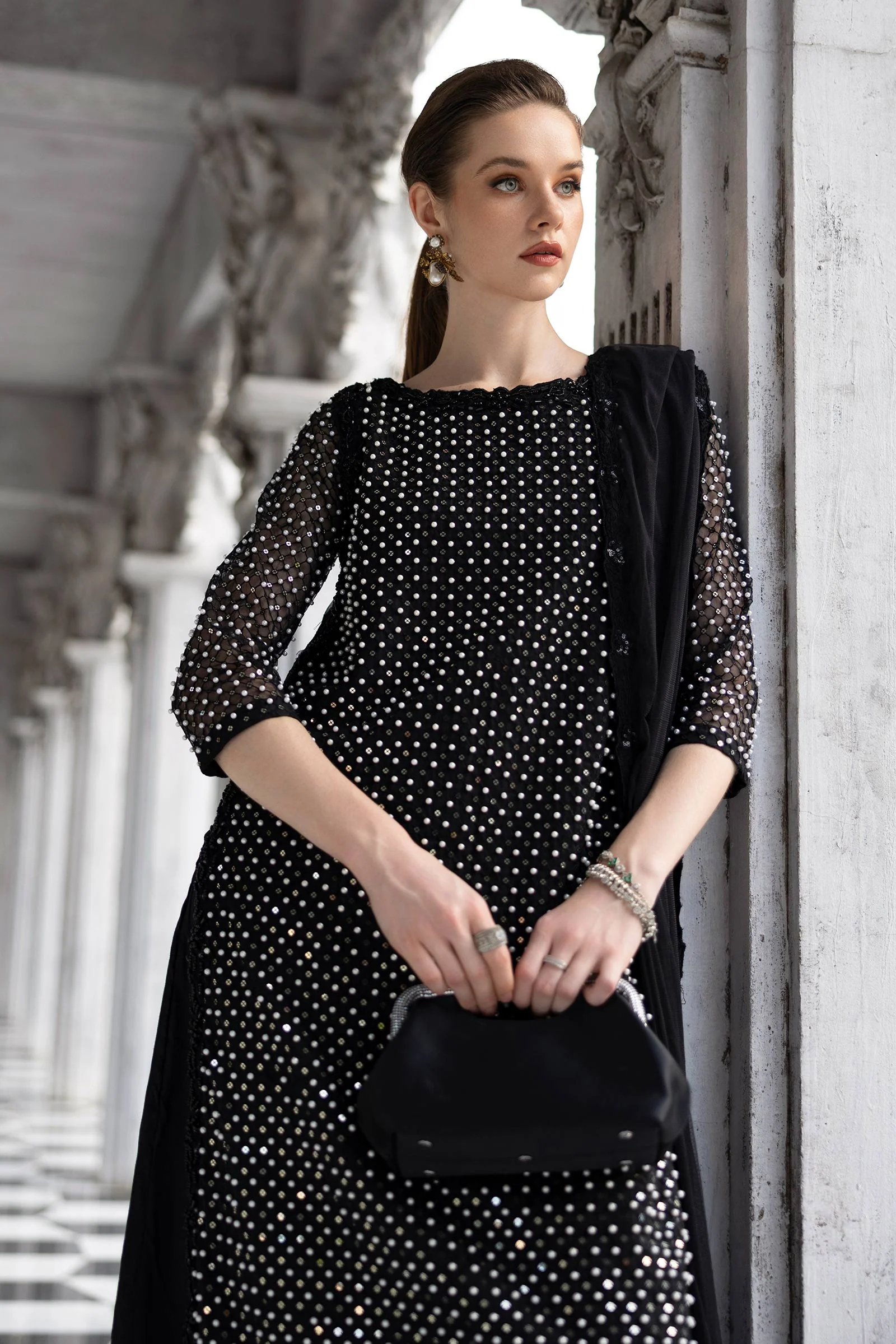
Every Eid, a little girl somewhere stands at her mother’s wardrobe and asks for the very same dress. It is one of the sweetest requests a mother can hear. It is also one of the hardest to get right.
Identical outfits can look charming in one photo and stiff in the next. A tiny copy of an adult formal also tends to be heavy, scratchy and hard to play in. Coordinating works better. You choose two outfits that clearly belong together, and each one still suits the person wearing it. These ideas will help you plan both looks for Eid evenings.
Pick One Color Family
Color is the easiest link between two outfits. Choose one family and give each of you a different shade of it. A mother in deep emerald looks lovely beside a daughter in soft mint. Wine red pairs with blush pink. Navy sits well next to powder blue.
Evening light favors deeper tones, so give the darker shade to the adult outfit. Lighter colors suit children and keep their look fresh and playful.
Want to share one exact color? Change the fabric instead. A raw silk shirt and a chiffon frock in the same gold will look related, yet never identical, because each fabric catches the light in its own way.
Repeat One Detail Across Both Outfits
Pick a single design element and let it appear on both outfits. It could be a floral motif, a scalloped border or a band of gota work along the hem. When the same detail shows up twice, people notice the link at once, and nobody feels they are looking at a uniform.
Placement matters here. Put the shared detail in the same spot on both outfits. A motif on the mother’s neckline and the daughter’s neckline reads clearly across a room. A motif on one neckline and the other’s trouser hem simply gets lost.
Sleeves are another easy option. Matching embroidered cuffs are a small touch, and they show up beautifully when you hold hands in photos.
Let Each Cut Suit Its Wearer
An adult silhouette rarely flatters a small child. A child’s frock would look just as odd on her mother. So keep the colors and details linked, and let the shapes go their own way.
For mothers, Eid evenings call for graceful lines. A long kalidar shirt, an angrakha or a straight shirt with flared trousers all work well. Girls under ten move more easily in a short frock with a sharara or tights. Older girls often love a smaller take on a grown up cut, such as a peplum shirt with a gharara.
Comfort should lead the child’s outfit. Look for a soft cotton lining. Keep heavy embellishment away from the neck and inner arms. Make sure the outfit is quick to take off for a bathroom trip. A happy child in a simple dress always looks better in photos than an unhappy one in a heavy dress.
The dupatta can follow the same rule. Give the mother a full length dupatta and the daughter a light stole, or skip it altogether for little girls.
Shop Pieces Designed as a Pair
Putting two outfits together from different stores takes longer than it seems. Shades rarely line up across brands. Two embroidery styles that look fine on a screen can clash once they stand side by side.
Choosing Eid evening dresses from a designer that creates mother and daughter sets is the simpler route. The shades are planned to sit together, the motifs are drawn as one family, and the child’s piece is cut with her comfort in mind. You place one order instead of hunting through several shops. Buying both outfits together can also push your basket past a free shipping threshold, which leaves more of your budget for the clothes themselves.
Some labels, Maria.B. among them, run a dedicated Mommy & Me range for exactly this reason.
Getting Your Daughter’s Size Right
Children’s sizes vary from brand to brand, so measure before you order. Check her chest, shirt length and trouser length against the size chart. Then allow a little room. Eid ul Fitr 2027 is expected around 9 or 10 March, and children can grow a lot in a few months.
If she falls between two sizes, choose the larger one. A hem can be taken up in ten minutes. A shirt that is tight across the chest cannot be saved. Order early as well, so there is time for an exchange if the fit is off.
Take the Photo Early
Plan your mother and daughter photo for the first hour of the evening. The outfits are still crisp at that point. The dupatta sits where it should, and nobody has spilled sheer khurma down the front yet.
Stand close together. Let her hold your hand or sit on your lap. Take a few shots under warm indoor light before the guests arrive and the room gets busy. Years from now, those are the pictures that end up framed in the hallway.
