

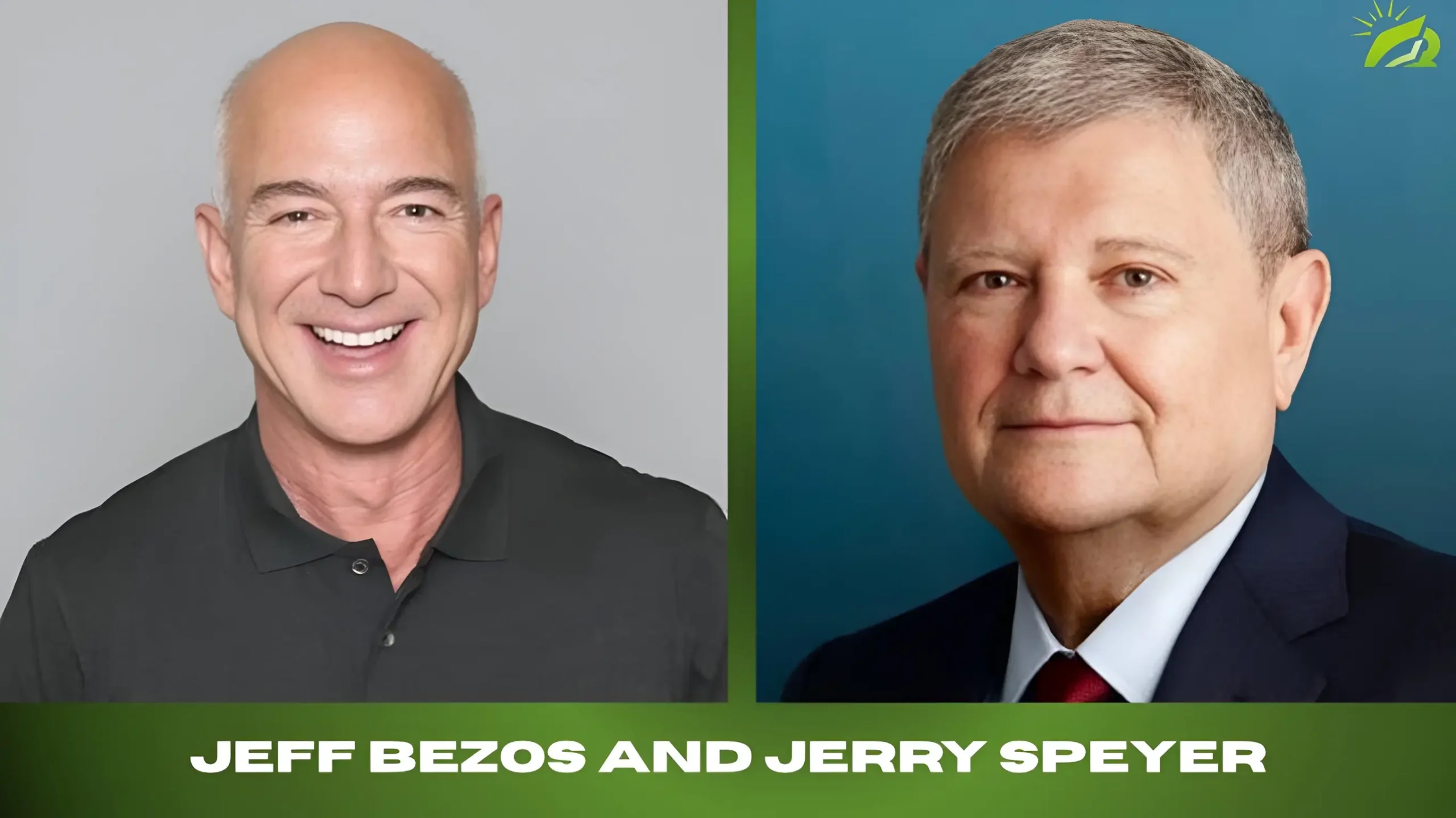
The American business world is full of influential individuals whose decisions have changed the direction of entire industries. Some have transformed technology and consumer behavior, while others have reshaped cities through property development, investment, and long-term business planning. Jeff Bezos and Jerry Speyer are two examples of leaders who have achieved remarkable influence through different approaches to business.
Jeff Bezos is best known for creating Amazon, one of the most influential companies in modern commerce. His entrepreneurial journey demonstrates how technology, customer-focused thinking, and a willingness to experiment can turn a relatively small business into a global organization. His interests eventually expanded into aerospace, media, and philanthropy, giving him influence beyond online shopping.
Jerry Speyer has established his reputation in a very different industry. As one of the founders of Tishman Speyer, he became an important figure in commercial real estate and urban development. His professional work has been associated with major office properties, landmark buildings, institutional investment, and the transformation of important business districts. His career illustrates the importance of understanding physical spaces, financial markets, and the long-term value of property.
The relationship between Jeff Bezos and Jerry Speyer is an interesting subject because their professional activities have intersected through the commercial real estate market, particularly in New York City. Although their business backgrounds are different, the growth of large technology companies creates opportunities for property developers, office owners, investors, and urban planners.
One of the most interesting examples emerged in 2018, when Amazon announced its intention to establish a major headquarters operation in Long Island City, Queens. At the time, Tishman Speyer already had a significant real estate presence in the neighborhood. Another point of intersection appeared in 2019, when Amazon was reportedly close to leasing retail space in the Chrysler Building, a property then owned by Tishman Speyer and the Abu Dhabi Investment Council.
These developments provide a useful foundation for understanding why the two names appear together in business and real estate discussions. They demonstrate that the technology and property industries are closely connected, even when the people leading the businesses are not formal partners.
This article explores the professional journeys of both individuals, their companies, their business philosophies, and the events that brought their respective business interests into the same commercial environment. It also examines three real-world case studies, the lessons entrepreneurs can learn from their achievements, and the future possibilities created by the relationship between technology and real estate.
Who Is Jeff Bezos?
Jeffrey Preston Bezos, commonly known as Jeff Bezos, is an American entrepreneur and business leader whose achievements have had a lasting influence on global commerce. He is widely recognized as the founder of Amazon, but his professional interests extend into space technology, publishing, environmental initiatives, and other areas of investment.
Bezos developed an interest in science, technology, and problem-solving early in life. He studied electrical engineering and computer science at Princeton University, graduating in 1986. His academic background provided a strong technical foundation, while his early professional experience exposed him to the financial and business environment.
Before establishing Amazon, Bezos worked in the financial sector. His experience helped him understand how businesses evaluate opportunities, manage risk, and build strategies around long-term growth. Rather than remaining in a familiar professional environment, he decided to pursue an emerging opportunity connected to the rapid expansion of the internet.
At that time, online commerce was still relatively new. Many consumers were unfamiliar with purchasing products through websites, and traditional retailers dominated the shopping experience. Bezos believed the internet could create a different kind of marketplace by allowing customers to explore products and access information without visiting physical stores.
This idea became the foundation of Amazon.
The Beginning of Amazon
Bezos founded Amazon in 1994, initially focusing on selling books online. Books were a practical starting point because they offered a large selection of titles that could be difficult to display in a traditional retail store.
Instead of immediately trying to compete with every established retailer, the company concentrated on building a digital shopping experience that offered convenience and product variety.
The early business model was straightforward but ambitious. Customers could browse a catalog, place orders online, and receive books without traveling to a bookstore. Amazon gradually expanded its product selection and improved its technology, logistics, and customer services.
What made the company particularly interesting was its willingness to develop capabilities beyond its original business category.
As the internet became more widely used, Amazon expanded into additional product categories, introduced new shopping services, and developed an increasingly sophisticated delivery network. Its growth eventually changed how consumers understood online shopping.
The company also made important investments in technology. Amazon Web Services, for example, became a significant part of its business by providing computing infrastructure and cloud services to other organizations.
This development demonstrated that a business originally established as an online bookstore could create new opportunities by using its technical capabilities to serve different markets.
Jeff Bezos and His Long-Term Business Philosophy
One of the defining features of Bezos’s business approach has been his interest in long-term opportunities.
Many organizations evaluate success primarily through immediate financial results. Bezos became associated with a different approach that emphasized customer satisfaction, experimentation, operational improvement, and the willingness to invest in projects that might require time to become successful.
This philosophy was particularly visible during Amazon’s development.
The company repeatedly invested in infrastructure, technology, and customer services that supported future growth. Some investments required considerable resources before their broader commercial value became obvious.
The underlying idea was that improving the customer experience could create stronger relationships with consumers and eventually support sustainable business expansion.
Several important principles can be identified in this approach:
- Customer convenience: Businesses should reduce the difficulty involved in finding, purchasing, and receiving products.
- Continuous experimentation: Companies should remain open to new ideas, even when their eventual results are uncertain.
- Long-term investment: A business should consider future opportunities instead of concentrating exclusively on immediate returns.
- Operational improvement: Strong customer experiences depend on reliable systems, technology, and organizational execution.
- Adaptability: Successful companies must be prepared to change when customer expectations and market conditions evolve.
These principles helped shape Amazon’s expansion and became closely associated with the company’s corporate identity.
Beyond Amazon: Blue Origin and Other Interests
Bezos did not limit his entrepreneurial activities to online commerce. He founded Blue Origin, an aerospace company focused on developing technology that can make access to space more practical and reusable.
The company’s long-term vision is connected to the development of space infrastructure and the possibility of supporting future human activity beyond Earth.
Blue Origin represents a different type of business challenge from Amazon. Whereas online retail requires customer relationships, logistics, software, and distribution systems, aerospace development requires advanced engineering, manufacturing capabilities, extensive testing, and significant long-term investment.
Bezos has also become involved in environmental philanthropy. The Bezos Earth Fund was established in 2020 with a $10 billion commitment intended to support environmental and climate-related work. His charitable interests also include the Day One Fund, which supports organizations working with homeless families and early childhood education.
In addition, Bezos owns The Washington Post, giving him a presence in the media industry.
These activities demonstrate that his business interests are not limited to one commercial sector. His career has developed across technology, aerospace, media, and philanthropy.
What Is Jeff Bezos Doing at Amazon Today?
An important detail when examining Bezos’s professional career is that he is no longer Amazon’s chief executive officer.
In 2021, he transitioned from the CEO position to the role of Executive Chair. Andy Jassy became Amazon’s CEO, while Bezos retained an important position in the company’s leadership structure.
This transition allowed him to devote attention to other interests while remaining involved with Amazon at the board level.
Understanding this distinction is important because articles about Bezos sometimes describe him as Amazon’s current CEO, which is inaccurate. His role as founder and executive chair remains significant, but the company’s daily executive leadership is handled by its CEO and management team.
Who Is Jerry Speyer?
Jerry I. Speyer is an influential American real estate executive best known for co-founding Tishman Speyer, a major commercial real estate investment, development, and management company.
His professional journey reflects a different form of entrepreneurship from that of Jeff Bezos. Rather than concentrating on digital products or online platforms, Speyer built his reputation through property investment, development, corporate relationships, and the management of valuable real estate assets.
The real estate business requires a combination of financial understanding, market knowledge, planning, negotiation, and patience. A major property project can take years to complete, and its long-term performance depends on factors such as location, tenant demand, operating costs, financing, and wider economic conditions.
Speyer’s career has been associated with understanding these interconnected factors.
The Foundation of Tishman Speyer
Jerry Speyer and Robert Tishman established Tishman Speyer in 1978. The company developed into an important participant in the international commercial property industry.
Its activities include acquiring buildings, developing new projects, managing property portfolios, and creating workplaces for corporate customers.
The firm’s business model is built around the idea that commercial properties should offer long-term value to investors and provide useful environments for the people and businesses occupying them.
This requires more than purchasing land or constructing office towers. Developers must understand how organizations use workplaces, how neighborhoods evolve, and what makes a property attractive to potential tenants.
Over time, Tishman Speyer became associated with major real estate projects and landmark properties.
Jerry Speyer’s Leadership and Professional Influence
Speyer’s influence extends beyond individual buildings and investment transactions. His position within Tishman Speyer has placed him in a broader network of financial institutions, civic organizations, and cultural institutions.
His professional affiliations have included leadership roles connected with New York-Presbyterian Hospital, the Museum of Modern Art, and other respected organizations.
He has also held significant positions in institutions associated with education, financial policy, and the development of New York City.
These activities illustrate an important feature of his professional life: his interests have not been restricted to commercial property.
Real estate development often involves a close relationship with cities, educational institutions, transportation systems, public organizations, and cultural communities. Successful developers must understand the broader environment in which their properties operate.
Speyer’s involvement in civic and philanthropic organizations reflects this wider dimension of his career.
Understanding the Tishman Speyer Business Model
Tishman Speyer operates in a field where long-term planning plays a major role.
A commercial real estate company must identify promising locations, evaluate development opportunities, arrange financing, manage construction, attract tenants, and maintain its properties.
Every stage requires different expertise.
For example, a developer considering an office project in a growing business district must understand more than current rental demand. It must consider whether employers are likely to expand, whether transportation infrastructure can support additional workers, and whether the surrounding neighborhood will attract employees.
The firm also has to determine what type of building will remain competitive over time.
Modern commercial properties are increasingly evaluated according to factors such as:
- Accessibility and transportation connections.
- Energy efficiency and environmental performance.
- Flexible office layouts and meeting facilities.
- Attractive shared areas and building amenities.
- Technology infrastructure.
- Security and building management.
- The quality of the surrounding neighborhood.
These considerations help explain why real estate development is not simply a matter of constructing buildings. It involves creating environments that meet the needs of businesses and communities.
Jerry Speyer and Rockefeller Center
Rockefeller Center is one of the most recognizable commercial and cultural destinations in New York City.
Tishman Speyer, together with other investment partners, acquired the center in 1996 and participated in a major redevelopment and revitalization effort.
The property provides an interesting example of how real estate investment can involve preserving the identity of an established landmark while improving its commercial and operational potential.
A building or complex with a long history cannot always be managed in the same way as a newly constructed development. Its cultural value, architecture, existing tenants, visitors, and public reputation all influence the decisions involved in its management.
The Rockefeller Center project illustrates the importance of balancing commercial performance with the preservation of an important urban destination.
For Speyer, this type of project represents the wider ambition associated with institutional real estate investment: acquiring or managing significant assets and finding ways to maintain their relevance for future generations.
Jeff Bezos and Jerry Speyer: Understanding Their Business Connection
The connection between Jeff Bezos and Jerry Speyer is best understood through the relationship between technology companies and commercial real estate.
Amazon represents a company that depends on a large physical and digital infrastructure. Although consumers primarily interact with the company through websites, applications, and delivery services, its operations require offices, warehouses, distribution centers, technology facilities, and retail locations.
A company with this level of activity naturally becomes an important participant in the property market.
Tishman Speyer, meanwhile, is involved in developing and managing the types of commercial environments that large corporations may need.
This creates an indirect connection between their business interests.
When Amazon evaluates a new office location, it considers the availability of suitable buildings, access to workers, transportation, operating costs, and the economic conditions of the surrounding area. Real estate companies evaluate many of these same factors from the perspective of investors, developers, and landlords.
The industries are different, but their decisions influence the same urban markets.
Why New York City Is Important to Their Story
New York City is one of the most important commercial environments in the United States. It attracts technology companies, financial organizations, professional services firms, retailers, and international investors.
The city’s commercial property market is therefore closely connected to the decisions of major employers.
Amazon’s interest in expanding its New York operations brought the relationship between technology companies and real estate developers into public discussion.
At the same time, Tishman Speyer had an established development presence in important parts of the city.
This overlap made New York an especially useful place to examine the professional context surrounding Jeff Bezos and Jerry Speyer.
It is important, however, to distinguish between overlapping corporate interests and a personal business relationship.
Amazon operating in the same property market as Tishman Speyer does not automatically mean that Bezos and Speyer negotiated a transaction together.
Similarly, a company exploring a possible lease in a building owned by a real estate firm does not establish a joint venture between the individuals leading those organizations.
A careful business analysis considers what actually happened, which companies were involved, and which details remain unconfirmed.
The Amazon Long Island City Headquarters Plan
One of the most important events connecting the business environments of Bezos and Speyer occurred in November 2018.
Amazon announced that it had selected New York City and Northern Virginia as locations for new headquarters operations. Its proposed New York location was Long Island City, a neighborhood in Queens.
The announcement described a major investment program intended to expand Amazon’s corporate presence and create thousands of jobs.
The proposed New York headquarters was expected to bring significant economic activity to the surrounding area.
It attracted attention from property owners, developers, local businesses, political representatives, and residents.
The decision was particularly important because Long Island City had been developing as a mixed-use neighborhood with residential buildings, office properties, cultural attractions, and transportation connections.
Tishman Speyer already had an established presence in this market.
Its Long Island City development, The JACX, represents a substantial office property designed around contemporary workplace requirements.
The project includes modern office facilities, amenities, and shared spaces intended to support businesses seeking accessible commercial locations.
The presence of The JACX illustrates why Long Island City was relevant to discussions involving major employers and commercial developers.
However, there is no verified evidence that Amazon’s proposed headquarters was intended to occupy The JACX or that Bezos and Speyer reached an agreement concerning the building.
The important point is that Amazon’s proposed expansion and Tishman Speyer’s existing property investments occupied the same broader neighborhood market.
Why Amazon Considered Long Island City
Long Island City offered several commercial advantages.
Its position across the East River from Manhattan made it attractive for businesses seeking access to the wider New York labor market.
Its transportation connections also supported movement between different parts of the city.
For a large employer, these factors can influence recruitment, employee convenience, and the ability to connect with customers and business partners.
The area also offered a mixture of existing industrial buildings, newer commercial projects, residential developments, and opportunities for additional investment.
From a corporate perspective, such characteristics can make a neighborhood attractive for a significant expansion.
From a property developer’s perspective, the arrival of a large employer can increase interest in office space and create new opportunities for surrounding businesses.
That is why Amazon’s proposed headquarters attracted such widespread attention in the real estate industry.
Case Study 1: Amazon’s Proposed HQ2 Expansion in Long Island City
The Long Island City headquarters proposal provides an important case study of how a major corporate decision can influence a neighborhood’s property market.
Background
On November 13, 2018, Amazon announced plans for a new headquarters operation in Long Island City, alongside another headquarters location in Arlington, Virginia.
The company anticipated substantial investment and employment growth across the two locations.
Jeff Bezos, who was Amazon’s founder and CEO at the time, publicly discussed the company’s intention to attract talent and develop its presence in these communities.
For Long Island City, the announcement represented the possibility of a significant change in its commercial environment.
The expected arrival of a large corporate employer could have influenced demand for office properties, residential accommodation, retail services, and transportation improvements.
Why Real Estate Developers Paid Attention
A large technology employer can influence property demand in several ways.
First, employees require suitable workplaces. This can create demand for large office buildings and smaller supporting spaces.
Second, workers may seek housing close to their workplace. This can affect residential development and rental demand.
Third, increased business activity can support restaurants, retail stores, entertainment venues, and service providers.
Finally, companies providing professional services may also seek nearby offices to remain close to important clients.
Tishman Speyer’s existing presence in Long Island City made the neighborhood particularly relevant to its commercial real estate interests.
The JACX provides an example of the type of contemporary office development that can attract corporate tenants seeking modern facilities.
What Happened to the Project?
The proposed New York headquarters did not proceed.
On February 14, 2019, Amazon publicly announced that it would not move forward with its planned Long Island City headquarters.
The decision followed disagreements involving local political leaders, public concerns, and opposition to the proposed development arrangements.
Amazon stated that it believed a successful headquarters project required a constructive long-term relationship with elected officials and the wider community.
The cancellation demonstrated that a major corporate investment cannot be evaluated only through financial forecasts or the availability of real estate.
Community acceptance, local government cooperation, public infrastructure, and political conditions also matter.
Business Lessons From the Case Study
This case provides several useful lessons for entrepreneurs and real estate professionals.
First, a project can appear commercially attractive but still face challenges when its social and political environment is not adequately understood.
Second, large development plans should involve meaningful communication with local communities.
Third, businesses should consider how their expansion plans affect existing residents, workers, small businesses, and public services.
Finally, real estate investors must avoid treating announced corporate expansions as guaranteed future demand.
The Long Island City proposal shows that even major companies can change their plans when the surrounding conditions become difficult.
Case Study 2: The JACX and the Changing Demand for Modern Office Properties
The JACX is another useful example for understanding the intersection between Amazon’s corporate real estate interests and Tishman Speyer’s development activities.
Located in Long Island City, The JACX is an office development designed to provide modern work environments.
It combines commercial space with facilities and amenities intended to support employees and businesses.
The building’s concept reflects a wider change in the commercial property industry.
Traditional office buildings were often evaluated primarily through their location, floor space, and rental terms.
Modern businesses may consider a much broader range of requirements.
They may want comfortable working environments, shared collaboration areas, outdoor facilities, convenient transportation, and flexible spaces that can adapt as their operations change.
Why Flexible Office Development Matters
Technology companies frequently experience changes in staffing, organizational structure, and operational requirements.
An office that works for one business at a particular stage may become unsuitable as the organization expands or changes its working model.
Real estate developers therefore have to consider how a building can remain attractive to tenants with different needs.
Modern workplace facilities can provide several advantages:
- Flexible layouts that support different team sizes.
- Shared facilities that encourage collaboration.
- Convenient transportation for employees and visitors.
- Outdoor and recreational areas.
- Technology-ready infrastructure.
- Services that improve the daily workplace experience.
The JACX illustrates how developers can respond to changing tenant expectations.
Its existence does not establish that Amazon occupied the property or worked with Jerry Speyer on the building.
Instead, it demonstrates the type of commercial environment that can emerge when a neighborhood attracts attention from major employers.
The Broader Lesson
The comparison between Amazon’s workplace requirements and Tishman Speyer’s development approach highlights an important relationship.
Technology companies need physical environments that support their employees and business operations.
Developers need to understand what those companies value when selecting office locations.
When both sides respond effectively to changing workplace requirements, cities can become more attractive to businesses and workers.
This is one of the most important ways technology and commercial real estate influence each other.
Case Study 3: Amazon’s Reported Chrysler Building Retail Lease Discussion
Another notable intersection between Amazon and Tishman Speyer occurred around the Chrysler Building in January 2019.
At that time, the historic building was owned by Tishman Speyer and the Abu Dhabi Investment Council.
Reports published on January 14, 2019, stated that Amazon was close to signing a lease for approximately 10,000 square feet of retail space in the property.
The possibility attracted attention because the Chrysler Building is one of New York’s most recognizable architectural landmarks.
Amazon was already expanding its presence in New York, and a potential retail location in such a well-known building would have provided an additional connection between the technology company and the city’s commercial property market.
Why the Reported Lease Was Interesting
The reported discussion illustrated how large technology companies can become potential tenants in properties traditionally associated with established commercial businesses.
Amazon had developed a reputation for transforming retail through digital platforms and logistics.
Exploring physical retail locations demonstrated that its commercial strategy was not restricted to online transactions.
A traditional retail property can offer advantages that digital platforms cannot fully reproduce.
It gives customers an opportunity to see products, interact with services, and experience a brand in a physical environment.
For property owners, attracting a recognizable tenant can improve a building’s commercial appeal.
It can also help introduce the property to a wider audience.
Was the Lease Completed?
This detail needs careful treatment.
The 2019 reporting described Amazon as being close to a lease agreement, but the report did not establish that the proposed lease was ultimately completed.
It would therefore be inaccurate to present the proposed arrangement as a confirmed long-term Amazon tenancy or to claim that Bezos personally negotiated the transaction with Speyer.
The more reliable conclusion is that Amazon reportedly explored a retail opportunity in a building then owned by Tishman Speyer and the Abu Dhabi Investment Council.
This distinction is important because business journalism should separate reported negotiations from completed transactions.
What the Example Reveals
The Chrysler Building discussion highlights the different ways a technology company can interact with the property industry.
A business may require traditional office space, distribution facilities, retail locations, and other physical environments.
A real estate company may own or manage properties that meet those needs.
The relationship can exist through property transactions and market activity without creating a direct personal partnership between the leaders of the organizations.
The Chrysler Building’s New Chapter in 2026
The Chrysler Building remains an important part of the wider story because Tishman Speyer has continued to pursue major projects involving the landmark.
On October 7, 2026, Tishman Speyer and The Cooper Union announced that they had finalized a 150-year ground lease agreement for the Chrysler Building.
The reported arrangement includes a $235 million investment and a restoration and revitalization plan for the property.
The project is intended to reposition the landmark office tower for future commercial use.
Rob Speyer, the company’s CEO, discussed the firm’s plans for the building and its intention to lead its next chapter.
This development is especially relevant when examining Jerry Speyer because he remains chairman of Tishman Speyer, while Rob Speyer serves as the company’s chief executive.
The announcement demonstrates the continued involvement of the Speyer family in the real estate industry and the company’s long-term interest in major New York properties.
It also illustrates a broader real estate principle: historic properties can require significant reinvestment to remain competitive in changing commercial markets.
Why This Development Matters
The Chrysler Building presents a distinctive challenge because its importance extends beyond ordinary office use.
Its architectural identity, location, history, and reputation make it a recognizable part of the New York skyline.
A successful revitalization strategy must consider the property’s historic character alongside the practical requirements of modern tenants.
This may involve improving building systems, upgrading facilities, creating attractive work environments, and ensuring that the property remains commercially viable.
For Tishman Speyer, the project represents an opportunity to apply its experience in property management and landmark redevelopment.
For the wider real estate industry, it offers another example of how major developers approach long-term asset management.
Although the building appeared in earlier reporting about Amazon’s potential retail lease, the 2026 ground lease is a separate development. It should not be described as an agreement involving Jeff Bezos or Amazon.
Jeff Bezos vs. Jerry Speyer: How Their Business Approaches Differ
Although the professional worlds of Jeff Bezos and Jerry Speyer have intersected through real estate, their business strategies are fundamentally different.
Bezos built his career around technology, innovation, digital commerce, and the development of large-scale business platforms.
Speyer developed his reputation through property investment, urban development, and the management of commercial real estate.
Understanding these differences helps explain how both individuals became influential in their respective fields.
1. Different Industries
Bezos’s primary business influence comes from technology and commerce.
Amazon changed how consumers purchase products and how businesses use digital infrastructure.
Speyer’s influence is concentrated in commercial property.
Tishman Speyer develops, owns, and manages buildings that support businesses, residents, and other organizations.
The industries are different, but they share an important characteristic: both depend on understanding changing customer requirements.
2. Different Types of Investment
Amazon’s growth required major investment in software, logistics, data infrastructure, distribution networks, and new business services.
These investments supported the development of a global technology and commerce platform.
Commercial real estate investment involves different financial considerations.
Developers must evaluate land, buildings, financing arrangements, construction costs, rental demand, property operations, and long-term asset value.
Both business models require capital discipline, strategic planning, and the ability to manage uncertainty.
However, the risks and expected returns are not identical.
3. Different Approaches to Growth
Bezos’s entrepreneurial journey illustrates how technology companies can expand by entering new markets and developing new services.
A company may begin with one product category and eventually become active in several related industries.
Real estate development often follows a more location-focused growth strategy.
A successful project can strengthen a developer’s position in a particular city or market, but its performance is closely connected to the property’s location and physical condition.
4. Different Time Horizons
Both leaders have been associated with long-term thinking, although their businesses operate through different planning cycles.
Technology organizations may invest in research, infrastructure, and new services years before those investments generate their full commercial value.
Real estate projects can also involve long development periods, particularly when they require complex financing, construction, approvals, and redevelopment work.
A property can remain part of an investor’s portfolio for decades.
This makes patience and consistent execution important in both industries.
What Entrepreneurs Can Learn From Jeff Bezos and Jerry Speyer
The professional journeys of these two business leaders provide useful lessons for entrepreneurs, investors, and company executives.
Their careers show that there is no single formula for building a successful organization.
Different industries require different capabilities, but several principles apply across business environments.
Lesson 1: Identify Opportunities Before They Become Obvious
Bezos recognized the potential of online commerce at a time when internet shopping was still developing.
His decision to establish Amazon reflected his belief that the internet could transform traditional retail.
Real estate developers also have to identify opportunities before they become fully established.
An investment in a growing neighborhood may offer significant potential if employment, transportation, and infrastructure continue to improve.
The important skill is recognizing a market opportunity while carefully evaluating the risks involved.
Lesson 2: Understand What Customers Actually Need
Amazon’s growth was supported by an emphasis on convenience and customer experience.
Tishman Speyer’s property developments similarly demonstrate the importance of understanding what tenants and building users value.
Customers do not purchase a product or occupy a building simply because it exists.
They make decisions based on usefulness, reliability, quality, accessibility, and the overall experience.
Businesses that understand these expectations are better positioned to develop products and services that remain relevant.
Lesson 3: Think Beyond Immediate Financial Results
Short-term decisions may produce temporary improvements, but long-term business success often requires investment in systems, people, infrastructure, and innovation.
Amazon’s expansion into cloud computing illustrates how developing a new capability can create a major business opportunity.
Tishman Speyer’s involvement in landmark properties demonstrates the importance of long-term asset management and redevelopment.
Both examples show why an organization should consider the future consequences of its investment decisions.
Lesson 4: Build Strong Professional Relationships
Large business projects rarely depend on one individual.
They require cooperation among employees, investors, customers, government officials, contractors, advisers, and other stakeholders.
The Long Island City headquarters proposal demonstrates how important these relationships can become.
A project may have commercial advantages but still encounter difficulties when the surrounding stakeholders do not support its development.
For entrepreneurs, communication and relationship management are important parts of business strategy.
Lesson 5: Adapt to Market Changes
Consumer behavior, technology, workplace expectations, and economic conditions continue to evolve.
Amazon adjusted its business model as the internet expanded and customer expectations changed.
Tishman Speyer’s modern office developments reflect the need to adapt commercial properties to changing workplace requirements.
Businesses that refuse to adapt can lose relevance, even when they have strong financial resources.
Lesson 6: Build for More Than One Market Cycle
A company should avoid assuming that current market conditions will continue indefinitely.
Real estate developers must consider changing rental markets, financing costs, construction expenses, and tenant demand.
Technology businesses must also prepare for changes in competition, consumer behavior, regulation, and technical capabilities.
Long-term planning requires flexibility rather than blind confidence in existing forecasts.
How Technology Companies Influence Commercial Real Estate
The story of Jeff Bezos and Jerry Speyer also highlights the wider relationship between technology and physical infrastructure.
Technology businesses are sometimes described as digital organizations, but many depend on substantial physical resources.
Their employees need offices. Their products require distribution networks. Their cloud services need data centers. Their customer-facing operations may require physical stores and service locations.
As technology companies grow, they can influence property demand in different cities.
Demand for Office Space
Large companies may require office environments that support collaboration, recruitment, training, and management.
The demand for these spaces changes with workforce size, operating models, and employee preferences.
Developers must understand whether companies prefer traditional offices, flexible workplaces, or a combination of different arrangements.
The Role of Data Centers
Cloud computing and artificial intelligence have increased the importance of specialized computing infrastructure.
Data centers require suitable land, electricity, cooling systems, security, connectivity, and reliable operating environments.
This creates a specialized area of real estate investment.
Although it is different from traditional office development, it demonstrates how technological growth can create new property opportunities.
Modern Workplace Expectations
Employees and businesses increasingly consider the quality of their working environment.
A modern office may need collaboration spaces, meeting rooms, wellness facilities, convenient transport, and reliable digital infrastructure.
Properties that fail to meet changing expectations may find it more difficult to compete for quality tenants.
Urban Development and Local Communities
Large corporate investments can influence surrounding neighborhoods.
They may create employment, attract new businesses, increase demand for services, and encourage infrastructure improvements.
However, they can also raise concerns about affordability, congestion, public incentives, and the distribution of economic benefits.
The Long Island City experience shows why these issues deserve consideration before major development projects proceed.
Could Jeff Bezos and Jerry Speyer Work Together in the Future?
It is natural to wonder whether two influential business figures with overlapping commercial interests could eventually participate in a shared venture.
However, speculation should not be confused with confirmed business activity.
As of November 6, 2026, the publicly available information examined for this article does not establish a direct personal partnership or jointly controlled venture between Bezos and Speyer.
That does not mean their professional interests are completely unrelated.
Amazon continues to operate in markets where commercial property plays an important role. Tishman Speyer continues to develop and manage properties for corporate and institutional customers.
Their industries therefore remain connected through the broader business environment.
A future commercial relationship involving companies associated with these individuals would depend on the relevant business requirements, investment opportunities, and contractual arrangements.
Potential areas of general overlap could include:
- Office and workplace development.
- Technology infrastructure and smart buildings.
- Energy-efficient commercial properties.
- Data center development.
- Urban redevelopment.
- Technology-supported property management.
These are possible areas of industry cooperation, not evidence of a planned partnership between the two individuals.
For readers, this distinction provides a more accurate understanding of the subject.
Common Misconceptions About Jeff Bezos and Jerry Speyer
When two prominent business leaders are discussed together, online articles can sometimes exaggerate the nature of their professional relationship.
Understanding the difference between confirmed events and speculation is therefore essential.
Misconception 1: They Are Direct Business Partners
There is no verified public record establishing that Bezos and Speyer are direct personal business partners.
Their companies have intersected through wider commercial real estate developments and market activity.
Misconception 2: Amazon’s HQ2 Was Located in a Tishman Speyer Property
Amazon’s proposed Long Island City headquarters was a separate development plan.
Tishman Speyer had existing property interests in the neighborhood, including The JACX, but that does not establish that Amazon planned to use the building as its headquarters.
Misconception 3: The Chrysler Building Retail Lease Was Completed
The January 2019 reporting described Amazon as being close to leasing retail space.
A reported negotiation should not be presented as proof of a completed lease.
Misconception 4: Jerry Speyer Is Amazon’s Business Partner
Speyer is associated with Tishman Speyer, not Amazon’s executive management.
His professional role should be understood through his real estate company and its activities.
Misconception 5: Jeff Bezos Still Runs Amazon as CEO
Bezos transitioned to Executive Chair in 2021. Andy Jassy is Amazon’s President and CEO.
These distinctions make it easier to understand the actual professional history behind the keyword.
The Future of Their Industries
Although the business paths of Bezos and Speyer are different, the industries they represent are likely to remain closely connected.
Technology companies will continue requiring physical infrastructure, while property developers will need to adapt their buildings to changes in technology and business operations.
Several developments are especially important.
Artificial Intelligence and Smart Buildings
Artificial intelligence is changing how businesses manage information, automate processes, and evaluate operational performance.
Commercial buildings may increasingly use intelligent systems for energy management, security, maintenance, and employee services.
These developments could create new opportunities for real estate companies that invest in technology-supported properties.
Sustainable Commercial Development
Energy efficiency and environmental performance are becoming important considerations in property management.
Developers must evaluate building materials, energy consumption, transportation access, and the long-term environmental impact of their projects.
Technology can support these objectives through monitoring systems, automation, and improved building management.
Flexible Commercial Spaces
The future workplace may combine traditional offices with flexible spaces and specialized facilities.
Some companies may require larger headquarters, while others may prefer smaller offices supported by technology and shared workplace services.
Developers must be prepared to respond to these different requirements.
The Importance of Long-Term Investment
Both technology and real estate require investment decisions that extend beyond immediate market conditions.
Research, infrastructure, redevelopment, and operational improvements may take time to produce their full benefits.
The careers of Bezos and Speyer provide useful examples of how long-term thinking can influence business strategy in different industries.
Frequently Asked Questions (FAQs)
1. Who are Jeff Bezos and Jerry Speyer?
Jeff Bezos is an American entrepreneur who founded Amazon and Blue Origin. Jerry Speyer is an American real estate executive and co-founder of Tishman Speyer. Both have become influential business figures through their work in different industries.
2. What is the connection between Jeff Bezos and Jerry Speyer?
Their business interests intersect through the New York commercial property market. Amazon’s proposed Long Island City headquarters and its reported 2019 retail lease discussions involving the Chrysler Building are two notable examples. These developments do not establish a direct personal partnership.
3. Are Jeff Bezos and Jerry Speyer business partners?
There is no verified public record establishing that Jeff Bezos and Jerry Speyer are direct business partners. Their professional interests have overlapped through corporate expansion and commercial property activity.
4. What company did Jerry Speyer establish?
Jerry Speyer co-founded Tishman Speyer with Robert Tishman in 1978. The company focuses on real estate investment, development, ownership, and property management.
5. What is Jeff Bezos best known for?
Jeff Bezos is best known for founding Amazon in 1994 and helping transform it from an online bookstore into a major global commerce and technology company. He also founded Blue Origin and established philanthropic initiatives.
6. What happened to Amazon’s Long Island City headquarters plan?
Amazon announced its proposed New York headquarters in November 2018. However, on February 14, 2019, the company announced that it would not proceed with the Long Island City project after facing political and community opposition.
7. Was Tishman Speyer connected to Amazon’s New York expansion?
Tishman Speyer had property development interests in Long Island City, where Amazon proposed its headquarters. Its office development, The JACX, illustrates its presence in the neighborhood. However, this does not establish that Amazon selected the property for its headquarters or that the companies formed a direct partnership.
8. Did Jeff Bezos try to lease space in the Chrysler Building?
In January 2019, media reports indicated that Amazon was close to signing a lease for approximately 10,000 square feet of retail space in the Chrysler Building. The reported discussions do not independently establish that the lease was completed.
9. Who owns or manages the Chrysler Building today?
On October 7, 2026, Tishman Speyer and The Cooper Union announced a finalized 150-year ground lease agreement for the Chrysler Building. The arrangement includes a $235 million investment and a plan to restore and reposition the property.
10. Is Jerry Speyer still involved with Tishman Speyer?
Yes. Jerry Speyer serves as chairman of Tishman Speyer, the real estate company he co-founded. His son, Rob Speyer, serves as the company’s chief executive officer.
11. Is Jeff Bezos still Amazon’s CEO?
No. Bezos stepped down as Amazon’s CEO in 2021 and transitioned to the position of Executive Chair. Andy Jassy serves as Amazon’s President and Chief Executive Officer.
12. What is Tishman Speyer known for?
Tishman Speyer is known for developing, acquiring, and managing commercial real estate. Its portfolio and activities include major office properties, workplace developments, and prominent projects such as Rockefeller Center and the Chrysler Building redevelopment initiative.
13. Why are Jeff Bezos and Jerry Speyer often discussed together?
Their names can appear together because Amazon’s corporate expansion and Tishman Speyer’s property investments have intersected within New York’s commercial real estate environment. Their careers also provide an interesting comparison between technology entrepreneurship and traditional property investment.
14. What can entrepreneurs learn from their careers?
Entrepreneurs can learn the importance of identifying opportunities, understanding customers, investing for the long term, managing risk, developing professional relationships, and adapting to changing market conditions. Both careers offer different examples of strategic business development.
15. Could Amazon and Tishman Speyer collaborate in the future?
A future commercial relationship is possible in principle because technology companies need offices and other facilities, while property developers provide commercial spaces. However, no future partnership should be treated as confirmed without an official announcement or reliable evidence.
Conclusion
The story of Jeff Bezos and Jerry Speyer provides an interesting perspective on how different business industries can influence the same commercial environment.
Bezos developed his reputation through technology, entrepreneurship, online commerce, and long-term innovation. His creation of Amazon changed the retail industry and helped establish new opportunities in cloud computing and digital services. His work with Blue Origin and his philanthropic initiatives demonstrate the wider range of his professional interests.
Jerry Speyer built his influence through commercial real estate. As a co-founder of Tishman Speyer, he became associated with major property investments, landmark developments, and the evolution of important business districts. His career reflects the importance of long-term asset management, financial planning, and understanding the needs of corporate tenants and urban communities.
The most meaningful connection between their professional worlds can be seen in New York City. Amazon’s proposed Long Island City headquarters brought attention to a neighborhood where Tishman Speyer already had significant development interests. The reported 2019 Chrysler Building retail lease discussion provided another example of how the companies’ commercial activities could intersect.
The later Chrysler Building ground lease finalized by Tishman Speyer and The Cooper Union in October 2026 provides further context for the continuing influence of the Speyer organization in New York real estate.
However, it is equally important to recognize what the available evidence does not establish. There is no verified public record confirming a direct personal business partnership between Bezos and Speyer.
Ultimately, Jeff Bezos and Jerry Speyer represent two different but complementary aspects of the modern American business landscape. One built a global technology and commerce organization, while the other helped shape major commercial properties and urban environments. Their professional histories demonstrate that successful businesses do not operate in isolation. Technology, property, investment, infrastructure, and local communities often depend on one another.
Understanding these connections provides readers with a clearer picture of how major business decisions influence industries, cities, and future opportunities.
For More Visits: Bright Magazine
Also Read: Yenkly Com Review 2026: What It Is & Is It Legit?
