

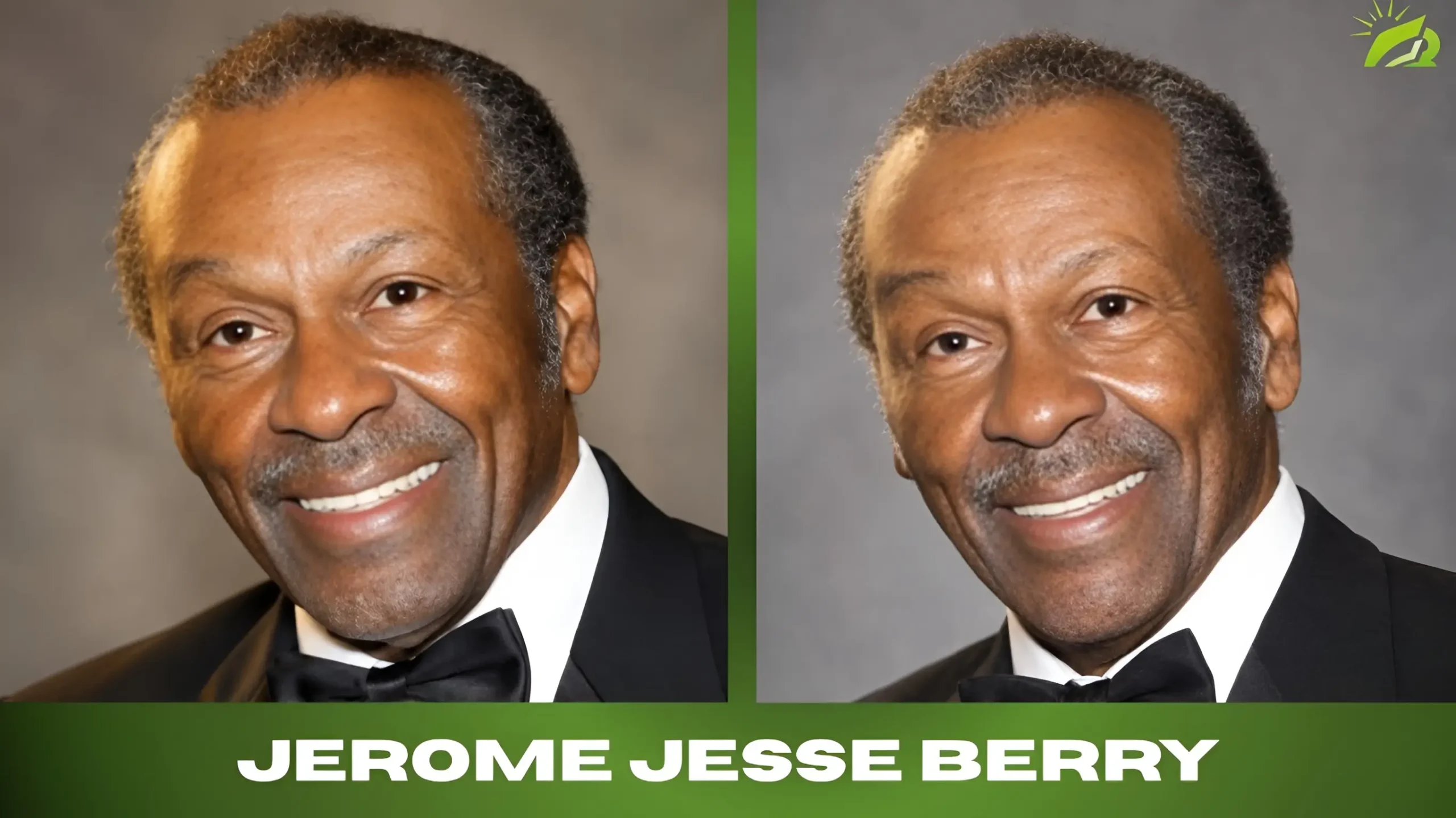
Jerome Jesse Berry is best known as the father of Academy Award-winning actress Halle Berry. Although he never became a public figure in the entertainment industry himself, his name continues to attract interest because of his connection to one of Hollywood’s most recognized actresses. His life story also draws attention because of the difficult family circumstances Halle Berry has described publicly, including her parents’ separation, her estrangement from her father, and the emotional challenges she experienced during childhood.
Unlike many celebrity parents whose lives become closely connected to the entertainment world, Jerome Jesse Berry spent most of his life outside the spotlight. He worked ordinary jobs, including employment as a hospital attendant and later as a bus driver. His story was largely private until his daughter’s successful acting career brought greater public attention to her family background.
However, understanding Jerome Jesse Berry requires looking beyond his connection to a famous daughter. His biography involves family relationships, employment, personal difficulties, separation, and the complicated feelings that can remain between parents and children when their relationship is interrupted early in life.
Halle Berry has spoken about the painful experiences she witnessed growing up and the long-term effect of her troubled relationship with her father. Years after his death, she also shared a more reflective message about him, acknowledging the importance he held in her life despite their limited relationship. Her public reflections reveal that family memories can contain both pain and affection, and that understanding a complicated past may take many years.
This article explores Jerome Jesse Berry’s life, his relationship with his family, his professional background, and his place in Halle Berry’s personal history. It also examines what is known about his later years, the limits of the available historical record, and why public interest in his biography continues today.
Who Was Jerome Jesse Berry?
Jerome Jesse Berry was an American man remembered primarily as Halle Berry’s father. He worked as a hospital attendant before becoming a bus driver, and he was married to Judith Ann Hawkins, a psychiatric nurse. The couple had two daughters, Halle Berry and her older sister, Heidi.
His life differed considerably from that of his daughter. Halle went on to become an internationally recognized actress, while Jerome maintained a largely private existence. His name became familiar to a wider audience because people wanted to understand the family background that shaped Halle’s early years.
Publicly available accounts describe Jerome as someone who worked to earn a living through conventional employment. He was also reported to have served in the United States Air Force. An obituary published after his death identified him as an Air Force veteran and former bus driver.
Nevertheless, reliable information about his childhood, education, friendships, and personal interests is limited. Many online biographies focus almost entirely on his relationship with Halle Berry, leaving significant gaps in the account of his individual life.
Those gaps matter. A person’s biography should not be filled with unverified claims simply because readers are curious. Jerome Jesse Berry’s documented story is meaningful enough to examine without inventing details about his private experiences.
His significance comes partly from his position within Halle Berry’s family history. It also comes from the way his daughter has spoken about the effects of childhood experiences and the process of reaching a more complicated understanding of a parent later in life.
Jerome Jesse Berry: Quick Biography
The following facts provide a brief introduction to Jerome Jesse Berry and the family relationships most closely associated with his name.
- Full name: Jerome Jesse Berry
- Known for: Being the father of actress Halle Berry
- Nationality: American
- Birthplace: Clarksdale, Mississippi, according to genealogical records
- Birth year: 1934
- Death date: January 24, 2003
- Age at death: 68
- Reported occupation: Hospital attendant and bus driver
- Military background: Reported United States Air Force veteran
- Former spouse: Judith Ann Hawkins
- Children: Halle Berry and Heidi Berry-Henderson
- Daughter’s profession: Actress, producer, and director
- Public legacy: Primarily associated with Halle Berry’s family history
These details establish the basic outline of Jerome Jesse Berry’s life. They do not, however, explain the full complexity of his family relationships. For that, it is necessary to consider the circumstances of his marriage, the separation from his wife, and the distance that developed between him and his daughters.
Early Life and Family Background
Jerome Jesse Berry was reportedly born on August 7, 1934, in Clarksdale, Mississippi. Genealogical records identify Clarksdale as his birthplace, although the surviving public biographical information about his childhood is limited.
Clarksdale is located in the Mississippi Delta, a region with a distinctive cultural and social history. Like many people of his generation, Jerome came of age during a period when employment opportunities, family responsibilities, and economic circumstances strongly influenced the direction of adult life.
It would be misleading, however, to assume that the general history of a place tells us everything about an individual who grew up there. The available record does not provide a detailed account of Jerome’s childhood home, school experience, early ambitions, or relationships with his parents.
What can be established more confidently is the broad direction of his later life. He eventually lived in Ohio, worked in a hospital, married Judith Ann Hawkins, and became a father. These experiences form the clearest documented foundation for a biography of his adult years.
Jerome’s early life is worth considering because it reminds readers that he existed as an individual long before he became known through his daughter’s celebrity. His childhood and early adulthood were not originally public subjects, and much of that history may never have been recorded in widely accessible sources.
A responsible biography acknowledges this limitation rather than treating missing information as an invitation to speculate.
There is also a difference between knowing the major events in someone’s life and understanding their personality. Employment records and family connections may establish where a person worked or whom they married, but they cannot independently reveal what he thought about his future, what motivated his decisions, or how he understood his responsibilities.
For Jerome Jesse Berry, the documented milestones are relatively clear, while many personal details remain private. That distinction is important when examining his life through the lens of a famous family member.
Jerome Jesse Berry’s Education and Early Career
Detailed records of Jerome Jesse Berry’s education have not been widely established in publicly accessible biographies. His professional history is better documented than his school years, particularly through references to his hospital employment and later work in transportation.
Jerome worked as a hospital attendant in Cleveland, Ohio. Accounts of Halle Berry’s family background identify him as an attendant in a psychiatric hospital, where Judith Ann Hawkins also worked as a nurse.
Their shared workplace is an important detail in the family’s history because it provides the background to their relationship. Both were employed in healthcare-related roles, although they had different responsibilities within the institution.
A hospital attendant’s work can involve supporting daily operations, assisting staff, and helping maintain a safe and organized environment. However, the precise duties Jerome performed, his length of service, and his complete employment history are not sufficiently detailed in the available public record to justify more specific claims.
His subsequent career as a bus driver offers another documented part of his working life. He was reportedly employed by Bluebird travel lines, according to the obituary published after his death.
Transportation work differs from hospital employment, but both professions require practical skills, reliability, and an ability to carry out assigned responsibilities. Jerome’s employment history therefore reflects a working life that extended beyond his daughter’s later fame.
It is also worth remembering that many people work in several occupations over the course of their lives. A change in profession does not automatically indicate personal difficulty, financial hardship, or a particular ambition. Without reliable information about Jerome’s reasons for changing jobs, it is better to concentrate on the positions associated with his name.
His career is less widely discussed than his family relationships, but it remains an important part of his biography. Jerome was a working man whose identity included employment, military service, and family responsibilities long before public interest focused on his daughter.
Was Jerome Jesse Berry in the Military?
Jerome Jesse Berry has been identified in his obituary as a veteran of the United States Air Force. This is one of the few details about his life outside his immediate family and civilian employment that appears in a contemporary account of his death.
Military service can be an important part of a person’s life history. It may influence employment opportunities, personal identity, friendships, and later decisions. Nevertheless, the available information about Jerome does not establish the exact years of his service, his military specialty, his rank, or the locations where he may have been stationed.
These details should not be guessed.
For readers researching Jerome Jesse Berry, the most careful conclusion is that he was reported to have served in the Air Force, but a complete military biography is not readily available in the public accounts commonly consulted about him.
His reported service also illustrates why biographical research benefits from separating a confirmed general detail from assumptions about the experiences behind it. A veteran’s status can be documented without knowing every event that occurred during their service.
Although his military background is not the main reason he attracts public attention today, it contributes to a more complete understanding of the different roles he occupied during his lifetime.
Marriage to Judith Ann Hawkins
Judith Ann Hawkins was Jerome Jesse Berry’s wife and the mother of his two daughters, Halle and Heidi. She later became an important figure in Halle Berry’s public story because of the role she played in raising the children after the marriage ended.
Judith worked as a psychiatric nurse, and Jerome worked as a hospital attendant. According to biographical accounts, the two met through their employment at the same hospital in Cleveland.
Their relationship resulted in a family that would eventually become associated with one of the most prominent actresses of her generation. At the time, however, they were a couple building an ordinary life together, away from Hollywood’s attention.
The marriage brought two daughters into their lives. Their younger daughter, Halle Berry, was born in Cleveland, Ohio, on August 14, 1966. Halle later became known internationally for her work in film and television, but her childhood took place long before that recognition.
The marriage between Jerome and Judith did not last. Public accounts state that they separated or divorced when Halle was approximately four years old. The end of their relationship had lasting consequences for the family structure, particularly because Judith raised the girls without Jerome being a regular presence in their lives.
It is important not to assume that the end of a marriage has one simple explanation. Relationships can be affected by many factors, and a responsible account should not invent private conversations or unrecorded events to provide a more dramatic narrative.
In this case, Halle’s later descriptions of her childhood provide some insight into the difficult circumstances surrounding the family. Her accounts of violence within the home help explain why the relationship between her parents became such a significant part of her personal history.
The marriage remains an important part of Jerome Jesse Berry’s biography because it connects his early working life with the family relationships that later defined his public identity.
Who Were Jerome Jesse Berry’s Children?
Jerome Jesse Berry was the father of Halle Berry and her older sister, Heidi Berry-Henderson.
Although Halle is the more widely recognized of the two sisters, both belong to the same family history. Public attention has centered on Halle because of her acting career, her awards, and her willingness to discuss aspects of her childhood in interviews.
Halle Berry was born in Cleveland, Ohio. She later entered beauty pageants and built a career in entertainment, eventually becoming one of the most familiar performers in American cinema.
Her sister Heidi has maintained a much more private profile. Unlike Halle, she has not developed a similarly prominent public career in the entertainment industry. Consequently, reliable information about her personal life is considerably more limited.
The differences in public visibility between the sisters should not be confused with differences in the importance of their experiences. Public figures often attract disproportionate attention because their professional accomplishments are visible, while family members who maintain private lives receive less coverage.
Jerome’s role as a father must also be understood in light of the separation from Judith. Following the end of the marriage, Halle and Heidi were raised by their mother. Halle later described a long period of estrangement from her father.
Her accounts indicate that the father-daughter relationship did not develop into the consistent, close bond that many children hope to have with a parent. This absence became a recurring part of the public discussion about Halle’s childhood.
However, the details of Jerome’s relationships with each daughter should not be treated as identical without evidence. Halle has spoken publicly about her own experiences, but that does not automatically establish everything about her sister’s personal feelings or memories.
The clearest conclusion is that Jerome was the father of two daughters and that his relationship with the family became strained after his marriage to Judith ended.
Halle Berry’s Childhood and Her Father’s Absence
Halle Berry’s childhood is an essential part of understanding the public interest in Jerome Jesse Berry. Her later success brought attention to the family circumstances that shaped her early years, including the separation of her parents and her lack of a close relationship with her father.
Halle and her older sister were primarily raised by their mother after the marriage ended. Judith therefore became the central parental figure in their day-to-day lives.
In interviews, Halle has described difficult childhood experiences, including witnessing violence involving family members. She has spoken about the distress caused by seeing her mother and sister harmed and about the fear and helplessness she experienced as a child.
These accounts provide important context for understanding why the relationship with her father remained painful. They are also deeply personal recollections, and they should be discussed with care.
Domestic violence can affect children even when they are not the direct targets of physical harm. Witnessing violence within a family may leave a child feeling unsafe, confused, or responsible for events beyond their control. Children may also struggle to understand why someone they depend on can behave in frightening or harmful ways.
Halle has described the emotional burden of witnessing such experiences. Her willingness to talk about them has helped bring attention to the long-term consequences of violence within a household.
It is important to distinguish Halle’s public account from unsupported claims about every aspect of Jerome’s behavior or private thinking. Her recollections provide direct information about what she says she witnessed and how she understood those events. They do not give readers unrestricted access to his motivations or entire personal history.
The subject is significant because a parent’s absence is not always merely a matter of physical distance. For a child, it can also mean losing opportunities for support, reassurance, guidance, and everyday communication.
Halle’s experience illustrates why childhood family relationships can remain emotionally important well into adulthood. Even when children grow up and achieve professional success, memories of an unstable or painful home life may continue to influence the way they understand themselves and their families.
Why Did Jerome Jesse Berry and Judith Ann Hawkins Separate?
One of the questions readers frequently ask about Jerome Jesse Berry is why his marriage to Judith Ann Hawkins ended.
The marriage ended when Halle Berry was very young, and the family eventually became estranged from Jerome. Halle’s later public comments described violence she witnessed within the household, providing context for the difficult family circumstances.
However, it is important to distinguish the family history that has been publicly described from the private decisions and conversations that have not been documented in detail.
A marriage can end for multiple reasons, and an accurate biography should not create a detailed account of private events that reliable information does not establish. In Jerome’s case, the most responsible approach is to acknowledge that the relationship ended and to describe the family circumstances Halle has discussed.
The separation fundamentally changed the family’s structure. Judith took primary responsibility for raising the daughters, and Jerome did not remain a regular presence in Halle’s life.
For Halle, this meant growing up without the sort of consistent father-daughter relationship that many people associate with childhood. Her later comments suggest that this absence was not an insignificant part of her personal history.
The subject also demonstrates why family relationships should not be reduced to a single question or a simplified headline. Readers may want a definite explanation for a separation, but the available public record may reveal only part of a private relationship.
Jerome Jesse Berry’s marriage and subsequent estrangement can be described through the information available, but a complete explanation of every decision made by either spouse would require evidence that is not widely available.
The Reported Domestic Violence and Family Difficulties
The most difficult part of Jerome Jesse Berry’s public story concerns the family violence Halle Berry has described from her childhood.
Halle has spoken about witnessing her mother and sister being physically harmed. She has also recalled the emotional impact of seeing frightening events within the family home. These recollections have contributed significantly to public understanding of her strained relationship with her father.
The topic deserves serious treatment rather than sensational language.
Domestic violence can create an environment in which family members feel frightened and uncertain. Children who witness it may struggle to understand the behavior of adults they love or depend on. They may also carry guilt about not being able to prevent what happened, even though a child is not responsible for stopping an adult’s violence.
Halle has discussed feelings of helplessness associated with what she witnessed. Her experiences show that a child’s emotional response to family violence can continue long after the immediate circumstances have changed.
These effects should not be minimized simply because the child later becomes successful. Professional achievements do not erase childhood memories, and public recognition does not mean that a person has never experienced vulnerability.
At the same time, it is important to avoid turning this discussion into an unsupported psychological assessment of Jerome. The publicly available record provides Halle’s recollections and her reflections on their relationship. It does not justify speculation about diagnoses, private motives, or events that have not been described reliably.
The subject also offers a wider lesson about how biographies should address serious personal allegations. Writers should identify whose account they are describing, use language that reflects the evidence, and avoid embellishing details for dramatic effect.
For Jerome Jesse Berry, this means acknowledging the difficult experiences Halle has discussed while recognizing that much of his individual history remains undocumented.
Understanding the family’s painful past does not require sensationalizing it. A careful account can recognize the harm Halle described and explain why the relationship remained complicated without inventing details or reducing either person’s entire identity to a single chapter of life.
Why Was Halle Berry Estranged From Her Father?
Halle Berry has said that she was estranged from her father for much of her life. In a 1992 public account, she indicated that she had not heard from him for a long time and was unsure whether he was still alive.
That statement illustrates how distant the relationship had become. Instead of a father who remained involved in his daughter’s life, Jerome had become someone about whom Halle had very little current information.
Estrangement can arise from many circumstances, including family conflict, separation, harmful behavior, and the loss of trust. In this family’s case, Halle’s accounts of childhood violence and her parents’ separation provide important context.
However, estrangement is not always adequately explained by a single event. Family relationships evolve over time, and long periods without contact can make communication increasingly difficult. The longer a relationship remains interrupted, the more difficult it may become to reconnect in a meaningful way.
The public record does not provide a detailed timeline of every attempt at communication between Jerome and Halle. It is therefore not possible to establish precisely what each person did at every stage or whether particular opportunities for reconciliation were considered.
What is clear is that Halle grew up largely without a regular relationship with Jerome and later discussed the emotional consequences of that absence.
Her public reflections also suggest that her understanding of her father changed over time. As an adult, she was able to speak about the relationship with a degree of reflection that acknowledged both its pain and its importance.
This is one reason Jerome Jesse Berry’s story continues to attract interest. It touches on a subject that many families recognize: a person can remain emotionally significant even when the relationship itself was difficult or largely absent.
The story does not provide a simple formula for repairing estrangement. Instead, it shows that family relationships can leave complicated feelings that continue to evolve long after childhood has ended.
Jerome Jesse Berry’s Relationship With His Famous Daughter
Halle Berry’s extraordinary acting career transformed the public visibility of her family history. As her work attracted international attention, readers and journalists became interested in the people who had been part of her life before she became famous.
Jerome Jesse Berry was one of those people. His name became associated with questions about Halle’s upbringing, her childhood experiences, and the relationship she had with her parents.
Halle’s professional achievements are substantial. She won the Academy Award for Best Actress for her performance in Monster’s Ball, becoming the first Black woman to receive that award. She also gained widespread recognition through films such as X-Men, Die Another Day, and Jungle Fever.
Yet her career is only one part of her life story. Her public reflections about her childhood reveal that personal experiences and family relationships can remain important regardless of professional success.
Jerome and Halle were estranged during much of her life, and there is little reliable public information showing that he was actively involved in the development of her acting career.
Although he was her father, his direct contribution to her professional success is not well documented. It would therefore be inaccurate to invent stories about how he supported her ambitions, advised her, or responded privately to her achievements.
Their connection is better understood through the family history Halle herself has described.
Halle’s willingness to discuss this relationship has also changed the way many people interpret the role of parents in a person’s biography. A parent may be an important influence even when the relationship is not close. The significance of that influence may come through absence, painful memories, or the process of making sense of childhood experiences.
Jerome Jesse Berry is therefore part of Halle Berry’s history in a way that extends beyond the simple fact of biological parenthood. His story is connected to the personal circumstances she has openly discussed and to the complicated process of understanding a parent whose presence was limited.
Did Jerome Jesse Berry Know About Halle Berry’s Success?
Halle Berry achieved major professional recognition before her father died in 2003. In 2002, she won the Academy Award for Best Actress for Monster’s Ball, a landmark moment in her career and in the history of the awards.
The timing naturally raises a question: did Jerome know about his daughter’s success, and how did he react?
The available public information does not establish in detail what Jerome knew, whether he watched her award-winning performance, or how he privately responded to her achievements.
It would be tempting to fill this gap with an emotional story about a father watching his daughter accept an Oscar. However, without reliable evidence, such a story would be speculation rather than biography.
The distinction matters because a public milestone does not automatically reveal what happened within an estranged family. A major award can be widely reported while individual family members remain distant from one another.
Halle’s achievement was historic in its own right. Her performance in Monster’s Ball received international recognition, and the award established her as a major figure in American cinema.
Jerome’s relationship with that achievement is less clear. The most accurate conclusion is that he was alive during the period in which Halle received her Oscar, but a detailed account of his knowledge or reaction is not established in the public record.
This uncertainty does not diminish the importance of Halle’s accomplishment. Instead, it reinforces the need to separate established historical events from assumptions about private emotional responses.
Jerome Jesse Berry’s Later Years
Information about Jerome Jesse Berry’s later years is relatively limited. Public accounts focus primarily on his health, his estrangement from Halle, and the circumstances of his death.
An obituary published in January 2003 reported that he died at a nursing home while receiving care for Parkinson’s disease. He was 68 years old.
The obituary also identified him as an Air Force veteran and former bus driver. These details provide a brief picture of his life during its later period, although they do not offer a comprehensive account of his daily circumstances or personal relationships.
Parkinson’s disease is a neurological condition that can affect movement and other bodily functions. Its impact varies from person to person, and the available information does not provide a detailed medical history of Jerome’s illness.
It would therefore be inappropriate to make claims about the precise progression of his condition, his final conversations, or his thoughts about his family during this period.
His later years remain an area where the historical record is limited. What can be said confidently is that he died in January 2003, at the age of 68, while receiving care in a nursing home.
His death brought an end to a life that had mostly remained outside public attention. For Halle Berry, however, the emotional meaning of her father continued to evolve in the years that followed.
When Did Jerome Jesse Berry Die?
Jerome Jesse Berry died on January 24, 2003, at the age of 68. His death was reported in an obituary published a few days later.
According to that report, he died in a nursing home where he was receiving care for Parkinson’s disease. The obituary also noted his military service and his career as a bus driver.
Because Jerome was not a public figure in his own right, reports of his death were largely connected to his relationship with Halle Berry. His daughter’s international recognition meant that his passing attracted attention beyond the family and people who had known him personally.
The timing is notable because Halle had already received the Academy Award for Monster’s Ball the previous year. Her career was entering a period of heightened public attention, while her relationship with her father remained complicated by years of estrangement.
It is not clear from the public record what private conversations, if any, took place between them near the end of his life. Nor is there sufficient evidence to describe in detail how he viewed their relationship.
These are the kinds of questions that may remain unanswered when family relationships are private and communication has been limited.
A responsible biography should not confuse the emotional importance of a question with the availability of evidence needed to answer it.
Jerome’s death can be documented, and its place in the family timeline can be explained. The private emotions surrounding that moment, however, should not be invented.
Halle Berry’s Public Reflection on Her Father After His Death
One of the most revealing developments in the public story of Jerome Jesse Berry came years after his death, when Halle Berry shared a message about him during Father’s Day.
In the post, Halle reflected on their troubled relationship and acknowledged that she had not had much of a relationship with him while he was alive. She also discussed his alcohol addiction and how it had deprived them of the relationship they might otherwise have had.
Her message was notable because it did not erase the difficulties of the past. Instead, it expressed a more reflective understanding of their connection.
Halle also described the photographs she had of her father as deeply meaningful. The limited number of pictures made them especially valuable to her and her family.
The post offered a glimpse into the emotional complexity of remembering a parent after a difficult childhood. It suggested that memories can change in meaning as people grow older, gain distance from painful experiences, and reconsider their relationships.
Her comments did not suggest that the past had been simple or that estrangement had never mattered. Rather, they showed that she had come to recognize her father’s significance in her life despite the relationship’s painful limitations.
This kind of reflection can be important for readers because it avoids a simplistic division between idealized family memories and complete rejection. People may acknowledge serious harm while also recognizing emotional connections that remain meaningful.
Halle’s words should be understood as her personal reflection, not as proof that every part of the relationship had been resolved or that all of her childhood pain had disappeared.
Nevertheless, the message added an important dimension to the public understanding of Jerome Jesse Berry. It showed that his place in his daughter’s life could not be described solely through absence or conflict.
His legacy within the family included difficult memories, but it also remained part of a larger process of reflection and understanding.
Did Halle Berry Forgive Her Father?
Halle Berry’s public comments about her father suggest that her understanding of their relationship evolved as she grew older. Her Father’s Day reflection expressed affection and acknowledged the importance he continued to hold in her life.
The message has been interpreted as an expression of forgiveness and emotional growth. However, forgiveness is a personal process, and the meaning of that process cannot always be reduced to a simple yes-or-no answer.
Halle recognized the harm associated with her father’s alcohol addiction and the absence of a close relationship during his lifetime. At the same time, she expressed a sense of connection to him despite those experiences.
Such feelings are not necessarily contradictory. A person can acknowledge that a parent caused harm and still want to understand that parent more fully. Equally, finding peace with a family history does not require pretending that difficult events did not happen.
The available public comments provide insight into Halle’s own reflections, but they do not establish every detail of her emotional journey. There is no need to claim that she reached a specific psychological state or resolved every feeling about her father.
What her words do demonstrate is that she was able to discuss him with a perspective that included both pain and affection.
For readers exploring Jerome Jesse Berry’s life, this may be one of the most meaningful parts of the story. His relationship with Halle remained difficult, yet her later reflections show that its significance did not disappear when contact ended or when he died.
The story illustrates how people can continue to reconsider family relationships over time. Sometimes, a greater understanding emerges from reflection rather than from a final conversation or a neatly resolved ending.
Jerome Jesse Berry’s Legacy
Jerome Jesse Berry’s public legacy is inseparable from his relationship with Halle Berry, but it should not be reduced entirely to the fact that his daughter became famous.
His life included military service, civilian employment, marriage, parenthood, and personal difficulties. These elements form a more complete outline of his experience, even though reliable details about many aspects of his private life remain limited.
His working life as a hospital attendant and bus driver represents an ordinary professional history that existed independently of Hollywood. His marriage to Judith Ann Hawkins and the birth of his daughters created family relationships that would later become central to his public identity.
The separation from his wife and his estrangement from Halle form difficult parts of that history. Halle’s accounts of childhood violence brought these circumstances into public discussion and made the family story more complicated than a simple celebrity genealogy.
Her later reflections also reveal another side of his legacy. Although she acknowledged the difficulties of their relationship, she described him as someone who remained important to her.
That perspective does not erase the reported harm or turn a complicated relationship into an uncomplicated one. Instead, it demonstrates that a family legacy can contain conflicting emotions and multiple truths.
Jerome Jesse Berry is remembered because of his daughter’s accomplishments, but public interest in him also reflects a broader curiosity about the family experiences behind successful people.
Readers often want to know what a famous person’s early life was like, who raised them, what obstacles they encountered, and which relationships influenced their development. When a celebrity discusses a difficult family history, that interest can become especially strong.
Jerome’s story provides an example of how a relatively private individual can become a subject of widespread curiosity through a relative’s public career. It also illustrates why biographical writing should balance that curiosity with respect for the limits of the historical record.
Case Studies: Understanding Jerome Jesse Berry’s Family Story
Case Study 1: How Family Separation Can Shape a Childhood
The first case study focuses on the separation of Jerome Jesse Berry and Judith Ann Hawkins and the circumstances Halle Berry later described about her childhood.
When Halle was young, her parents’ marriage ended, and she and her sister were raised primarily by their mother. Her father was not a consistent presence in her life, and she later described an extended period of estrangement.
This family history illustrates how the end of a parental relationship can have consequences that extend beyond the two adults involved. Children may have to adjust to a new household structure, changes in daily routines, and the absence of a parent who might otherwise have been involved in their development.
The situation becomes more difficult when the family history also includes violence. Halle’s public recollections indicate that her childhood experiences involved fear and emotional distress, helping explain why the relationship with her father remained a painful subject.
It is important not to treat this as a universal account of every family separation. Children respond differently to changing family circumstances, and outcomes depend on many factors, including safety, stability, support, and the behavior of the adults involved.
In this particular story, the available evidence comes primarily from Halle’s own descriptions of her experiences and the broad facts of her family’s history.
The case study demonstrates why a biography should examine family circumstances carefully rather than reducing a parent-child relationship to a simple statement about divorce.
Case Study 2: The Difference Between Estrangement and Emotional Significance
The second case study examines Halle Berry’s long estrangement from Jerome and her later reflections about him.
A long period without contact can make a relationship appear to have disappeared entirely. Yet Halle’s later comments suggest that her father continued to hold emotional significance despite the distance between them.
In her public Father’s Day message, she acknowledged that they had not shared much of a relationship while he was alive. She also recognized the effect of his addiction and expressed affection for him.
This contrast is important because it shows that estrangement does not necessarily eliminate a relationship’s emotional importance. A parent may remain part of a person’s identity through memories, unanswered questions, pain, or a desire to understand what happened.
At the same time, emotional significance should not be mistaken for proof that a relationship was healthy. Acknowledging a parent’s importance is not the same as denying the difficulties associated with that parent.
Halle’s account offers a personal example of how an adult may come to describe a painful family relationship with greater complexity over time.
The case study also illustrates a broader point about biography: the meaning of past experiences can change, even when the events themselves cannot be undone.
Case Study 3: Why Responsible Biographies Must Acknowledge Missing Information
The third case study concerns the limits of the available information about Jerome Jesse Berry.
Many readers want a detailed account of his early life, career, marriage, parenting, finances, and final years. However, the public historical record does not provide equally strong evidence for every subject.
Some facts, such as his work as a hospital attendant and bus driver, his marriage to Judith, and his death in 2003, are recorded in contemporary or established biographical accounts. Other details, such as his personal motivations, exact financial circumstances, and private conversations with his family, are not similarly documented.
A responsible biography should maintain this distinction. It should not invent a childhood anecdote, claim knowledge of an unrecorded conversation, or produce an estimated fortune simply to satisfy curiosity.
This approach is particularly important when writing about a person whose fame comes largely through a relative. The public may know a great deal about the relative while knowing very little about the individual being profiled.
In Jerome’s case, the strongest account combines verified milestones with careful discussion of the family history Halle has described.
The result is a more useful biography because it respects the reader’s need for information without presenting speculation as established truth.
Common Misconceptions About Jerome Jesse Berry
Several misunderstandings can arise when readers encounter brief online biographies of Jerome Jesse Berry.
One is the assumption that his entire life can be explained through Halle Berry’s acting career. His daughter’s success explains why his name attracts attention, but it does not provide a complete picture of his own working life or private experiences.
Another misconception is that every detail repeated by online biographies must be historically established. Different websites may repeat the same claim without providing independent evidence. Repetition alone does not guarantee accuracy.
Questions about his net worth are another example. Because Jerome was not a prominent businessperson or entertainment figure, reliable public information about his assets and financial circumstances is limited. A specific financial estimate would require evidence that is not generally available.
Readers may also assume that the meaning of Halle’s later reflections is straightforward. Her comments show affection and recognition, but they also acknowledge a difficult past. They should not be treated as evidence that every aspect of the relationship was repaired.
Finally, it is important to avoid treating Jerome’s family history as a complete explanation for Halle Berry’s achievements. Her career involved her own decisions, training, work, talent, and professional experiences. Her father’s biography is one part of her larger background, not a complete explanation for everything she accomplished.
Separating these issues from speculation creates a clearer and more reliable understanding of Jerome Jesse Berry.
Why Is Jerome Jesse Berry Still a Subject of Public Interest?
Interest in Jerome Jesse Berry continues because readers want to understand the personal background of Halle Berry, a major figure in film and popular culture.
Celebrity biographies often generate questions about parents, spouses, children, and other relatives. People want to understand the environment in which a famous individual grew up and whether family relationships played a role in their development.
Jerome’s story is particularly compelling because the relationship with his daughter was not an uncomplicated one. Halle’s public accounts introduced questions about childhood trauma, parental absence, addiction, and the long-term effects of difficult family experiences.
These themes are broadly recognizable, even for readers who have never experienced the same circumstances. They concern the way families change, how childhood memories remain important, and how adults interpret their past.
The story also draws attention because Halle later spoke about her father in a way that included affection as well as painful memories. That combination resists the simplistic narratives often favored by celebrity coverage.
However, continued interest should not encourage writers to manufacture new details. Jerome’s story has meaningful themes, but the available factual record has limits.
A reliable biography can explain what is known, examine the significance of Halle’s public reflections, and acknowledge which questions cannot be answered confidently.
In doing so, it provides readers with a fuller understanding of why Jerome Jesse Berry remains relevant to discussions of Halle Berry’s family history.
Conclusion
Jerome Jesse Berry was an American hospital attendant, bus driver, reported Air Force veteran, and father of Halle Berry and Heidi Berry-Henderson. His life became a subject of widespread curiosity because of his daughter’s success and her openness about the difficult circumstances of her childhood.
His marriage to Judith Ann Hawkins ended when Halle was young, and his relationship with Halle remained distant for much of her life. Her public descriptions of childhood violence and family instability provide important context for understanding that estrangement.
Jerome died in January 2003 at the age of 68 while receiving care for Parkinson’s disease. Years later, Halle shared a heartfelt reflection about her father, acknowledging both the limited relationship they had shared and the importance he continued to hold in her life.
His story is not a conventional celebrity success narrative. Instead, it is a family history marked by separation, painful memories, an extended absence, and a later effort to understand a complicated relationship.
Ultimately, Jerome Jesse Berry remains part of Halle Berry’s personal story, but his biography also highlights a wider truth about family relationships: their emotional meaning is not always simple, and the way people understand their past may change as they grow older.
The most reliable account of his life is one that respects both the facts that can be established and the experiences Halle has publicly described, without inventing details that the historical record cannot support.
Frequently Asked Questions About Jerome Jesse Berry
Q1: Who was Jerome Jesse Berry?
A: Jerome Jesse Berry was an American man best known as the father of actress Halle Berry. He worked as a hospital attendant and later as a bus driver. He was also reported to have served in the United States Air Force.
Q2: When was Jerome Jesse Berry born?
A: Genealogical records commonly list Jerome Jesse Berry’s birth date as August 7, 1934, and his birthplace as Clarksdale, Mississippi. Detailed public information about his childhood is limited.
Q3: When did Jerome Jesse Berry die?
A: Jerome Jesse Berry died on January 24, 2003, at the age of 68. His obituary reported that he died in a nursing home while receiving care for Parkinson’s disease.
Q4: Who was Jerome Jesse Berry’s wife?
A: His wife was Judith Ann Hawkins, a psychiatric nurse. The couple met through their hospital employment and had two daughters, Halle Berry and Heidi Berry-Henderson, before their marriage ended.
Q5: How many children did Jerome Jesse Berry have?
A: Jerome Jesse Berry is publicly identified as the father of two daughters, Halle Berry and Heidi Berry-Henderson. Halle became an internationally recognized actress, while her sister has maintained a more private life.
Q6: What did Jerome Jesse Berry do for a living?
A: Jerome worked as a hospital attendant in Cleveland, Ohio, and later as a bus driver for Bluebird travel lines, according to the obituary published after his death.
Q7: Was Jerome Jesse Berry in the military?
A: Yes. His obituary identified him as a veteran of the United States Air Force. However, detailed information about his military rank, duties, and service dates is not readily available in the commonly accessible biographical record.
Q8: Why did Jerome Jesse Berry and Judith Ann Hawkins divorce?
A: The couple’s marriage ended when Halle Berry was approximately four years old. Halle later described violence and distressing experiences within the family. Those accounts provide important context, although the public record does not document every private event involved in the marriage’s breakdown.
Q9: Why was Halle Berry estranged from her father?
A: Halle Berry has spoken about a difficult childhood and a strained relationship with her father. She described witnessing violence within the family and later acknowledged that they had not maintained a close relationship. The available information does not establish every detail of their communication over the years.
Q10: Did Jerome Jesse Berry support Halle Berry’s acting career?
A: There is limited reliable public information documenting Jerome’s direct involvement in Halle’s professional development or acting career. Their estrangement means that claims about his private reactions to her success should not be presented as established facts.
Q11: Did Jerome Jesse Berry live to see Halle Berry win an Oscar?
A: Yes. Jerome died in January 2003, while Halle won the Academy Award for Best Actress in March 2002 for Monster’s Ball. However, reliable public information does not establish his private reaction to the award or whether he watched the ceremony.
Q12: Did Halle Berry forgive her father?
A: Halle’s later public reflections expressed affection and a more developed understanding of her father while acknowledging the painful relationship they had shared. Her comments have been interpreted as reflecting forgiveness, but the precise meaning of that personal process is hers to define.
Q13: Did Jerome Jesse Berry struggle with alcohol addiction?
A: In a public Father’s Day reflection, Halle Berry described her father’s alcohol addiction as a factor that deprived them of the relationship they might otherwise have had. This information comes from her account of their relationship.
Q14: What illness did Jerome Jesse Berry have?
A: His obituary reported that he was receiving nursing-home care for Parkinson’s disease when he died in 2003. Detailed medical records about his condition are not readily available in public biographical accounts.
Q15: What was Jerome Jesse Berry’s net worth?
A: There is no widely established, reliable public estimate of Jerome Jesse Berry’s net worth. He worked as a hospital attendant and bus driver, but detailed information about his assets, income, and financial holdings has not been publicly documented.
Q16: Where did Jerome Jesse Berry live?
A: Genealogical records identify Clarksdale, Mississippi, as his birthplace. His adult life included residence in Ohio, where he worked in Cleveland and where his death was reported in 2003.
Q17: Why is Jerome Jesse Berry famous?
A: Jerome Jesse Berry is primarily known because he was the father of Halle Berry. Public interest in his life is closely connected to Halle’s film career and her reflections on childhood, family separation, and their complicated relationship.
Q18: What is Jerome Jesse Berry’s legacy?
A: His legacy is largely connected to his family history and the experiences Halle Berry has publicly discussed. His story highlights the lasting emotional significance of family relationships, including those shaped by separation, difficult childhood memories, and later reflection.
Q19: Was Jerome Jesse Berry a Hollywood actor?
A: No reliable biographical account identifies Jerome Jesse Berry as a Hollywood actor. His reported professional background was in hospital work and transportation rather than the entertainment industry.
Q20: What can readers learn from Jerome Jesse Berry’s story?
A: His story demonstrates why family history should be approached with care. It shows that a parent can remain emotionally significant despite a strained relationship, and that a responsible biography should distinguish documented information from speculation. It also illustrates the importance of listening to personal accounts when discussing painful family experiences.
For More Visits: Bright Magazine
Also Read: Elizabeth Huberdeau: Untold Story of John Cena’s Ex-Wife
