

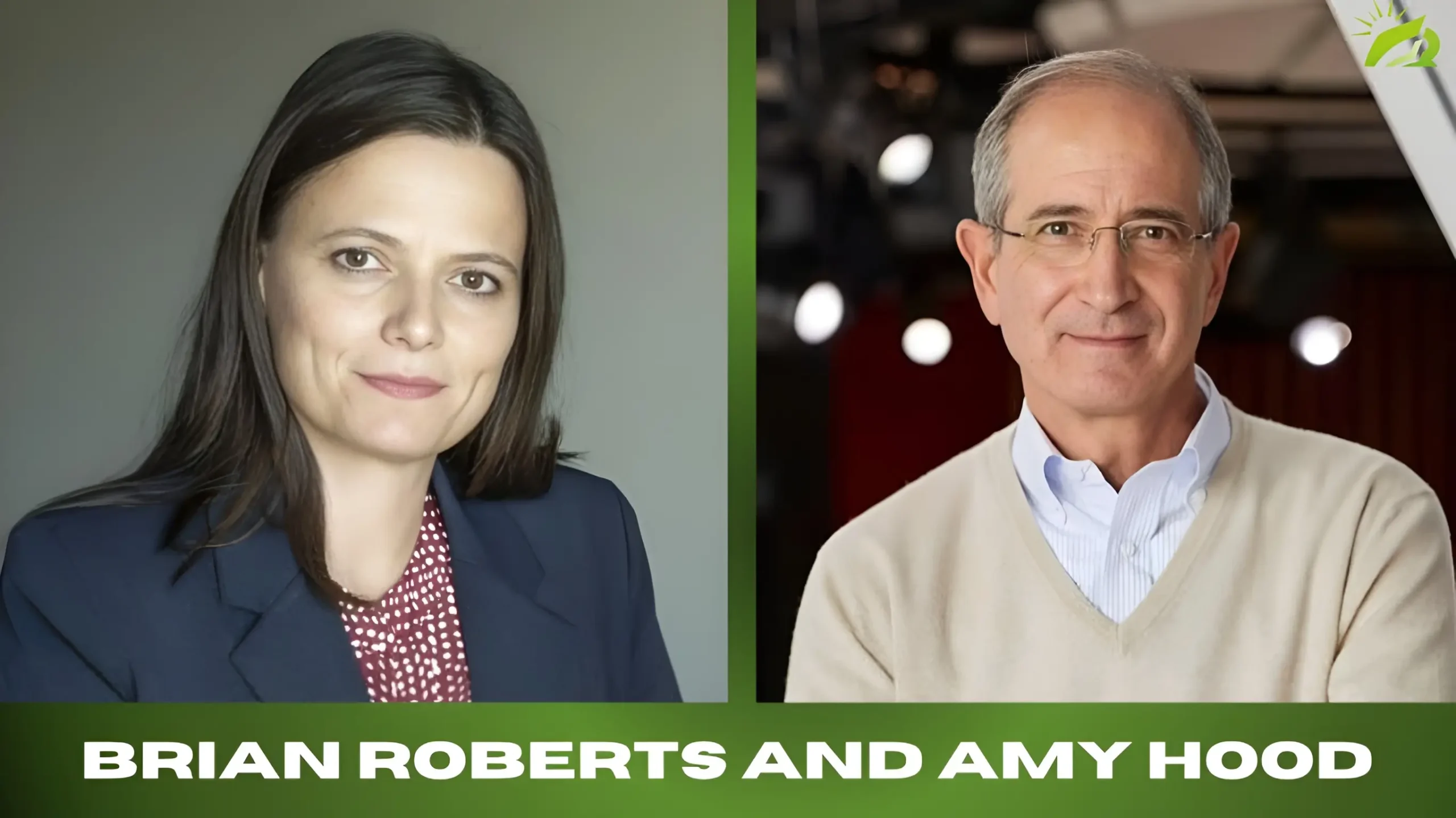
The technology and media industries have witnessed transformative leadership under visionary executives who have navigated unprecedented market challenges and positioned their organizations for sustained growth. Two names that stand out prominently in this landscape are Brian Roberts and Amy Hood-executives whose strategic acumen, operational excellence, and forward-thinking approaches have redefined what effective leadership looks like in the 21st century.
Brian Roberts, as the Chairman and CEO of Comcast Corporation, has steered one of the world’s largest media and technology infrastructures through dramatic industry shifts. Amy Hood, serving as Chief Financial Officer of Microsoft Corporation, has become instrumental in driving financial strategy and operational efficiency for a company that dominates the cloud computing and software sectors. While operating in different sectors, both executives demonstrate remarkable similarities in their approach to leadership, stakeholder value creation, and long-term vision.
This comprehensive exploration examines the career trajectories, leadership philosophies, business achievements, and strategic decisions that have made Brian Roberts and Amy Hood influential figures in corporate America. Their combined impact extends beyond their respective organizations, influencing industry standards, investor confidence, and how modern corporations approach digital transformation and financial stewardship.
The Leadership Journey of Brian Roberts
Early Career and Rise to Leadership
Brian Roberts’ tenure at Comcast represents one of the most notable executive journeys in American business history. Beginning his career within the organization that his father founded, Roberts was uniquely positioned to understand the company’s DNA while bringing contemporary business acumen to evolving challenges. His early involvement in the company’s operations provided him with comprehensive exposure to the intricacies of the cable, media, and entertainment sectors.
Roberts’ ascent through the ranks wasn’t simply a product of family legacy; rather, it reflected his demonstrated competence in strategic decision-making and operational management. He took on increasingly significant responsibilities, eventually leading major segments of the business before assuming the top role. This gradual progression allowed him to build institutional knowledge while developing the relationships necessary to execute transformational strategies.
Strategic Acquisitions and Market Expansion
One of Roberts’ most defining contributions to Comcast’s trajectory has been his willingness to pursue transformational acquisitions that position the company for future growth. The acquisition of NBC Universal represents a pivotal moment in Comcast’s evolution, fundamentally reshaping the company from a pure-play cable operator into a vertically integrated media and technology conglomerate.
This strategic move demonstrated several key principles of Roberts’ leadership approach:
- Vertical Integration: Acquiring content production capabilities alongside distribution infrastructure created economies of scale and competitive advantages
- Digital Adaptation: The merger enabled Comcast to evolve beyond traditional cable television into digital streaming, on-demand content, and emerging entertainment platforms
- Stakeholder Balance: Roberts navigated complex regulatory landscapes and competing stakeholder interests while executing the acquisition
- Long-term Positioning: Rather than optimizing for short-term profits, Roberts invested heavily in infrastructure and content that would sustain competitiveness for decades
Navigating Industry Disruption
Perhaps no aspect of Roberts’ leadership is more instructive than his navigation of the cord-cutting phenomenon and streaming revolution. As traditional cable television faced existential threats from digital alternatives, Roberts made pivotal decisions to transform Comcast from a company defending legacy businesses to one actively innovating within new media paradigms.
The development and expansion of Comcast’s streaming services, investment in broadband infrastructure, and strategic partnerships with content creators reflect Roberts’ understanding that survival in media requires constant evolution. Rather than resist disruption, he has positioned Comcast to participate in and benefit from transformational industry changes.
Amy Hood: Architecting Financial Excellence at Microsoft

Path to the C-Suite
Amy Hood’s rise to Chief Financial Officer of Microsoft illustrates a different but equally powerful leadership trajectory. Hood joined Microsoft from a consulting and financial analysis background, bringing external perspectives and rigorously analytical frameworks to the organization. Her career progression reflects exceptional financial acumen combined with strategic business insight.
Hood’s ascent to CFO came during a period of significant internal transition at Microsoft, when the company was reassessing its strategic priorities under CEO Satya Nadella’s leadership. Her appointment marked confidence in her ability to align financial strategy with the company’s transformation toward cloud computing and enterprise software.
Redefining Microsoft’s Financial Strategy
As CFO, Hood has been instrumental in translating Nadella’s strategic vision into financial reality. The migration toward subscription-based models, the expansion of Azure cloud services, and the diversification into enterprise artificial intelligence have all required sophisticated financial planning, capital allocation decisions, and investor communication.
Hood’s financial stewardship has been characterized by several distinctive elements:
- Disciplined Capital Allocation: Strategic investments in high-growth segments while maintaining profitability across the portfolio
- Transparency and Communication: Clear articulation of financial strategy and performance metrics to investors and stakeholders
- Operational Efficiency: Driving cost management and resource optimization without compromising innovation investments
- Emerging Technology Investment: Recognizing the financial implications of artificial intelligence, quantum computing, and other frontier technologies
Driving Shareholder Value Through Strategic Finance
Microsoft’s financial performance under Hood’s leadership has been exceptional, with consistent revenue growth, margin expansion, and share price appreciation. The company’s market capitalization has grown substantially, reflecting confidence in both the business strategy and financial execution.
Hood has demonstrated particular skill in managing the tension between immediate profitability and long-term investment. The company’s significant commitments to artificial intelligence and cloud infrastructure represent enormous capital requirements that could theoretically constrain short-term earnings. Hood’s financial frameworks have made the case for these investments to investors while ensuring disciplined deployment of capital.
Leadership Philosophies Of Brian Roberts And Amy Hood: Common Threads
Strategic Patience and Long-term Vision
Both Roberts and Hood exemplify a leadership approach that prioritizes long-term value creation over quarterly earnings optimization. In an era when activist investors and market pressures often encourage short-term thinking, both executives have maintained conviction in multi-year strategic initiatives that required substantial capital commitments before generating returns.
Roberts’ decision to maintain expensive broadband infrastructure investments despite near-term profit pressures and Hood’s support for massive cloud computing infrastructure spending both reflect this patient, visionary approach to leadership.
Stakeholder Alignment
Neither Roberts nor Hood operate in isolation from their stakeholder ecosystems. Rather, both have demonstrated exceptional skill in aligning the interests of employees, investors, customers, and community stakeholders. This alignment requires transparent communication, consistent execution against stated strategies, and willingness to make difficult tradeoffs in service of sustainable value creation.
Operational Excellence Orientation
Both executives bring strong operational discipline to their leadership roles. Roberts’ attention to operational metrics across Comcast’s complex portfolio of businesses and Hood’s detailed engagement with Microsoft’s financial processes and performance indicators reflect a belief that excellence in execution separates winning organizations from average ones.
Embrace of Technological Change
Rather than viewing technological disruption as a threat to be managed, both Roberts and Hood have positioned their organizations to lead technological change. This requires intellectual humility-acknowledging that existing business models may not be optimal-combined with aggressive investment in emerging technologies and capabilities.
Case Study: Comcast’s Digital Transformation Under Roberts

The Challenge
When Roberts took full leadership of Comcast, the company faced an existential challenge. Cord-cutting trends threatened the traditional cable television revenue model that had powered the company for decades. Broadband and wireless competitors were fragmenting the customer base, and young consumers were increasingly indifferent to traditional television packages.
The Strategic Response
Rather than retreat into defending legacy business, Roberts implemented a comprehensive digital transformation strategy:
Streaming Platform Development: The launch and expansion of Peacock represented a direct response to streaming disruption. Rather than surrender this market to competitors, Comcast invested in its own content platform, leveraging NBC Universal’s content production capabilities and Comcast’s distribution infrastructure.
Broadband Prioritization: Recognizing that connectivity would become the foundational service, Roberts invested heavily in broadband network infrastructure. The company deployed gigabit-speed networks across service territories, positioning Comcast as a premium broadband provider even as video revenue declined.
Wireless Integration: The acquisition and expansion of Comcast’s wireless services created a bundled offering that increased customer stickiness and provided alternative revenue streams to declining video business.
Advertising Technology: Investment in advanced advertising technology platforms enabled Comcast to participate in the shift from traditional media advertising to programmatic digital advertising.
Results and Lessons
While Comcast has not escaped the secular decline in traditional cable television, the company’s digital investments have substantially offset legacy business declines. The case demonstrates that strategic adaptation, while expensive and organizationally complex, can allow legacy businesses to remain competitive in transformed markets.
Roberts’ leadership lesson: Accept disruption as inevitable, but position your organization to lead transformation rather than resist it.
Case Study: Microsoft’s Cloud and AI Dominance Under Hood’s Financial Leadership
The Financial Imperative
When Satya Nadella took over Microsoft’s leadership, the company was transitioning from a declining personal computer software business toward cloud computing. This transition required massive capital investment in data centers, research facilities, and software development. Hood faced the financial challenge of funding this transformation while maintaining investor confidence and earnings growth.
Hood’s Financial Architecture
Hood constructed a financial model that:
Separated Business Unit Economics: By clearly delineating the profitability profiles of legacy businesses (which generated steady cash flows) and growth businesses (which required investment), Hood could justify growth investment to investors while demonstrating responsibility in capital allocation.
Subscription Model Transition: The shift toward subscription-based revenue for Microsoft’s core software products (Office 365, Windows 365, etc.) created more predictable, recurring revenue that improved financial forecasting and investor confidence.
Cloud Infrastructure Investment: Hood approved and managed massive capital expenditure programs for Azure data center infrastructure, recognizing that cloud computing required continuous infrastructure investment to maintain competitive position.
AI Integration Capital: Most recently, Hood has shepherded financial decisions supporting massive investment in artificial intelligence capabilities, including partnerships with OpenAI and significant internal R&D funding.
Financial Performance Outcomes
Microsoft’s financial metrics under Hood’s stewardship demonstrate successful execution:
- Consistent double-digit revenue growth across major segments
- Operating margin expansion despite substantial growth investments
- Cloud revenue growth exceeding 25% annually
- Share price appreciation substantially exceeding market averages
- Investment-grade balance sheet with substantial cash generation
Hood’s contribution: Financial strategy that enables ambitious transformation while maintaining disciplined capital allocation and investor confidence.
Comparative Leadership Analysis
Decision-Making Frameworks
Both Roberts and Hood employ disciplined analytical frameworks for major decisions. Rather than rely on intuition, both demand comprehensive analysis, financial modeling, and risk assessment before committing significant capital. This analytical rigor provides confidence that decisions reflect reasoned judgment rather than executive whim.
However, both also demonstrate decisiveness. Analysis informs but does not paralyze decision-making. Once strategic direction is established, both executives commit organizational resources and leadership attention to execution.
Stakeholder Communication
In an era of 24-hour news cycles and social media amplification, Roberts and Hood have both mastered stakeholder communication. Earnings calls, investor conferences, media interviews, and internal communications are all leveraged to clearly articulate strategic direction, acknowledge challenges, and demonstrate competent leadership.
Both executives also demonstrate willingness to acknowledge mistakes or changed strategies without defensive posturing. This authentic communication builds credibility with sophisticated stakeholders who understand that no strategy survives unchanged.
Organizational Development
Both Roberts and Hood have invested in developing leadership talent within their organizations. Rather than rely on external executive recruitment for critical roles, both have built succession pipelines and developed emerging leaders. This organizational focus ensures sustainable leadership and reduces dependence on any individual executive.
Impact on Industry Standards
Setting Competitive Benchmarks
The strategic and operational decisions of Roberts and Hood influence broader industry norms. When Comcast pursues transformational acquisitions or invests in digital platforms, competitors must reassess their strategies. When Microsoft announces substantial AI investments under Hood’s financial oversight, other technology companies must reconsider capital allocation priorities.
Executive Compensation and Performance Metrics
The success of both executives has influenced how boards think about executive compensation and performance evaluation. Long-term value creation, rather than short-term earnings per share, has become more prominent in how boards evaluate and compensate senior leadership.
Corporate Governance Principles
Both executives operate within corporate governance frameworks that increasingly emphasize stakeholder responsibility, transparency, and long-term thinking. Their success demonstrates that thoughtful governance and strong operational execution are complementary rather than conflicting.
Digital Transformation Lessons from Two Leaders
Lesson One: Embrace Disruption
The most powerful lesson from both Roberts and Hood is that successful leaders don’t resist technological disruption; they position their organizations to lead it. This requires intellectual humility about the limitations of existing business models combined with aggressive investment in emerging opportunities.
Lesson Two: Financial Discipline Enables Transformation
Transformation at scale requires substantial capital, but it also requires rigorous financial discipline. Neither Roberts nor Hood has approached transformation as a license for spending. Rather, both apply financial rigor to ensure that transformation investments generate returns that justify the capital required.
Lesson Three: Stakeholder Alignment Drives Execution
Strategic decisions, however brilliant, fail without organizational and stakeholder alignment. Both Roberts and Hood have devoted substantial leadership attention to communicating strategy, aligning incentives, and building consensus among diverse stakeholder groups.
Lesson Four: Long-term Perspective Provides Competitive Advantage
In industries subject to quarterly earnings pressures, the willingness of Roberts and Hood to sacrifice short-term earnings for long-term positioning creates competitive advantage. Investors increasingly recognize that this long-term orientation drives sustainable value creation.
Challenges and Criticisms
Comcast’s Market Perception
Despite strategic successes, Comcast continues to face criticism regarding customer service quality, broadband pricing, and market dominance concerns. Roberts has faced criticism that his focus on strategic transformation has not sufficiently addressed operational customer service issues. This represents a persistent tension in his leadership-balancing transformation priorities with operational excellence in legacy businesses.
Microsoft’s Market Dominance Concerns
Microsoft’s market dominance in enterprise software and growing power in cloud computing have attracted regulatory scrutiny and competitive challenges. Hood’s financial stewardship has been effective, but the company faces ongoing questions about fair competition and customer choice in cloud markets.
Corporate Responsibility and Sustainability
Both executives lead companies that increasingly face expectations regarding environmental sustainability, workforce diversity, and broader corporate social responsibility. These expectations represent ongoing leadership challenges that extend beyond traditional financial and operational metrics.
Frequently Asked Questions
Q: What is the primary business focus of Brian Roberts at Comcast?
A: Brian Roberts leads Comcast Corporation as Chairman and CEO, overseeing a diversified portfolio encompassing cable television, broadband internet, wireless services, and the NBC Universal media division. His strategic focus has evolved toward digital transformation, streaming services, and advanced broadband infrastructure.
Q: How long has Amy Hood served as Microsoft’s CFO?
A: Amy Hood has served as Chief Financial Officer of Microsoft since 2014, a tenure spanning over a decade. Her leadership has coincided with Microsoft’s transformation toward cloud computing and artificial intelligence focus.
Q: What are the key differences in Roberts and Hood’s leadership approaches?
A: While both emphasize long-term value creation and stakeholder alignment, Roberts operates primarily in legacy media and infrastructure industries requiring digital transformation, while Hood leads a technology company undergoing reinvention toward cloud and AI. Roberts focuses heavily on infrastructure and content integration, while Hood prioritizes financial strategy and capital allocation efficiency.
Q: How have Roberts and Hood navigated their respective industry disruptions?
A: Roberts positioned Comcast for streaming, broadband, and wireless competition by investing in complementary businesses and technologies. Hood supported Microsoft’s transition from personal computing to cloud infrastructure by constructing financial models that justified substantial growth investment while maintaining earnings growth.
Q: What lessons can other executives learn from Brian Roberts?
A: Roberts demonstrates that legacy businesses can remain competitive through strategic adaptation, disciplined capital allocation, and willingness to participate in rather than resist industry disruption. His example suggests that acknowledging changing market dynamics and investing in transformation is preferable to defending legacy business models.
Q: How does Amy Hood’s role as CFO influence Microsoft’s strategic direction?
A: Hood’s financial frameworks and capital allocation decisions directly enable or constrain strategic possibilities. Her willingness to fund substantial cloud and AI investments reflects and reinforces Microsoft’s strategic direction toward these growth markets.
Q: What are the common success factors between Roberts and Hood?
A: Both executives demonstrate analytical rigor, stakeholder communication skill, long-term perspective, operational excellence orientation, and comfort with technological change. Both have successfully balanced transformation investment with financial discipline.
Q: How do Roberts and Hood approach risk management?
A: Both executives employ analytical frameworks to understand and manage business risks. Rather than avoid risk entirely, both accept calculated risks that align with long-term strategic objectives.
Q: What is the significance of Comcast’s acquisition of NBC Universal?
A: The acquisition represented Roberts’ vision for vertical integration-combining distribution infrastructure with content production capabilities. This deal fundamentally transformed Comcast from a cable operator to a media conglomerate positioned for the digital streaming era.
Q: How has Microsoft’s financial performance reflected Hood’s strategic priorities?
A: Consistent revenue growth, margin expansion, and share price appreciation have validated Hood’s financial strategy. The company’s ability to fund substantial transformation investments while maintaining investor confidence reflects Hood’s effective financial stewardship.
Q: Who is Amy Hood’s husband?
A: Amy Hood is married to David Hourt, whom she keeps out of the public spotlight. Very limited personal information about him is publicly available, as both Amy and her family maintain privacy regarding personal matters.
Q: What does Brian Roberts do now?
A: Brian Roberts currently serves as Chairman and CEO of Comcast Corporation, overseeing all operations including cable, broadband, wireless services, and NBC Universal media division while driving digital transformation and streaming initiatives.
Q: What is Amy Hood’s salary at Microsoft?
A: Amy Hood’s total compensation package (salary, bonuses, and stock) is estimated around $25-30 million annually based on SEC filings, though exact figures vary yearly. Her compensation reflects her CFO role and performance metrics tied to Microsoft’s financial success.
Q: What religion is Brian Roberts of Comcast?
A: Brian Roberts is Jewish. He has been involved in various philanthropic efforts and has supported causes aligned with Jewish organizations, though he maintains a primarily professional public profile.
Conclusion
Brian Roberts and Amy Hood represent exemplary models of 21st-century corporate leadership, each excelling within their respective industries through distinctive yet complementary approaches. Roberts has navigated Comcast through technological disruption by building a diversified portfolio of media, broadband, and wireless services. Hood has orchestrated Microsoft’s transformation toward cloud computing and artificial intelligence through disciplined financial strategy and capital allocation.
Their combined impact extends beyond their respective organizations. Both have influenced how boards think about executive evaluation, how investors assess strategic transformation, and how industries adapt to technological change. Their example demonstrates that disciplined analysis, stakeholder alignment, long-term perspective, and willingness to embrace technological change represent essential elements of executive excellence.
For organizations navigating digital transformation, industry disruption, or market uncertainty, the leadership approaches of Roberts and Hood provide instructive examples. Their success suggests that visionary leadership combined with operational discipline, financial rigor, and authentic stakeholder communication creates competitive advantage that sustains through market cycles.
As technology continues reshaping business models across industries, the leadership principles demonstrated by Roberts and Hood-strategic patience, stakeholder alignment, embrace of disruption, and disciplined capital allocation-will likely become increasingly essential for sustained competitive success. Their ongoing influence on industry standards and business practices ensures that their impact will extend well beyond their individual tenures in executive roles.
For More Visits: Bright Magazine
Also Read: Nadine Caridi: 7 Shocking Truths the Media Never Revealed
