

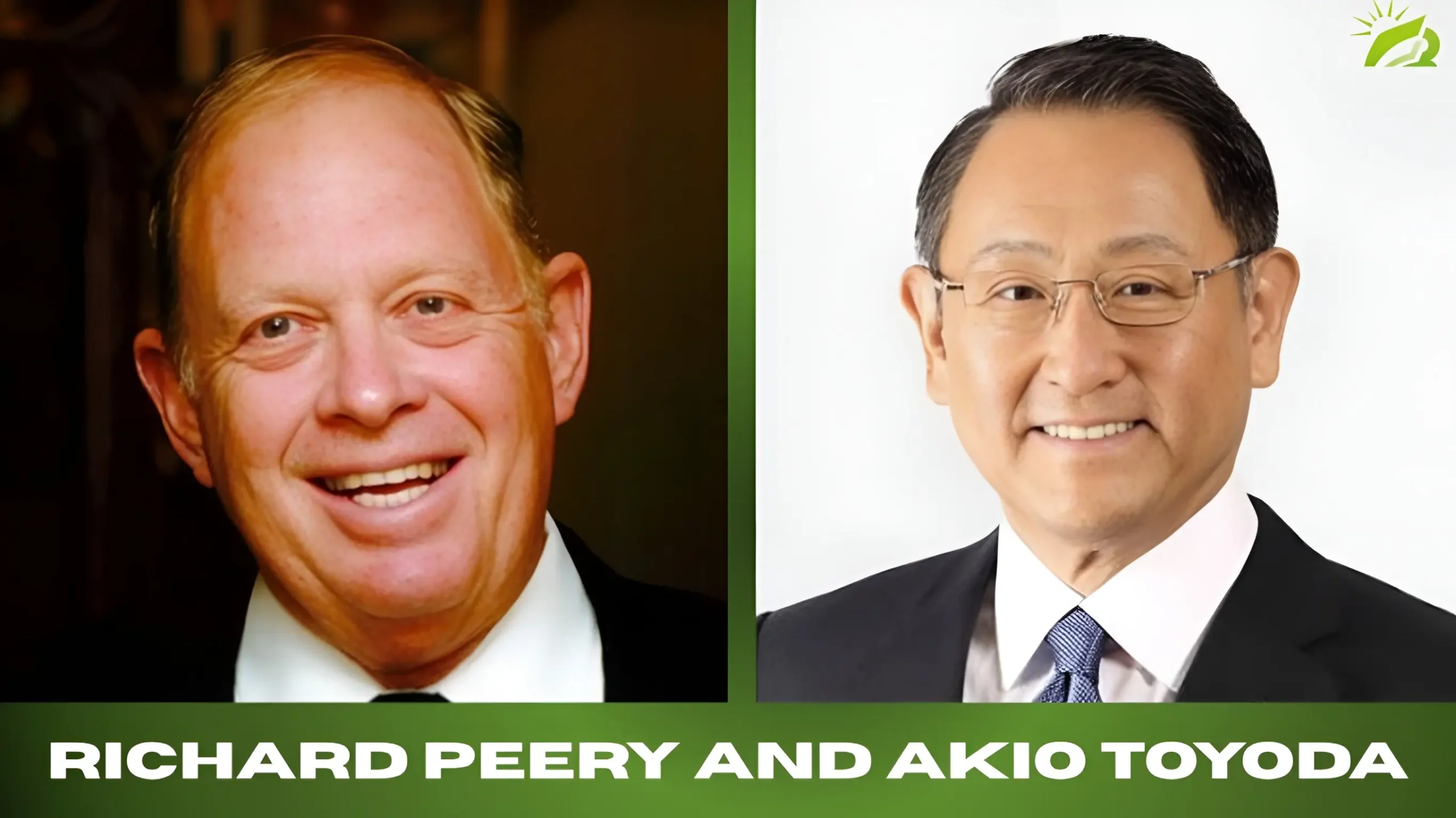
The business world frequently intersects the names Richard Peery and Akio Toyoda in comparative analyses, yet nothing could be further from the truth than suggesting these two leaders traveled similar paths. Both achieved extraordinary wealth and influence, both shaped entire industries, and both remain influential figures in global commerce. However, the mechanisms of their success, the industries they dominated, and the philosophies guiding their decisions reveal fundamentally different approaches to building and managing billion-dollar enterprises.
Richard Peery represents the classic American entrepreneurial archetype a self-made billionaire who recognized opportunity in California’s undeveloped landscape and transformed raw land into the physical infrastructure of the digital revolution. Akio Toyoda embodies something distinctly different: the professional executive stewarding a multigenerational family empire through unprecedented global complexity, technological disruption, and safety crises that threatened to unravel a century of corporate trust.
Understanding these two leaders side by side offers critical insights into divergent wealth-creation models, leadership philosophies under pressure, and the distinct challenges facing entrepreneurs versus organizational administrators. Their stories reveal that in the modern global economy, there are multiple paths to the top and multiple frameworks for navigating the responsibilities that come with extreme influence.
Part 1: The Foundation Years – Where Ambition Meets Circumstance
Richard Peery’s California Vision (1960s-1980s)
Richard Peery’s wealth origin story begins with what could only be described as impeccable timing combined with bold conviction. Born in 1938, Peery entered adulthood just as California’s post-war expansion was accelerating. While others saw farmland on the outskirts of San Jose, Peery recognized something else entirely: the inevitable geographic center of a technological revolution that hadn’t yet begun.
In the 1960s, partnering with John Arrillaga, Peery began acquiring vast tracts of undervalued agricultural property in what would become known as Silicon Valley. This wasn’t speculative real estate flipping in the modern sense. Rather, Peery and Arrillaga were making a calculated bet on the region’s future as a technology hub. They purchased properties systematically, often from farmers ready to exit the business, accumulating holdings at a fraction of what would become their eventual value.
The genius of this strategy lay in Peery’s willingness to hold these properties long-term while simultaneously developing them strategically. As technology companies began establishing operations in the region during the 1970s and 1980s, Peery Arrillaga positioned itself as the premier landlord and development partner. Intel, Apple, Google, and Cisco all became tenants in properties controlled by Peery’s company.
Key characteristics of Peery’s early success:
- Recognition of geographic/economic trends before widespread adoption
- Patient capital willing to hold assets during low-value periods
- Strategic partnerships that aligned incentives and distributed risk
- Development expertise that transformed raw land into functional infrastructure
- Adaptability to evolving tenant needs as industries matured
By the 1990s, Peery had transitioned from seeing himself primarily as a real estate speculator to understanding his role as a foundational architect of technological progress. This mindset shift proved critical to maintaining relevance as his initial properties matured and market dynamics shifted.
Akio Toyoda’s Inheritance and Ascension (1956-2009)
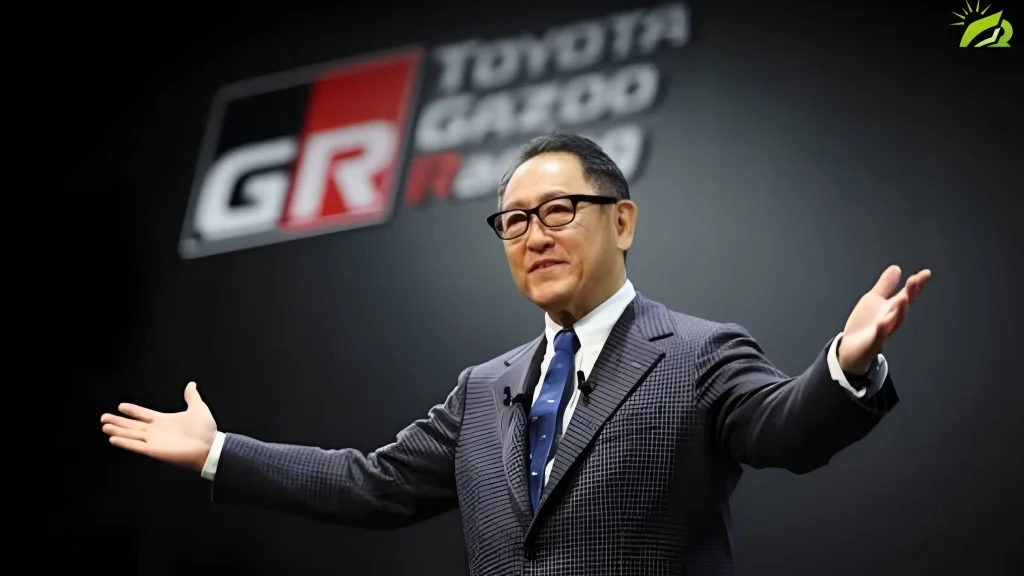
Akio Toyoda’s journey to influence followed an entirely different trajectory. Born in 1956 as a member of the Toyoda family the founding dynasty of Toyota Motors Akio inherited not just wealth but responsibility. His great-grandfather, Sakichi Toyoda, founded Toyota Industries in 1926, and the family legacy extended across more than eight decades of automotive history by the time Akio reached adulthood.
Unlike Peery’s self-made narrative, Toyoda’s early career unfolded within the protective and demanding structure of a multinational corporation. After completing his education, Toyoda entered Toyota not as an external executive but as a family member expected to understand every facet of the business from the ground up. He rotated through manufacturing divisions, worked in product development, and gained hands-on experience in the operational realities that create or destroy automotive companies.
This distinction matters profoundly. While Peery was learning to read market signals and identify undervalued assets, Toyoda was learning to navigate massive organizational hierarchies, manage competing interests within family ownership structures, and maintain institutional stability while facing industry-wide disruptions.
The Toyota that Toyoda inherited responsibility for in the 2000s was already the world’s largest automaker by revenue a position requiring not entrepreneurial innovation but operational excellence, strategic navigation of geopolitical complexity, and the capacity to manage relationships with governments, suppliers, competitors, and internal constituencies simultaneously.
Part 2: The Critical Inflection Points – Crisis and Opportunity
Peery’s Transition to Philanthropy (2000s-Present)
By the early 2000s, Richard Peery had accumulated wealth estimated in the billions. The traditional real estate development model that created this fortune faced inevitable maturation. In many ways, Peery had already accomplished his core objective: transforming undeveloped land into the physical backbone of Silicon Valley’s tech ecosystem.
Rather than attempt to extend a model nearing saturation, Peery made a significant strategic pivot toward philanthropy. The Peery Foundation, established to support education and community development in California, became his primary focus. This transition revealed something essential about Peery’s mindset: his ability to recognize when an established business model had run its course and to redirect energy toward new forms of impact.
This shift also reflected a broader pattern in self-made billionaire behavior the eventual transition from wealth accumulation to legacy building. Peery’s decision to focus on giving back while still maintaining wealth management operations showed sophisticated understanding of both personal mortality and the diminishing returns on continued real estate expansion.
Toyoda’s Leadership During the Recall Crisis (2009-2010)
If Peery’s critical inflection point involved voluntary transition, Toyoda’s came as a forced reckoning with institutional failure. In 2009-2010, Toyota faced one of the most serious crises in its corporate history. Sudden acceleration issues in multiple vehicle models led to massive recalls affecting millions of cars worldwide. The company faced congressional testimony, criminal investigations, and a precipitous collapse in consumer trust.
Akio Toyoda, recently elevated to President and CEO, inherited this catastrophe almost immediately upon taking the role. This moment crystallized the fundamental difference between his position and Peery’s: Toyoda could not simply exit the business or pivot to new ventures. He was bound by family legacy, corporate responsibility, and the expectations of employees, customers, and governments across dozens of countries.
His response revealed his leadership character. Rather than deflect blame or minimize the crisis, Toyoda:
- Personally testified before the U.S. Congress, demonstrating accountability
- Implemented comprehensive quality control reforms across all manufacturing facilities
- Established a corporate quality advisory committee with external oversight
- Committed billions in capital investment to prevent future failures
- Restructured decision-making processes to elevate safety concerns
This crisis management approach painful, costly, but ultimately credible restored Toyota’s reputation over the following decade. It also demonstrated that Toyoda’s value lay not in generating new growth but in navigating existential threats to established enterprises.
Part 3: Contrasting Business Models and Operational Philosophy
The Self-Made Billionaire Model: Peery’s Approach
Richard Peery’s business model rests on several foundational principles distinct from corporate management:
1. Asymmetric Information Advantage Peery’s original wealth came from seeing something others missed the future value of Silicon Valley land. This required independent thinking, market contrarianism, and willingness to act on conviction before consensus emerged.
2. Long-Term Capital Patience Unlike corporate managers judged quarterly, Peery could hold assets for decades, waiting for market conditions to validate his thesis. This patience created wealth compounding across extended timescales that shorter-term investors couldn’t match.
3. Partnership-Based Risk Distribution Rather than building massive organizations, Peery operated through strategic partnerships (notably with Arrillaga) that aligned incentives and distributed both risk and reward. This kept operations lean while maintaining adequate expertise.
4. Exit Clarity Peery recognized when his core business model had maximized its utility and successfully transitioned to different value creation modes. This flexibility prevented the trap of defending obsolete strategies.
The Institutional Leadership Model: Toyoda’s Approach
Akio Toyoda’s operational reality diverged significantly from this model:
1. Stakeholder Complexity As CEO of a publicly traded multinational corporation, Toyoda answered to shareholders, employees across dozens of countries, government regulators, suppliers, and the Toyoda family’s ownership interests. Managing these competing constituencies simultaneously created constraints that Peery never faced.
2. Organizational Continuity Requirements Toyoda couldn’t simply exit Toyota when business conditions changed. The company employed hundreds of thousands of people and formed the economic backbone of entire Japanese communities. His decisions had to maintain institutional stability across extended timeframes.
3. Regulatory and Geopolitical Navigation As the leader of Japan’s largest automaker, Toyoda operated within a complex framework of government relationships, trade policies, and international agreements. His strategic options faced limitations that family-controlled enterprises didn’t encounter.
4. Innovation vs. Stability Tension While Peery could focus on identifying emerging opportunities, Toyoda had to balance the imperative to innovate (particularly around electric vehicles and autonomous technology) against the need to maintain profitability in existing business lines. This tension defined much of his strategic decision-making.
Part 4: Leadership Under Pressure – How They Handled Adversity
Peery’s Experience with Market Volatility
Though Richard Peery didn’t face the acute crisis that Toyoda encountered, his career spanned multiple significant market disruptions. The dot-com bubble burst of 2000-2001 created a moment where tech companies Peery’s primary tenants faced severe contraction. His response demonstrated the advantages of patience and diversified tenant relationships.
Because Peery had built tenant diversity across multiple tech companies rather than depending on any single customer, the sector-wide downturn, while painful, didn’t threaten the fundamental business. Additionally, his long-term capital availability allowed Peery to maintain properties through downturns without forced sales, a luxury many real estate operators lacked.
This experience shaped a fundamental lesson in Peery’s approach: resilience comes from not betting everything on a single outcome or customer, and from having capital reserves that allow you to outlast market downturns rather than liquidate at the worst time.
Toyoda’s Crisis Management at Scale
Toyoda’s management of the recall crisis, by contrast, operated in the unforgiving glare of global media and regulatory scrutiny. His approach included:
Immediate accountability measures:
- Full disclosure of the scope of recalls rather than gradual expansion
- Personal communication with customers and stakeholders
- Investment of corporate resources without attempting to minimize costs
Structural reforms:
- Enhanced supplier relationships to improve parts quality
- Manufacturing facility audits and equipment upgrades
- Development of new decision-making processes that elevated quality concerns
Cultural realignment:
- Explicit messaging that quality took precedence over production targets
- Reorientation of internal incentive structures to reflect safety priorities
- International recruitment of quality experts to bring external perspectives
The recall crisis tested whether Toyoda could maintain organizational credibility during failure. His measured, transparent, costly response ultimately validated his leadership while establishing a template for how large multinational corporations should handle quality crises.
Part 5: Wealth Application and Long-Term Legacy Building
Peery’s Philanthropic Model
Richard Peery’s transition into philanthropy through the Peery Foundation reflected a deliberate strategy of wealth application matched to personal expertise and regional commitment. Rather than spreading resources across generic charitable causes, Peery focused the foundation on education and community development in California the geographic region that generated his wealth and the sector (education) most aligned with his history of supporting technological advancement.
This focused approach differs markedly from many billionaire philanthropists who spread resources across numerous causes. Peery’s model prioritized depth over breadth, recognizing that concentrated investment in specific domains creates more measurable impact than scattered charitable giving.
Key principles of Peery’s philanthropic approach:
- Geographic focus reflecting business legacy
- Sector specialization in education and community development
- Long-term commitment rather than episodic grants
- Connection between philanthropic work and original business expertise
- Sustained engagement rather than celebrity philanthropy
Toyoda’s Leadership of Toyota’s Transformation
While Peery directed resources toward external philanthropic goals, Toyoda’s legacy building occurred through his stewardship of Toyota’s evolution during his tenure as President and CEO. His strategic priorities included:
Environmental sustainability: Pushing Toyota’s massive manufacturing apparatus toward lower-emission vehicles, hybrid technology, and eventually electric vehicles a transition that required coordinated change across thousands of facilities and required working with suppliers to develop new technologies.
Quality restoration: Following the recall crisis, making quality not merely a compliance checkbox but a cultural imperative embedded in decision-making processes at every organizational level.
Technological integration: Positioning Toyota to address the autonomous vehicle revolution and connected car technology, despite Toyota’s origins in mechanical engineering rather than software development.
Organizational renewal: Managing generational transitions in leadership while maintaining institutional continuity, a challenge that family-controlled enterprises face acutely.
Toyoda’s legacy operates at the organizational level rather than through external foundations. His impact measures in the strategic direction of the world’s largest automaker and the implications of Toyota’s decisions for millions of customers, employees, and investors globally.
Part 6: Case Studies in Decision-Making
Case Study 1: The Silicon Valley Real Estate Play
Context: In the 1960s, Silicon Valley didn’t exist as a distinct economic region. The area was primarily agricultural, with scattered electronics manufacturers and no dominant industry.
Peery’s Decision: Systematically acquire farmland across the region at low valuations, based on thesis that technology manufacturing would concentrate in this geographic area.
Key Decision Points:
- Recognized undervaluation before market consensus
- Maintained conviction during periods when the thesis seemed unproven
- Built development expertise to convert raw land into functional infrastructure
- Diversified tenant relationships rather than depending on single customers
Outcome: As tech companies expanded operations, Peery’s properties appreciated exponentially. By the 1990s and 2000s, Peery Arrillaga controlled some of the most valuable real estate in the world. The partnership accumulated billions in wealth and positioned Peery as one of the most significant landlords in technology’s geographic epicenter.
Lessons: Market-contrarian positions generate extraordinary returns when they prove correct. Success required patience, capital resources to maintain positions through extended periods of low returns, and expertise in converting recognized opportunities into operational reality.
Case Study 2: Toyota’s Response to Safety Crises
Context: By 2009, Toyota had achieved unprecedented scale, becoming the world’s largest automaker. Safety issues emerged in multiple vehicle models, requiring massive recalls affecting millions of vehicles.
Toyoda’s Decision: Rather than minimize recalls or blame external factors, personally take responsibility, implement comprehensive reforms, and invest billions in quality improvements.
Key Decision Points:
- Accept short-term financial pain for long-term credibility restoration
- Acknowledge manufacturing and quality processes had failed
- Restructure internal decision-making to prioritize safety over production targets
- Invite external scrutiny rather than defend institutional autonomy
Outcome: Toyota’s brand recovered over the following decade. The company maintained market leadership, customer loyalty rebuilt, and Toyota became a case study in crisis management within corporate leadership education.
Lessons: Institutional credibility, once damaged, requires genuine remediation rather than PR management. Accepting responsibility, implementing structural reforms, and demonstrating sustained commitment to change proves more effective than deflection. Leadership during crisis requires willingness to sacrifice short-term financial performance for long-term institutional survival.
Case Study 3: Strategic Pivots and Industry Evolution
Context Peery: By the 2000s, the Silicon Valley real estate market had matured. Future growth would necessarily slow from the exponential expansion of previous decades.
Peery’s Pivot: Rather than attempt to maintain real estate growth model, redirect focus toward philanthropy while maintaining wealth management operations.
Context Toyoda: During Toyoda’s leadership, the automotive industry faced existential disruption from electric vehicles, autonomous technology, and changing consumer preferences regarding vehicle ownership.
Toyoda’s Pivot: Invest heavily in electric vehicle development, establish autonomous vehicle research partnerships, and maintain Toyota’s core manufacturing competency while building new technological capabilities.
Contrasting Approaches: Peery recognized when his business model had maximized utility and exited toward new forms of value creation. Toyoda recognized that his core business required fundamental transformation but couldn’t be abandoned. Both decisions reflected clear-eyed assessment of market realities and available options within their respective contexts.
Part 7: Key Lessons from Richard Peery and Akio Toyoda’s Contrasting Paths
Lesson 1: Market Timing and Patience
Richard Peery and Akio Toyoda operated in different time horizons. Peery could wait decades for his thesis to prove correct. Toyoda had to deliver quarterly results to shareholders while managing long-term strategic transformation.
This highlights a fundamental distinction in wealth creation: speculative positioning (Peery’s approach) requires patience and capital reserves that operating companies rarely possess. Toyoda’s leadership occurred within compressed timeframes and reporting requirements that precluded the luxury of extended patience.
Lesson 2: Accountability Mechanisms
Self-made billionaires and institutional leaders face different accountability structures. Peery answered primarily to himself and his partners. Toyoda answered to shareholders, regulators, employees, and the public. This distinction shaped how each leader made decisions, allocated resources, and communicated results.
Lesson 3: Crisis Response Profiles
Peery’s wealth came partly from markets that aligned with his thesis. Crises, when they occurred, could be weathered through capital reserves and tenant diversification. Toyoda’s crisis required acknowledging institutional failure and implementing expensive corrections. Both responses demonstrated leadership capacity, but in entirely different contexts.
Lesson 4: Legacy Application
Peery’s legacy building occurred through deliberate redirection of resources toward external impact. Toyoda’s legacy building occurred through internal organizational stewardship. Neither approach is superior; they reflect different circumstances and available options.
Lesson 5: Adaptability Within Constraints
The most overlooked parallel between Peery and Toyoda is their shared capacity for adaptation. Peery adapted to market realities by recognizing when his core business model faced maturation. Toyoda adapted to industry disruption by investing in technological transformation while maintaining core operations.
Both demonstrated that enduring leadership involves recognizing when established approaches require fundamental change and implementing that change before crisis forces your hand.
Frequently Asked Questions
Q1: Why are Richard Peery and Akio Toyoda frequently compared online despite operating in completely different industries?
A: The comparison typically emerges from automated content algorithms that pair wealthy global leaders for net worth comparisons and “success stories” without considering whether meaningful connections actually exist. Peery and Toyoda both achieved billionaire status and significantly influenced their respective industries, which creates algorithmic affinity even though their paths and business models diverged fundamentally. The comparison reveals more about content generation algorithms than about any actual relationship or similarity between the two leaders.
Q2: How did Richard Peery identify Silicon Valley as the location for his real estate investments when the area wasn’t yet recognized as a technology hub?
A: Peery demonstrated what economists call “contrarian foresight” the capacity to recognize emerging trends before widespread market recognition. In the 1960s, scattered technology manufacturing operations, research institutions, and the Stanford University presence suggested that the region had structural advantages for technology companies. Peery and his partner Arrillaga conducted market analysis suggesting this scattered activity would concentrate and expand. Their willingness to commit significant capital based on this thesis, combined with patience to hold properties through extended periods before validation, allowed them to acquire land at valuations far below ultimate worth.
Q3: What was Akio Toyoda’s experience during Toyota’s safety recall crisis, and how did it affect his leadership style?
A: Toyoda assumed the role of President and CEO in 2009, nearly simultaneously with the emergence of the recall crisis. Rather than being established in the role before the crisis, he inherited it. His approach personal accountability, comprehensive reform implementation, and willingness to absorb significant financial costs established his leadership credibility during an extremely difficult period. Many analysts suggest the crisis actually solidified his position by demonstrating his capacity to navigate institutional threats with transparency and decisive action.
Q4: Did Richard Peery and Akio Toyoda ever work together or have business dealings?
A: No documented evidence suggests direct business relationships between Peery and Toyoda. Their industries (real estate and automotive), geographies (California and Japan), and operational models (independent investor versus corporate executive) created no natural intersection for collaboration. The pairing online reflects algorithmic comparison rather than actual business or personal connection.
Q5: How do their leadership philosophies differ regarding long-term strategic planning?
A: Peery operated with extended time horizons without quarterly earnings pressure, allowing him to hold positions for decades while waiting for thesis validation. Toyoda operated under compressed timeframes including quarterly earnings reports, shareholder expectations, and competitive market pressures. This distinction fundamentally shaped their strategic decision-making. Peery could prioritize long-term positioning; Toyoda had to balance short-term performance with long-term transformation.
Q6: What role did family background play in their career trajectories?
A: Peery’s success derived substantially from individual initiative and partnership. While he likely had some family support, his wealth came from identifying and executing on opportunities that others missed. Toyoda’s career unfolded within an established family business empire with multigenerational legacy, resources, and expectations. He inherited operational responsibility rather than building from limited resources. This distinction self-made versus inherited responsibility shaped fundamentally different leadership experiences.
Q7: How have Peery’s philanthropy efforts influenced regional development in California?
A: The Peery Foundation has focused resources on education and community development in California, reflecting both Peery’s regional roots and his recognition that educational advancement supports technological innovation. While less visible than some billionaire philanthropic efforts, the foundation’s focused approach has influenced local institutions and development initiatives, particularly in education sectors that feed technology industry pipelines.
Q8: What challenges did Toyoda face in leading Toyota’s transition toward electric vehicles?
A: Toyoda inherited a company built on internal combustion engine expertise and manufacturing processes optimized for traditional automotive engineering. Transitioning toward electric vehicles required developing new technological capabilities, retooling manufacturing facilities, managing relationships with suppliers whose components would become obsolete, and maintaining profitability during the transition period. Unlike startup competitors without legacy infrastructure, Toyota had to transform existing operations while maintaining market competitiveness a substantially more complex challenge.
Q9: What defines successful wealth management for self-made billionaires like Peery versus inherited wealth leaders like Toyoda?
A: For self-made billionaires like Peery, success often involves recognizing when original business models mature and redirecting toward new value creation modes (in Peery’s case, philanthropy). For inherited wealth leaders like Toyoda, success involves transforming existing enterprises to remain relevant during industry disruption while maintaining stakeholder confidence. Neither approach is inherently superior; they reflect different circumstances and available strategic options.
Q10: Could Akio Toyoda have pursued Richard Peery’s philanthropic model instead of remaining focused on Toyota’s leadership?
A: While theoretically possible, doing so would have abandoned Toyota’s ownership structure and millions of dependent employees. Toyoda’s family stake in Toyota created not just financial interest but family legacy and stakeholder responsibility. Peery, by contrast, had built wealth through real estate holdings that could be maintained through professional management, allowing him to redirect personal attention toward philanthropy. These distinctions reflect different circumstances rather than different character or capability.
Conclusion: Two Models of Success in Global Business
Richard Peery and Akio Toyoda achieved extraordinary influence and wealth through fundamentally different paths. Peery’s success derived from identifying market opportunities before consensus recognition and maintaining the capital and patience to realize those positions across extended timeframes. Toyoda’s success derived from navigating complex organizational challenges, managing institutional crises, and steering established enterprises through profound industry disruption.
Their contrasting approaches offer distinct lessons about wealth creation, leadership responsibility, and strategic decision-making in complex environments. Neither model is universally applicable; each reflects specific circumstances, available resources, and external market conditions.
What remains constant across their experiences is the capacity for clear-eyed assessment of market realities, willingness to make difficult decisions aligned with those realities, and sustained commitment to executing strategies despite complications and resistance. Whether building Silicon Valley real estate empires or steering the world’s largest automaker through safety crises and technological transformation, enduring success requires recognizing when established approaches require fundamental change and implementing that change before external circumstances force your hand.
The pairing of Richard Peery and Akio Toyoda online, while algorithmically driven rather than reflecting actual connection, offers a valuable framework for understanding that global business success manifests through multiple distinct models each valid within its context, each requiring different capabilities and strengths, each generating different forms of impact on broader economic systems and communities.
For More Visits: Bright Magazine
Also Read: Cristina Invernizzi: 7 Remarkable Career Milestones Beyond
