

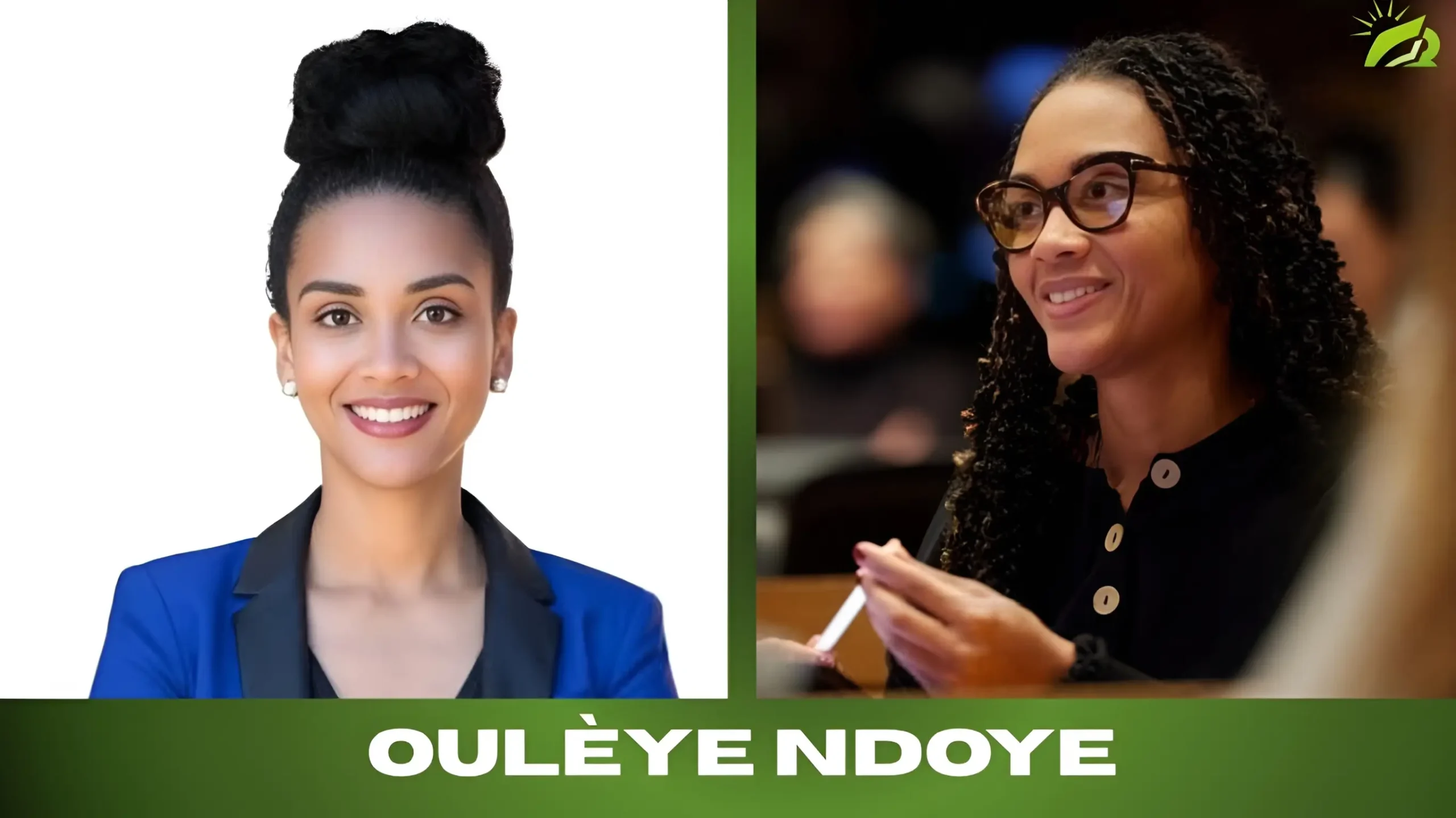
In an era where public health crises demand innovative solutions and compassionate leadership, few individuals demonstrate the multifaceted expertise and unwavering commitment that defines Oulèye Ndoye. As an accomplished human rights activist, researcher, and emerging thought leader in maternal and child public health, Ndoye represents a new generation of global health professionals who merge academic rigor with on-the-ground humanitarian work. Her trajectory from award-winning student to Harvard-trained researcher to advisor on critical policy matters demonstrates how individual dedication can catalyze systemic change in healthcare systems that serve the world’s most vulnerable populations.
Oulèye Ndoye’s career encompasses multiple dimensions of public health advocacy, from combating human trafficking networks to advancing maternal healthcare access in underserved communities. What distinguishes her work is not merely the breadth of her engagement, but the depth of her understanding—rooted in formal education from elite institutions, enriched by lived experience across continents, and animated by a persistent belief that public health is fundamentally a human rights issue. As we navigate the complexities of global health in 2026, her work serves as a blueprint for how contemporary activists can leverage education, institutional platforms, and advocacy to address entrenched inequalities.
This comprehensive exploration examines Oulèye Ndoye’s professional journey, her substantive contributions to public health, her approach to human rights work, and the broader implications of her leadership for the future of global health advocacy.
Educational Foundation: Building Expertise Through Rigorous Training
The Spelman College Foundation
Oulèye Ndoye’s educational journey began at Spelman College, one of America’s preeminent historically Black colleges and universities, where she graduated summa cum laude with an honors degree. This achievement reflects not simply academic achievement, but an early demonstration of the intellectual rigor and disciplined scholarship that would characterize her entire career. Spelman College’s legacy of producing leaders in social justice, public health, and international affairs established a foundational framework for Ndoye’s subsequent work.
The summa cum laude distinction from Spelman carries particular significance. The college maintains one of the most rigorous academic standards among American undergraduate institutions, particularly within its pre-medical and public health tracks. Graduating at the highest honors level indicates that Oulèye Ndoye possessed not only strong foundational knowledge but demonstrated the capacity to excel within demanding academic environments—a predictor of her ability to navigate complex research and policy environments later in her career.
International Graduate Training at Oxford
After completing her undergraduate education, Oulèye Ndoye pursued a Master of Science degree in Migration Studies from the University of Oxford, one of the world’s oldest and most prestigious academic institutions. The choice to study migration at Oxford is instructive. Migration represents one of the most pressing contemporary challenges to public health systems globally, intersecting with human trafficking, healthcare access, maternal health outcomes, and workforce development.
Oxford’s Migration Studies program is particularly distinguished for its emphasis on understanding migration not as an isolated phenomenon, but as a complex intersection of policy, human rights, economics, and social dynamics. By completing advanced graduate work in this field, Oulèye Ndoye developed sophisticated analytical tools for understanding how population movement, displacement, and transnational flows affect health outcomes and social vulnerability. This training would prove instrumental in her subsequent work addressing human trafficking and caring for displaced populations.
Columbia University and Historical Scholarship
Complementing her migration expertise, Oulèye Ndoye pursued a Master of Arts degree in History from Columbia University, another institution among America’s most selective graduate programs. The combination of migration studies and historical training creates a powerful analytical framework—one that allows researchers to contextualize contemporary health challenges within longer historical trajectories of inequality, colonialism, and institutional change.
Historical training provides scholars with sophisticated methodologies for understanding how present circumstances emerge from past decisions, policies, and structures. For public health professionals, this perspective proves invaluable. Understanding the historical roots of health disparities, the colonial legacies embedded in healthcare systems, and the long-term patterns of inequality informs more effective, culturally competent intervention strategies. Oulèye Ndoye’s historical training equipped her with tools to move beyond treating symptoms of health inequalities and toward addressing their structural foundations.
Harvard’s Public Health Doctorate
Currently, Oulèye Ndoye is pursuing doctoral training at Harvard T.H. Chan School of Public Health, one of the world’s most influential institutions for training public health leadership. The Harvard School of Public Health maintains particular distinction for producing researchers and practitioners who shape global health policy and practice. Doctoral candidates at Harvard engage with cutting-edge research methodologies, work alongside faculty who lead major international health initiatives, and contribute to research that informs policy decisions at national and international levels.
Her doctoral candidacy at Harvard represents a significant milestone—it positions Oulèye Ndoye among the next generation of public health scholars who will shape how the field understands and addresses critical challenges. The doctoral research she develops at Harvard will likely influence policy conversations and research agendas for years to come. This trajectory from elite undergraduate institution through multiple distinguished graduate programs to doctoral training at America’s leading school of public health represents the development of genuine expertise grounded in rigorous academic preparation.
Professional Leadership: From Research to Advocacy
Human Trafficking Prevention and Survivor Support
Oulèye Ndoye’s professional work reflects her commitment to translating academic knowledge into direct humanitarian impact. One of her most significant professional roles involved serving as the City of Atlanta’s inaugural Senior Human Trafficking Fellow—a position created specifically to address the epidemic of human trafficking affecting communities across Georgia. This pioneering role placed Ndoye at the intersection of policy, law enforcement, and humanitarian services.
Human trafficking represents one of the most severe human rights violations of our time, affecting millions globally and creating profound trauma for survivors. The work requires understanding complex criminal networks, trauma-informed approaches to survivor support, legal mechanisms for prosecution, and healthcare protocols for traumatized individuals. As Senior Human Trafficking Fellow, Oulèye Ndoye developed frameworks for identifying trafficking victims within health systems, created protocols for survivor support, and worked to build institutional capacity for recognizing and responding to trafficking situations.
Following her work with the City of Atlanta, Oulèye Ndoye advanced to advising the Georgia Criminal Justice Coordinating Council, a high-level policy body responsible for ensuring effective coordination among law enforcement, corrections, and judicial systems. This advisory role demonstrates her evolution from direct services into policy influence—a critical progression for systemic change. Her expertise in human trafficking informed policy recommendations affecting how Georgia’s justice system approaches trafficking cases, training protocols for law enforcement, and resources allocated to survivor support services.
Global Fellowships and International Experience
Beyond her Atlanta-based work, Oulèye Ndoye has undertaken significant international humanitarian work through prestigious fellowship programs. As a Luce Scholar—a highly selective fellowship supporting individuals working on pressing global challenges—Ndoye worked in Thailand addressing child survivors of sex trafficking. The Luce Scholars program identifies fewer than 80 scholars annually from among thousands of applicants, placing selected fellows in demanding international positions where they contribute to development work while advancing their own expertise.
Her work in Thailand placed Oulèye Ndoye in one of the world’s regions most affected by sex trafficking. Thailand’s geographic location, economic disparities, and tourism infrastructure create conditions enabling large-scale trafficking networks. Working with child survivors in this context requires not only technical knowledge of trauma and rehabilitation but cultural competency, linguistic capability, and emotional resilience. The skills Ndoye developed through this Luce fellowship—understanding trafficking networks within specific geographic and cultural contexts, designing trauma-informed care for child survivors, coordinating with local organizations and authorities—became foundational to her subsequent policy work.
Additionally, Oulèye Ndoye received a Critical Language Scholarship, enabling her to study Arabic intensively in Cairo, Egypt. Language scholarship recipients are identified for their potential to develop expertise in languages critical to American foreign policy and international development. Arabic proficiency opens access to understanding Middle Eastern and North African contexts, engaging with populations across North Africa, the Middle East, and diaspora communities. For public health professionals, language capability dramatically expands ability to conduct research, engage with communities on health issues, and build trust across linguistic and cultural boundaries.
Board Memberships and Institutional Leadership
Oulèye Ndoye’s professional trajectory extended into institutional leadership through board memberships with organizations working at the frontlines of vulnerable population health. Her service on the board of Wellspring Living, an organization providing comprehensive services to survivors of sex trafficking and exploitation, positioned her among the leadership guiding organizational strategy and resource allocation. Board membership at an organization like Wellspring Living requires not merely passion for the issue but substantive expertise in organizational governance, trauma-informed care, healthcare delivery, and program evaluation.
Her work with Motherhood Beyond Bars—an organization serving incarcerated pregnant women and supporting their reentry after release—reflects another critical dimension of Oulèye Ndoye’s commitment to maternal and child health. This organization addresses one of America’s most overlooked maternal health crises. Incarcerated pregnant women face profound barriers to prenatal care, experience high rates of maternal complications, and face separation from newborns and children. Motherhood Beyond Bars provides doula support, mental health services, and reentry assistance for pregnant individuals involved in the justice system. Board membership in such an organization demonstrates Ndoye’s comprehensive commitment to maternal health equity, particularly for the most marginalized populations.
Council on Foreign Relations Membership: Shaping Global Policy Dialogue
Oulèye Ndoye’s designation as a term member of the Council on Foreign Relations represents recognition of her expertise by one of America’s most influential foreign policy institutions. CFR membership is selective and competitive, extended to individuals demonstrating expertise, leadership capacity, and contributions to foreign policy discourse. As a term member, Oulèye Ndoye engages with the institution’s research initiatives, participates in policy dialogues, and contributes to CFR’s work on global health security, human rights, and development.
Membership in institutions like the Council on Foreign Relations amplifies an individual’s ability to influence policy conversations at the highest levels. Through CFR platforms, Oulèye Ndoye can engage with policymakers, business leaders, academic researchers, and international diplomats. This positioning allows her expertise in maternal health, human trafficking prevention, and human rights to inform discussions shaping American foreign policy and international development priorities.
The Intersection of Personal Circumstances and Professional Commitment
Public Prominence and Advocacy Platform
Oulèye Ndoye gained significant public attention through her marriage to Raphael Warnock, now a United States Senator from Georgia, on Valentine’s Day 2016. While personal relationships often attract media scrutiny, Ndoye’s public prominence has provided an expanded platform for her advocacy work. Public figures in humanitarian fields often leverage higher visibility to amplify messages about critical social issues.
However, it is essential to recognize that Oulèye Ndoye’s professional achievements and expertise preceded and substantially exceed the profile gained through her marriage. Her Luce Scholarship, Critical Language Scholarship, positions at Harvard and Oxford, and advisory roles in Atlanta were all earned through her own qualifications and achievements. Her prominence in public health and human rights advocacy is substantially her own.
Navigating High-Profile Family Circumstances
Oulèye Ndoye and Senator Warnock separated in late 2019 and completed divorce proceedings in 2020. High-profile divorces involving public figures inevitably attract media attention, particularly regarding custody arrangements and co-parenting dynamics. Throughout this process, Oulèye Ndoye maintained her professional commitments and continued her doctoral studies at Harvard.
The ability to maintain focus on rigorous professional and academic work while managing the complexities of high-profile family circumstances demonstrates resilience and commitment to her mission. Public figures in humanitarian fields often face the challenge of balancing personal circumstances with professional visibility. Ndoye’s trajectory illustrates how dedicated professionals can sustain their contributions despite personal challenges.
Substantive Contributions to Public Health Practice
Addressing Structural Roots of Health Inequity
Oulèye Ndoye’s work consistently addresses health issues from a structural and rights-based perspective. Rather than treating human trafficking, maternal mortality, or lack of healthcare access as isolated problems, her approach recognizes these as symptoms of deeper systemic inequalities rooted in poverty, discrimination, gender inequality, and inadequate governance.
The public health field increasingly recognizes that addressing health disparities requires attending to social determinants—the economic, social, and political conditions that shape health outcomes. Oulèye Ndoye’s expertise encompasses this understanding. Her work in human trafficking prevention, for instance, recognizes that trafficking networks exploit poverty, gender discrimination, migration vulnerabilities, and lack of economic opportunity. Effective prevention requires addressing these underlying vulnerabilities while providing trauma-informed support to survivors.
Building Capacity for Vulnerable Population Care
Through her various roles, Oulèye Ndoye has focused on building institutional and systemic capacity for recognizing and serving vulnerable populations. Her work with the City of Atlanta created frameworks for healthcare providers to identify trafficking victims. Her advisory role with Georgia’s criminal justice system influenced how institutions approach trafficking cases. Her board work with organizations serving trafficking survivors and incarcerated pregnant women directly improved services available to these populations.
This capacity-building approach recognizes that sustainable change requires strengthening systems and institutions, not merely providing temporary services. When healthcare providers understand how to recognize trafficking victims, when law enforcement is trained in trauma-informed approaches, when organizations have resources to serve populations comprehensively—then systems become more resilient and effective at protecting vulnerable people.
Maternal Health as a Human Rights Priority
Throughout her career, Oulèye Ndoye has emphasized maternal and child health as fundamental human rights issues. Her work with Motherhood Beyond Bars addresses a population often rendered invisible in maternal health discussions. Incarcerated pregnant women face structural barriers to adequate prenatal care, higher risk of maternal complications, and trauma related to separation from children. Recognizing these women as possessing rights to maternal health care, dignity during pregnancy, and family connection reflects a rights-based approach to public health.
Similarly, her work in international contexts through her fellowships reflects understanding that maternal and child health in developing contexts requires attention to broader systems—healthcare infrastructure, education access, economic opportunity, and protection from exploitation. The combination of her technical training and humanitarian orientation positions her to advocate for comprehensive approaches to maternal health that center human dignity and rights.
Key Areas of Expertise and Professional Impact
Human Trafficking Prevention and Survivor Services
Oulèye Ndoye’s expertise in human trafficking encompasses:
- Victim identification protocols within healthcare and justice systems
- Trauma-informed care for survivors, particularly child survivors
- Understanding trafficking networks and their connection to poverty and inequality
- Policy development for anti-trafficking responses at municipal and state levels
- Criminal justice approaches to trafficking prosecutions and victim protection
- International dimensions of trafficking, including cross-border victim movements
Maternal and Child Public Health
Her work in maternal and child health addresses:
- Health disparities affecting women of color and low-income mothers
- Access to prenatal and postnatal care for marginalized populations
- Health complications specific to incarcerated pregnant women
- Reproductive justice frameworks centering bodily autonomy and dignity
- International maternal mortality reduction strategies
- Policy approaches to improving maternal health outcomes
Migration, Healthcare Access, and Social Determinants
Through her migration studies background and international experience, Oulèye Ndoye understands:
- How migration patterns affect health outcomes and healthcare access
- Healthcare rights for migrant and displaced populations
- Language access and cultural competency in health systems
- Policy frameworks for ensuring healthcare access regardless of immigration status
- Connections between migration, trafficking, and health vulnerabilities
Human Rights and Social Justice in Public Health
Underlying all her work is a commitment to:
- Health equity and elimination of health disparities
- Recognition of health as a fundamental human right
- Understanding systemic and structural roots of health inequalities
- Integration of human rights principles into public health practice
- Advocacy for policy change advancing health justice
Vision for Contemporary Global Health Leadership
Bridging Academic Expertise and Advocacy
Oulèye Ndoye exemplifies a contemporary model of global health leadership that bridges rigorous academic training with direct advocacy and policy engagement. Rather than viewing these as separate spheres, she demonstrates how advanced training positions professionals to influence systems while maintaining commitment to vulnerable populations.
Her trajectory—from elite undergraduate education through multiple graduate degrees, international experience, and advisory roles—illustrates how individuals can leverage educational credentials and institutional affiliations to advance social justice goals. This model proves particularly important in fields like public health, where academic legitimacy can amplify advocacy messages and open doors for policy influence.
Intersectional Approach to Health and Justice
Oulèye Ndoye’s work demonstrates an intersectional understanding of health inequities. Rather than siloing human trafficking work separately from maternal health work, she recognizes these as interconnected issues affecting vulnerable women and children. Understanding that trafficking victims often include pregnant women and mothers, that incarcerated pregnant women are disproportionately trafficking survivors, that trafficking prevention requires attention to poverty and gender inequality—this integrated perspective reflects sophisticated analysis of how multiple forms of oppression compound health vulnerabilities.
Commitment to Sustainable Systemic Change
Throughout her career, Oulèye Ndoye has pursued not temporary humanitarian relief but sustainable systemic change. Her advisory roles, policy work, and institutional leadership all target longer-term transformation of how systems recognize and respond to vulnerability. This reflects understanding that while direct services matter profoundly, protecting populations requires changing institutional structures and systems.
Frequently Asked Questions
Q: What is Oulèye Ndoye’s educational background?
A: Oulèye Ndoye holds an honors bachelor’s degree (summa cum laude) from Spelman College, a Master of Science degree in Migration Studies from the University of Oxford, and a Master of Arts degree in History from Columbia University. She is currently a doctoral candidate in public health at Harvard T.H. Chan School of Public Health, where she is conducting research at the intersection of maternal health, migration, and human rights.
Q: What professional roles has Oulèye Ndoye held?
A: Oulèye Ndoye has served as the City of Atlanta’s inaugural Senior Human Trafficking Fellow, advisor to the Georgia Criminal Justice Coordinating Council, Luce Scholar in Thailand working with child trafficking survivors, and Critical Language Scholar studying Arabic in Cairo. She has also served on the boards of Wellspring Living, which provides services to trafficking survivors, and Motherhood Beyond Bars, which serves incarcerated pregnant women.
Q: What is the focus of Oulèye Ndoye’s professional work?
A: Oulèye Ndoye’s work focuses on maternal and child public health, human trafficking prevention, and human rights advocacy. She approaches these issues from a perspective recognizing their connection to broader social determinants of health, structural inequality, and systemic injustice.
Q: How is Oulèye Ndoye involved in policy development?
A: Oulèye Ndoye has influenced policy development through her advisory role with Georgia’s Criminal Justice Coordinating Council, her work creating protocols for identifying trafficking victims in health systems, and her thought leadership on maternal and child health issues. She is also a term member of the Council on Foreign Relations, enabling engagement with high-level foreign policy discourse.
Q: What is the significance of Oulèye Ndoye’s international fellowships?
A: Her Luce Fellowship enabled her to work directly with child survivors of trafficking in Thailand, one of the world regions most affected by human trafficking. Her Critical Language Scholarship allowed her to achieve fluency in Arabic, enabling engagement with Middle Eastern and North African communities. These experiences substantially expanded her understanding of trafficking, migration, and health disparities within diverse global contexts.
Q: How does Oulèye Ndoye approach the connection between human rights and public health?
A: Oulèye Ndoye views public health fundamentally as a human rights issue. She recognizes that health inequities result from structural injustice, discrimination, and denial of rights to healthcare, dignity, and safety. Her work targets both immediate survivor support and systemic change to protect vulnerable populations and advance health justice.
Q: What makes Oulèye Ndoye’s approach to maternal health distinctive?
A: Oulèye Ndoye’s work in maternal health extends to populations often overlooked in maternal health discussions, particularly incarcerated pregnant women and trafficking survivors. Her approach centers the dignity and rights of pregnant women, recognizes trauma’s impact on maternal health outcomes, and emphasizes equitable access to comprehensive prenatal and postnatal care.
Q: How has Oulèye Ndoye’s education prepared her for her professional work?
A: Her education across multiple disciplines—combining rigorous training in history, migration studies, and public health—enables sophisticated analysis of how health inequities emerge from historical processes, migration patterns, and structural inequality. Her training at elite institutions developed both technical expertise and leadership capacity for influencing policy and practice.
Q: What is Oulèye Ndoye’s current focus as a doctoral candidate?
A: While specific dissertation details remain with her institution, her doctoral training at Harvard positions her to conduct research advancing understanding of maternal and child health, particularly for vulnerable populations. Her research likely informs policy conversations and evidence-based practice in her fields of expertise.
Q: Why is institutional affiliation important to Oulèye Ndoye’s work?
A: Institutional affiliations—including her doctoral training at Harvard, membership in the Council on Foreign Relations, and board positions with established organizations—provide platforms for amplifying her expertise, influencing policy, and advancing her advocacy agenda. These positions enable her to engage with policymakers, researchers, and practitioners at scale.
Q: How does Oulèye Ndoye’s work reflect contemporary public health priorities?
A: Her focus on human trafficking, maternal health equity, migration-related health issues, and rights-based approaches to public health aligns with contemporary recognition that health inequities require attending to social determinants, structural inequality, and systemic change. Her work exemplifies how modern public health leaders integrate advocacy with technical expertise.
Q: What can emerging public health professionals learn from Oulèye Ndoye’s career trajectory?
A: Oulèye Ndoye’s career demonstrates the value of rigorous academic training, international experience, willingness to work with marginalized populations, and commitment to translating expertise into policy and practice. Her trajectory illustrates how dedicated professionals can navigate multiple roles—researcher, advocate, advisor, institutional leader—while maintaining consistent focus on social justice and vulnerable population health.
Conclusion
Oulèye Ndoye represents a contemporary model of public health leadership grounded in rigorous scholarship, commitment to human rights, and dedication to addressing health inequities affecting the world’s most vulnerable populations. Her educational trajectory through elite institutions, combined with direct humanitarian experience across multiple continents, has positioned her to influence both policy and practice in critical areas including human trafficking prevention, maternal health equity, and rights-based approaches to public health.
Her professional journey—from her pioneering work as Atlanta’s first Senior Human Trafficking Fellow through her current doctoral training at Harvard—illustrates the progression of a dedicated scholar-advocate working to create systemic change. The combination of policy influence, direct services advocacy, and institutional leadership reflects her sophisticated understanding that sustainable progress requires working at multiple levels simultaneously.
As global health challenges intensify and the world increasingly recognizes the intersection of human rights and public health, professionals like Oulèye Ndoye offer crucial leadership. Her work addresses not merely symptoms of health inequity but their structural roots. Her approach integrates technical expertise with human dignity, recognizing that effective health solutions must simultaneously address technical challenges and justice imperatives.
Looking toward the future, Oulèye Ndoye’s trajectory and commitment position her to continue advancing maternal and child health, preventing exploitation and trafficking, and demonstrating how public health professionals can serve as advocates for vulnerable populations. Her influence through policy advisory roles, institutional memberships, and emerging scholarship will likely shape how the global health community understands and addresses critical challenges. For those working in public health, human rights, maternal health, or humanitarian fields, Oulèye Ndoye’s career offers inspiration and a model for how dedicated professionals can create meaningful, systemic change while maintaining unwavering commitment to the populations they serve.
For More Visits: Bright Magazine
Also Read: Sanaa Chappelle: Best Rising Talents Impact Guide
